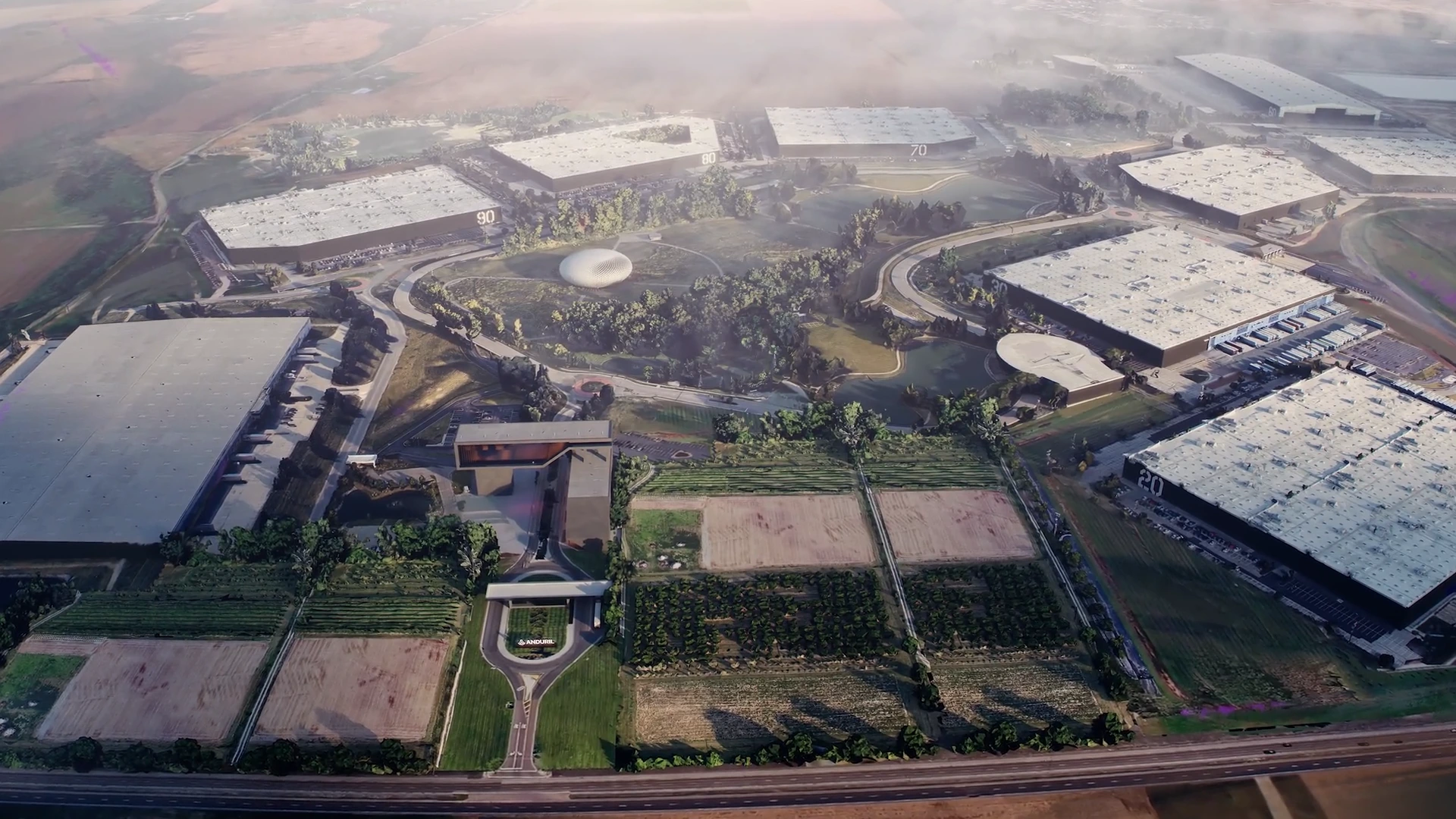
Anduril’s Arsenal-1 facility in Pickaway County, Ohio is ahead of schedule and under budget — a combination that almost never happens in defense procurement — and production of the YFQ-44A Fury is set to begin in Q2 2026.
The numbers are significant. Building 1 covers 775,000 square feet of production space. Building 2, already under construction after a ground-breaking last summer, adds another 924,000 square feet. By 2035, the campus will include additional manufacturing buildings, warehousing, a centralized hub, and a substation. Employment is projected to reach close to 4,000 workers within a decade, starting from 250 by end of 2026.
What Arsenal-1 Is Actually Building
The YFQ-44A Fury is Anduril’s entry in the Air Force’s Collaborative Combat Aircraft program — the autonomous wingman designed to fly alongside the F-47, Boeing’s manned sixth-generation fighter awarded last year. The Fury is also intended to support existing fifth-generation platforms including the F-35 and potentially the B-21 Raider.
The aircraft flies at up to Mach 0.95 and altitudes up to 50,000 feet. The Air Force has signaled it wants thousands of them.
Anduril COO Matthew Grimm called the production timeline “extremely aggressive in comparison to every other fighter aircraft program in recent history.” That’s not spin — traditional defense procurement cycles measure in decades, not quarters.
The Manufacturing Model Is the Story
Arsenal-1 is not just a factory. It’s a test of whether defense hardware can be produced like commercial technology.
Roughly 90% of the YFQ-44A’s components are commercially available — a deliberate choice to reduce supply chain fragility and accelerate production ramp. Anduril is also investing directly in upstream suppliers, including mines and refineries, to control raw material availability before it becomes a bottleneck.
The facility is hiring deliberately from Ohio’s commercial aviation and automotive workforce. The logic: workers who already understand precision assembly require less time to become productive on the production line. It compresses the ramp.
“It decreases the amount of time from when we hire an employee to when they’re useful on the production line,” Grimm said.
Why This Matters
The CCA program is the first serious attempt to build autonomous combat aircraft at the scale and pace the Air Force actually needs, rather than the pace defense contractors have historically delivered. Arsenal-1 is the physical infrastructure that makes that possible — or proves it isn’t.
YFQ-44A production begins in Q2. If Anduril hits that date, it validates the entire model: software-first defense company, commercial supply chain, hyperscale manufacturing. If it slips, the skeptics have their data point.
Watch the Q2 production start date. That’s the only milestone that matters right now.