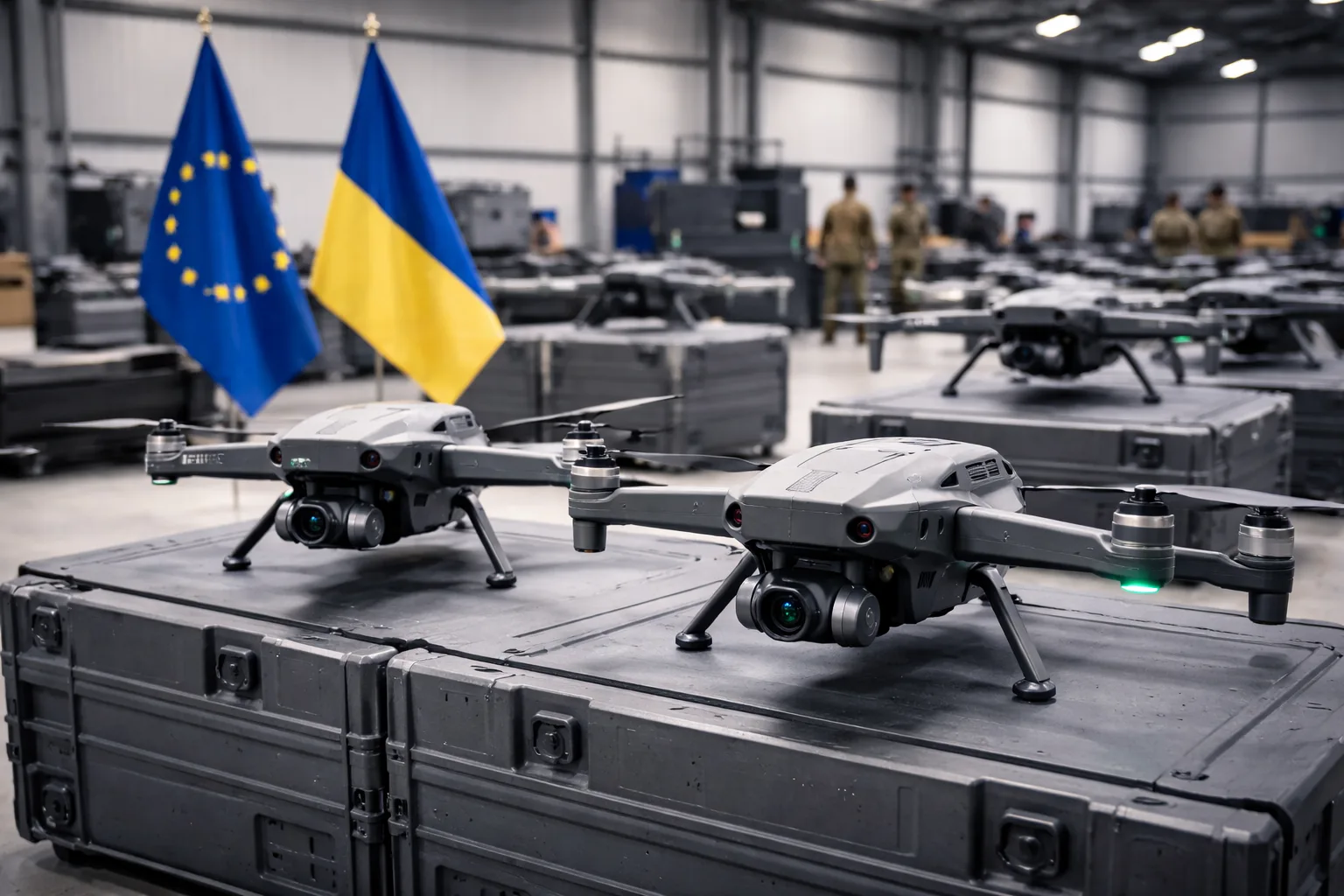
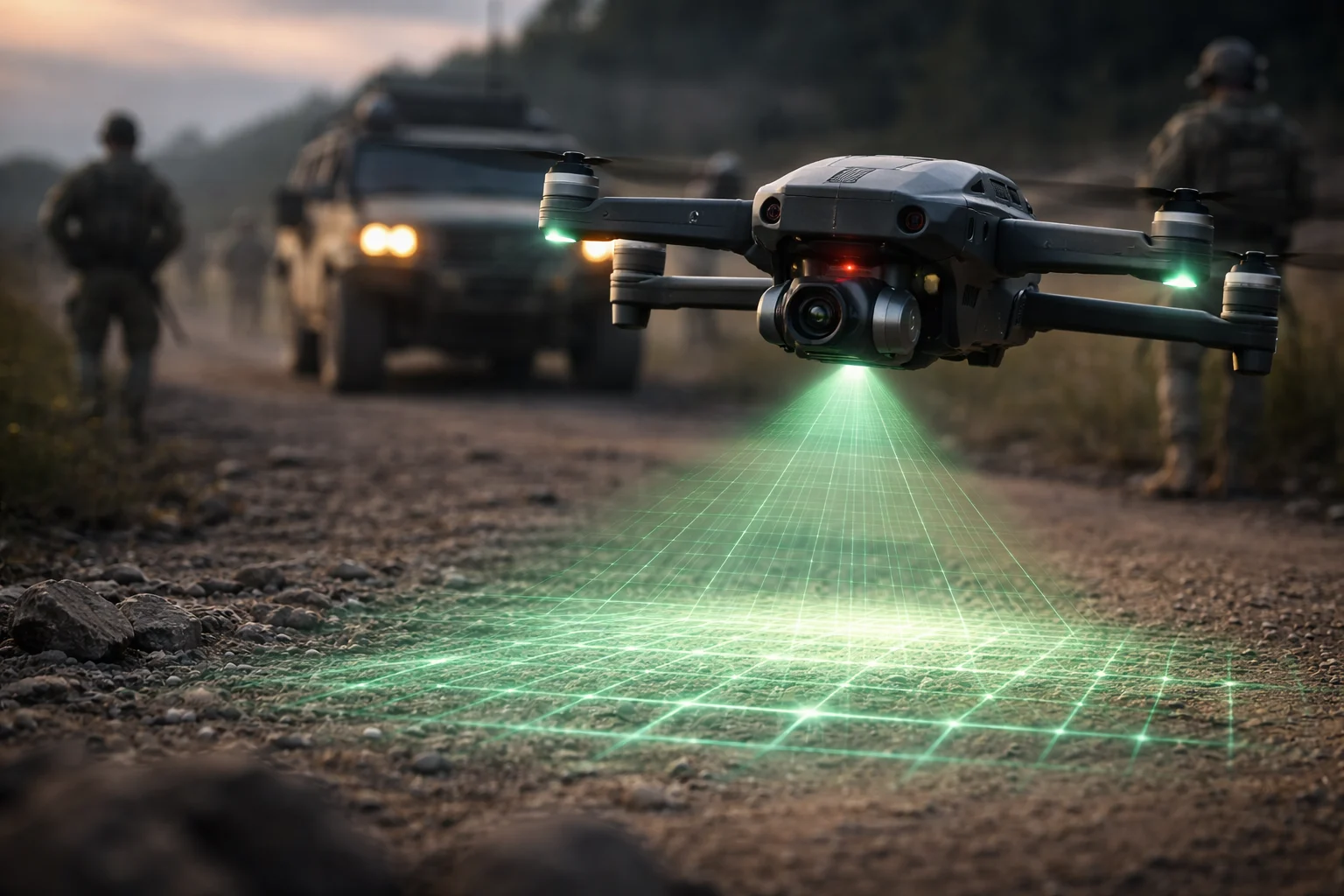
Britain’s Defence Science and Technology Laboratory has successfully trialled AI-powered drones for landmine and explosive ordnance detection, with the technology demonstrating the ability to rapidly retrain on new threat types — a capability that matters as much as the detection itself.
The trial, conducted with 33 Engineer Regiment at their Essex base over several weeks, placed dozens of replica mines and ordnance across varied terrain. Sensors on small uncrewed aerial systems relayed data to Army operators, who used AI tools to locate and identify the munitions. The trial was run on behalf of the British Army and forms part of the UK’s broader autonomous systems investment, which the government is doubling from £2 billion to £4 billion this parliament.
Why Retraining Speed Matters
The headline result — drones can detect landmines — is less interesting than the secondary finding: the AI models can be rapidly retrained to recognise new threat types and adapt to different environments.
Explosive ordnance evolves constantly. Adversaries modify devices specifically to defeat detection systems. A detection capability that can only identify known threat signatures becomes obsolete as soon as the threat changes. A system that can be retrained in the field to recognise new signatures is a fundamentally different proposition — one that stays relevant as the threat evolves rather than requiring a new procurement cycle each time.
This is the lesson from Ukraine, where the pace of drone and IED evolution has consistently outrun the response time of conventional military procurement. The UK has explicitly framed this trial in that context.
The Procurement Path
Further trials are planned for later this year to mature the technology and guide procurement of a deployable capability. The language is deliberate: this is moving toward soldiers’ hands, not back into a lab.
Major Mark Fetters, the British Army’s Future Counter-Explosive Ordnance Capability lead, flagged the hardware trajectory clearly — as sensors become lighter and more power-efficient, they fit onto smaller UAS, which expands where and how the capability can be deployed. The procurement target isn’t a fixed system; it’s a maturing one.
The UK’s commitment to a tenfold increase in Army lethality over the next decade depends heavily on exactly this kind of human-machine teaming working in practice. A successful landmine detection trial is one data point. The procurement decision later this year is the one that matters.