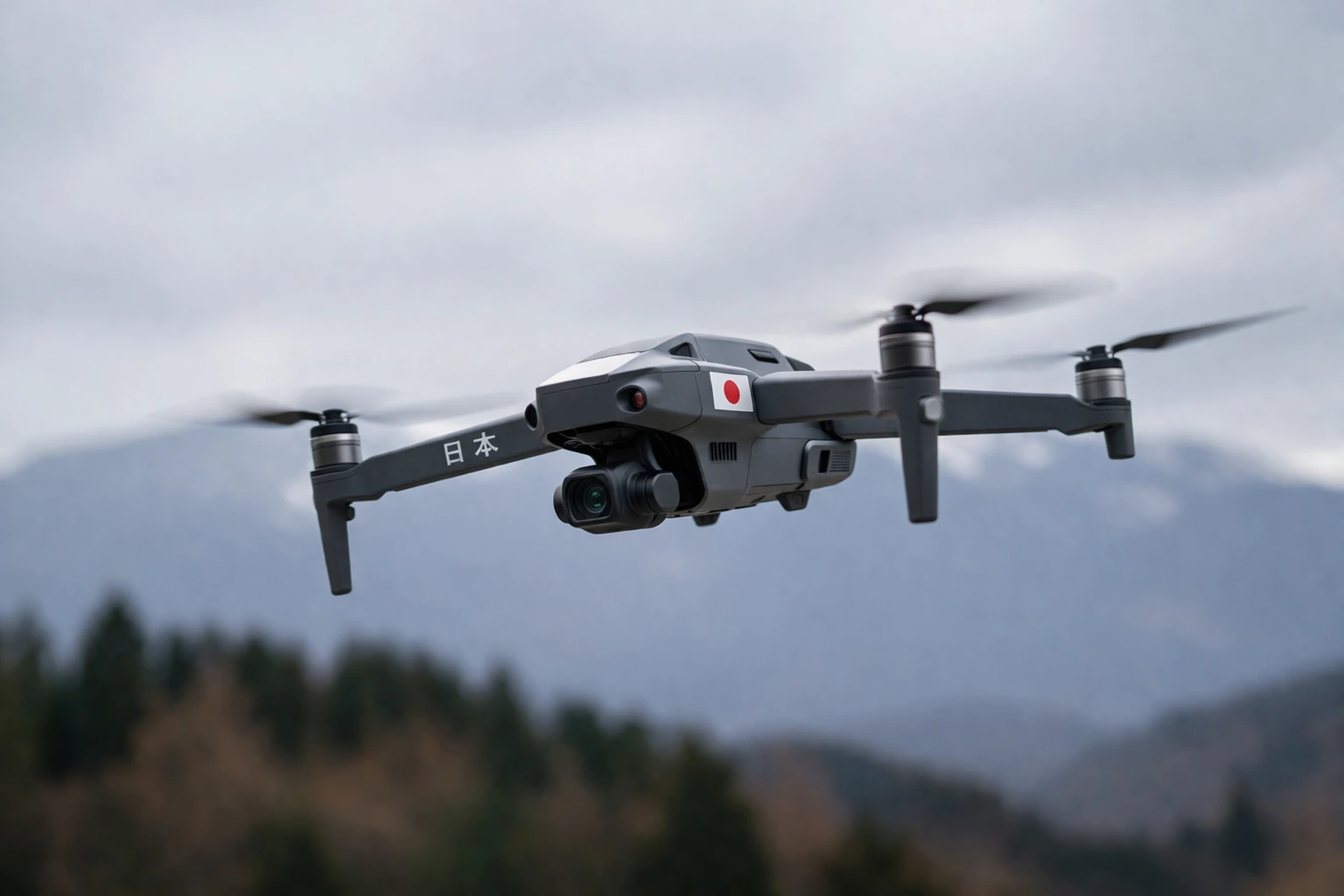

Performance Drone Works raised $110 million to scale drone production, while ORAN Development Company secured $45 million to build AI-native radio infrastructure — both backed by Booz Allen’s venture arm.
The two deals point to a clear thesis: autonomy and communications are converging into the same battlefield stack.
PDW is scaling for contracts, not prototypes
Performance Drone Works, founded in 2015, builds small autonomous drones for military and public safety missions. Its systems cover surveillance, electronic warfare, and strike.
The $110 million Series B, led by Ondas with participation from Booz Allen Ventures, is aimed at one thing: production.
The bottleneck in defense drones is no longer early-stage innovation — it’s the ability to deliver systems at scale under contract. PDW is positioning itself to compete in that layer, where programs of record and sustained procurement live.
The company already operates in combat and crisis-response contexts. This funding suggests it expects more demand from government buyers, not just experimentation budgets.
The network layer is becoming the real battlefield
ORAN Development Company raised $45 million to build what it calls a “Distributed Compute Grid” — an open architecture platform that merges communications, sensing, and edge AI.
The pitch is simple: turn cell towers and telecom sites into compute nodes.
Backers include Cisco, Nokia, NVIDIA, AT&T, and Booz Allen Ventures. That lineup matters more than the amount raised. These are the companies that control the underlying infrastructure.
ODC’s goal is to support the transition from 5G to 6G by embedding intelligence directly into the network layer. In practice, that means lower latency, more resilient systems, and the ability to run AI workloads closer to where data is generated.
For drones, that’s not abstract. It directly affects autonomy, coordination, and electronic warfare performance.
One bet on hardware, one on the layer beneath it
Taken together, the two investments map cleanly onto the emerging drone stack.
PDW sits at the edge — the physical systems executing missions.
ODC sits underneath — the network and compute layer that enables those systems to operate with more autonomy and coordination.
Booz Allen backing both suggests a view that future defense capability won’t be defined by platforms alone, but by how tightly integrated they are with communications and compute infrastructure.
What to watch
PDW now has to prove it can convert capital into contracts and sustained production. That’s where most drone startups stall.
ODC faces a different challenge: getting telecom operators to deploy its architecture beyond pilots and into live networks.
If both succeed, the result is a tighter loop between drones and the infrastructure they rely on — faster decisions, more autonomy, and less dependence on centralized control.
That’s where the next phase of the drone industry is heading.