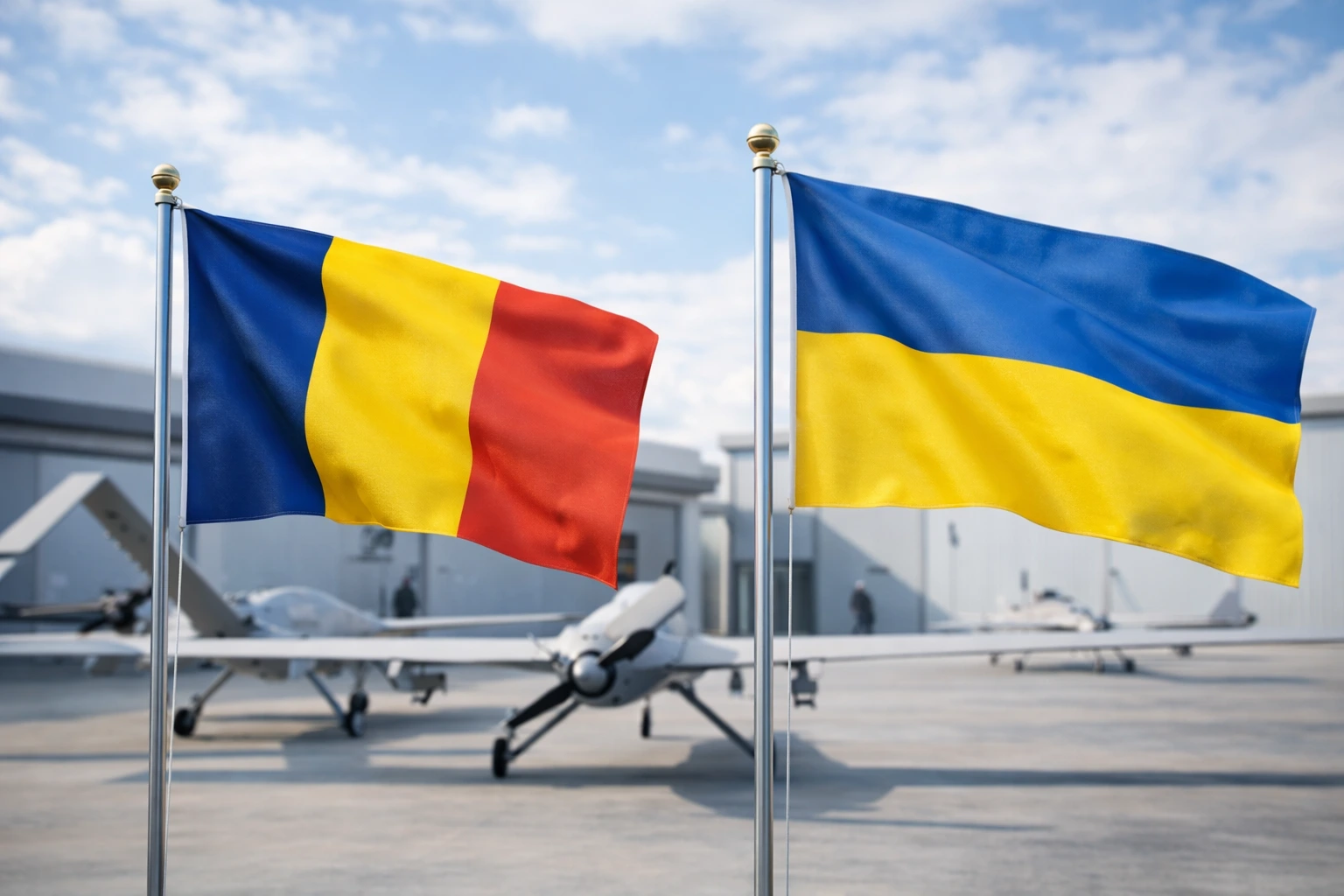
Fifteen Ukrainian drone manufacturers are in Bucharest this week negotiating a joint production agreement with Romania’s defence ministry, with a contract signing deadline set for end of May. Romania wants to allocate €200 million of its EU rearmament funding to the project.
The talks are the operational follow-through on a statement of intent signed by the Romanian and Ukrainian presidents earlier this month. They’re moving fast — Romania has a contract deadline, Ukraine has manufacturers ready, and the EU has provided the funding mechanism.
The Money and the Mechanism
Romania has been allocated €16.6 billion under SAFE — the EU’s new rearmament initiative launching later this year. The €200 million earmarked for joint drone production is a fraction of that total, but it’s a concrete first deployment of SAFE funding into active drone manufacturing rather than procurement.
The structure matters. This isn’t Romania buying Ukrainian drones. It’s joint production — Ukrainian design and manufacturing expertise, Romanian territory and EU funding. The output stays within NATO and EU supply chains, which is the point.
Why Romania
Romania shares a 650-kilometre land border with Ukraine and has repeatedly had drones breach its airspace and fragments land on its territory since Russia began targeting Ukrainian ports on the Danube. The strategic logic for hosting Ukrainian drone production is obvious: proximity to the front, shared threat environment, and direct access to a supply chain that can replenish Ukrainian forces faster than production facilities further west.
It also gives Romania a domestic defence manufacturing capability it didn’t have before — one funded largely by Brussels.
What to Watch
Romanian Defence Minister Radu Miruta said a dedicated team is being formed to manage the project, with contract signing by end of May. Fifteen companies are at the table. Not all of them will make it into the final agreement — the next few weeks will determine which Ukrainian manufacturers Romania bets on and what production volumes the €200 million actually buys.
This is the first significant test of whether SAFE funding translates into real production capacity at the EU’s eastern flank, or whether it stalls in procurement bureaucracy. The May deadline suggests Romania is serious about moving quickly.