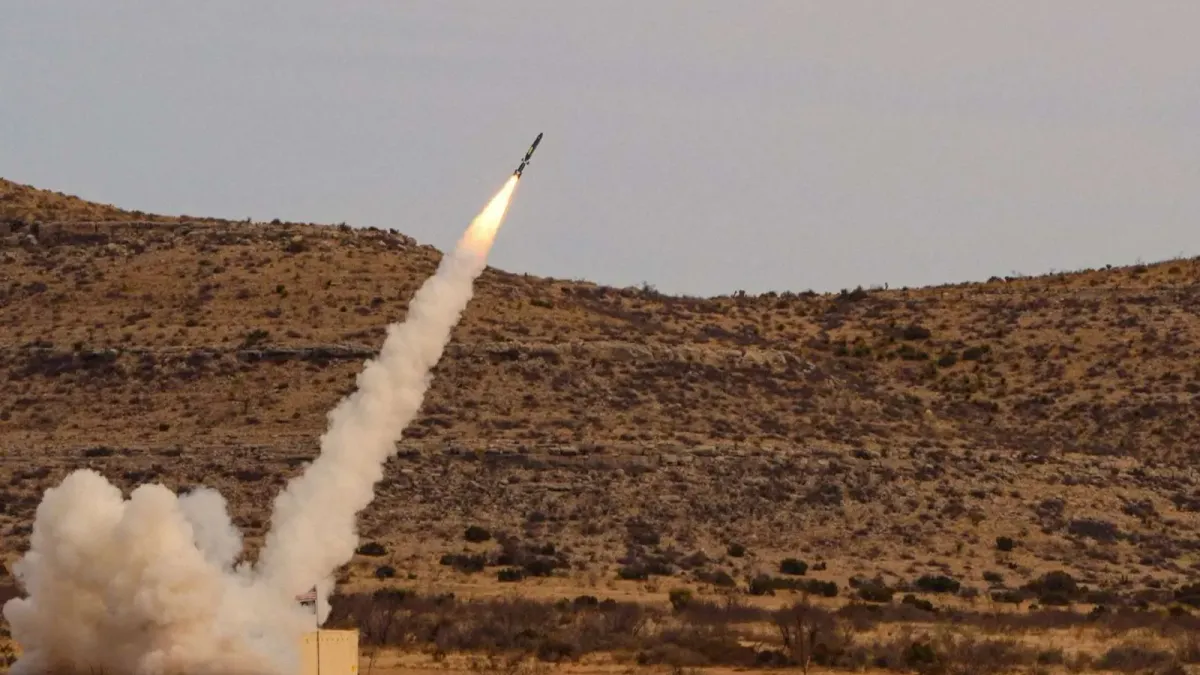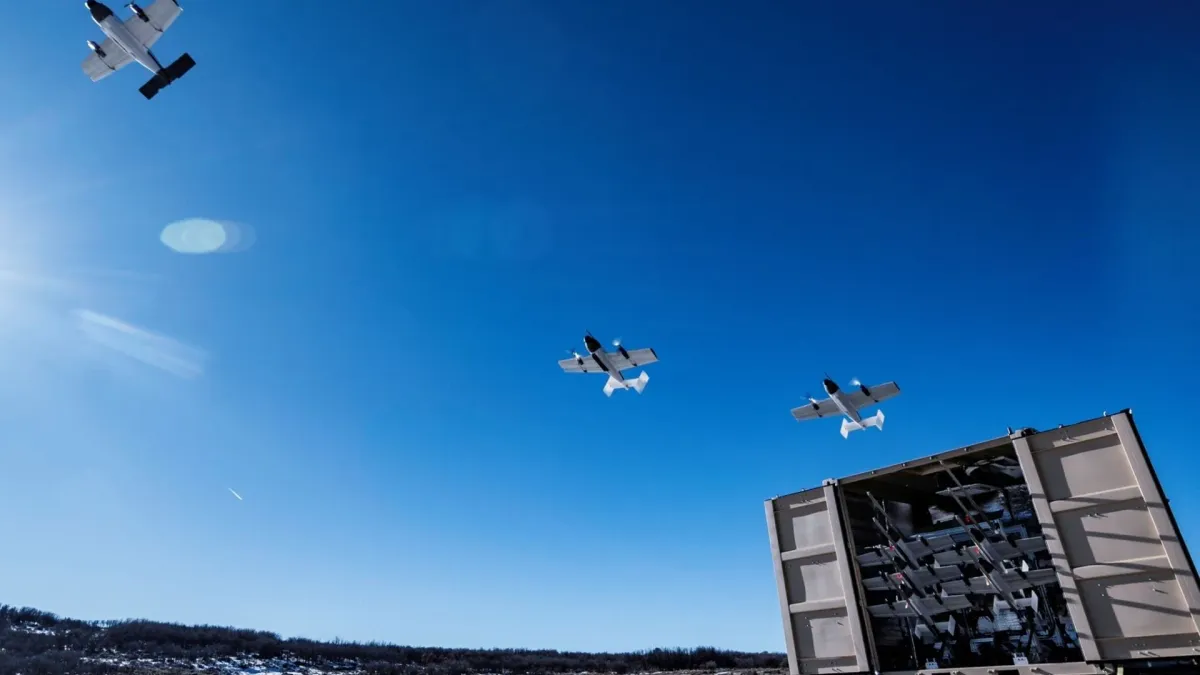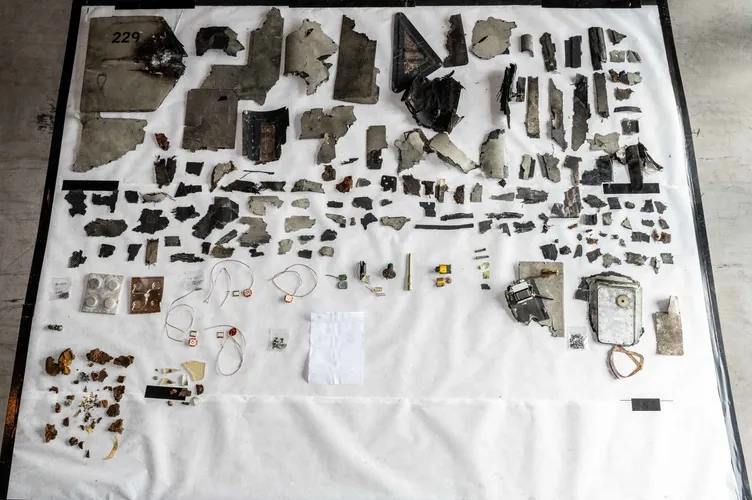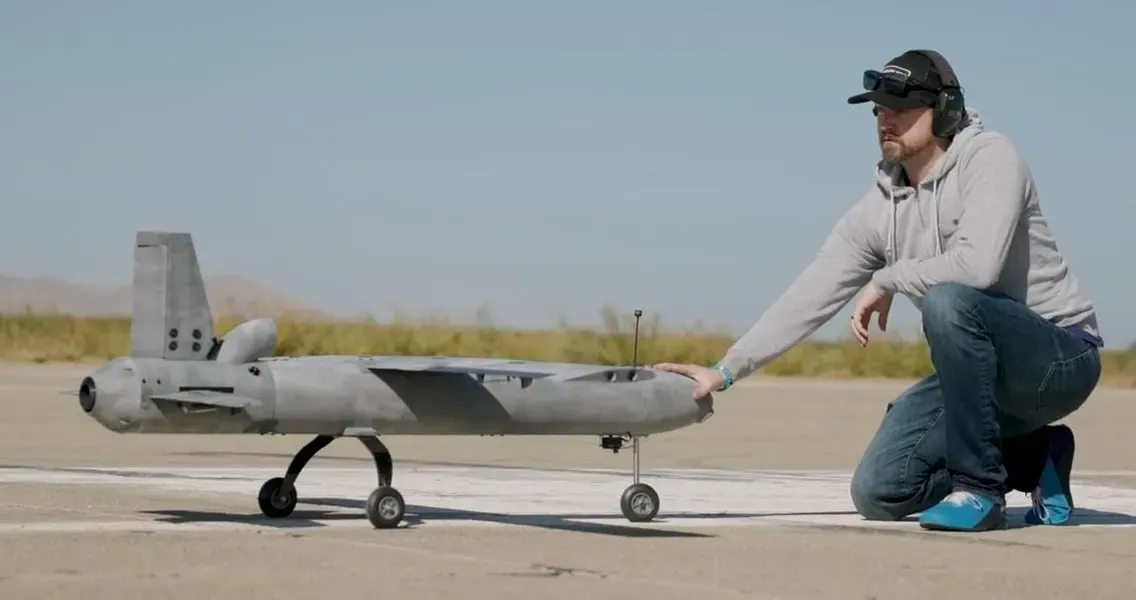

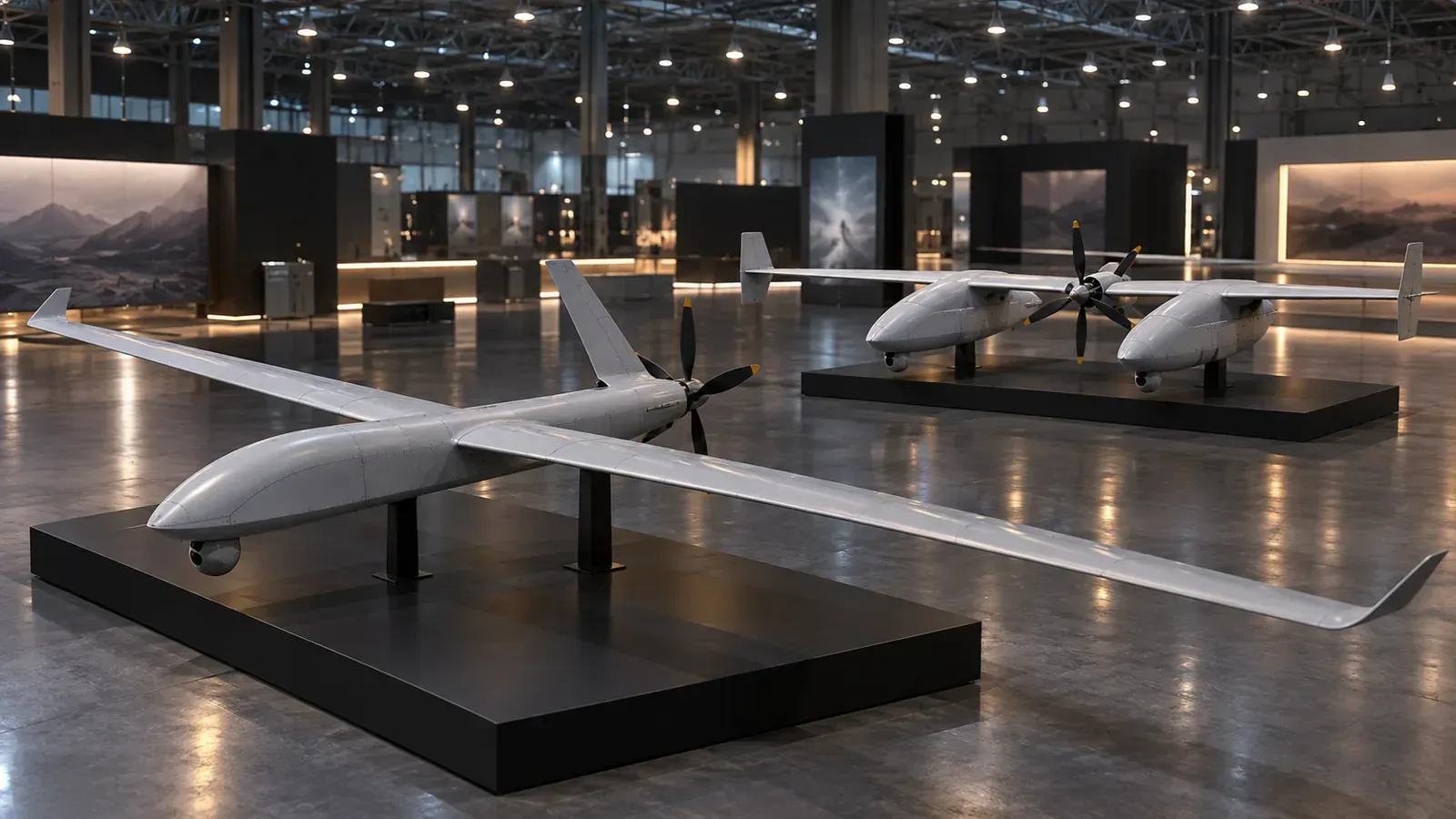
The US Air Force had lost 45 MQ-9 Reapers over Iran by 13 August, about a quarter of the fleet, and within five days this month two companies showed the aircraft they want to replace it with.
General Atomics, which builds the Reaper, released the first renderings of its Wildfire in a video on 9 September. Swarm Aero, a company founded in 2022 that has never delivered an aircraft, put a full-scale model of its Gamera on the floor of the Air and Space Forces Association conference at National Harbor, Maryland, on 14 September. Both are aimed at the Massed Modular Aircraft programme, which the Air Force and the Defense Innovation Unit opened in July with a target price of about $10 million per air vehicle before sensors, an 8,000-nautical-mile ferry range and a 2,800-pound payload. A Reaper costs $30 million to $50 million depending on configuration.
Lt. Gen. Christopher Niemi, the Air Force’s chief modernization officer, said the service wants to “bring this thing forward” because it is going through Reapers “at a rate that is concerning to us.” Secretary of the Air Force Troy Meink has directed the programme to accelerate. The original plan was a full-scale prototype 21 months after contract award and 20 operational aircraft by fiscal 2031. DefenseScoop reported the accelerated plan as at least 180 aircraft; Air & Space Forces Magazine reports the service wants 500 MMAs and 500 Collaborative Combat Aircraft fielded by 2032.
What the two aircraft are
The MMA requirement is a turboprop with a long, high-aspect-ratio wing that trades speed for range. Neither entrant is stealthy. That is the point: the Reaper was lost in numbers because it is expensive and slow, and the answer the Air Force has chosen is cheap and slow.
Wildfire is a clean-sheet design from General Atomics Aeronautical Systems. The company says it self-deploys more than 8,000 nautical miles, carries two Long-Range Anti-Ship Missiles or four Joint Strike Missiles, which the Reaper cannot, and can be delivered “years earlier” than the fiscal 2031 timeline at more than double the quantity. “The whole point of a flying weapons truck is to come heavy,” said C. Mark Brinkley, the company’s spokesman. David Alexander, GA-ASI’s president, called it “exactly the right design for high-demand missions and cost-conscious customers.” That is the incumbent describing its own bid, from a company that says it has built up to 100 aircraft a year.
Gamera is stranger. It has two parallel, offset fuselages under a 72-foot wing, seven hardpoints, and a Honeywell TPE331 turboprop, and Swarm Aero claims an unrefuelled range of 9,000 nautical miles. Oliver Palmer, the company’s co-founder and chief revenue officer, said the design “cuts against the conventional wisdom” by being very simple, non-stealthy and built for extreme range. Peter Kalogiannis, the chief executive, said it meets the 2,800-pound payload at range and can trade one for the other. First flight is planned for late 2027; what was shown this week is a model.
The other Reaper-sized drone at the show
Lockheed Martin used the same conference on 14 September to say it is building four more Vectis prototypes on top of the first, which is due to fly by the end of 2027. Vectis is the size of a Reaper — 34 feet long, 38-foot wingspan — but it is stealthy and priced at about $20 million, and Ron Fehlen, who leads the Skunk Works division, said its target is the Collaborative Combat Aircraft programme rather than MMA, because the MMA “mission is a little different.”
FlightBrief analysis: the Air Force now has two separate drone programmes at two price points — $20 million for a stealthy wingman that flies with fighters, $10 million for an unstealthy truck that flies alone and far — and the losses over Iran accelerated the cheaper one. The Reaper did neither job well enough to survive Iranian air defences, so it is being replaced by two aircraft that each do one.
The Air Force has not said which companies will receive MMA prototype awards, or when. The first Gamera is due to fly in late 2027, and the first Vectis by the end of the same year.