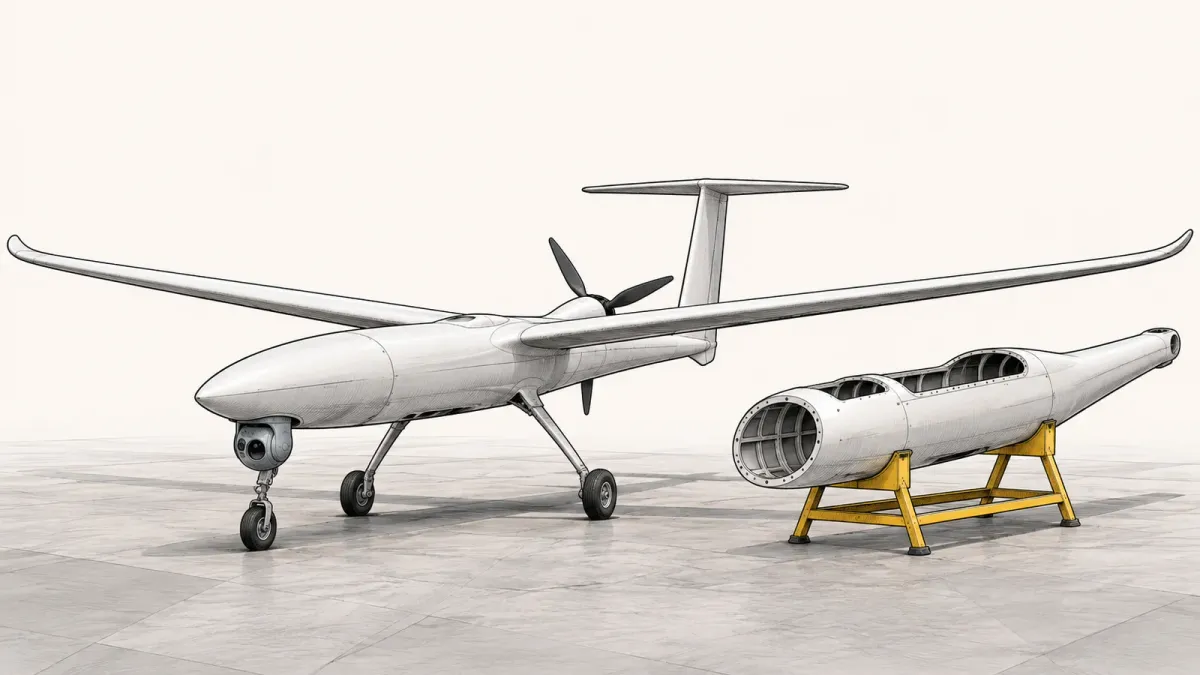

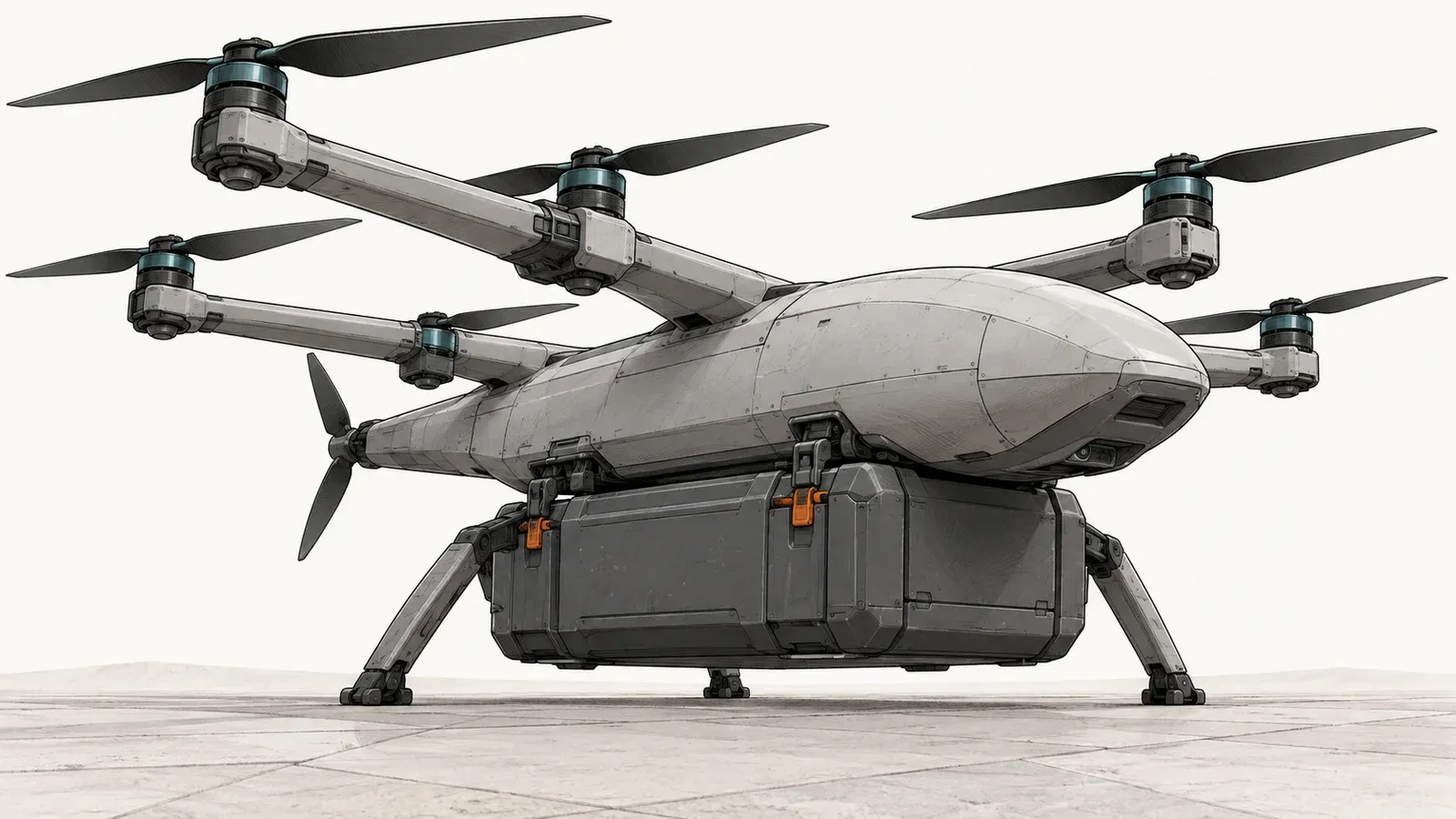
Shareholders of Inflection Point Acquisition Corp. VII voted on 25 November to merge the blank-cheque company with Elroy Air at an $800 million valuation. Elroy, the California maker of the Chaparral autonomous cargo drone, earned $2.4 million in revenue last year.
The vote was not close. The SPAC’s filing with the SEC counts 22,067,168 shares for the deal and 787,783 against, with 73% of its shares represented. The two companies expect to close in early December, when the combined company takes the Elroy Air name and, subject to Nasdaq’s approval, trades as ELRY.
What changed since October
When the merger filing was made public on 8 October, it said no binding contract to deliver any aircraft existed. In November Elroy announced a purchase agreement with Barq Group for up to 20 Chaparrals worth up to $70 million: five firm orders backed by a $10.25 million deposit and 15 reserved production slots.
The order came with a stake. On 12 November Elroy issued Barq Electric Holdings a warrant to buy 5 million of its shares, a third amendment to the merger agreement shows. The amendment, signed on 22 November, converts it into a warrant on the listed company and keeps it out of the earn-out shares reserved for Elroy’s existing holders.
The vote filing does not say how many SPAC shareholders asked for their money back instead of taking shares. That number decides how much of the trust reaches Elroy. Elroy says it has about $175 million committed, $75 million of it pre-funded and a $100 million PIPE due at closing.
What the October filing showed
The registration statement was the first public look at Elroy’s books since the deal was announced in June. It describes a company still living mostly on development contracts.
Revenue fell 40% in 2025, from $4.1 million, after a contract with Leidos ended. The first half of 2026 was better: $4.5 million, of which $3.7 million came from a single contract with Japan’s Itochu Aviation.
Elroy lost $13.6 million from operations in 2025. Its net loss was $155.6 million, but $133.6 million of that was a paper charge for the rising value of an obligation to issue its own preferred shares.
Its auditor, Grant Thornton, says there is substantial doubt that Elroy can continue as a going concern. The filing ties that to Elroy’s need for outside money and to noteholders who can demand repayment if the merger fails. Elroy had $65.1 million in cash at 30 June, up from $2.2 million at the end of 2025, after selling $66.6 million of convertible notes and warrants.
How the price was set
The SPAC’s board relied on Elroy’s own forecasts: $6 million of revenue this year and $30 million in 2027. The 2027 figure assumes four to six Chaparral sales at $3.5 million each. The filing says no binding contract to deliver any aircraft existed when the forecasts were made.
Newbridge, the adviser that prepared the valuation analysis, took twelve listed companies and averaged their multiples of 2027 revenue. They included Joby Aviation at 36.5 times and Archer Aviation at 27.5 times. Applied to Elroy’s $30 million, the 32-times average gave an equity value of about $958 million.
The pipeline Elroy cites is 1,410 aircraft. Letters of intent account for 1,150 of them, memoranda of understanding 160 and master purchase agreements 100. The filing calls these “generally non-binding”.
The contract it does have
In August the US Army awarded Elroy an SBIR Phase III contract worth up to $46.1 million with options. About $5.1 million was funded at the start, the filing says. Kratos is to build the Chaparral in a dedicated part of its Sacramento plant, which had not yet been handed over at 30 June.
Andrew Clare, a former chief technology officer of the self-driving company Nuro, has run Elroy since December 2024 and stays on as chief executive. The deal assumes $175 million from PIPE investors and up to $233 million from the SPAC’s trust, before $42 million of transaction costs.
Kratos is the partner Elroy now names for production, targeting one aircraft a week from 2027, according to the companies’ joint release on the vote. Either side can still walk away if the deal has not closed by 26 June 2027.