

NODA AI has closed a $25 million Series A led by Bessemer Venture Partners, with Booz Allen Ventures, Draper Associates, Bloomberg Beta, and Alumni Ventures also participating. The company builds an AI orchestration platform that coordinates autonomous military systems across domains — and the Department of War has already selected it to lead the orchestration layer for a multi-domain collaborative autonomy program.
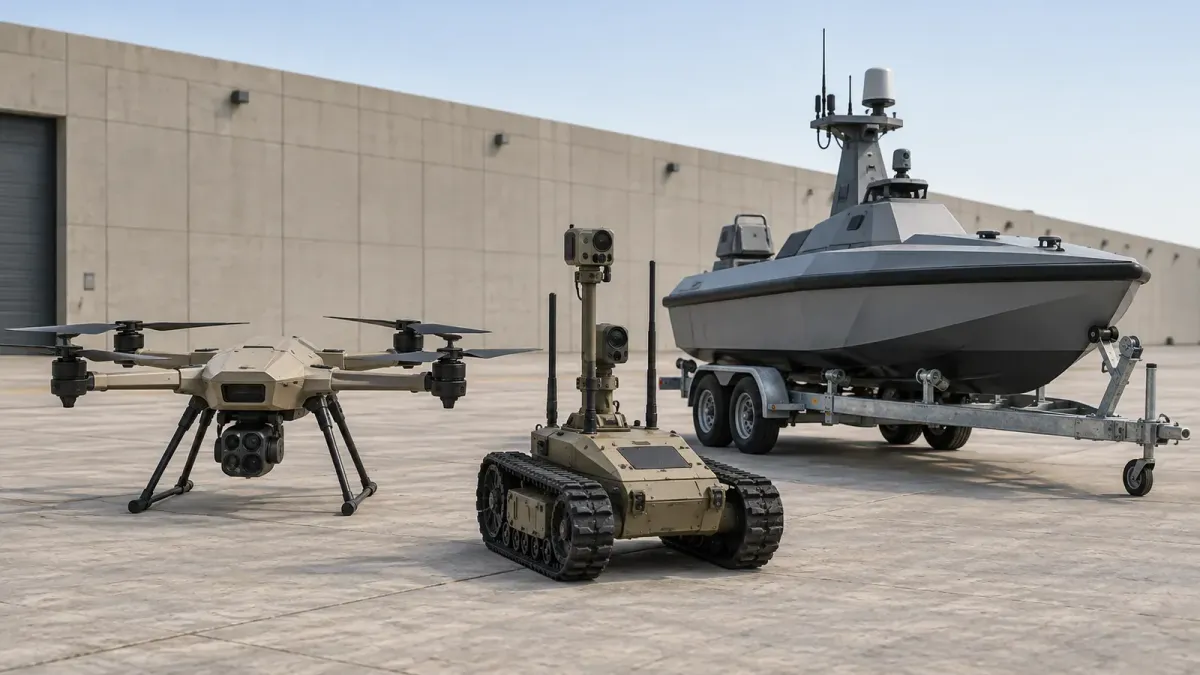
Founded in 2024 by veterans of the Global War on Terrorism, NODA AI is addressing a fragmentation problem that predates the current autonomous systems boom. Drones, ground vehicles, underwater sensors, and satellite assets have proliferated faster than the software to coordinate them. Most operate in isolated stacks, unable to share tasking, deconflict airspace, or combine their sensor feeds in real time. The result is autonomous systems that are individually capable but collectively inefficient — or worse, actively interfering with each other.
What an Orchestration Layer Actually Does
NODA AI’s platform sits above individual platform control systems as a cognitive coordination layer. Rather than replacing the autopilot on a drone or the control software on a ground vehicle, it manages decision-making across all of them simultaneously — allocating missions, routing assets, and synthesizing sensor data from multiple platforms into a single operational picture.
CEO Philong Duong describes the goal as building “the brains” for autonomous defense systems. The practical effect is that an operator managing a multi-domain mission interacts with the orchestration layer rather than individual platforms. The system handles the machine coordination; the human handles the mission.
That architecture matters for how militaries actually want to deploy autonomy. The political and legal constraints around fully autonomous lethal decisions aren’t going away. An orchestration platform that keeps humans in the decision loop while removing the cognitive burden of managing individual assets is a more deployable product than one that pitches full autonomy.
Why Bessemer and Booz Allen Together Is a Signal
Bessemer is a generalist tier-one VC firm that doesn’t lead defense rounds casually. Its participation alongside Booz Allen Ventures — the investment arm of one of the largest US defense contractors — suggests NODA AI has credibility on both the technical and procurement sides simultaneously. Booz Allen’s involvement in particular implies the company has already navigated enough of the government contracting environment to be taken seriously as a deployment partner, not just a research project.
The DoW selection for a named multi-domain collaborative autonomy program confirms that. A two-year-old company winning that kind of contract requires either exceptional technology, the right relationships, or both.
NODA AI says it is targeting integration with more than 30 existing platforms and expansion into additional defense and intelligence programs. With US and UK defense customers already live, the Series A is effectively funding scale rather than validation. The orchestration problem it’s solving only gets harder as the number of autonomous systems in the field grows — and every major military is adding more.