
The US Army awarded AeroVironment $464.8 million on 2 September to build LOCUST X3 laser weapons, which the company and the Army both describe as the first production contract for a high-energy laser in American history.
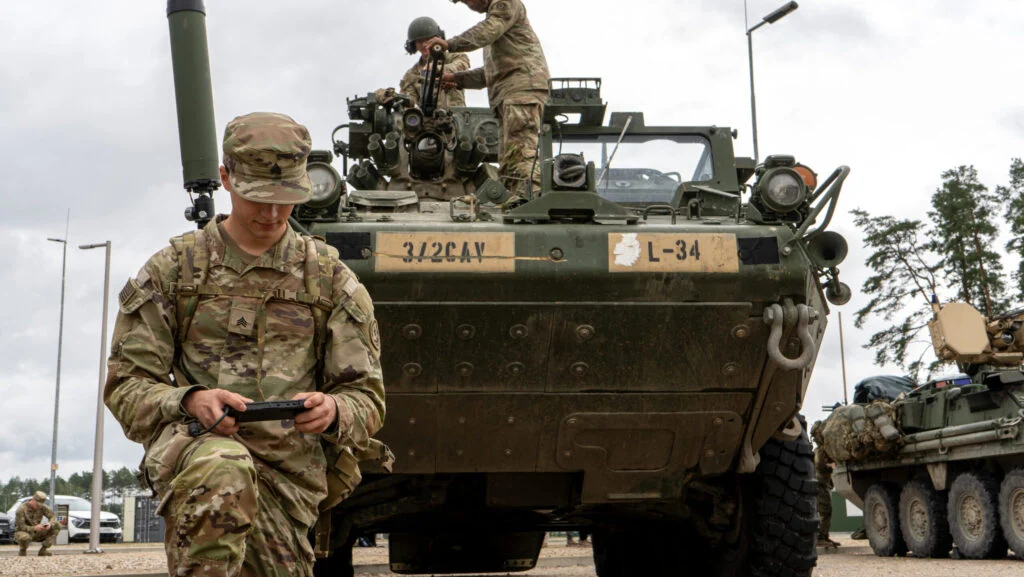
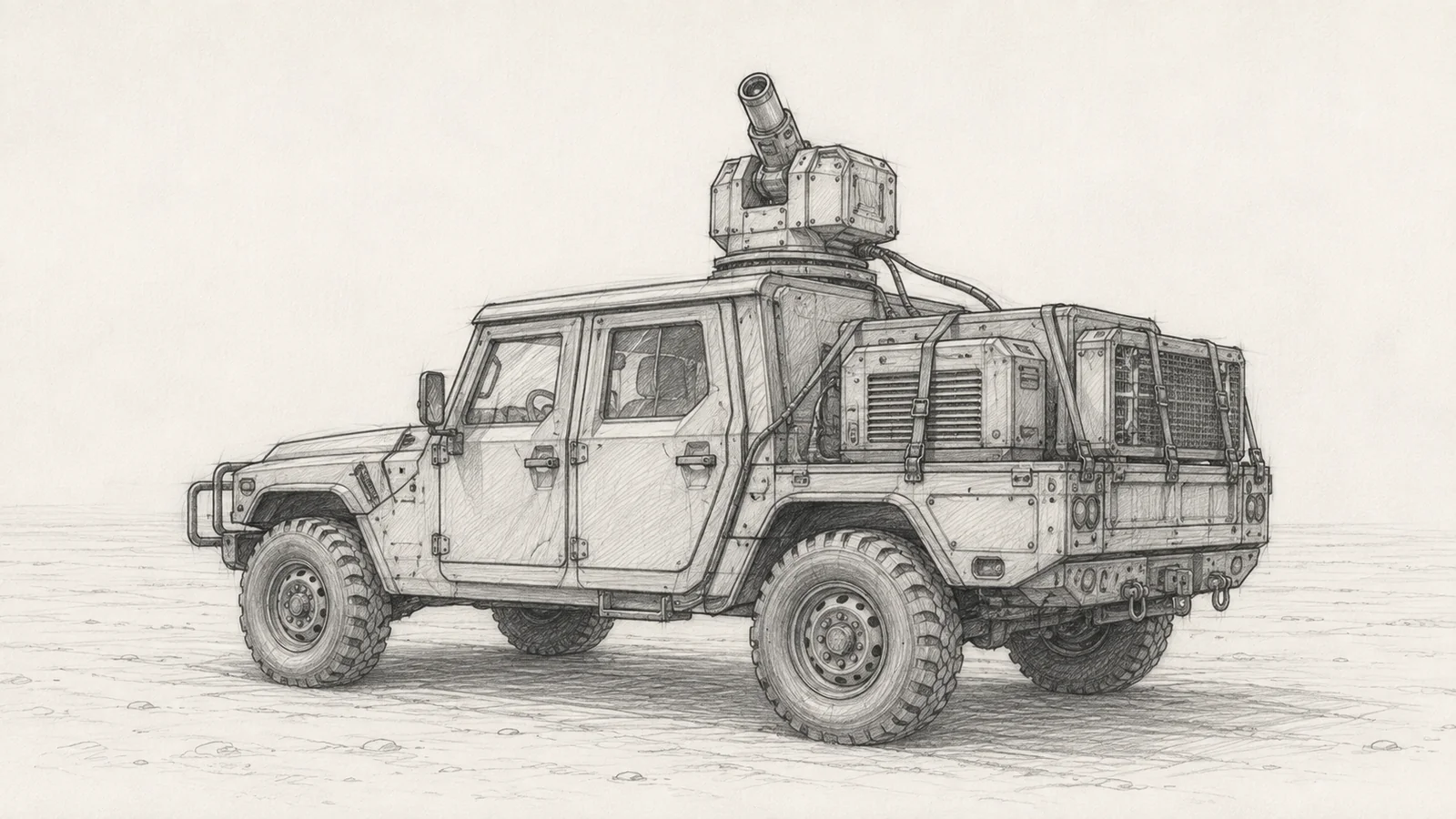
The money comes from the Army’s Portfolio Acquisition Executive for Fires, under the Enduring-High Energy Laser programme, on an other transaction agreement. AeroVironment says it will deliver dozens of systems over the next few years. LOCUST X3 is a 30-kilowatt laser built to defeat Group 1 through Group 3 drones — everything from a hobby quadcopter up to an aircraft of 1,320 pounds — and the company calls it platform-agnostic, fitting the Joint Light Tactical Vehicle and the Infantry Squad Vehicle, with palletised versions planned.
“Directed energy weapons have been considered S&T projects, and I’m proud that the Army is moving at speed and scale to deliver this first time capability,” said Brent Ingraham, assistant secretary of the Army for acquisition, logistics and technology. Wahid Nawabi, AeroVironment’s chairman and chief executive, called the award “a defining moment not only for AV, but for the future of modern defense.”
The Army wrote this down in May
The Army’s fiscal 2027 budget request, published in May, put $66 million against directed energy in its small counter-drone line and asked to buy two E-HEL systems at $17.4 million apiece. The same request said the Army intended to produce and rapidly field up to 24 more over the following five and a half years.
Twenty-six systems at $17.4 million each is $452 million. The contract signed on 2 September is $464.8 million and also covers training and system support. FlightBrief’s reading is that this is not a programme leaping from the laboratory to the field — it is the vehicle for a purchase the Army had already costed and written into its budget justification four months ago. What changed on 2 September is that a company now has an order, which is the part a prototype line never gets.
Two Army counter-drone awards, nine weeks apart, not the same thing
AeroVironment has now taken two Army counter-drone awards of roughly half a billion dollars each since the start of July, and the headlines make them easy to confuse.
On 2 July, Army Contracting Command at Detroit Arsenal awarded the company $500 million to procure commercial counter-drone technology, with locations and funding to be determined with each order and no public detail on which products it covers. On 2 September, the Portfolio Acquisition Executive for Fires awarded $464.8 million for E-HEL. Different offices, different contracting vehicles, different equipment. AeroVironment’s own headline for the September award describes it as “nearly $500 million”, which is a defensible rounding of $464.8 million and lands within $35 million of the July figure.
The cost argument and the physics
A laser’s magazine is electrical power, so a shot costs single-digit dollars. Raytheon’s Coyote, the Army’s main missile interceptor for small drones, costs $100,000 to $200,000 per round in its Block 2 form. That gap is the entire argument for directed energy, and it has been the argument for a decade without producing a fielded weapon.
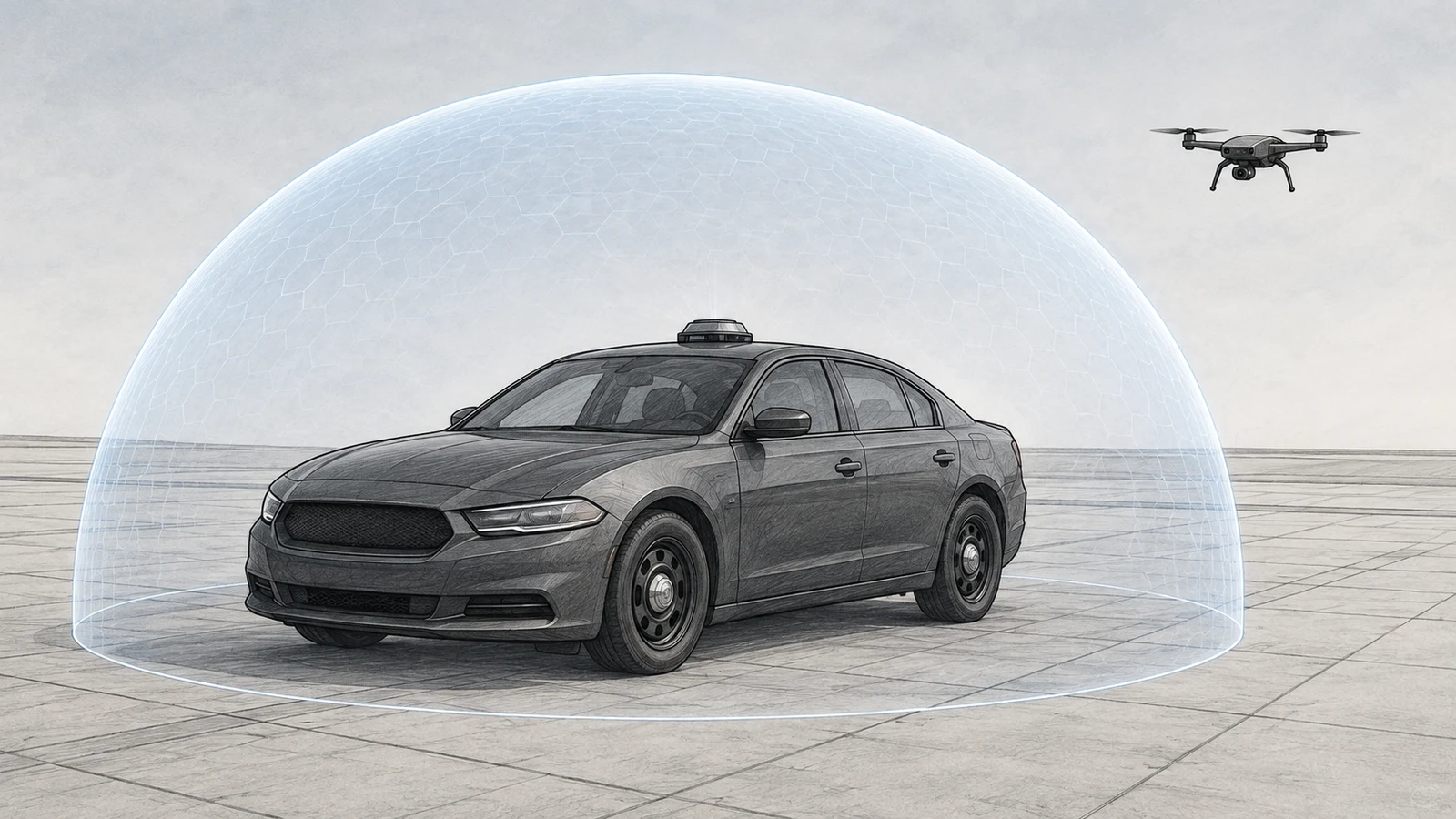
The physics has not moved. Weather, dust and atmospheric turbulence still degrade a beam, and burning through a target takes a dwell of seconds, which is why a laser handles one drone at a time while a high-power microwave handles a swarm. LOCUST X3 is meant to sit in the innermost layer of a defence that still needs radars, jammers and interceptors around it; DefenseScoop reports it will tie into Anduril’s Lattice software and the Army’s Next Generation Command and Control prototype.
A 20-kilowatt LOCUST is already deployed near El Paso, Texas. John Garrity, AeroVironment’s vice president for directed energy systems, would not say where the X3 systems will go. The Army has not named the formations that will receive them, or a date.