

Counter-UAS
Counter-Drone Technology: How Militaries Defeat UAVs
Radar, jamming, lasers, interceptors and drone-on-drone — how counter-UAS works, who leads it, and who is legally allowed to shoot a drone down.
Updated
39 news articles on Counter-UAS ↓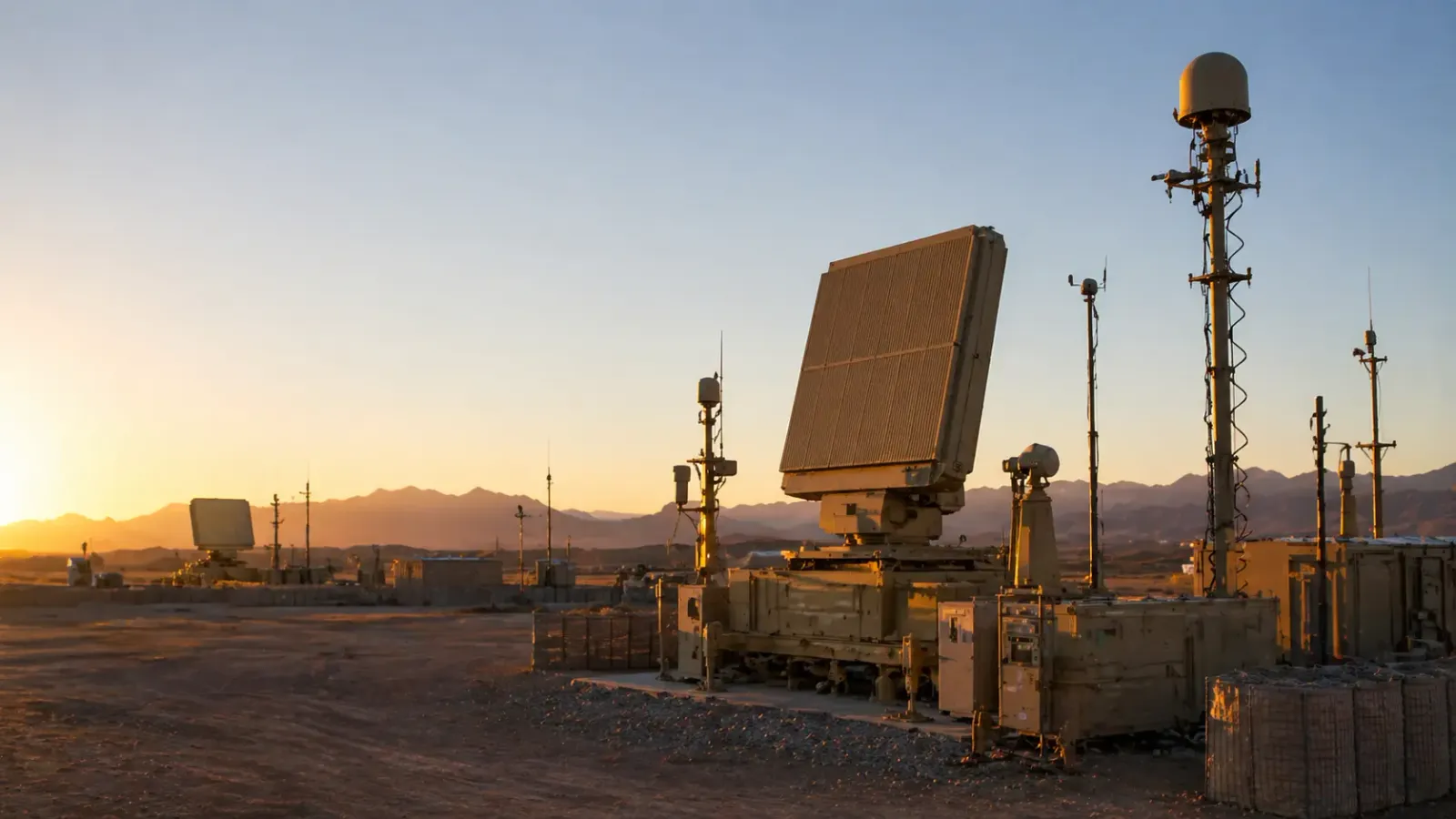
Every company on the DHS counter-drone contract
Twelve firms hold the five-year, $1.5 billion DHS counter-UAS contract. Which track each sits on, and what that track buys.
Checked· Latest addition: Anduril,
- Covers
- Every company holding a place on either track of the DHS counter-drone contract, from federal award records.
- Leaves out
- Orders and revenue: a place on the contract is permission to sell to DHS, not a sale.
Spotted an error? Email [email protected] with the row and the document that shows it.
12 of 12
Notes
- Dedrone Defense Bought by Axon in 2024. One of the two counter-drone businesses now owned by a company that already sells to most American police departments, the other being D-Fend. Holds the first orders on the contract: three, worth $6.8 million, from TSA and FEMA on 28 to 30 September 2026, one of them for a system built on D-Fend’s EnforceAir2.
- D-Fend Solutions Motorola Solutions closed its $1.5 billion acquisition on 20 August 2026, three weeks after this contract opened. EnforceAir takes over an intruding drone’s control link and lands it rather than jamming or shooting it, which is what makes it usable over a crowd.
- Leidos One of three companies holding positions on both the hardware and the managed-services track, with BAE Systems and, since 15 September 2026, Anduril.
- BAE Systems On both tracks, through its US subsidiary BAE Systems Technology Solutions & Services.
- Fortem Technologies Radar detection and the DroneHunter interceptor, which captures a target in a net rather than destroying it.
- CACI International Established federal counter-UAS integrator.
- EMS Defense Technologies The least prominent name on either track and the only Track 1 awardee with no FlightBrief profile.
- Booz Allen Hamilton Services rather than equipment: running the capability for a DHS component instead of selling it a box.
- General Dynamics Information Technology The General Dynamics IT services arm, not the land systems or shipbuilding businesses.
- Parsons Federal infrastructure and defense services contractor.
- Anduril Placed on the services track only in July. Anduril protested, GAO dismissed the protest on 4 September after DHS agreed to re-evaluate, and DHS added Anduril to the hardware track on 15 September 2026. Official record
- Astrion Engineering and technical services contractor.
Where this comes from. Assembled by FlightBrief from the federal award records on USAspending, one per company per track, and contemporaneous reporting, and carried in our coverage of the Motorola acquisition. The contract runs five years to July 2031 out of the DHS Science and Technology Directorate. Track 1 is worth about $1.01 billion, per Fortem, and covers hardware and software; Track 2 was reported at roughly $489 million and covers managed services. Leidos, BAE Systems and, since 15 September 2026, Anduril hold positions on both, which is why eight and seven entries make twelve companies. An IDIQ is a ceiling and an eligibility list, not an order: a place on it means a DHS component may buy without running its own competition, and no company here is guaranteed any revenue.
Sources
- USAspending, TSA task order 70T05026F6116N004 to Dedrone Defense, the first order on the contract, 28 September 2026
- Inside Unmanned Systems, DHS awards $1.5 billion counter-UAS contract to 12 companies, August 2026
- Washington Technology, 12 firms land spots on DHS’s $1.5 billion counter-unmanned aircraft contract, August 2026
- USAspending, award records 70RDA226D00000001 to 70RDA226D00000015 (Anduril’s Track 1 award, the fifteenth, shown), 15 September 2026
- Fortem Technologies, selected as prime contractor on the DHS counter-drone IDIQ, giving Track 1 at $1.011 billion, 4 August 2026
- Motorola Solutions, completion of the D-Fend Solutions acquisition, 20 August 2026
Cite or reuse this table
FlightBrief, “Every company on the DHS counter-drone contract”, checked Oct 7, 2026, https://flightbrief.news/topics/counter-uas/#dataset-dhs-cuas-idiq-awardees
Free to reuse, including commercially, under CC BY 4.0. Credit FlightBrief and link to this page.
US state counter-drone laws and FEMA counter-drone grants
Seventeen states and the National Capital Region: nine states with a counter-drone law of their own (eleven acts, 2025–2026) and twelve recipients of FEMA’s first $250 million in counter-UAS grants.
Checked· Latest addition: Missouri,
- Covers
- Enacted state laws that let state or local agencies detect, track or disable drones, and FEMA’s first-round counter-drone grants.
- Leaves out
- Laws that only create offences, and bills that died, were vetoed or are pending.
Spotted an error? Email [email protected] with the row and the document that shows it.
18 of 18
| State | Counter-drone law | In force | What it allows | Tie to federal certification | FEMA grant, round one | Status |
|---|---|---|---|---|---|---|
| Alabama1 | Act 2026-187 (HB 274), prisons; Act 2026-270 (SB 231), Capitol area | 1 June 2026 (HB 274); 17 March 2026 (SB 231) | The Department of Corrections over prisons, and the state police (ALEA) around the Capitol, Governor’s Mansion and courts, may jam, hack or capture drones | Jamming only as far as federal law and FCC rules allow; no certification requirement | None | Law only |
| Arizona2 | Laws 2025, Ch. 89 (HB 2733) | 26 September 2025 | Shields peace officers from civil liability for downing a drone within 15 miles of the border when they suspect organised crime, drug offences or terrorism | None | None | Law only |
| California3 | None enacted | — | — | — | $34,591,628 | Grant only |
| Florida4 | None enacted | — | — | — | $23,636,511 | Grant only |
| Georgia5 | Act 388 (HB 1230), prisons and jails | 1 July 2026 | Any law enforcement officer may detect, track, intercept, jam, hack or capture a drone used to commit a crime over a prison, jail or detention centre | None beyond the drone breaking state or federal law | $20,284,936 | Law and grant |
| Idaho6 | Session Laws 2026, Ch. 233 (HB 522), Idaho Code § 20-251 | 1 July 2026 | The Department of Correction and any law enforcement officer may jam, intercept or disable drones flown below 400 feet inside a state prison’s perimeter | “As long as it does not conflict with federal law”; no certification requirement | None | Law only |
| Indiana7 | Public Law 72-2026 (SEA 227), IC 10-22 | 1 July 2026, but applies only after a governor’s notice naming the federal authority | State Police and the local agencies it designates may detect, track, disrupt, seize control of or disable drones, as far as federal law allows | Built on it: only federally certified staff and systems on the federal counter-UAS technology list | None | Law only |
| Kansas8 | None enacted | — | — | — | $5,341,058 | Grant only |
| Louisiana9 | Act 170 of 2025 (HB 261); Act 854 of 2026 (HB 940) | 1 August 2025 (Act 170); 8 June 2026 (Act 854) | Any law enforcement officer may detect, track, jam, hack or capture a drone used “in a nefarious manner”; the 2026 act adds a state counter-drone task force, training rules and an equipment inventory | Act 854: every mitigation must follow federal law; no certification requirement by name | None | Law only |
| Massachusetts10 | None enacted | — | — | — | $21,891,527 | Grant only |
| Missouri11 | HBs 2637 & 3155 (2026), §§ 589.900–589.902 RSMo | 12 June 2026 (emergency clause) | Federally certified peace officers may detect, track, warn, take control of, seize or destroy a drone posing a credible threat to people, venues, critical infrastructure or prisons | Requires it: only officers certified under federal law, as far as the Homeland Security Act allows | $14,240,568 | Law and grant |
| National Capital Region (DC, Maryland, Virginia)12 | None enacted | — | — | — | $28,266,328 | Grant only |
| New Jersey13 | None enacted | — | — | — | $21,764,005 | Grant only |
| New York14 | Laws of 2026, Ch. 55, Part D (Executive Law § 236) | 25 August 2026 | Police and peace officers may detect, track and disable drones: non-kinetic means on reasonable suspicion, kinetic means on probable cause and only when non-kinetic means fail | State Police training on top of federal certification; federally approved technology for kinetic measures | $17,731,725 | Law and grant |
| Pennsylvania15 | None enacted | — | — | — | $12,470,777 | Grant only |
| South Dakota16 | HB 1280 (2026), SDCL ch. 50-15 | 1 July 2026 | Law enforcement may use “mitigation techniques and countermeasures” against drones over prisons, jails, juvenile detention and military facilities | None in the text | None | Law only |
| Texas17 | None enacted | — | — | — | $30,276,431 | Grant only |
| Washington18 | None enacted | — | — | — | $19,504,506 | Grant only |
| Nothing matches that search. | ||||||
Notes
- Alabama Two acts in one session. SB 231 protects 500 feet horizontally and 250 feet vertically around each Capitol area and lets the ALEA Secretary designate more sites. The legislature’s system records both as enacted (5 and 17 March 2026); it does not show the signature date itself. Source
- Arizona Contested as a row: the law gives officers immunity from the drone owner’s claims but does not itself authorise them to bring drones down, and it leaves federal law untouched. Approved by the governor on 18 April 2025. Official record
- California The largest first-round award. Assembly Bill 2043, a counter-drone bill, died in 2026. The state has published no list of local sub-awards; seven appear in the federal sub-award records. Official record
- Florida Florida’s 2025 drone law (Ch. 2025-29) creates offences but no counter-drone power. On 17 April 2026 the Legislative Budget Commission approved the Florida Department of Law Enforcement’s spending authority for a counter-UAS sub-award. Official record
- Georgia Signed 5 May 2026. The act also makes flying over a place of incarceration a felony. No local sub-awards of the FEMA grant had been published or reported by 10 October 2026. Official record
- Idaho Signed 31 March 2026. Flying in that airspace becomes a misdemeanour with a fine of up to $1,000, and prisons must post “Drone No Fly Zone” signs. Official record
- Indiana Signed 4 March 2026. The State Police must apply for federal authorisation and run the statewide programme; Indianapolis may be named a pilot site. No notice in the Indiana Register had been confirmed by 10 October 2026. Official record
- Kansas The smallest first-round award. Neither the state nor the federal sub-award records show how it was divided by 10 October 2026. Official record
- Louisiana The 2025 act predates SAFER SKIES. The 2026 act, signed 8 June, exempts the task force’s meetings, annual report and most of its policies from the open-meetings and public-records laws, and presumes officers acting in good faith acted lawfully. Official record
- Massachusetts The state said on 14 January 2026 that $21,234,781 goes to Boston Police, Foxborough Police and the State Police. Official record
- Missouri Approved by the governor on 12 June 2026, in a public safety omnibus that also makes using a drone to deliver an explosive a Class B felony. Seized drones are subject to forfeiture. Official record
- National Capital Region (DC, Maryland, Virginia) Awarded to the District of Columbia on behalf of the region. The only sub-award reported, $23,355,000, went to the Metropolitan Washington Council of Governments. Official record
- New Jersey Bill A2313 was not enacted. The state’s homeland security office says it will run the FY2027 round as soon as FEMA issues the notice. Official record
- New York Signed 27 May 2026 in the budget. It also sets up a “New York State Blue List” of approved vendors: once published, state and local agencies may buy drones and counter-drone systems only from vendors on it. The governor named four sub-awards on 10 February 2026: State Police, NYPD, MTA and Port Authority. Official record
- Pennsylvania Only one local sub-award, to Philadelphia, has been reported to the federal sub-award system, covering about 55% of the grant. Official record
- South Dakota Signed 12 March 2026. The act does not define the techniques and leaves them to Department of Public Safety rules; flying over those facilities becomes a Class 6 felony. Official record
- Texas The Department of Public Safety announced its own share, about $3.2 million, for a radio-frequency mitigation system run by FBI-trained staff. Houston and Dallas sub-awards appear in the federal records. Official record
- Washington House Bill 2462, a counter-drone bill, died in 2026. Four local agencies appear in the federal sub-award records; the state has published no list. Official record
Where this comes from. Assembled by FlightBrief from the enacted or enrolled text of each state act on the legislature’s own site, with the governor’s action as the legislature records it, and from FEMA’s award table for the Counter-Unmanned Aircraft Systems Grant Program (Assistance Listing 97.161), read on the verification date. A law is a row when it is enacted and gives state or local agencies power to detect, track or disable drones, or sets up a counter-drone programme; laws that only create offences for flying near prisons or events, and bills that died, were vetoed or are pending, are not rows (the dossier names them). Grant amounts are the first round, awarded 30 December 2025 to the 11 FIFA World Cup host states and the National Capital Region; the FY2027 round of $250 million for all 56 states and territories had no published notice on the verification date. A state law does not replace federal law: under SAFER SKIES, mitigation still needs federal certification and training, and several state acts say so. In-force dates for South Dakota and Georgia are those states’ default effective dates, not dates the acts set.
Sources
- FEMA, Counter-Unmanned Aircraft Systems Grant Program (awards table)
- FEMA, FY2026 C-UAS notice of funding opportunity
- FEMA, award announcement, 30 December 2025
- State legislatures, enacted texts, linked from each row
- USAspending.gov, federal sub-award reports
Cite or reuse this table
FlightBrief, “US state counter-drone laws and FEMA counter-drone grants”, checked Oct 10, 2026, https://flightbrief.news/topics/counter-uas/#dataset-state-counter-drone-laws
Free to reuse, including commercially, under CC BY 4.0. Credit FlightBrief and link to this page.
Interceptor drones in service, on order or cleared for sale
Sixteen systems built to destroy other drones, with the maker’s own top speed where one is published and the ministry, contract or sale notice behind each.
Checked· Latest addition: SkyFall interceptor drones (model not named),
- Covers
- Interceptor drones a government has fielded, ordered or been notified a sale of, or that the maker says units use, named in a document from 2025 or later.
- Leaves out
- Prototypes, demonstrations and products with no order, and unit prices, which no source states.
Spotted an error? Email [email protected] with the row and the document that shows it.
16 of 16
| System | Maker | Country | Type | Stated top speed | Status | Notable buyer or order |
|---|---|---|---|---|---|---|
| Octopus1 | Ukrainian design, licensed to UK industry | Ukraine; United Kingdom | Not published | Not published | In service | Ukraine and the UK signed a licence agreement for UK production on 27 November 2025 |
| Shvidun2 | Not named by the Ministry | Ukraine | Composite airframe, about 8 kg, wingspan nearly 2 m | Above 250 km/h (Ministry) | In service | Codified and authorised for use by Ukraine’s armed forces; the Ministry’s page of 31 March 2026 says the first systems are operational |
| LITAVR3 | F-Drones | Ukraine | Interceptor with a secondary ground-strike role; day and thermal cameras | 350 km/h (Ministry) | In service | Codified in summer 2025; serial production and deliveries to the military began in autumn 2025 (Ministry of Defence, 8 June 2026) |
| Sting4 | Wild Hornets | Ukraine | Not published | Not published | In service | No government order published; the maker’s site names Ukrainian brigades and battalions it supplies |
| SkyFall interceptor drones (model not named)5 | SkyFall | Ukraine | Not published | Not published | Ordered | Japan’s Ministry of Defense has signed a contract to buy SkyFall interceptor drones, Defence Minister Shinjiro Koizumi said on 9 October 2026 |
| STRILA6 | Quantum Systems, with WIY Drones | Germany; Ukraine | Electric, propeller-driven; 5.75 kg maximum take-off weight | 415 km/h (maker brochure) | Ordered | Quantum Systems said on 23 March 2026 it was tasked to provide 15,000 interceptors to Ukraine’s National Guard |
| TYTAN interceptor drones7 | TYTAN Technologies | Germany | Medium-range, for NATO Class I and II drone threats | Not published | Ordered | Germany’s procurement office (BAAINBw) commissioned TYTAN to supply AI-based command and control and effector systems to protect military installations |
| Skyhammer8 | Cambridge Aerospacecontested | United Kingdom | Called an “interceptor missile” by the UK government; propulsion not stated | 700 km/h (UK government) | Ordered | UK Ministry of Defence, multi-million-pound contract for the UK Armed Forces and Gulf partners, announced 10 April 2026 |
| Hornet Block 29 | Destinus | Netherlands | Canister-launched with rocket booster, folding wings, electric cruise | Not published | Ordered | Netherlands Ministry of Defence (COMMIT): concept development and evaluation contract with Royal Netherlands Navy warships, due to finish in Q2 2027 (announced August 2026) |
| BLAZE10 | Origin Robotics | Latvia | Autonomous interceptor with a STANAG-compliant warhead module | Not published | Ordered | Latvia, Belgium and Estonia; deliveries began in January 2026 (Latvia’s investment agency, 6 February 2026) |
| Merops (AS3)11 | Perennial Autonomy | United States | Not published | Not published | Ordered | JIATF-401 three-year contract with a $500 million ceiling covering Merops, Bumblebee and Hornet, announced 19 May 2026 |
| Bumblebee V212 | Perennial Autonomy | United States | FPV multirotor that collides with its target | Not published | Ordered | JIATF-401, $5.2 million agreement awarded 30 January 2026; deliveries from March |
| DroneHunter F70013 | Fortem Technologies | United States | Reusable, captures drones in a tethered net | Not published | Ordered | JIATF-401: two F700 systems, the first Replicator 2 purchase, announced 11 January 2026 with delivery expected by April |
| Coyote Block 214 | Raytheoncontested | United States | Expendable, rail-launched, boost rocket motor and turbine engine, kinetic warhead | Not published | Ordered | US Army indefinite-delivery contract of $5,039,629,681 for Coyote launchers, kinetic and non-kinetic interceptors and Ku-band radars, announced 29 September 2025, running to 2033; funding is set with each order |
| Roadrunner-M15 | Anduril | United States | Twin-jet, vertical take-off and landing, high-explosive interceptor, subsonic | Subsonic (notice) | Sale notified | Kuwait: possible sale notified to Congress on 5 June 2026, in a package estimated at $1.98 billion |
| Anvil-Kinetic16 | Anduril | United States | Drone-on-drone kinetic interceptor with millimetre-wave radar guidance | Not published | Sale notified | Kuwait: possible sale notified to Congress on 5 June 2026, in the same $1.98 billion package |
| Nothing matches that search. | ||||||
Notes
- Octopus Ukraine’s defence minister said it had proved effective against Shahed drones. The Ministry’s page gives “several thousand units per month” as the plan and does not name the UK producer. On 26 February 2026 the UK government said British-built Octopus interceptors were already in production, aiming for thousands a month. Official record
- Shvidun The Ministry states a range over 70 km, a ceiling up to 6 km and endurance over two hours, and says forces had destroyed about 100 enemy drones with it. It publishes no order number or quantity. Official record
- LITAVR The Ministry gives an operational range of 40 km and a ceiling of 9 km, and says it is listed in the Brave1 market catalogue where units can request it. No quantity is published. Official record
- Sting The maker’s site lists Sting among its products and reports that its drones have destroyed 6,724 Shahed and Gerbera drones, a tally for all its drones, not Sting alone. It gives no speed; press figures from videos and interviews differ and are not used here. Source
- SkyFall interceptor drones (model not named) Koizumi gave no model, quantity, value or delivery date and said the ministry was working toward early delivery. SkyFall confirmed the contract to Ukrainska Pravda without details. Its interceptors are the P1-SUN family; it has no official website, so no maker speed is shown. Official record
- STRILA The brochure gives a 17 km operating radius, 15 minutes’ flight with payload and a cruising speed of 150–200 km/h. On 4 October 2026 Quantum Systems said Chancellor Merz had announced German financing for several tens of thousands of its interceptors for Ukraine; that release does not name STRILA. Source
- TYTAN interceptor drones From the NATO Innovation Fund’s release on TYTAN’s €30 million Series A, 24 February 2026, which carries TYTAN’s own statements. It gives no contract value, date or quantity, and says only that the drones are fast enough to intercept Shaheds and that TYTAN has orders from Ukraine. Source
- Skyhammer Contested as a row: the Ministry calls it an interceptor missile, and it is listed because it is sold against Shahed-type drones like the other rows. The release gives a range of 30 km and says the first tranche would be delivered in May, subject to contract. No quantity or value is published. Official record
- Hornet Block 2 A development programme, not a series order. Destinus’s product page gives a Block 2 interception range of 50–75 km and a 3 kg payload, and says the earlier Hornet Block 1 is in serial production. The contract value is not published. Source
- BLAZE The agency’s page, built on Origin Robotics’s statements, says Latvia announced its order first in early October 2025 and that quantities and roles are confidential. Belgium’s defence ministry announced a €50 million counter-drone allocation in November; the page does not say how much of it is for BLAZE. Official record
- Merops (AS3) The Army’s own account says it bought 50 systems for a Poland–Romania exercise and rapidly deployed “thousands” to the Middle East. The ceiling is not money spent, and Perennial has not stated volumes under it. Source
- Bumblebee V2 The Army’s article says the Army’s Global Response Force will assess it and calls it fully NDAA compliant. It states no quantity. Official record
- DroneHunter F700 Two systems, a first purchase rather than a fleet. Fortem says it began delivering the next-generation DroneHunter 5.0 on 20 January 2026; the announcement names the F700, so the model delivered may differ. Official record
- Coyote Block 2 Contested as a row: Raytheon calls Coyote a “missile variant”. The contract total covers the radars and launchers as well as the interceptors, so no unit price follows from it. Raytheon states no speed or range for Block 2. Official record
- Roadrunner-M The notice is a proposal, not a signed contract, and the $1.98 billion also covers sentry towers, command software, electronic warfare and training. The notice describes Roadrunner as built to defeat mid-sized (Group 3) aircraft; it was published in the Federal Register on 22 July 2026 as Transmittal 26-74. Official record
- Anvil-Kinetic The notice says it uses speed and a hardened fuselage to defeat small (Group 1) drones at lower cost per engagement. Official record
Where this comes from. Assembled by FlightBrief from ministry pages, contract and sale notices, buyers’ releases and the makers’ own pages and brochures, read on the verification date. A system is a row when a document dated 2025 or later names it as an interceptor for uncrewed aircraft and shows that a government has fielded, ordered or been notified a sale of it, or that its maker says units are using it. Prototypes, demonstrations and products announced without an order are not rows (the dossier names them). Top speed is the maker’s or ministry’s stated maximum and is left as "Not published" where no such page exists; press figures from videos and interviews are not used. Unit prices are not shown: none of the sources states one. “Ordered” means a contract or order is announced, not that units have been delivered; a framework ceiling such as Perennial’s $500 million is the most the buyer may spend, not what it has spent; and a notified foreign sale is a proposal to Congress, not a contract. Two rows are marked contested because their buyer or maker calls the system a missile.
Sources
- Ukrainian Ministry of Defence, Shvidun interceptor, 31 March 2026
- Ukrainian Ministry of Defence, more than 25 interceptor models authorised, 21 August 2025
- Ukrainian Ministry of Defence, F-Drones LITAVR, 8 June 2026
- Cabinet of Ministers of Ukraine, Octopus licensing agreement with the UK, 27 November 2025
- UK government, new drone factory opens in Suffolk (Octopus production), 26 February 2026
- UK Ministry of Defence, Cambridge Aerospace Skyhammer, 10 April 2026
- Quantum Systems, interceptor drones for Ukraine (STRILA), 23 March 2026
- Quantum Systems, STRILA brochure (WIY Drones)
- Quantum Systems, Merz announces interceptor-drone package, 4 October 2026
- NATO Innovation Fund, TYTAN Series A, 24 February 2026
- Destinus, Hornet B2 naval counter-UAS programme
- Destinus, Hornet product page
- Investment and Development Agency of Latvia, BLAZE deliveries, 6 February 2026
- Perennial Autonomy, $500 million IDIQ release, 19 May 2026
- US Army, JIATF-401 Bumblebee V2 agreement
- US Army, G-TEAD counter-drone capability for NATO’s eastern flank (Merops)
- US Army, JIATF-401 first Replicator 2 purchase (DroneHunter F700), 11 January 2026
- RTX Raytheon, Coyote counter-UAS page
- Federal Register, arms sales notification 26-74, Kuwait counter-UAS platforms, 22 July 2026
- Wild Hornets, maker site
- Japan Ministry of Defense, Defence Minister’s press conference (SkyFall contract), 9 October 2026
Cite or reuse this table
FlightBrief, “Interceptor drones in service, on order or cleared for sale”, checked Oct 11, 2026, https://flightbrief.news/topics/counter-uas/#dataset-interceptor-drones
Free to reuse, including commercially, under CC BY 4.0. Credit FlightBrief and link to this page.
Guide
Governments announced more than $53 billion in counter-drone contracts in the first eight months of 2026. For comparison, the analyst forecasts this guide used to quote had the entire global market reaching $20 billion by 2030. The market research was not slightly behind. It was describing a different industry.
Two other things changed the picture this year. On 2 September the US Army awarded AeroVironment $464.8 million for LOCUST X3 laser weapons — the first production contract for a high-energy laser in US history, which moves directed energy out of the demonstration phase it has occupied for a decade. And in July, a new rule gave American state and local police the legal authority to bring a drone down themselves, which until then almost nobody outside a short federal list could do.
The technology stack has not changed much. Detect, classify, track, identify, decide, defeat, assess. What changed is money, legal authority, and the fact that some of this is now being bought in production quantities rather than tested.
Key facts
- Counter-UAS is the detection, tracking, identification and defeat of hostile drones. The stack is the same everywhere: radar and radio-frequency sensing to find them, cameras to confirm, then jamming, lasers, guns, missiles or interceptor drones to stop them.
- Governments announced more than $53 billion in counter-drone contracts in the first eight months of 2026, by Unmanned Airspace’s count; the analyst forecasts quoted before then had the whole market at $20 billion by 2030.
- The US Army awarded AeroVironment $464.8 million for LOCUST X3 laser weapons on 2 September 2026, the first production contract for a high-energy laser in the United States.
- Since 1 July 2026 the SAFER SKIES rule has let certified US state and local police bring a drone down themselves; before it, that authority sat with a short list of federal agencies.
- Twelve firms hold the five-year, $1.5 billion DHS counter-UAS contract, split into a hardware track of about $1.01 billion and a services track of about $489 million; the table on this page lists them.
- Ukraine’s interceptor drones, at roughly $1,000–2,000 each, cost less than the Shahed-type drones they stop; Ukrainian forces intercepted 7,674 Russian drones in March 2026.
What Is Counter-UAS Technology?
Counter-UAS is the business of detecting, tracking, identifying and defeating unmanned aircraft that threaten military forces, critical infrastructure or civilians. It barely existed as an organised defense sector before 2016.
The US Army alone requested $994 million for small counter-UAS procurement in FY2027, against $596 million enacted for FY2026. The comparison is worth reading carefully: the whole FY2027 request is discretionary, while FY2026’s total split into $336 million discretionary and $260 million in mandatory reconciliation spending. Measured discretionary to discretionary it is a 195% rise; measured against the total the Army actually received, it is closer to double. Either way the direction is the same, and the Army anticipates asking for $1.4 billion in FY2028. Across the whole department, the FY2027 request earmarks roughly $20 billion for counter-drone work inside a $75 billion drone and counter-drone total. JIATF 401, the Joint Interagency Task Force set up in 2025 to coordinate counter-drone efforts across government, asked for $580.3 million in research and development against $6.5 million the year before.
Inside that request, $414 million goes to operational counter-UAS — batteries, expeditionary platforms, mobile sensors — $165 million to fixed-site defense, and $132 million to effectors, including 24 units of the Next Generation Counter-UAS Missile that AeroVironment builds as Freedom Eagle-1. The directed-energy line is $66 million, modest against the rest and, as the laser section below shows, no longer the whole picture.
The core problem is arithmetic. A $500 FPV drone has destroyed tanks worth $2-5 million in Ukraine. A Coyote Block 2 interceptor costs somewhere around $100,000-$200,000 per shot. Fire a Patriot-class missile at a commercial-grade kamikaze drone and you lose the exchange by a factor in the thousands.
Every serious development in this field is an attempt to fix that ratio. Lasers do it by making the shot nearly free. High-power microwave does it by defeating many drones at once. Drone-on-drone does it by making the interceptor as cheap as the threat.
How Are Drones Detected?
Detection is the foundation. The dominant approach pairs radar with RF sensing and uses EO/IR cameras to confirm what the other sensors found. Acoustic adds a cheap passive layer in the right conditions.
Radar
Radar is still the primary detection method for small UAS. Raytheon’s KuRFS is the US Army’s main counter-UAS radar, paired with Coyote interceptors in LIDS, the Low, Slow, Small UAS Integrated Defeat System. It gives 360-degree coverage and detects Class 1 drones past 15 km. The Pentagon awarded Raytheon $5.04 billion in September 2025 for KuRFS radars, Coyote interceptors, launchers and support through 2033.
Robin Radar’s IRIS reaches 12 km against small drones including Shahed-class munitions, weighs 29 kg and works on the move. HENSOLDT’s Spexer 2000 3D radar serves with the Bundeswehr in the GUARDION field-camp protection system. Fortem’s TrueView R20 AESA radar runs under 7 kg at 38 watts and cues the DroneHunter interceptor.
RF and Signal Detection
RF detection identifies a drone by its control link, video downlink or Remote ID broadcast. Its real advantage is that it can geolocate the operator as well as the aircraft, when the controller is transmitting. Defeating the person is often more useful than defeating the airframe.
Dedrone’s RF-360 classifies roughly 600 drone models with direction-finding to 8 km in good conditions. Sentrycs takes the protocol-takeover route instead of brute-force jamming. DroneShield’s RfOne MkII does RF direction-finding to 8 km. Anduril’s Lattice pulls Pulsar electronic warfare sensors, Sentry radar towers and WISP infrared cameras into one fire-control picture.
Passive sensing has become its own procurement category. Hidden Level received a $100 million Other Transaction Authority award in July 2026 to scale passive RF sensing across Department of War customers — its systems listen rather than transmit, which matters for installations that do not want to advertise their own sensor emissions. The award is a contracting route rather than guaranteed revenue, and no detection ranges or deployment schedules were published with it.
RF detection has a hard limit. Autonomous drones, fiber-optic FPVs and pre-programmed one-way attack drones emit little or nothing. Against those, radar and acoustics carry the load.
Acoustic Detection
Passive acoustic arrays pick up propeller and motor signatures. They are cheap, passive and cannot be jammed, which makes them useful for cuing when other sensors are saturated.
Ukraine runs the largest operational acoustic network in the world: roughly 14,000 low-cost nodes under Sky Fortress, for less than $5 million in total, used to detect Shahed-type drones and cue sirens and higher-end intercept systems.
The limitations are real. Range is typically 300-500 metres in the field and falls away in wind above 5 m/s, rain, urban traffic and anywhere near artillery. The US Army issued a request for information in January 2026 for Group 1 and 2 acoustic detection that works on the move and feeds Tactical Assault Kit — treating acoustic as a soldier-level layer, not a primary sensor.
EO/IR and AI Sensor Fusion
EO/IR cameras are the identification layer: they confirm whether a radar or RF track is a drone, a bird, an airliner or a false positive. Controp’s SPEED-ER reaches 40 km for land-based surveillance.
Fusion platforms correlate radar, RF, acoustic and optical feeds to cut false alarms and automate the kill chain. Anduril’s Lattice was selected by JIATF 401 in March 2026 as the enterprise tactical command-and-control layer for US government counter-UAS, with a first task order of $87 million. Dedrone’s Tracker.AI runs at more than 955 sites globally. Ukraine’s Sky Map platform, built for Shahed detection, was deployed by US personnel at Prince Sultan Air Base in Saudi Arabia in April 2026.
How Does Electronic Warfare Counter Drones?
Electronic warfare defeats a drone by attacking its links rather than its airframe: jamming overpowers the control, video or navigation signal, and spoofing feeds it false positioning until it lands, hovers or flies home.
RF Jamming
Jamming overpowers the control link, video feed or navigation signal. What happens next depends on the drone’s firmware: hover, return to home, descend, or crash. Handheld systems reach 500 m to 2 km, vehicle-mounted beyond 5 km.
DroneShield’s DroneGun Mk4 weighs 3.2 kg and is fielded with several Western militaries; the DroneGun Tactical reaches 1-2 km. Dedrone’s Defender 2 is protocol-specific rather than broadband, which reduces collateral interference in crowded RF environments. Safran’s Skyjacker, tested on French Navy frigates and used during the Paris Olympics, combines jamming with GNSS spoofing at 1-10 km.
GPS Spoofing
Spoofing feeds false positioning signals to redirect or crash a GNSS-dependent drone. Ukraine has used it extensively against Russian Shaheds, with documented cases of drones diverted into Belarus or empty fields, and built the national Pokrova system to spoof GPS along the line of contact.
It only works on drones that trust GNSS. By 2025 both sides had pushed hard into inertial navigation, visual-inertial odometry, terrain-referenced navigation, pre-programmed routes, frequency agility and fiber-optic links that skip RF altogether. Jamming and spoofing still work well against commercial-grade platforms. Against purpose-built military systems hardened for contested airspace, less and less.
What Are Directed Energy Weapons for Counter-Drone?
Directed energy weapons are lasers and high-power microwaves: a laser burns one drone at a time for a few dollars of electricity a shot, and a microwave pulse disables the electronics of every drone in its beam at once.
High-Energy Lasers
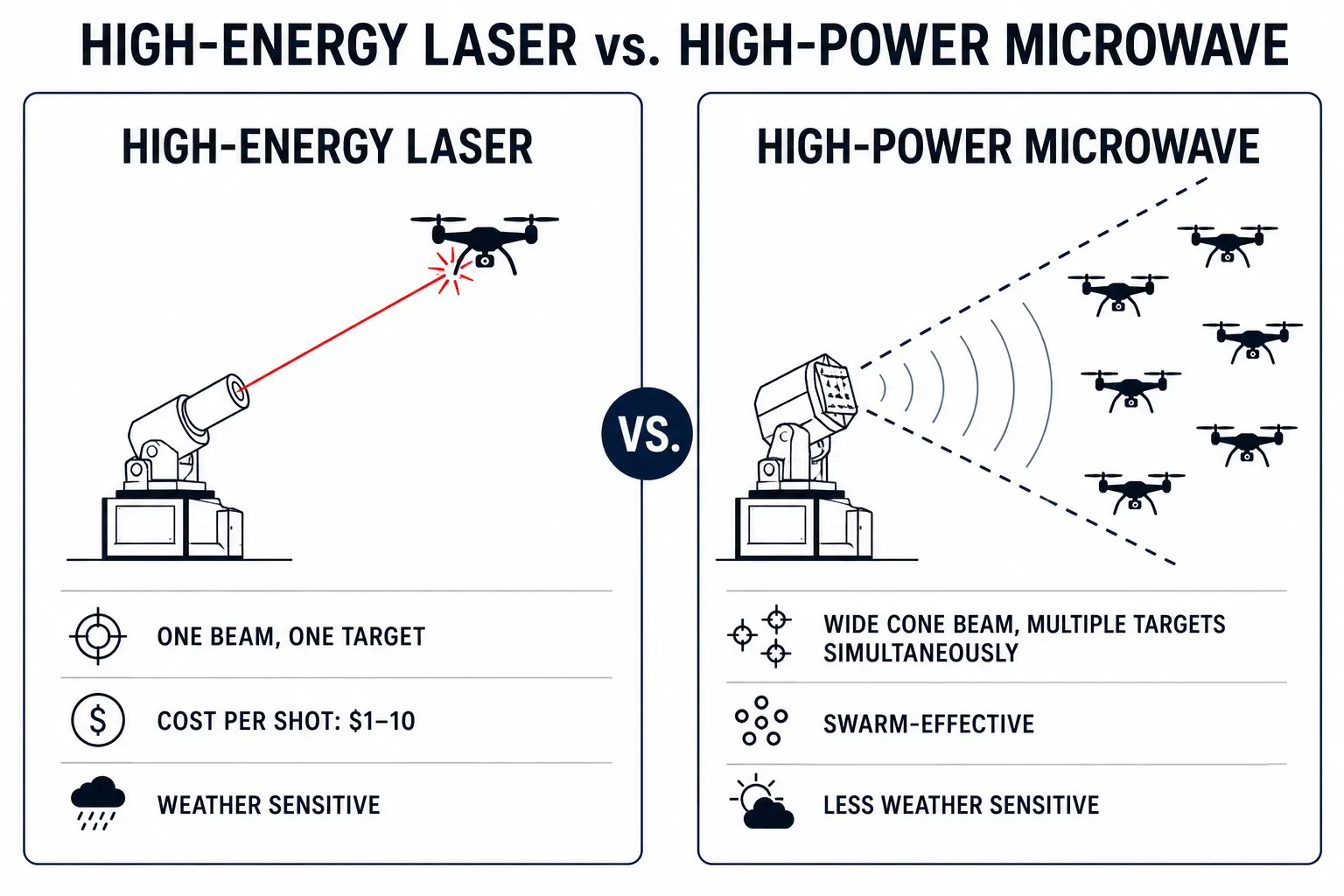
Lasers burn a point on the target until something structural, optical or electrical fails. Cost per shot is electricity — roughly $1-10, against $100,000 or more for a kinetic interceptor. The constraint is physics: weather, smoke, dust and atmospheric turbulence degrade the beam, and a 2-5 second dwell per target limits how fast you can work through a swarm.
The category crossed a threshold on 2 September 2026. The US Army awarded AeroVironment $464.8 million under the Enduring-High Energy Laser programme for LOCUST X3, a 30 kW system aimed at Group 1-3 drones, with delivery of “well into the dozens” of units expected over the next few years. It is the first production contract for a high-energy laser weapon in US history. Every other programme on this page is still a prototype, a demonstrator or a shipboard trial.
The rest of the field: the US Navy’s HELIOS, a 60 kW Lockheed Martin system on USS Preble, has downed drones in testing. Israel’s Iron Beam, a Rafael 100 kW-class fiber laser, is the most operationally proven, with a cost per shot estimated at $2-3.50 and confirmed combat use. The UK’s DragonFire, 50 kW from MBDA, Leonardo and QinetiQ, hit roughly £10 per shot and is contracted for Royal Navy Type 45 destroyers from 2027 under a £316 million deal.
High-Power Microwave
HPM emits a directed electromagnetic pulse that damages electronics across an area rather than burning one point. That makes it the natural answer to swarms — a single engagement can defeat dozens of drones, where a laser is one-to-one by construction.
Epirus’s Leonidas is the most commercially mature: solid-state, software-defined gallium nitride, with Gen II units reaching roughly 2 km. The Army awarded Epirus $66.1 million in 2023 for IFPC-HPM prototypes, delivered all four by March 2024, and followed with a $43.5 million Gen II contract in July 2025. In August 2026 the Marine Corps added an $11 million contract through the Office of Naval Research for HAVOC, which puts an Epirus HPM system on a universal sled mount so it can move between crewed and uncrewed ground vehicles.
In December 2025 Leonidas became the first HPM system demonstrated against fiber-optic FPV drones. That matters more than the contract values: fiber-optic guidance exists specifically to defeat RF jamming, and HPM is currently the most credible counter to it.
The Air Force Research Laboratory’s THOR is a containerised HPM system that flies on a C-130 and assembles in about three hours with two people. Leidos is building the follow-on Mjölnir.
What Kinetic Systems Kill Drones?
Kinetic systems destroy the drone physically: guided missiles such as Raytheon’s Coyote at $100,000–200,000 a shot, programmable-airburst cannon rounds, and interceptor drones that ram or detonate beside the target.
Missile Interceptors
Raytheon’s Coyote is the Army’s primary missile-based counter-sUAS interceptor, at roughly $100,000-$200,000 per shot for Block 2. Block 3NK is a reusable non-kinetic variant. The September 2025 $5.04 billion contract covers launchers, kinetic and non-kinetic effectors, KuRFS radars and support through 2033. Enduring Shield, from Leidos and Dynetics under IFPC Increment 2, took a $617 million award in April 2026, bringing total IFPC production contracts near $1.2 billion.
Anduril’s interceptors have gone export. In June 2026 the State Department approved, and notified to Congress, a possible $1.98 billion sale to Kuwait built around Roadrunner-M and Anvil kinetic interceptors, bundled with electronic warfare, sensors and Lattice command and control as a single counter-drone network. That is one of the largest counter-UAS foreign military sales ever notified.
Gun-Based Systems
Rheinmetall’s Skyranger 30 and 35 are the benchmark mobile gun systems. The 30 mm fires 1,250 rounds per minute to roughly 3 km using programmable AHEAD airburst ammunition; the 35 mm reaches 4 km. Germany ordered a prototype plus 18 vehicles for about €595 million, with a potential programme of 600-plus systems that could exceed €9 billion. Rheinmetall has also put Skyranger on the uncrewed Ripsaw M5.
The US Navy’s Phalanx CIWS — 20 mm, 4,500 rounds per minute, 1.5 km — has Block 1B variants adapted for small UAS, though the economics only work when what you are protecting is very valuable.
Net Capture
OpenWorks’ SkyWall Patrol is a shoulder-fired net launcher reaching about 100 m, with parachute recovery so the drone survives for forensics. Fortem’s DroneHunter F700 is an autonomous interceptor that uses onboard radar to chase and net its target; the Army awarded Fortem an $18 million three-year contract in 2026. Net capture earns its place in urban and sensitive environments where falling debris is unacceptable.
What Is Drone-on-Drone Interception?
Ukraine made this mainstream. Interceptor drones at $1,000-$2,000 each, used against Shahed-type drones, invert the cost exchange that every other method loses. Ukrainian forces intercepted 2,975 Russian drones in January 2026 and 7,674 in March.
US programmes are industrialising it. Fortem’s DroneHunter is in Army service, Anduril’s Anvil is integrated with Lattice and has been demonstrated at NORTHCOM’s Falcon Peak exercises, and Coyote Block 3NK adds a reusable non-kinetic option.
Ukraine’s Ministry of Defence said in August 2025 that more than 25 Ukrainian interceptor models were authorised for military use. The interceptor table on this page lists the sixteen systems, in Ukraine, Europe and the United States, where a ministry, a contract or a sale notice shows someone is using or buying them. One of them, SkyFall’s, now has a buyer in Asia: Japan’s Ministry of Defense said on 9 October 2026 that it had signed a contract for them. Four state a top speed: Shvidun above 250 km/h, LITAVR 350, STRILA 415 and Skyhammer 700.
The economics are compelling and the preconditions are demanding. Cheap interceptors need reliable detection, fast cueing, autonomous target acquisition and airspace deconfliction. Without that sensor and command infrastructure underneath, drone-on-drone creates as many problems as it solves.
Who Is Actually Allowed to Shoot Down a Drone?
For most of the past decade the answer in the United States was: almost nobody. Counter-drone authority sat with a short list of federal agencies. A police department watching a drone over its own stadium could see it on a display and do nothing.
That changed with the SAFER SKIES Act, enacted as Title LXXXVI of the FY2026 National Defense Authorization Act and signed on 18 December 2025. The implementing interim final rule — issued jointly by Homeland Security and Justice — took effect on 1 July 2026.
It creates two tiers. A detection-and-warning certification allows detecting, identifying, monitoring, tracking, warning and confiscation. A mitigation certification goes further: disrupting, interfering with, seizing control of or destroying an aircraft using reasonable force.
The obligations are substantial. A certified agency needs an implementation policy, an approved technology list, an operations plan, coordination and notification arrangements, and real-time notification to air traffic control. Mitigation actions must be reported within 48 hours, with semiannual operational summaries.
The rule states that the FBI’s National Counter-UAS Training Center has trained and certified operators from roughly 46 agencies. The government’s own paperwork anticipates about 1,850 participating. By late August the FBI said about 500 officers had been trained since the rule took effect, without saying how many of them are cleared to take a drone down. Legal authority arrived years ahead of the training pipeline to use it. Ondas said in August that the Jacksonville Jaguars’ EverBank Stadium would be the first NFL venue to use it, with a Sentrycs protocol-takeover system run by trained police from the 27 September 2026 home game.
States are writing their own rules around the federal one. Nine had enacted counter-drone laws by October 2026, most of them for prisons: Alabama, Georgia, Idaho and South Dakota let officers jam or capture drones over correctional facilities. Missouri and Indiana tie their powers to federal certification, and New York, whose law took effect on 25 August 2026, adds state training on top of it and an approved-vendor list for state and local buyers. The second table on this page lists each law and each state’s federal grant.
The money arrived before most of the laws. FEMA paid the first $250 million of its counter-drone grants on 30 December 2025 to the 11 World Cup host states and the National Capital Region, from $34.6 million for California to $5.3 million for Kansas. Only Georgia, Missouri and New York have both a grant and a counter-drone law of their own. A second $250 million round, open to every state and territory, had no published notice by 10 October 2026.
For anyone selling counter-drone equipment to US domestic customers, that gap is the addressable market. For anyone responsible for a venue, it is the reason a system you are legally allowed to own may still sit unused.
How Do Militaries Layer C-UAS Defenses?
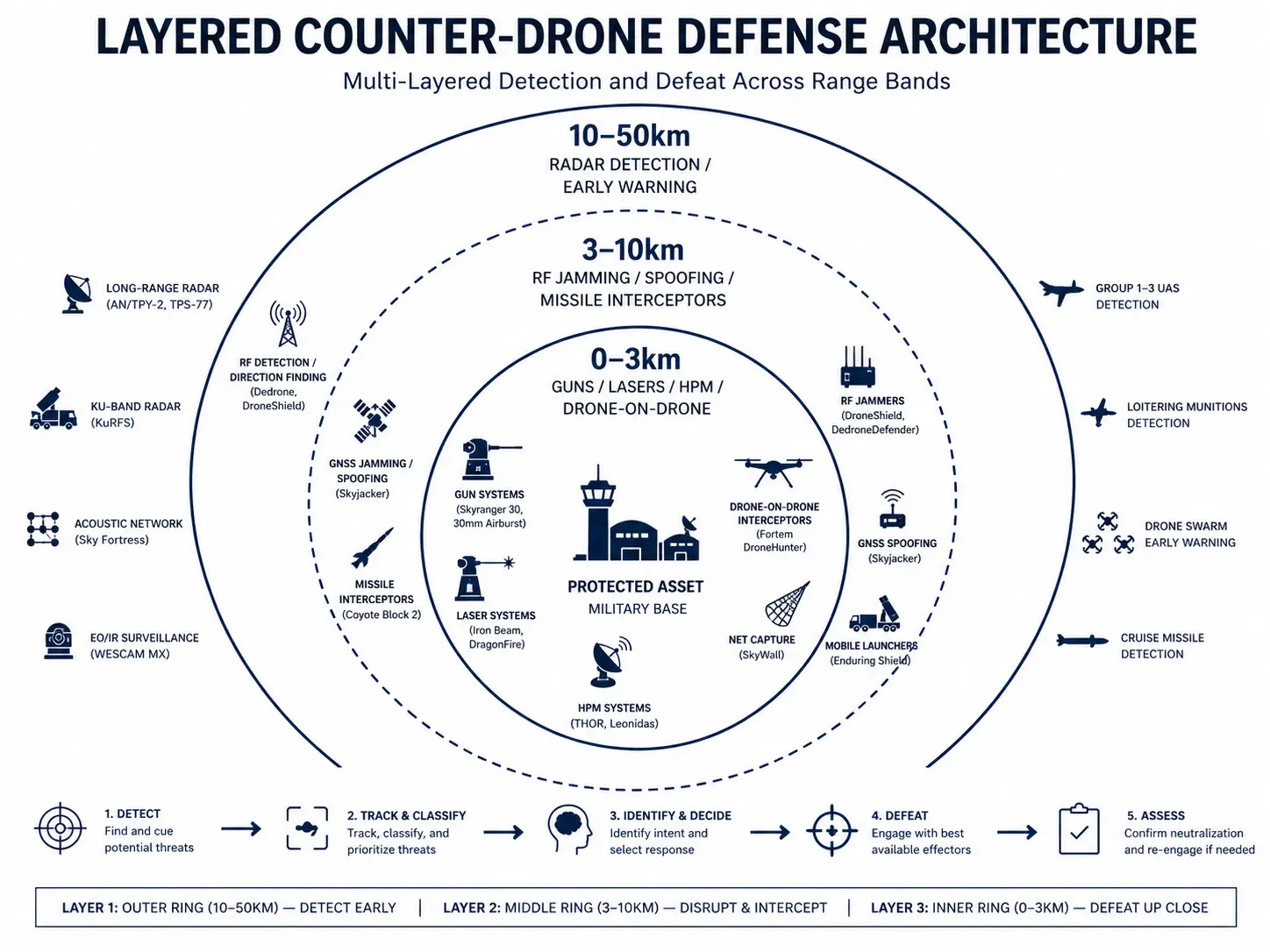
No single technology handles every threat at every range. Modern architectures are deliberately layered: wide-area sensors for early warning, soft-kill in the middle, hard-kill on the inside.
The US Army pairs KuRFS radar with Coyote for the tactical layer, adds electronic warfare and Leonidas HPM for point defense, and ties it together through FAAD C2 and increasingly Anduril Lattice. IFPC Increment 2 bridges short-range air defense and Patriot-class systems. LOCUST X3 will slot into the inner layer as it fields.
Israel runs the most mature stack. Iron Dome takes rockets and some drones, Drone Dome adds radar, RF, EO/IR and jamming for local counter-UAS, and Iron Beam is the innermost directed-energy layer that pulls down the cost per intercept.
Europe is building its own. The European Commission published an Action Plan on Drone and Counter Drone Security on 11 February 2026, turning the political “drone wall” idea into the European Drone Defence Initiative and folding it into the Defence Readiness Roadmap with a dedicated drone and counter-drone capability area. Officials talk about an early capability in 2026 — realistically radar and sensors with light mitigation — and an EU-level legal framework for counter-UAS by 2030. Separately the European Defence Fund committed €1.07 billion across 57 defence projects, with significant drone and counter-drone content.
National procurement is running ahead of the EU framework. France’s PARADE programme awards Thales and CS Group roughly $370 million. Poland’s SAN programme, a Kongsberg and PGZ consortium for 18 counter-UAS batteries, is valued around $4.2 billion.
Which Companies Lead the C-UAS Market?
RTX / Raytheon — the largest single contractor by value. KuRFS plus Coyote generated the $5.04 billion September 2025 multiyear award.
Anduril Industries — command and control plus autonomous interceptors. The Army awarded it a $20 billion ten-year contract vehicle in March 2026, with the first task order counter-drone work at $87 million through JIATF 401, and the State Department notified Congress of a possible $1.98 billion Kuwait sale in June.
AeroVironment — absent from earlier versions of this guide and now impossible to leave out. The BlueHalo acquisition brought counter-UAS and directed energy in-house, and LOCUST X3 gives it the first US production contract for a high-energy laser weapon at $464.8 million.
Epirus — high-power microwave specialist and the only US HPM system in Army field service. $66.1 million in 2023, $43.5 million Gen II in 2025, $11 million Marine Corps HAVOC award in August 2026, and a $250 million Series D taking total funding past $550 million.
DroneShield — Australian RF detection and jamming pure play, listed on the ASX as DRO. First-half 2026 revenue was a record A$125.8 million, up 74%, with recurring revenue up 229%. It reaffirmed full-year guidance of A$250-270 million while posting a statutory loss of A$32.2 million as it builds production capacity.
Hidden Level — passive RF sensing, with a $100 million OTA vehicle awarded in July 2026 covering hardware, software and its Airspace Monitoring Service.
Fortem Technologies — drone-on-drone net capture, with an $18 million three-year Army contract in 2026 pairing TrueView radar with DroneHunter.
Dedrone / Axon — sensor fusion and RF, acquired by Axon in 2024, with Tracker.AI at more than 955 sites.
Rheinmetall — mobile short-range air defense. Roughly €595 million of Skyranger orders from Germany with potential expansion past €9 billion.
Leidos / Dynetics — IFPC Increment 2 launchers, $617 million in April 2026, total production contracts near $1.2 billion.
SRC Inc. — LIDS radar and electronic warfare integration, including a Qatar sale reported around $1 billion.
What Is Driving Demand?
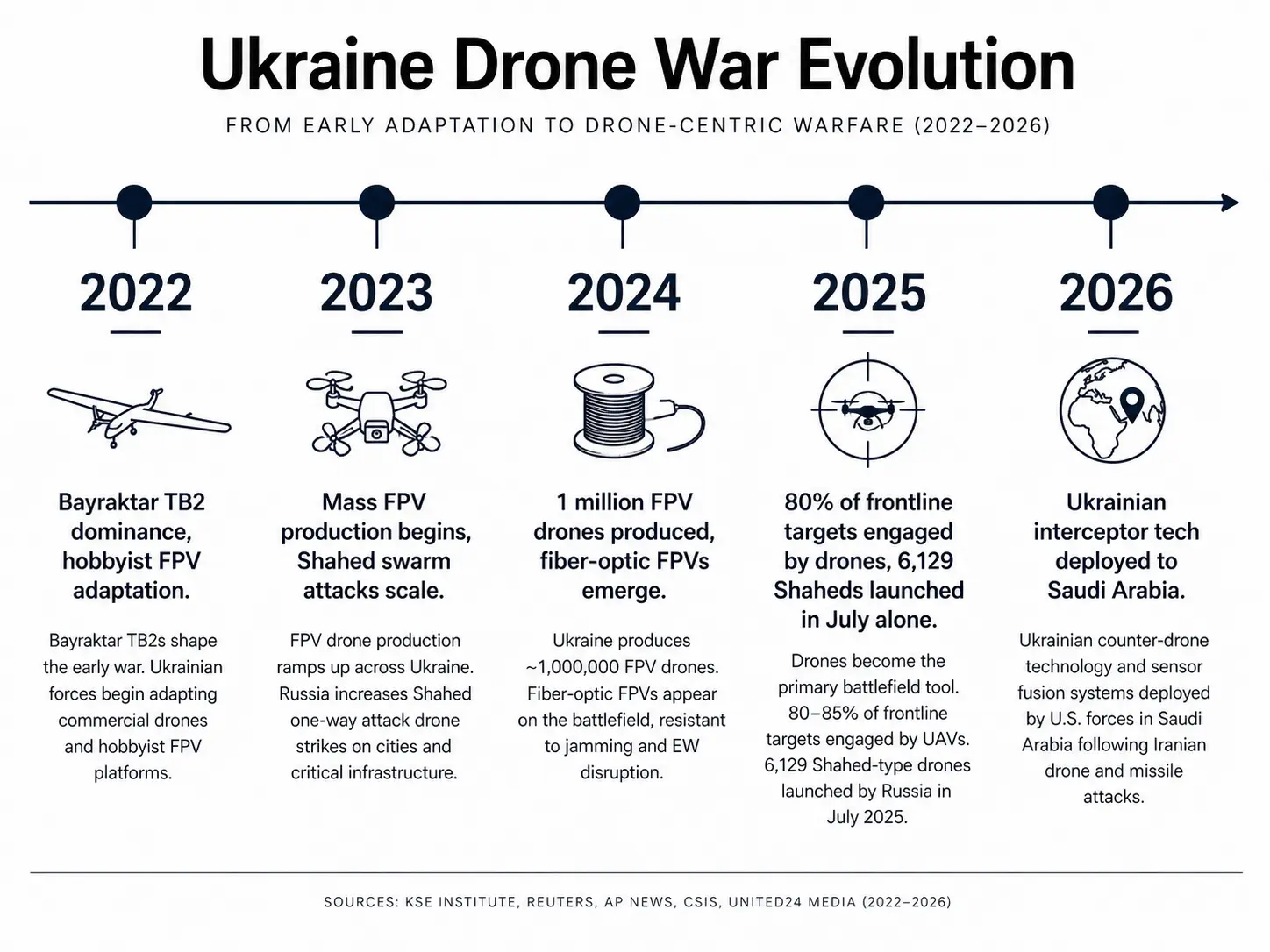
Ukraine reset procurement everywhere. Kyiv School of Economics data showed drones engaging 80-85% of frontline targets by mid-2025, with at least 215,000 drone strikes recorded that summer. Russia launched 6,129 Shahed-type drones in July 2025 alone, 741 of them in a single night. Mass drone attack became a normal military method, and counter-UAS moved from niche capability to tier-one priority.
The Red Sea confirmed the cost problem. Reuters reported the US Navy spending more than $1 billion in munitions defending ships from Houthi drones and missiles between late 2023 and early 2025, firing roughly 200 SM-2, SM-3 and ESSM missiles at threats costing a tiny fraction of that. The argument for directed energy stopped being theoretical there.
Incursions over home installations did the rest. NORTHCOM reported hundreds over US bases, with Langley Air Force Base seeing drone activity for 17 consecutive days in December 2023. US air bases in the UK — Lakenheath, Mildenhall, Feltwell and Fairford — faced prolonged incursions in late 2024, prompting British troop deployments and emergency counter-UAS installation.
How Big Is the Counter-Drone Market?
Larger than any forecast said: more than $53 billion in publicly announced government counter-UAS contracts in the first eight months of 2026, by Unmanned Airspace’s count, against analyst forecasts that had the whole market at $20 billion by 2030. Be careful with market-size forecasts in this sector; they have been consistently wrong in the same direction.
The figure this guide used to lead with — MarketsandMarkets at $6.64 billion in 2025 growing to $20.31 billion by 2030 — has already been overtaken. Unmanned Airspace counted more than $53 billion in publicly announced government counter-UAS contracts in the first eight months of 2026 alone, after more than $29 billion in the first quarter.
Announced contracts and market revenue are not the same measure, and a multiyear award books over many years, so the two numbers are not directly comparable. But the gap is too large to be a definitional quibble. The forecasts were built before Ukraine normalised mass drone attack, before European rearmament, and before the FY2027 US budget request.
Treat any single market-size number here, including the ones above, as an indication of direction rather than a figure to plan against.
What to Watch Through 2027
LOCUST X3 deliveries. A production contract is not a fielded weapon. Whether AeroVironment delivers dozens of 30 kW lasers on schedule determines whether directed energy becomes a standing part of air defense or stays a decade-long demonstration.
The fiber-optic FPV problem. Fiber-optic links are immune to RF jamming and have spread well beyond Ukraine. HPM is the best current answer and Leonidas proved it in December 2025, but deployment scale is still small.
IFPC Increment 2 fielding, targeted around 2027. The interceptor competition decides whether low-cost autonomous intercept or missile-based defeat becomes the doctrine baseline for the next decade.
Whether SAFER SKIES certifications scale. 46 certified agencies at the rule’s start, and about 500 officers trained by August, against an expected 1,850 agencies is the bottleneck between a domestic counter-drone market that exists on paper and one that buys equipment. Watch the FBI training centre’s throughput.
Whether drone-on-drone survives contact at scale. Ukraine has proved the economics. Nobody has yet proved that autonomous interception works reliably at volume without blue-on-blue incidents or airspace deconfliction failures. The next 18 months of field experience will settle it.
Sources
- DHS Science and Technology Directorate counter-UAS IDIQ award, July 2026, as reported by Inside Unmanned Systems and Washington Technology.
- AeroVironment, LOCUST selected for the Army’s Enduring High Energy Laser programme, 2 September 2026.
- Motorola Solutions, completion of the D-Fend Solutions acquisition, 20 August 2026.
- SAFER SKIES Act, Title LXXXVI of the FY2026 National Defense Authorization Act, signed 18 December 2025; DHS and DOJ interim final rule in force 1 July 2026.
- DefenseScoop, one year into the federal counter-drone task force, 24 August 2026, for the FBI’s training figure.
- Ondas, Sentrycs selected for Jacksonville Jaguars games, 7 August 2026.
- Unmanned Airspace’s running count of announced government counter-UAS contracts, 2026; Kyiv School of Economics data on drone engagements.
- FEMA, Counter-Unmanned Aircraft Systems Grant Program, first-round awards of 30 December 2025.
- State counter-drone laws, from each legislature’s enacted text: New York Laws of 2026, Ch. 55, Missouri HBs 2637 and 3155, Indiana SEA 227; the others are linked from the table.
- Interceptor drones, from Ukrainian Ministry of Defence pages, UK government releases, US Army and JIATF-401 releases, the Federal Register notice of the Kuwait sale (Transmittal 26-74) and the makers’ own pages; each is linked from the table.
- Japan Ministry of Defense, Defence Minister’s press conference, 9 October 2026, for the SkyFall contract.
Coverage
Japan Buys Ukrainian Interceptor Drones From SkyFall
Defence Minister Koizumi named no model, number or price. Japan sends Ukraine no weapons, but now buys one of its anti-Shahed drones.
Poland Seeks Interceptor Drones That Can Hit Helicopters
Makers have until 15 October to offer a 20 km interceptor flying 340 km/h or more, or a 4 kg one a soldier can carry.
Dallas Man Faces 8 Years for Drone Flights at Two Airports
Prosecutors say his drone crossed an active runway at Love Field one night and entered DFW's restricted airspace the next.
EU Pays €1.24B for Ukrainian-Made Drones and Interceptors
It is the fifth defence payment from the €90 billion loan, and €15.4 billion of this year's defence money is still unpaid.
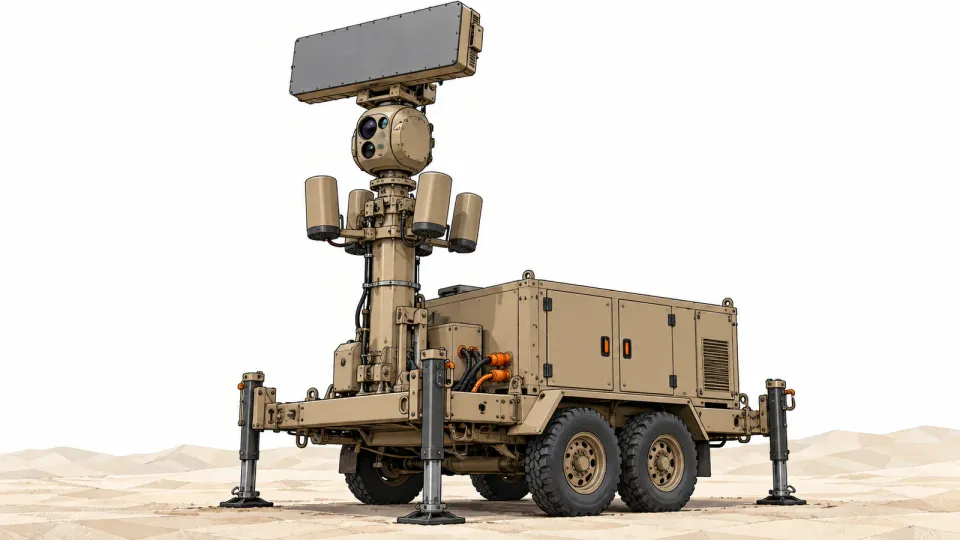
Kuwait Is the Buyer Behind EOS's £370M Counter-Drone Deal
Britain named the customer. EOS's own filing says work cannot start until it posts a £74m bank guarantee and wins export licences.
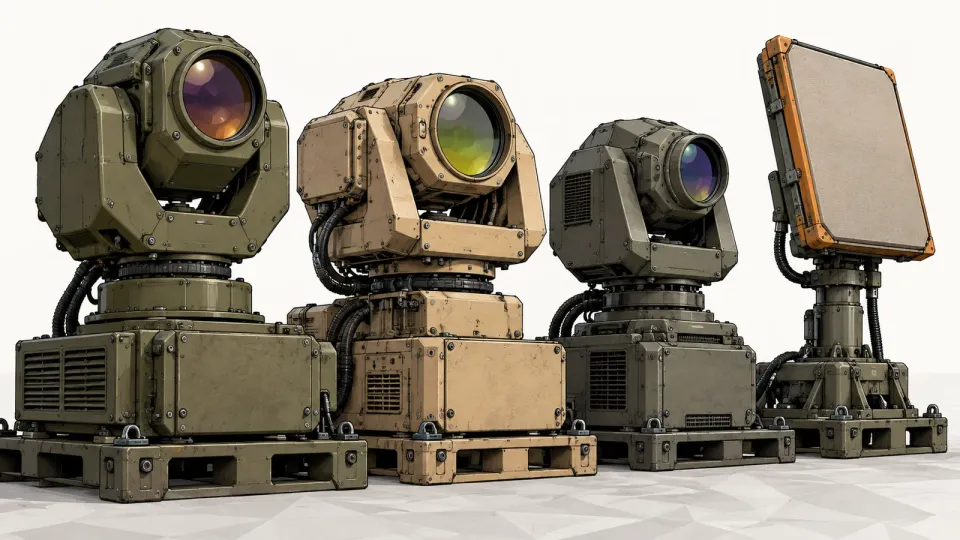
Pentagon Picks Three Lasers and a Microwave for US Bases
A year-long trial at US bases follows February's El Paso airspace closure. The Pentagon has not said which weapon goes where, how many, or the cost.
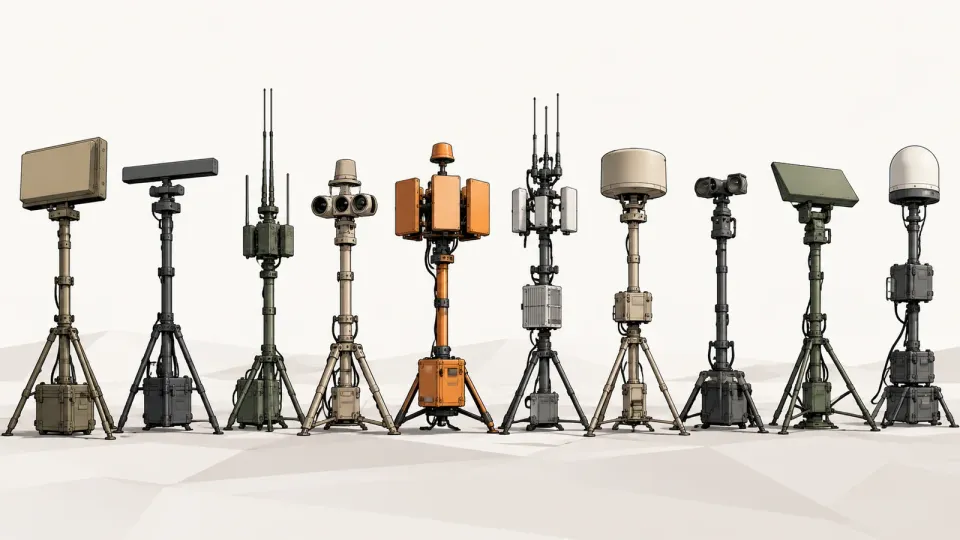
DroneShield's $500m counter-drone deal is one of ten
The Army set $4.15 billion of counter-drone ceilings across ten firms on 28 September. About $50 million has been committed to them so far.
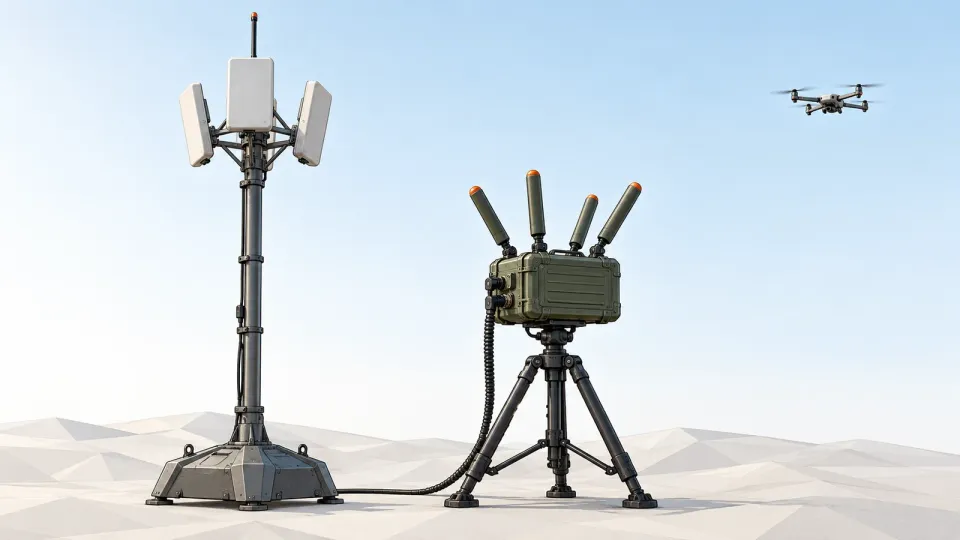
Dedrone wins first orders on DHS counter-drone contract
TSA and FEMA spent $6.8 million in the last three days of the fiscal year. One order buys a system built on rival Motorola's D-Fend.
Police Can Now Take Over Drones Above Jaguars Games
The NFL logged 10,852 drone violations near its stadiums in five seasons. Until July, only federal agents could bring one down.
Unidentified Drones Shut Luxembourg Airport Twice in a Week
Officials say some were fixed-wing and up to two metres across. None has been caught, and police say they lack the legal power to bring one down.
Jet Shaheds Get Past Ukraine's Defenses Four Times as Often
In the Air Force's September daytime reports, 36% of Russia's jet drones were not shot down or jammed, against 9% of the rest.
Greece Buys €26M of Rafael Drone Dome With Achilles Shield
The counter-drone systems sit in a side deal to Greece's €3 billion air-defence package, and Israel has not said which sites they will guard.
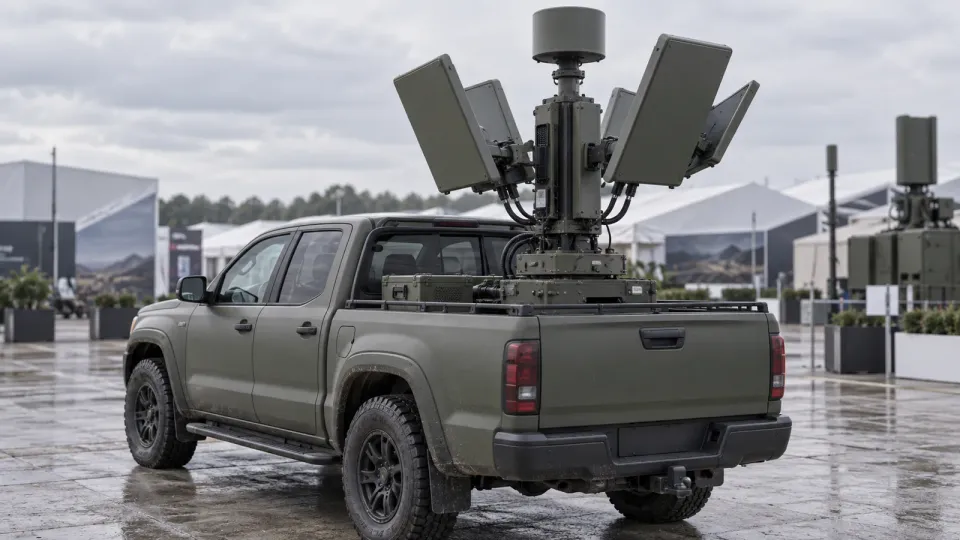
Ukraine's Ai-Petri Jammer Makes Its Export Debut in Poland
The Ai-Petri electronic warfare system, in Ukrainian service since 2024, was shown abroad for the first time at MSPO 2026 in Kielce.
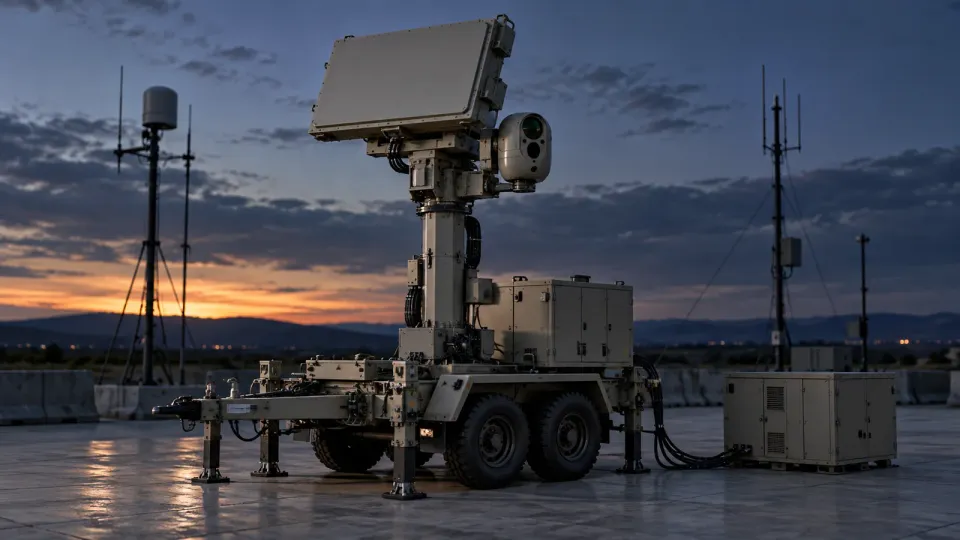
Counter-UAS Contracts Reach $53B in First Eight Months
Publicly announced counter-drone contracts passed $53 billion by September 2026. One ten-year Anduril award accounts for $20 billion of it.
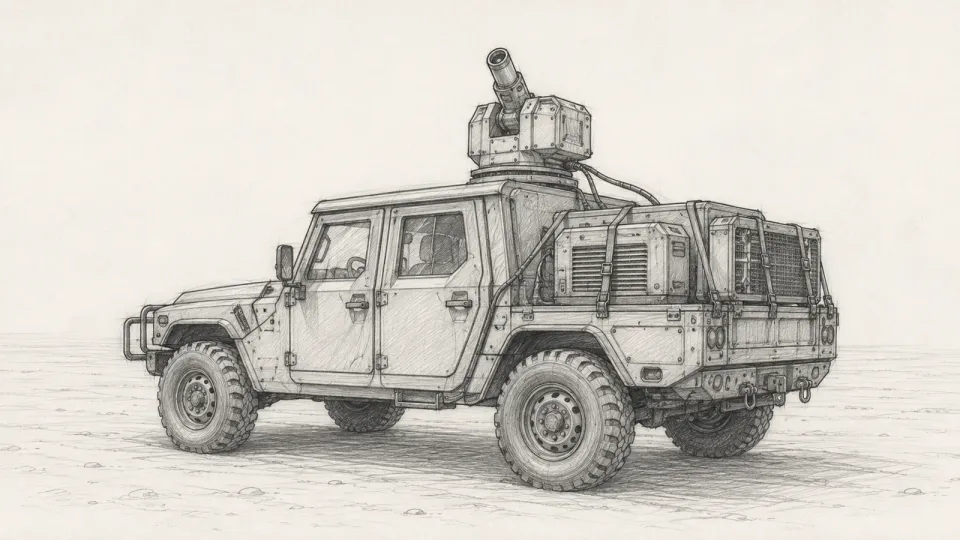
Army's first laser production contract goes to AeroVironment
The Army awarded AeroVironment $464.8 million on 2 September for LOCUST X3 laser weapons, the first US production contract for a high-energy laser.
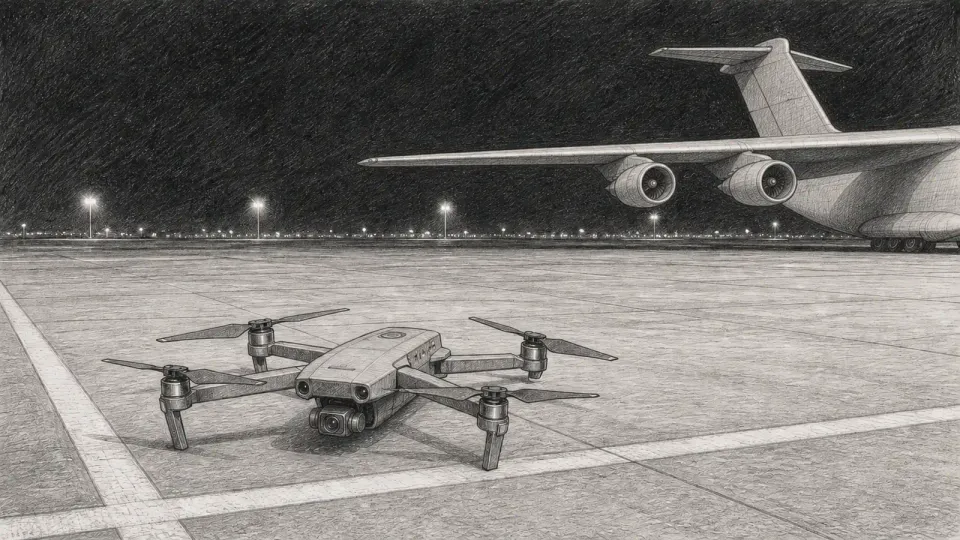
Germany blames Russia for the Leipzig airport drone attack
Berlin named Russia on 1 September for an explosive-carrying drone at Leipzig/Halle. The unit legally allowed to stop one is going from 150 people to 300.
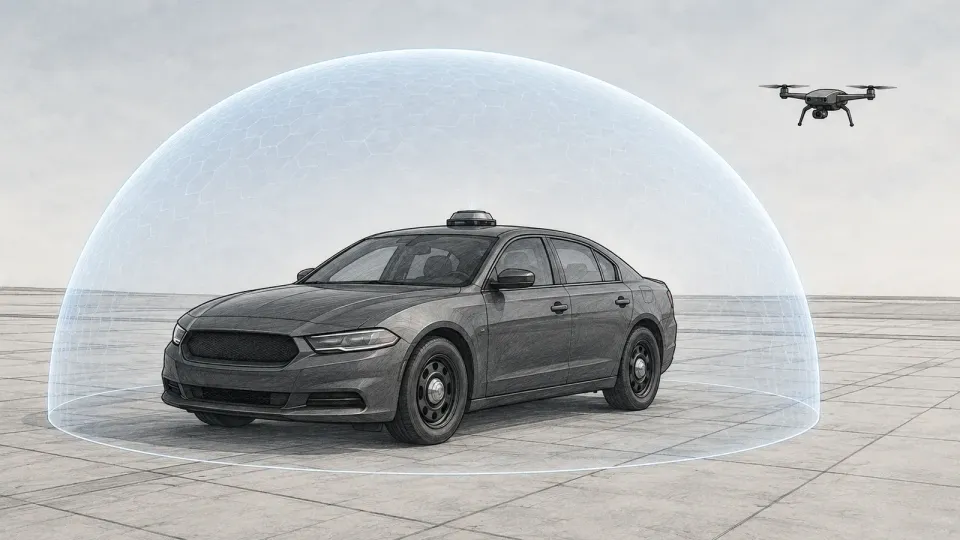
Motorola buys D-Fend weeks after DHS opens $1.5B contract
Motorola closed a $1.5B counter-drone acquisition on August 20, three weeks after DHS opened a contract worth the same amount to twelve companies.
Ondas Books $83.8M Quarter, Raises Guidance to $550M
Ondas grew Q2 2026 revenue more than 13-fold to $83.8 million and lifted full-year guidance, while adjusted EBITDA losses widened to $50.6 million.

Counter-Drone Rule Expects 1,850 Agencies; 46 Are Certified
The SAFER SKIES counter-UAS rule lets US police disable drones, but only about 46 agencies are trained against the 1,850 the government expects.
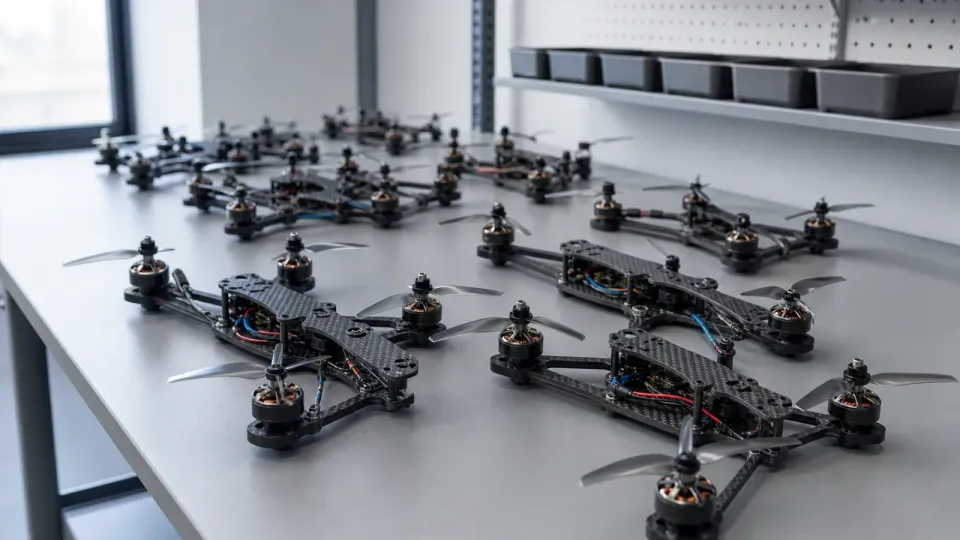
Neros Raises $250M to Build Interceptor and FPV Drones
Neros raised $250M at a $2.5B valuation and is adding a counter-drone interceptor, moving beyond the FPV airframes that made its name in Ukraine.
Companies
AeroVironment
US manufacturer of small tactical UAS, loitering munitions and counter-UAS systems, transformed in scale by its 2025 acquisition of BlueHalo.
United States
Anduril Industries
US defense technology company building autonomous weapons, counter-UAS, and AI command software, and manufacturing them at its own Arsenal-1 plant in Ohio.
United States
Baykar
Turkish defense company behind the Bayraktar TB2, the most widely exported armed drone of the past decade, now also the owner of Italy's Piaggio Aerospace.
Turkey
Dedrone
US counter-drone company, now part of Axon, providing airspace security platforms for military bases, prisons, airports and critical infrastructure.
United States
Fortem Technologies
US counter-drone company producing radar detection and autonomous interceptor drones for airspace security at airports, stadiums and military sites.
United States
Axon Enterprise
US public-safety technology company selling TASER devices, body cameras and evidence software, now a big counter-drone and DFR vendor via Dedrone.
United States
D-Fend Solutions
Israeli counter-drone company, bought by Motorola Solutions in August 2026, whose RF cyber systems take control of rogue drones and land them.
Israel
DroneShield
Australian counter-drone company producing detection, tracking, and defeat systems for military, government, and critical infrastructure customers.
Australia
Funding
Series C
Sequoia Capital, American Strategic Technology Fund, Interlagos, Valor Equity Partners, Allen & Company, Thiel Capital, Spark Capital, Dylan Field
Neros TechnologiesSeed
Rainfall Ventures, ACME Capital, Skyfall Ventures, Sisyphus Ventures, Antler, Startuplab, Off Piste, Andøya Ventures
StendrContracts
Government of Kuwait
MARSS
Nation-wide counter-drone system built around MARSS's NiDAR command-and-control software, with…
Transportation Security Administration
Dedrone Defense
Split award for fixed and portable counter-drone capability built on a D-Fend EnforceAir2 system…
Federal Emergency Management Agency
Dedrone Defense
Survey, installation, integration, testing and support of a counter-drone sensor suite, task order…
U.S. Army
DroneShield
Ceiling of a three-year IDIQ for commercial counter-drone capabilities under JIATF-401's Domestic…
U.S. Army
SRC Inc.
Ceiling of a three-year IDIQ for commercial counter-drone capabilities under JIATF-401's Domestic…