The United Arab Emirates General Civil Aviation Authority has certified VDX, a four-storey vertiport built by Skyports Infrastructure next to Dubai International Airport. It is the first purpose-built commercial vertiport anywhere to be certified by a civil aviation regulator, and it shifts the advanced air mobility conversation onto ground that has been largely ignored.
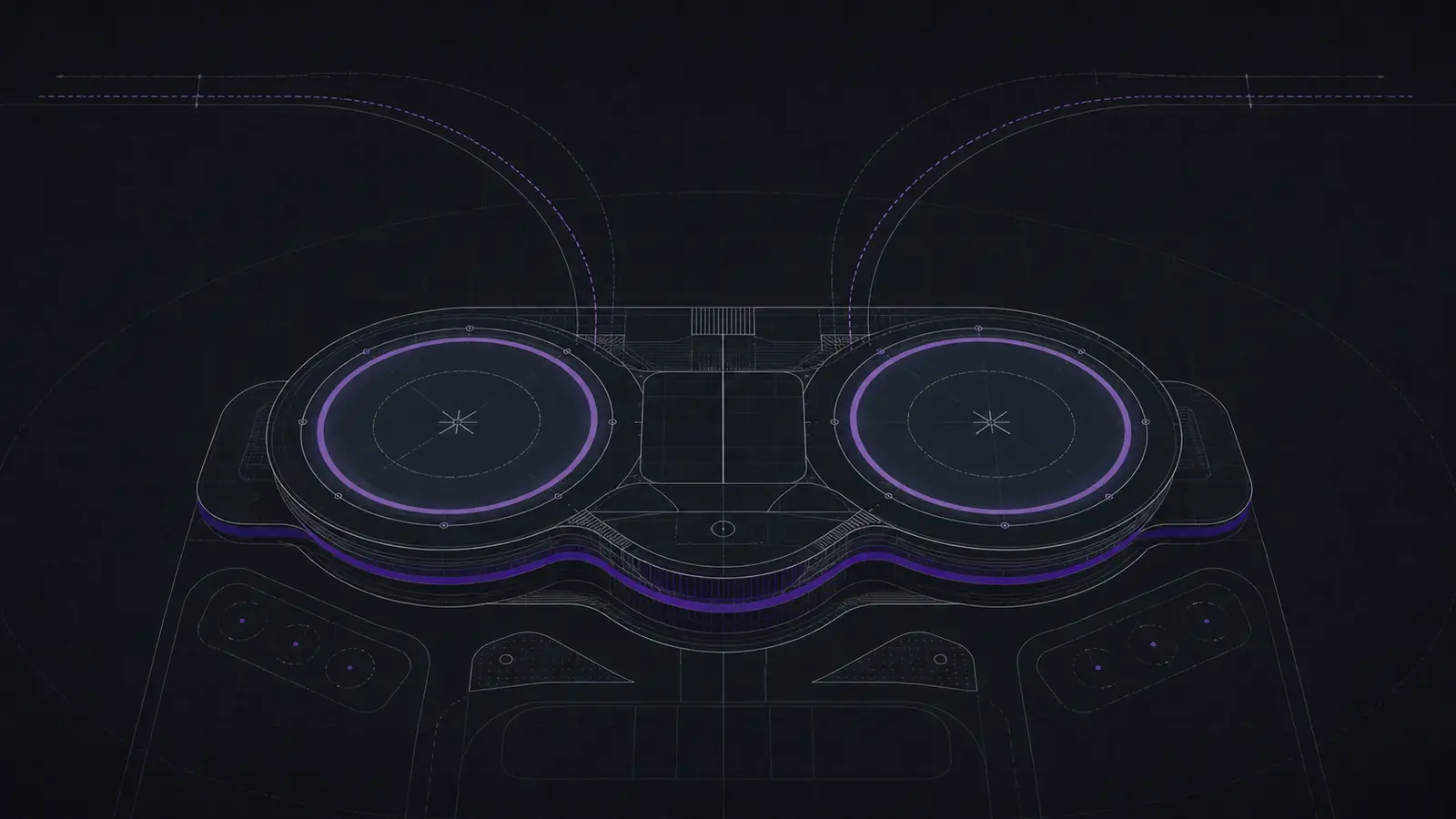
Certification was granted on July 7, 2026. The facility covers roughly 3,100 square metres across four storeys, with two dedicated take-off and landing areas and rapid charging infrastructure. Skyports puts its capacity at up to 170,000 passengers a year once commercial service begins. Three further vertiports are under development with Dubai’s Roads and Transport Authority.
Certifying a building is not like certifying an aircraft
Almost every milestone the eVTOL sector reports concerns aircraft: flight hours, conforming prototypes, stages of type certification. Those are necessary and insufficient. A certified aircraft with nowhere approved to land is a demonstrator.
Vertiport certification requires a regulator to have written the standard first — dimensions, obstacle clearance, approach and departure paths, fire response, passenger handling, electrical provision for high-rate charging — and then to have applied it to a real structure. Most authorities have published guidance material and stopped there. The GCAA wrote regulations and issued a certificate against them.
Saif Mohammed Al Suwaidi, Director General of the GCAA, called it “a historic achievement for the UAE and a defining moment for the future of aviation.” Aqeel Al Zarouni, the GCAA’s Assistant Director General for Aviation Safety Affairs, framed the point more precisely: the certification “demonstrates the UAE’s ability to establish a robust regulatory framework for emerging aviation technologies.”
Duncan Walker, chief executive of Skyports Infrastructure, said the certification showed “that the infrastructure, operational standards and regulatory frameworks required for commercial eVTOL services are now a reality.”
What it unblocks, and what it does not
VDX is the intended launch hub for Joby Aviation’s Dubai air taxi service, under an exclusivity arrangement with the RTA that has been public since 2024. Certifying the vertiport removes one of two remaining gates on that service. The other is Joby’s own operational approval, which is a separate process and is not affected by this certificate.
The site placement is itself a decision worth noting. Putting the first certified vertiport adjacent to a major international airport rather than in a business district means the initial route is an airport transfer — the shortest path to a fare-paying passenger, and the case where a helicopter service already proves the demand exists.
The sequencing question this raises
FlightBrief’s analysis is that Dubai has now inverted the sequence the rest of the sector assumed. The working expectation in the US and Europe has been that aircraft certify first and infrastructure follows demand. The UAE has certified the infrastructure ahead of the aircraft that will use it, which means the first operator to arrive with an approved aircraft finds an approved place to land rather than waiting on a second regulatory process.
That is a real advantage for a jurisdiction competing to host launch operations, and it is a standing reproach to authorities that have issued vertiport guidance without a certification basis. The relevant test now is whether the GCAA’s framework travels — whether other regulators validate against it, as they do with aircraft type certificates, or write their own from scratch and reset the clock.