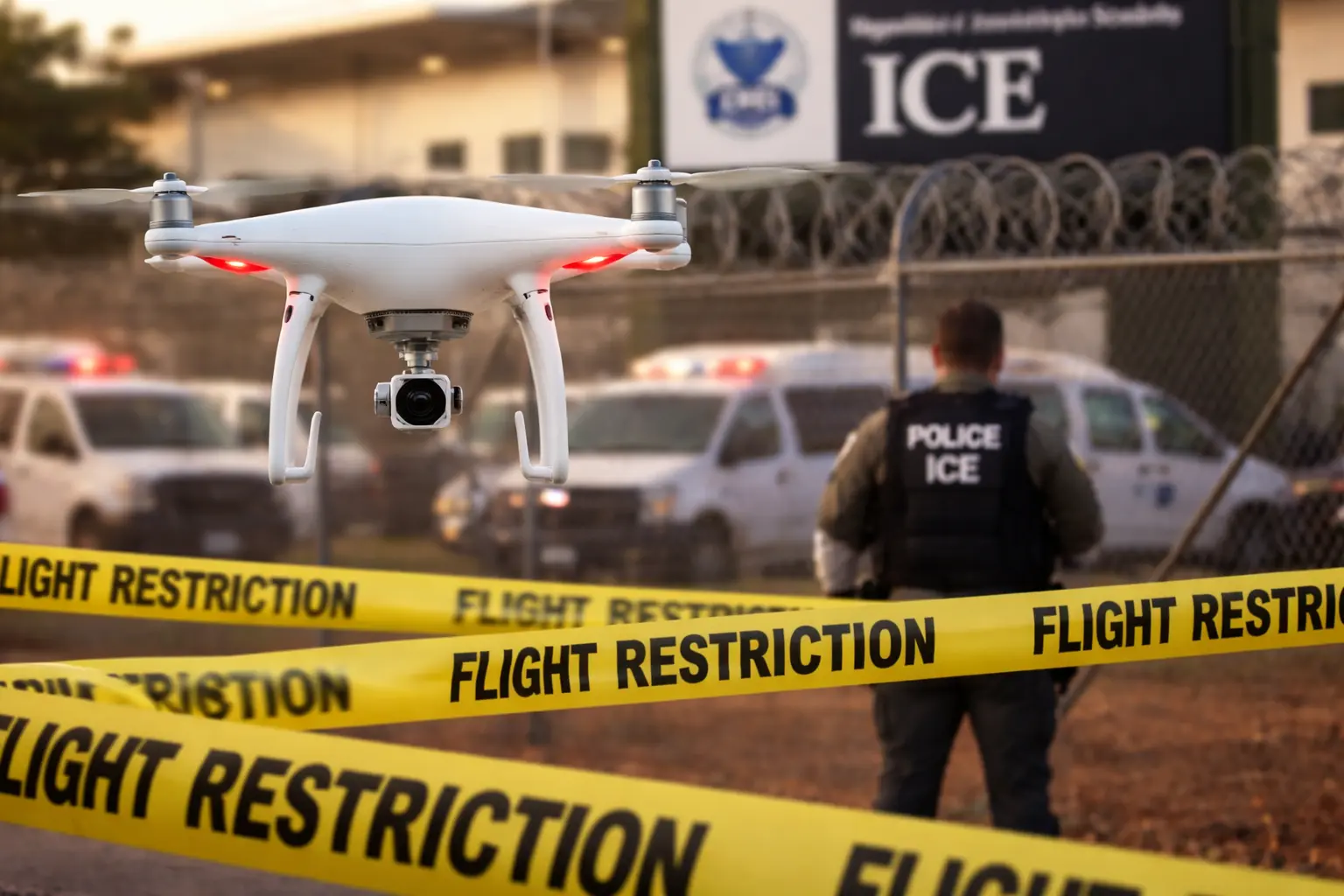
The FAA issued a flight restriction in January 2026 that bans drone flight within 3,000 horizontal feet of any vehicle operated by the Departments of Defense, Energy, Justice, or Homeland Security. It runs 21 months, until October 29, 2027, covers the entire United States, and moves with the vehicles it protects. It is the broadest drone TFR ever issued.
The Electronic Frontier Foundation, the Reporters Committee for Freedom of the Press, The New York Times, and The Washington Post have all formally demanded the FAA rescind it. The Reporters Committee has filed a petition for review in the DC Circuit in Levine v. FAA.
Why This TFR Is Unlike Any Other
Standard FAA temporary flight restrictions last hours and cover fixed geographic areas. FDC 6/4375 lasts 21 months, covers the entire country, and follows the vehicles it protects. ICE and CBP agents frequently use unmarked rental cars or vehicles without license plates. A drone operator has no reliable way to know whether they are within the restricted radius before the restriction applies, yet faces criminal penalties and potential destruction of their aircraft if they are.
The FAA’s own regulations require TFRs to specify the hazard or condition requiring the restriction, and to provide accredited journalists a point of contact for access authorization. Neither requirement was met.
The First Amendment Problem
Nearly every federal appeals court has recognized the right to record law enforcement officers performing their duties. The TFR restricts that recording by making proximity to unmarked government vehicles a criminal threshold. News organizations cannot obtain clearance to operate within the zone because the FAA never established the access contact point its own rules require.
The EFF argues the timing is not coincidental. FDC 6/4375 took effect January 16, shortly after protests over immigration enforcement operations in Minneapolis, and shortly before two incidents in which civilian recordings contradicted official government accounts of law enforcement use of force.
The DC Circuit petition is the most direct path to resolution. If the court finds the TFR violates the FAA’s own procedural requirements, it could be vacated well before October 2027.