

Consumer Drones
The Best Personal Drone: What You Can Actually Buy in 2026
The best personal drones of 2026, ranked by use case — and which ones you are allowed to buy where you live, because in 2026 that is the harder question.
Updated
11 news articles on Consumer Drones ↓
What it costs to import a drone into the United States
Every Section 232 band that applies to uncrewed aircraft and their components: what it covers, the rate, and when it bites.
- Covers
- The rates, annexes and country caps of the Section 232 drone proclamation of 13 August 2026.
- Leaves out
- Rulings on individual products: which annex applies depends on the product’s tariff classification.
Spotted an error? Email [email protected] with the row and the document that shows it.
10 of 10
| What it covers | Rate | Status | From |
|---|---|---|---|
| Uncrewed aircraft above 25 kg maximum take-off weight1 | 100% | In force | 3 September 2026 |
| Any uncrewed aircraft incorporating a thermal imager2 | 100% | In force | 3 September 2026 |
| Docking stations3 | 100% | In force | 3 September 2026 |
| Critical components on the Annex I list4 | 100% | In force | 3 September 2026 |
| Uncrewed aircraft at or below 25 kg maximum take-off weight5 | 25% | In force | 3 September 2026 |
| A second list of components6 | 25% additional | Deferred | 9 February 2027 |
| Japan, South Korea, Taiwan, Switzerland, Liechtenstein and EU member states7 | 15% cap | Conditional | 3 September 2026 |
| United Kingdom8 | 10% cap | Conditional | 3 September 2026 |
| Products on the Blue UAS Cleared List or the FCC Conditional Approval List as of 2 September 20269 | 180-day deferral of Annex I and II | Relief | 3 September 2026 |
| Importers with an approved US manufacturing plan10 | Duty-free while building | Relief | 13 August 2026 |
| Nothing matches that search. | |||
Notes
- Uncrewed aircraft above 25 kg maximum take-off weight Annex I. Weight alone triggers it, whatever the aircraft is for.
- Any uncrewed aircraft incorporating a thermal imager Annex I, and it applies regardless of weight. A sub-250 g aircraft with a thermal payload is in the 100% band; the same airframe without one is in the 25% band.
- Docking stations Annex I. The drone-in-a-box category takes the top rate on the box as well as on the aircraft where the aircraft also qualifies.
- Critical components on the Annex I list Annex I. This is the band that reaches domestic assemblers importing parts, not just importers of finished aircraft.
- Uncrewed aircraft at or below 25 kg maximum take-off weight Annex II, and the band that covers the entire consumer and prosumer camera-drone category plus most of the enterprise inspection fleet. If you are buying a drone to fly for fun, this is your rate.
- A second list of components Annex III. The 180-day delay is granted explicitly so domestic production can stand up first, which concedes that the capacity the proclamation wants does not exist yet.
- Japan, South Korea, Taiwan, Switzerland, Liechtenstein and EU member states Inclusive of existing HTSUS Column 1 rates, and not automatic. The importer must certify that substantially all critical components and technology originate in the US or a qualifying jurisdiction. Commerce has not defined "substantially all", so the cap is a provision without a test.
- United Kingdom Same certification requirement and the same undefined threshold as the 15% cap.
- Products on the Blue UAS Cleared List or the FCC Conditional Approval List as of 2 September 2026 A snapshot date, not a rolling qualification: a platform cleared on 3 September or later does not qualify. It turns two security-vetting lists into tariff relief, and hands a six-month pricing advantage to the Blue UAS roster and the roughly seventeen holders of FCC conditional approvals. Neither DJI nor Autel holds one.
- Importers with an approved US manufacturing plan Covers products and production equipment in volumes tied to the plant’s anticipated output. Construction must begin before 20 January 2029. Commerce audits compliance and can rescind the relief and collect retroactively.
Where this comes from. Assembled by FlightBrief from the Section 232 proclamation signed on 13 August 2026 and our reporting of it. Rates are ad valorem and stack on top of existing HTSUS Column 1 duties rather than replacing them. This is a guide to the proclamation’s structure, not a customs determination: which annex a given product falls under depends on its tariff classification, which is the importer’s responsibility. Two provisions are still undefined at the time of writing — Commerce has not published a test for the "substantially all" certification the country caps require. Nothing in the proclamation expires.
Sources
Cite or reuse this table
FlightBrief, “What it costs to import a drone into the United States”, checked Oct 7, 2026, https://flightbrief.news/topics/consumer-drones/#dataset-drone-tariff-schedule
Free to reuse, including commercially, under CC BY 4.0. Credit FlightBrief and link to this page.
Foreign drone brands: FCC approvals before and after the 22 December 2025 ban
Ten foreign drone brands, the last new product each had approved before the FCC stopped authorising foreign-made drones, and what it has been granted since.
- Covers
- Foreign drone brands’ FCC approvals before and since the 22 December 2025 ban, read one company code at a time.
- Leaves out
- Software updates and other permissive changes, and any judgement on whether a grant was lawful.
Spotted an error? Email [email protected] with the row and the document that shows it.
10 of 10
| Brand | FCC grantee and code | Based in | Last new approval before the ban | New approvals since 22 Dec 2025 | Status |
|---|---|---|---|---|---|
| DJI1 | SZ DJI Technology (SS3); SZ DJI Osmo Technology (2ANDR) | China | Avata 360, 19 November 2025 (SS3-DVN3NT) | None | No new approvals |
| Autel Robotics2 | Autel Robotics (2AGNT) | China | EVO III Pro series (4T, 4N, 3M, 4F), 28 November 2025 | None | No new approvals |
| Potensic3 | Shenzhen Potensic Intelligent (2BK8B) | China | ATOM 2 drone, 12 February 2025; its remote controller, 26 April 2025 | One: “TR1 Remote controller”, 24 August 2026 (2BK8B-TR1) | New controller approved |
| Holy Stone4 | Xiamen Huoshiquan Import & Export (2AJ55) | China | “R/C quadcopter”, 2 December 2025 (2AJ551865D01) | None | No new approvals |
| HoverAir5 | Shenzhen Zero Zero Infinity Technology (2AIDW) | China | “VCOPTER Falcon Mini” and a second F-series grant, 18 August 2025; HOVER Air X1 PRO and PROMAX, 23 September 2024 | VERSA grant set aside by the FCC, August 2026 | Approval withdrawn |
| Parrot6 | Parrot Drone SAS (2AG6I) | France | “ANAFI 3” and the SKYCONTROLLER UKR, 13 and 17 February 2025 | Four: ANAFI 3 GOV drone (19 June 2026) and its controller (11 June), ANAFI 3 XLR drone (10 September) and its controller (17 September) | New drones approved |
| XAG7 | Guangzhou Xaircraft Technology (2A46G) | China | “FPI Pressurized Injector”, 20 November 2025; Super X5 Ultra Intelligent Control System, 30 September 2025 | Three, none of them aircraft: XRTK S1 base station (26 June 2026), XP 1 Smart Panel (20 September), APC 4 AutoPilot Console mainframe (29 September) | New ground equipment only |
| Xtra8 | Xtra Technology LLC (2BQH2) | Not stated in the grant | Not established: the code’s first grants date from the day after the ban | Two: XTRA ATTO (23 December 2025) and an unnamed device (2BQH2-X, 17 June 2026) | New devices, not named as drones |
| Hubsan9 | Shenzhen Hubsan Technology (2AN75) | China | Receiver for the ACE 2, ACE 2+, ACE 3, BLACKHAWK and ZINO 3, 29 October 2023 | None | No new approvals |
| FIMI10 | Shenzhen FIMI Robot Technology (2AYVY) | China | Remote controller, 18 June 2024 | None | No new approvals |
| Nothing matches that search. | |||||
Notes
- DJI DJI is named in the Covered List itself, under section 1709 of the 2025 defence act, so no exemption for foreign-made drones applies to it and it cannot use the FCC’s self-declaration route either. The Avata 360 went on sale in the US on 13 April 2026 because it was approved a month before the ban. SS3 holds 218 FCC IDs; the last grant under 2ANDR, on the same day, was a DJI Mic receiver. Official record
- Autel Robotics Named in the Covered List under section 1709 alongside DJI, with the same consequences. The EVO III Pro grant came 24 days before the ban. Official record
- Potensic Granted by MiCOM Labs, a private certification body, as a low-power transmitter. The FCC counts drone controllers as drone components, so a foreign-made one needs an exemption; the grant does not name the aircraft the TR1 controls or the exemption relied on, and toy drones are exempt. An older code with the same DSDR/DSRC product naming, 2AYUO (Shenzhen Deepsea Innovation Technology), was last used for a Remote ID module in November 2023.
- Holy Stone The last grants before the ban are a new “1865” series begun on 28 July 2025, seven of them at 5.8 GHz; their model names were confidential when checked on 29 September. The code holds 90 FCC IDs.
- HoverAir The VERSA, launched on Indiegogo on 18 August 2026, carried an FCC grant (2AIDW-ZZ-H-1-006) that the FCC said had been “granted erroneously” and set aside that month; it no longer appears in the FCC’s database. The AQUA, on sale from 28 May 2026, was not sold in the US.
- Parrot The ANAFI 3 GOV filing includes a user manual titled “UKR”, and the 2025 controller grant names the SKYCONTROLLER UKR, so these are versions of the ANAFI UKR. The ANAFI UKR and UKR XLR have been on the Blue UAS list since 9 April 2025, one of the exemptions; Parrot has not said publicly which route it used. The only brand here with new aircraft approvals still standing. Source
- XAG XAG makes farm drones and autonomous ground machines; none of the three grants names an aircraft. XAG is one of nine companies the FCC proposed on 17 July 2026 to bar from importing or marketing even their already-approved equipment (PS Docket 26-184); no decision had been issued when checked. Official record
- Xtra One of the nine companies in the FCC’s import-ban proposal of 17 July 2026, which says the FCC sent Xtra a letter of inquiry on 30 March and deferred the codes of eight of the nine, Xtra included, on 10 July after they did not respond. Neither grant describes the product as a drone. Official record
- Hubsan No new Hubsan approval under this code since 2023. An older code, 2AEXY, was last used in January 2017.
- FIMI The Xiaomi-backed brand’s earlier code, Beijing FIMI (2AG53), was last used in May 2020.
Where this comes from. Assembled by FlightBrief from the FCC’s equipment authorization search, one company (grantee) code at a time, opening each grant to read the product it names. Since 22 December 2025 the FCC has not authorised new foreign-produced drones or drone components (controllers, cameras, data links and more), except toy drones, products on the Pentagon’s Blue UAS list or made as Buy American domestic end products (both until 1 January 2028), and products with a conditional approval. Anything approved before that date can still be imported, sold and flown. “Last new approval” is the most recent original grant under the code before the ban; “since” counts original grants from 22 December 2025, not the permissive changes and software updates the FCC still allows. A grant does not say which exemption, if any, it rests on: the applicant’s attestation letters are filed but the FCC refused to open them for us. A brand may file under more than one code, and a code can cover products other than drones; the notes say which products the grants name. Rows show what the FCC record says, not whether a grant was lawful.
Sources
- FCC equipment authorization search (search by grantee code), 12 October 2026
- FCC public notice DA 25-1086, foreign UAS and components added to the Covered List, 22 December 2025
- FCC Covered List FAQs: UAS and UAS critical components, 21 July 2026
- FCC public notice DA 26-742, proposed import and marketing prohibition, PS Docket 26-184, 17 July 2026
- Parrot, ANAFI UKR listed on GSA Advantage (Blue UAS status)
- TechRadar, FCC sets aside the HoverAir VERSA certification
Cite or reuse this table
FlightBrief, “Foreign drone brands: FCC approvals before and after the 22 December 2025 ban”, checked Oct 12, 2026, https://flightbrief.news/topics/consumer-drones/#dataset-fcc-drone-brand-approvals
Free to reuse, including commercially, under CC BY 4.0. Credit FlightBrief and link to this page.
Guide
The best consumer drone of 2026 is the DJI Mini 5 Pro. It is also, if you live in the United States, a drone you cannot buy from the company that makes it.
That sentence is the whole problem with buying a drone this year. Three regulatory regimes pulled apart in 2026 — the EU, the UK and the US now classify, register and restrict the same aircraft differently — and several of the year’s most interesting machines are simply unavailable in the world’s largest consumer market. A guide that ranks drones on sensor size alone is answering a question nobody actually has.
So this one is organised around the question people do have: what should you buy, and are you allowed to buy it?
How we assessed these drones. FlightBrief has not flown any aircraft in this guide. There is no test bench here and we are not going to pretend otherwise. What we have done is check every specification against the manufacturer’s own published spec sheet rather than a press release or a retailer listing, note where a manufacturer’s own materials disagree with each other, and verify the regulatory position for each aircraft against the EU, UK and US regulators directly. Where a number comes from a manufacturer, we say so. That is a narrower claim than a hands-on review, and a more useful one than a spec table copied from a press kit.
The short version
- Best overall — DJI Mini 5 Pro. A 1-inch sensor at 249.9g. Nothing else does this.
- Best if you are in the US — DJI Mini 4 Pro. Older, still excellent, and actually purchasable.
- Best budget — Potensic ATOM 2. $299, sub-250g, no obstacle avoidance. Know what you are giving up.
- Best for creators who do not want to pilot — HoverAir X1 PROMAX. 192g, follows you, 8K.
- Best for something genuinely new — Antigravity A1. 8K 360° capture at 249g.
- Best FPV — DJI Avata 360. 8K spherical from a 455g cinewhoop.
- Best for water — HoverAir AQUA. IP67, floats, takes off from the sea. Not sold in the US.
- Best flagship camera — DJI Mavic 4 Pro. A 100MP Four Thirds sensor. Also not officially sold in the US.
Key facts
- The DJI Mini 5 Pro, at 249.9 g with a 1-inch sensor, is the best consumer drone of 2026 on FlightBrief’s reading of the manufacturers’ specifications. DJI does not sell it in the United States.
- Since 3 September 2026, Section 232 tariffs add 25% to imported drones at or below 25 kg, which is every aircraft in this guide, under the proclamation signed on 13 August 2026. The 100% band covers aircraft over 25 kg, thermal imagers and docking stations.
- The FCC added every foreign-produced drone to its Covered List on 22 December 2025 (public notice DA 25-1086). That blocks new equipment authorisations; drones authorised before that date can still be sold, and everything already owned remains legal to fly.
- In the EU, under Regulation (EU) 2019/947, a drone under 250 g with a C0 mark flies in subcategory A1, but the operator must still register if the aircraft carries a camera. EASA proposed a single 100 g threshold for registration and Remote ID on 18 September 2026; it is not yet law.
- The UK has run its own UK0 to UK6 class scheme since 1 January 2026 (CAA CAP 2320). Registration starts at 100 g: a Flyer ID above 100 g, an Operator ID at £12.34 a year above 100 g with a camera, and EU C marks are recognised only until 31 December 2027.
- Japan registers every drone of 100 g or more; Canada registers from 250 g for $10 with no Remote ID requirement; India has prohibited the import of complete foreign-made drones for private use since February 2022, with no sub-250 g exemption from registration.
Best overall: DJI Mini 5 Pro
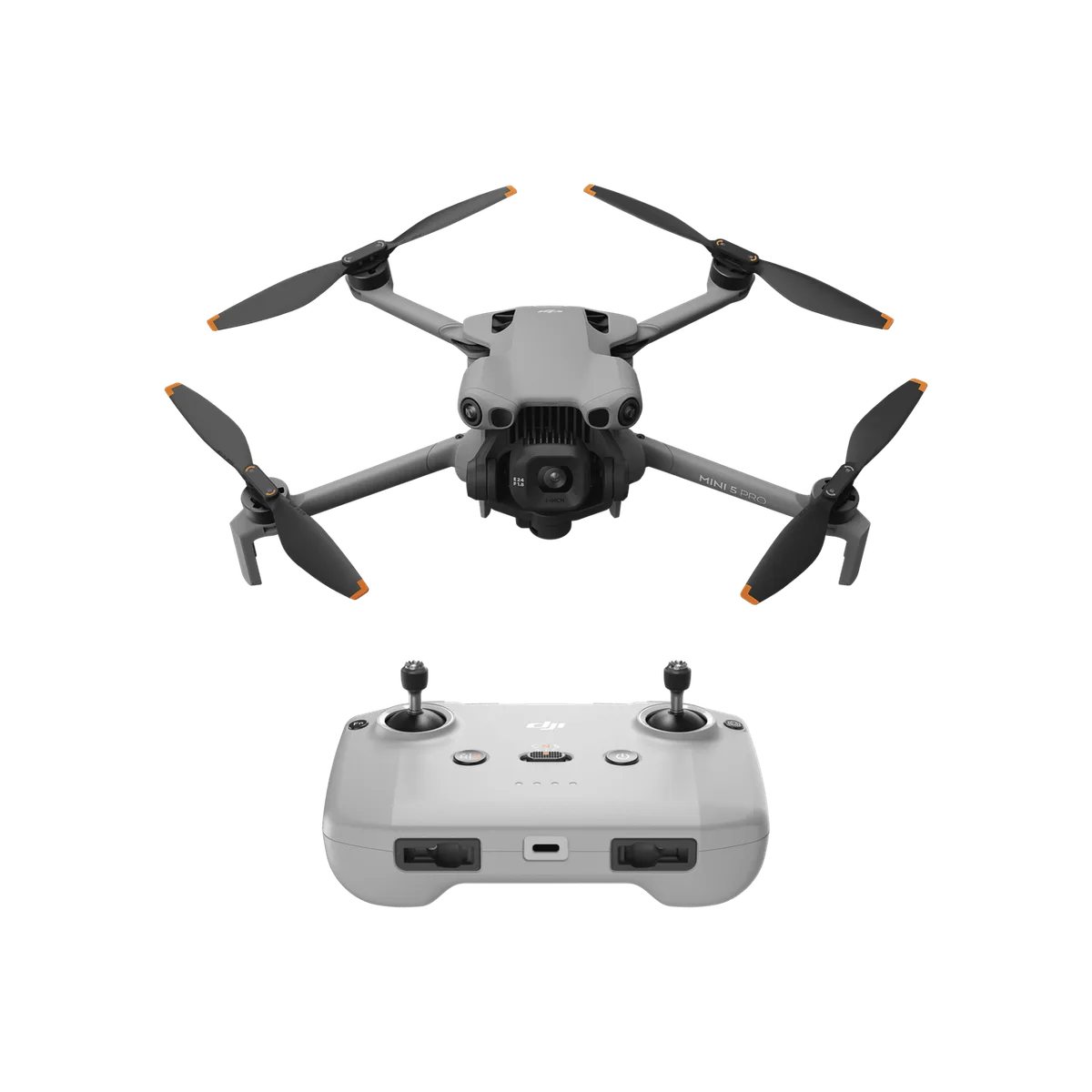
Specifications — Weight: 249.9g ±4g · Sensor: 1-inch, 50MP · Video: 4K/120 · Flight time: 36 min claimed · Range: 20km FCC / 10km CE · Sensing: omnidirectional plus forward LiDAR
Reasons to buy
- First sub-250g drone with a true 1-inch sensor
- Forward LiDAR, so it sees in low light
- 4K at 120fps
Reasons to avoid − Not officially sold in the US − The long-life battery breaks its own EU class rating − You will pay flagship money for a Mini
DJI put a 1-inch sensor in a 249.9g airframe, and that is the entire story. Everything below 250g used to mean accepting a small sensor and the noise that comes with it. The Mini 5 Pro removes the compromise that defined the category, and adds forward-facing LiDAR that most drones twice its price do not carry.
There is a catch, and it is a good example of why spec sheets mislead. DJI advertises up to 52 minutes of flight with the Intelligent Flight Battery Plus. Fit that battery and, in DJI’s own words, the aircraft “exceeds the C0 MTOM threshold and can no longer be operated as a C0 UAS within the EU.” The 52-minute drone and the sub-250g drone are not the same aircraft. In Europe you choose one.
Put simply: if you can buy it where you live, the Mini 5 Pro is the best personal drone in the world right now. In the US you cannot buy it from DJI at all — the company declined even to give it a product page — and the units reaching American buyers arrive through third-party retailers.
Top alternatives — DJI Mini 4 Pro – the same idea, one generation back, and available in more places. Potensic ATOM 3 – far cheaper, far less capable, and equally hard to buy in America.
Best in the US: DJI Mini 4 Pro
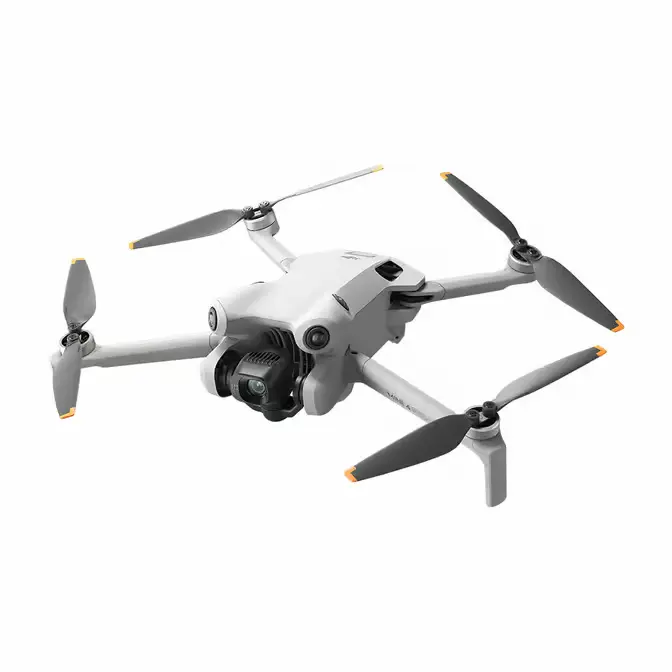
Specifications — Weight: under 249g · Sensor: 1/1.3-inch, 48MP · Video: 4K/100 · Flight time: 34 min claimed · Range: 20km FCC / 10km CE · Sensing: omnidirectional, no LiDAR
Reasons to buy
- Genuinely omnidirectional obstacle sensing
- Authorised before the December 2025 cutoff, so it stays on sale
- Still the most complete sub-250g package
Reasons to avoid − Superseded by the Mini 5 Pro − Smaller sensor than its replacement − The extended battery is not sold in Europe
This is the pragmatist’s answer. The Mini 4 Pro is a 2023 drone that has aged well, and its real advantage in 2026 is bureaucratic rather than technical: it received its FCC equipment authorisation before 22 December 2025, so it can still legally be sold in the United States while its successor cannot.
If you want a capable sub-250g camera drone and you want to buy it from a shop rather than a grey importer, this is the one. The sensor is smaller than the Mini 5 Pro’s and there is no LiDAR, but omnidirectional sensing is present and the software is mature.
Top alternatives — DJI Air 3S – bigger, better, 724g, and outside the sub-250g exemption. Potensic ATOM 2 – a third of the price if you can live without obstacle avoidance.
Best budget: Potensic ATOM 2
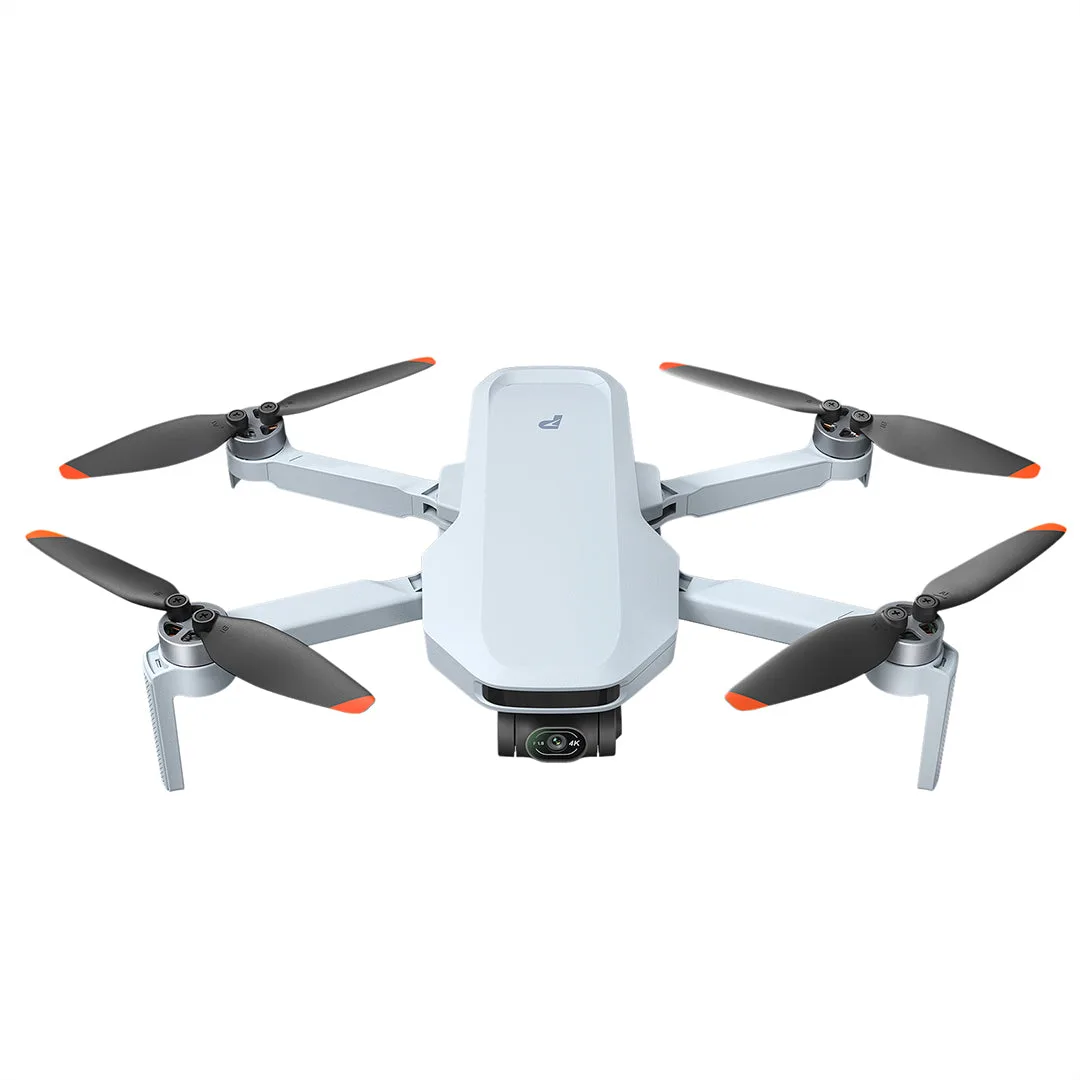
Specifications — Weight: under 249g · Sensor: 1/2-inch, 48MP · Video: 4K/30 · Flight time: 32 min claimed · Range: 10km · Sensing: downward positioning only
Reasons to buy
- $299 for a stabilised sub-250g 4K drone
- Still purchasable in the US
- Genuinely three-axis stabilised, not electronic-only
Reasons to avoid − No obstacle avoidance of any kind − 4K caps at 30fps − Its replacement is better and you cannot buy it in America
Potensic makes the most credible budget alternative to DJI, and the ATOM 2 is the model to have — not because it is the best one Potensic builds, but because it is the best one most people can buy. The ATOM 3, released in June 2026, has a 1/1.3-inch sensor and a claimed 40 minutes of flight for $429, and it is blocked from US sale for want of an FCC authorisation.
Be clear about what the money does not buy. Potensic states plainly that the ATOM 2 has no obstacle avoidance; the downward vision system is a hover aid. Neither Potensic nor Holy Stone ships collision avoidance on any current model, whatever the marketing copy implies about smart sensing. For a first drone flown in open country that is survivable. Flying it between trees is not.
Top alternatives — Holy Stone HS900 Pro – 249g, $389, also no obstacle avoidance. DJI Mini 4K – DJI build quality at the bottom of the range, with downward sensing only.
Best for creators: HoverAir X1 PROMAX
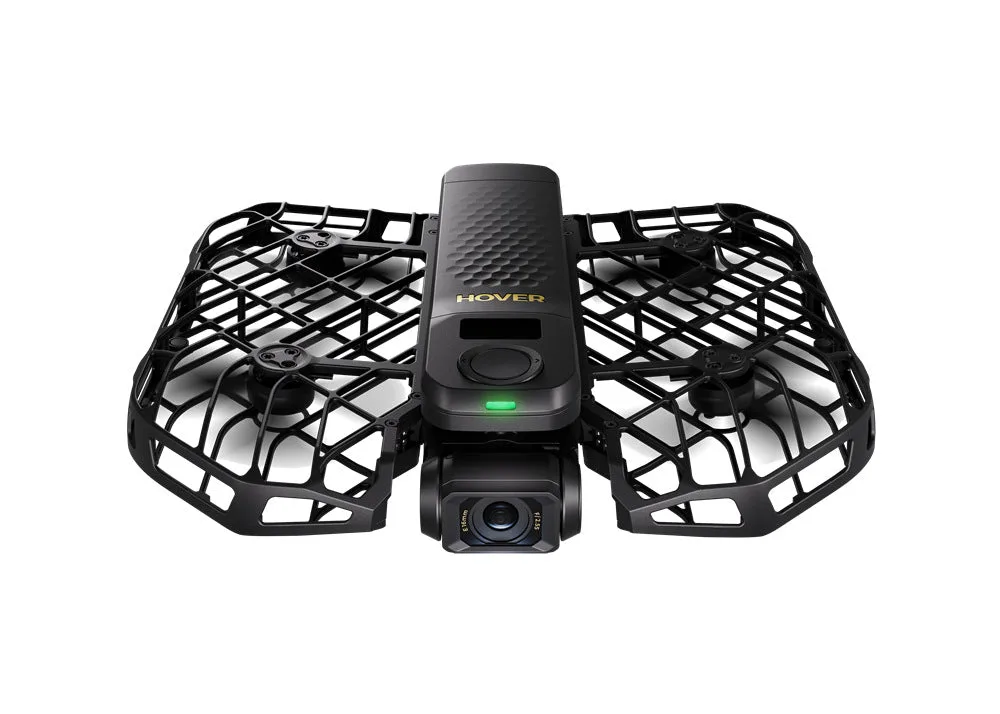
Specifications — Weight: 192g · Sensor: 1/1.3-inch, 48MP · Video: 8K/30, 4K/120 · Flight time: 16 min claimed · Control: phone app, optional Beacon to 1km · Sensing: rear only
Reasons to buy
- Launches from your hand and follows you
- 8K capture and 10-bit H-Log
- 192g, folds flat, genuinely pocketable
Reasons to avoid − 16 minutes in the air − Obstacle sensing is rear-facing only − Not a drone you fly so much as one you deploy
HoverAir has built the thing a lot of people actually wanted: a flying camera that requires no piloting. You unfold it, it lifts off your palm, it tracks you, it lands back in your hand. For cyclists, skiers and anyone filming themselves, that is a more useful machine than a better drone they never take out of the bag.
The compromises are real and worth stating flatly. Sixteen minutes is short. The obstacle sensing looks backwards only — there is nothing watching where it is going. And this is a category HoverAir invented and still leads, which means the alternatives are its own cheaper models rather than a competitor.
Top alternatives — HoverAir X1 PRO – $200 less, 4K instead of 8K, smaller sensor. DJI Neo 2 – 151g, cheaper, and it has omnidirectional sensing the HoverAir lacks.
Best new idea: Antigravity A1
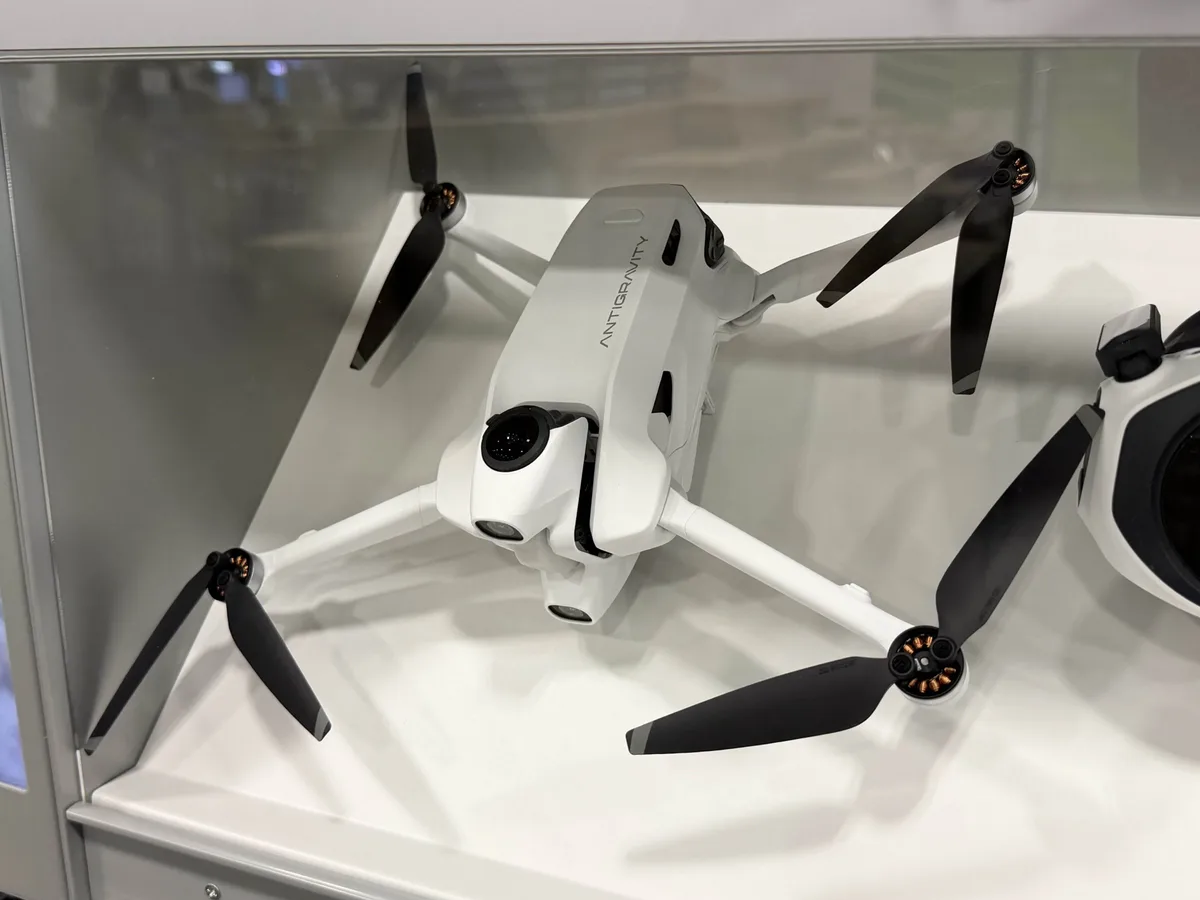
Specifications — Weight: 249g · Sensors: two 1/1.28-inch, 64MP each · Video: 8K 360° at 30fps · Flight time: 24 min claimed, 39 min with the large battery · Range: 10km FCC / 6km CE
Reasons to buy
- Full 360° capture, so you frame the shot afterwards
- 249g, which keeps it in the lightest regulatory class
- Goggles-based flying without FPV skills
Reasons to avoid − $1,599 before you add anything − Shipped without omnidirectional obstacle avoidance − A first-generation product from a first-generation brand
Antigravity is Insta360’s drone company, and the A1 does the obvious thing nobody had done: it films everything, in every direction, and lets you decide where to point the camera later. There is no gimbal to aim and no shot to miss.
One caveat belongs in the open. The A1 shipped in December 2025 with forward and downward sensing only; omnidirectional obstacle avoidance arrived in a software update on 28 April 2026. That is a good outcome for anyone who bought early, and a reminder that a spec sheet describes the drone as it is today rather than as it shipped.
Top alternatives — DJI Avata 360 – 8K spherical too, built for speed rather than stills. DJI Mini 5 Pro – a better camera if you do not need 360°.
Best FPV: DJI Avata 360
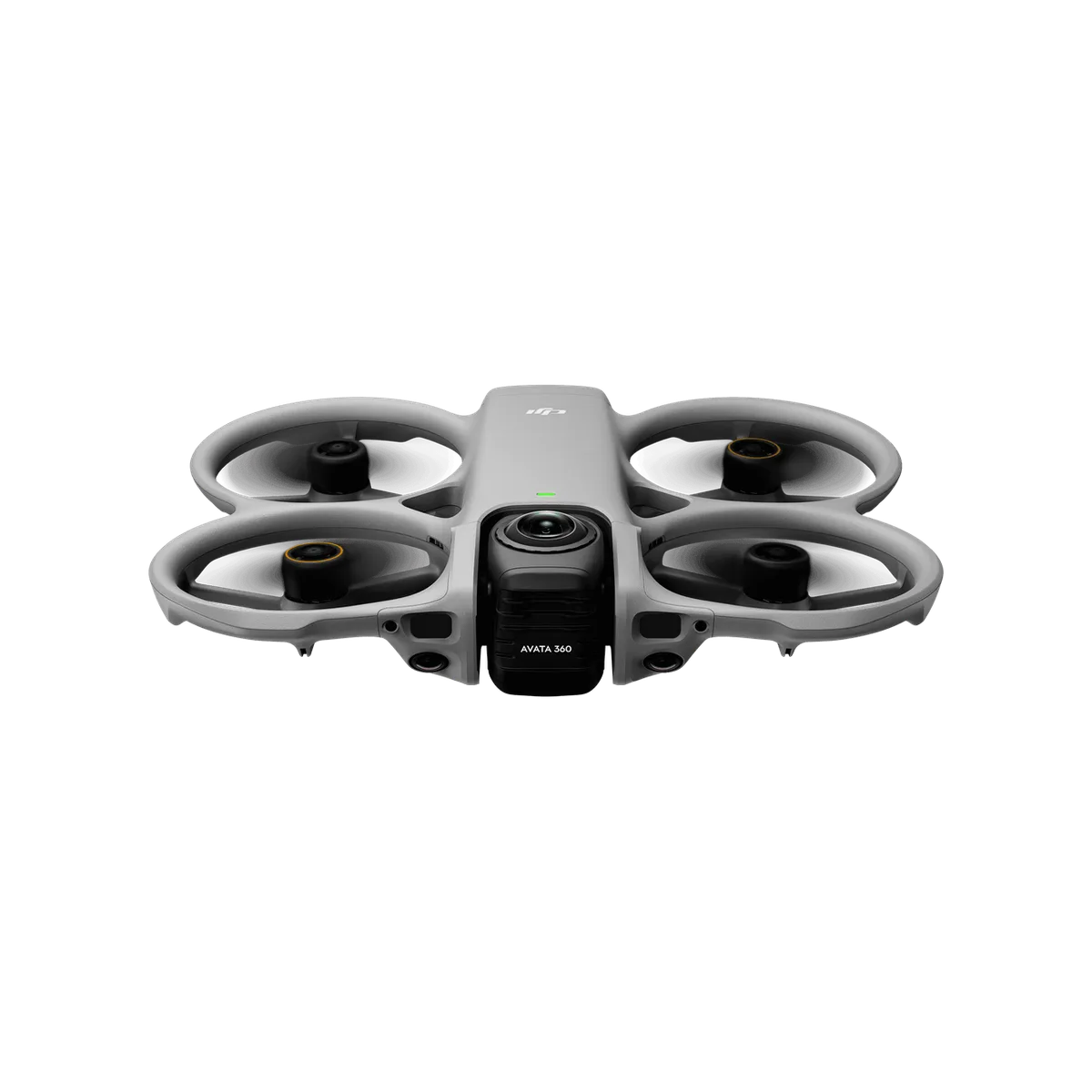
Specifications — Weight: 455g · Sensors: two 1/1.1-inch, 64MP each · Video: 8K at 60fps in 2:1 · Flight time: 23 min claimed · Range: 20km FCC / 10km CE · Sensing: omnidirectional plus forward LiDAR
Reasons to buy
- Ducted, so it survives contact
- Omnidirectional sensing on an FPV drone, which is rare
- The goggles bundle costs the same as the controller bundle
Reasons to avoid − 455g puts it outside every sub-250g exemption − 23 minutes − FPV has a learning curve no software removes
DJI’s FPV line stopped being a niche when it started carrying real cameras, and the Avata 360 is the current answer. Note that there is no Avata 3, whatever the rumour sites said — this is the successor.
The pricing has a quirk worth exploiting. The Motion Fly More Combo, which includes goggles and the motion controller, costs exactly the same as the standard Fly More Combo with the screen controller. If you are buying an FPV drone at all, take the goggles.
Top alternatives — DJI Avata 2 – still sold, 377g, but no true obstacle avoidance. Antigravity A1 – 360° capture in a lighter aircraft.
Best for water: HoverAir AQUA
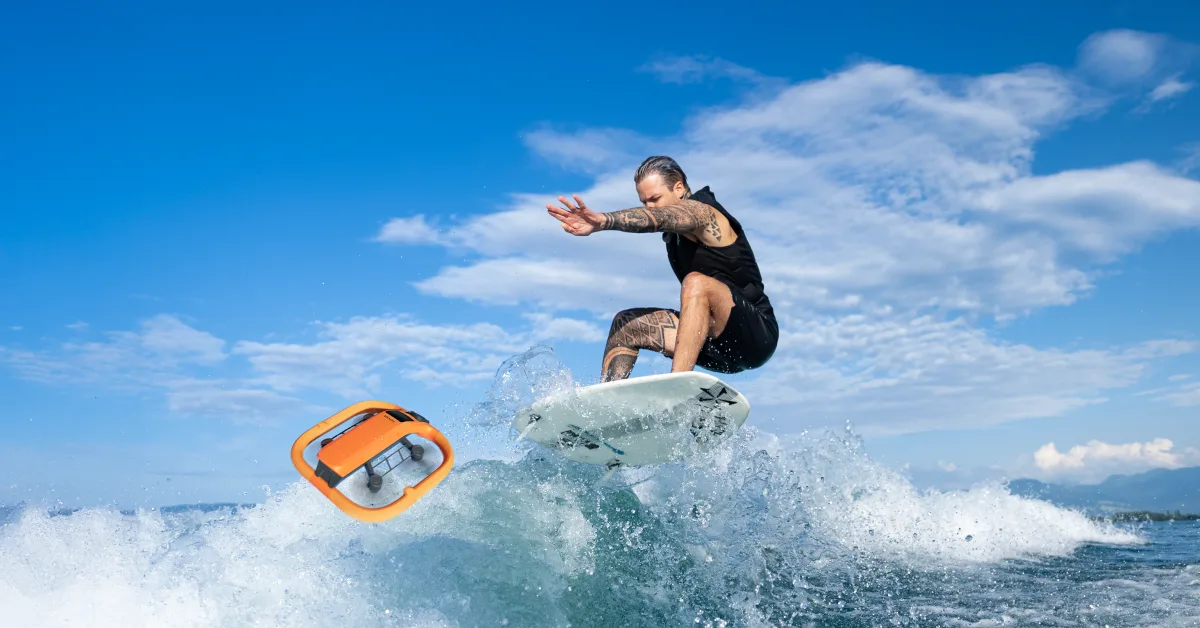
Specifications — Weight: 249g · Sensor: 1/1.28-inch · Video: 4K/100 · Flight time: 23 min claimed · Wind resistance: 17 m/s · Sealing: IP67, positively buoyant
Reasons to buy
- Takes off from and lands on water
- Rated to 17 m/s of wind, far beyond its class
- 249g despite the sealing
Reasons to avoid − No obstacle avoidance at all − 128GB internal storage and no card slot − Not sold in the United States
Nobody else makes this. The AQUA floats, launches off the surface, and is rated for conditions that would ground most consumer drones — level 7 wind, against the level 5 that is standard in this class. For sailing, surfing or anything coastal it has no direct competitor.
It is also the clearest illustration of this year’s central problem. The AQUA launched on 28 May 2026 in more than fifty countries and skipped the United States entirely, because it had not obtained FCC certification before the December 2025 cutoff. The best drone in its category for an American buyer is one they cannot legally be sold.
Top alternatives — HoverAir X1 PROMAX – the same follow-me idea, dry land only. DJI Mini 5 Pro – a better camera in a drone you keep away from water.
Best flagship: DJI Mavic 4 Pro
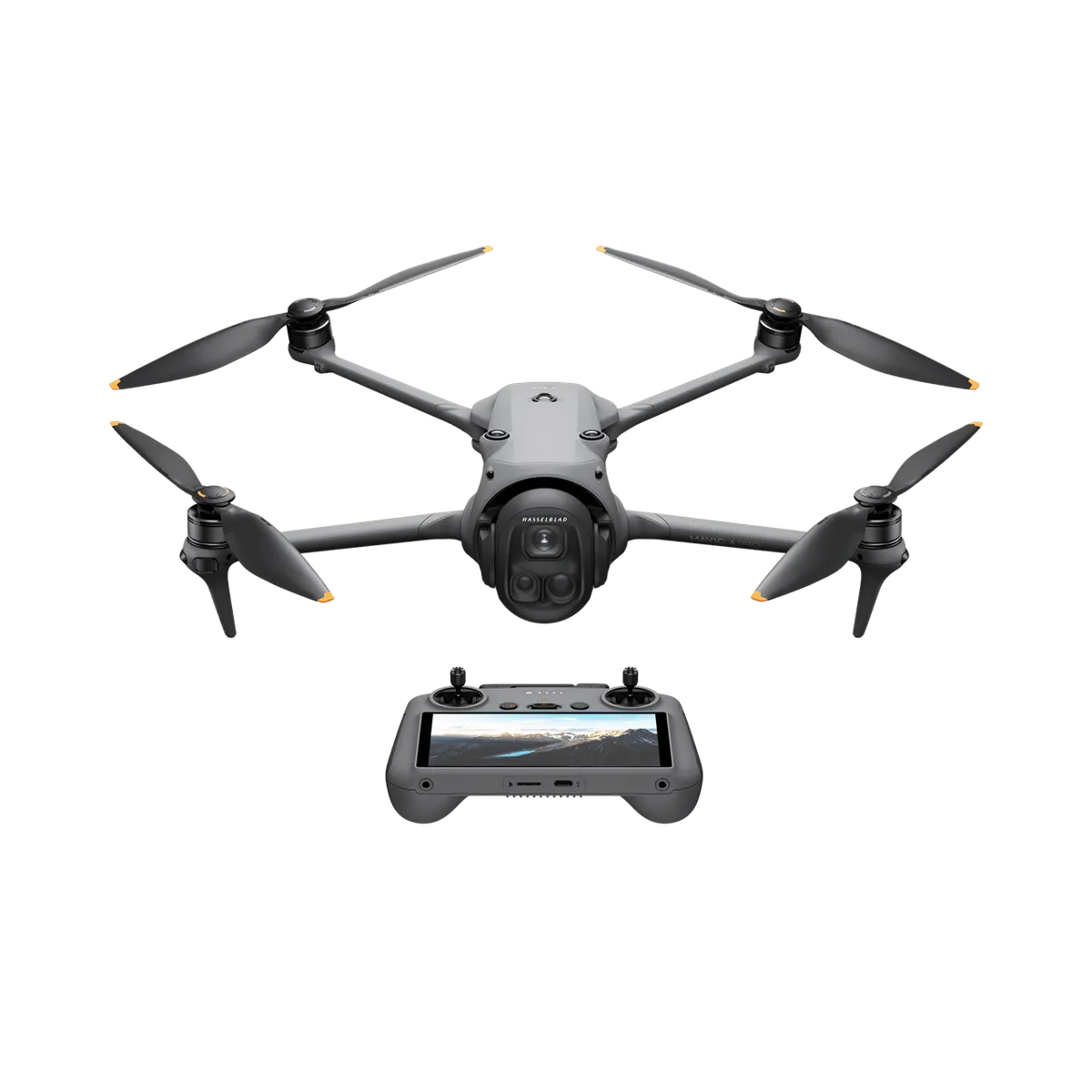
Specifications — Weight: 1063g · Sensors: 100MP Four Thirds Hasselblad plus 48MP and 50MP telephotos · Video: 6K/60 · Flight time: 51 min claimed · Range: 30km FCC / 15km CE
Reasons to buy
- A 100MP Four Thirds sensor, which is medium-format thinking in a drone
- Three cameras covering 28mm to 168mm
- 51 minutes
Reasons to avoid − Never officially launched in the US − Over a kilogram, so it is an A3 aircraft in Europe − Warranty is only valid in the region of purchase
If image quality is the only thing that matters, this is the drone. Three cameras, a Hasselblad main sensor at 100MP, and nearly an hour aloft.
American buyers should read the small print carefully. DJI never launched the Mavic 4 Pro in the US, citing tariffs and customs problems, and the units on the shelves at major US retailers are international imports. DJI’s warranty is valid only in the region of purchase. On a drone at this price, that is not a footnote.
Top alternatives — DJI Air 3S – two thirds of the capability at a third of the weight. DJI Mini 5 Pro – if you would rather stay under 250g than gain a sensor.
Also consider
- DJI Neo 2 – 151g, omnidirectional sensing and forward LiDAR at the bottom of DJI’s range. Remarkable for the size.
- DJI Air 3S – 724g, dual camera, 45 minutes. The sensible middle of the DJI line, and widely available.
- Potensic ATOM 3 – 1/1.3-inch sensor and a claimed 40 minutes for $429, if you are outside the US.
- Holy Stone HS900 Pro – 249g and $389, with no obstacle avoidance.
- Holy Stone SATURN T60A – Holy Stone’s 2026 flagship at 666g, which puts it in a different regulatory class entirely.
- DJI Mini 4K – the cheapest DJI worth owning, with downward sensing only. DJI’s US store listed it as discontinued in September 2026; third-party sellers still have it.
- HoverAir VERSA – a modular gimbal that clips into a flight kit, announced in August 2026. Not yet shipping, and the FCC has already set aside its certification as granted in error.
How to choose, depending where you live
The weight class is the decision, not the camera. Everything else follows from whether your drone is under the threshold in your jurisdiction.
In the EU, the number that matters is 250g, but not for the reason most people think. Under 250g with a C0 mark buys you the A1 subcategory and the right to fly over uninvolved people. It does not buy you an exemption from registration: you must register if the aircraft is 250g or more, or can transfer more than 80 joules on impact, or carries a sensor that can capture personal data. Every camera drone triggers the third test. Remote ID follows the class mark rather than the weight — C1, C2 and C3 need it, C0 does not. On 18 September 2026 EASA proposed replacing all of this with a single 100g line for both registration and Remote ID. Nothing changes until the European Commission adopts it.
If you own a drone bought before 2024 without a class mark, the transitional regime that used to accommodate it expired on 31 December 2023. A legacy aircraft under 250g is A1; a legacy aircraft under 25kg is A3, flown 150 metres from built-up areas. There is nothing in between any more.
In the UK, the rules changed on 1 January 2026 and this is where buyers are most likely to get caught out. Britain now operates its own UK0 to UK6 class scheme. EU C marks are recognised only until 31 December 2027 — after which a C-marked drone becomes a legacy aircraft governed by weight alone. Buy a C2 drone today and it loses its A2 privileges in Britain at the end of next year.
The UK registration floor is also 100g, not 250g. A Flyer ID is required above 100g. An Operator ID, which costs £12.34 a year and must be labelled on the airframe, is required above 100g if there is a camera. That catches the 125g HoverAir X1 and the 151g DJI Neo 2, which in the EU need an operator registration only because they carry cameras.
In the US, every drone in this guide became 25% more expensive to import on 3 September 2026. Section 232 tariffs from a proclamation signed on 13 August took effect that day. The table above carries the whole schedule — every band, both country caps and the two routes to relief. The row that applies to this guide is the first one: 25% on aircraft at or below 25kg, which is the entire consumer category. These duties stack on top of existing tariffs rather than replacing them.
Three consequences worth being blunt about.
First, treat every US price in this guide as a pre-tariff list price. They were checked against manufacturer and retailer listings and none of them yet reflects the duty. Ask a retailer which they are quoting: stockpiled pre-September inventory is still being sold at old prices in places, and that stock is finite.
Second, the deferral that softened the blow elsewhere does not reach this shelf. Platforms on the Blue UAS Cleared List or the FCC’s Conditional Approval List as of 2 September got 180 days before the duties applied. That is an enterprise and defence roster. No drone in this guide qualified, and neither DJI nor Autel holds a conditional approval, so consumer buyers took the full rate on day one.
Third, the 100% band is not a consumer problem. It is triggered by thermal imaging, weight above 25kg and docking stations, none of which describes a camera drone you fly for fun. If you are buying from this guide, the number that applies to you is 25%.
Separately, the de minimis exemption that let you import an $800 order duty-free is gone, suspended indefinitely since June 2026 for everything except international post. Ordering direct from a Chinese seller to dodge US pricing no longer works.
On what you may fly, rather than what you may buy, the position is more relaxed than the coverage suggests. The FCC added all foreign-produced drones to its Covered List on 22 December 2025. It blocks new equipment authorisations. Anything authorised before that date can still be sold, and anything you already own remains perfectly legal to fly. Nothing has been grounded and nothing is being recalled.
What it does mean is that the newest and best models are shut out: the Mini 5 Pro, the Mavic 4 Pro, the Potensic ATOM 3 and the HoverAir AQUA are all unavailable or import-only. Separately, US Customs has been detaining DJI shipments since October 2024 under forced-labour legislation, which explains empty shelves better than the FCC action does.
The FCC approvals table on this page goes brand by brand through the FCC’s own records: the last product each foreign maker had approved before the cut-off, and what it has been granted since. Of ten brands checked on 12 October, only Parrot has new drone approvals still standing, versions of an aircraft on the Pentagon’s Blue UAS list. HoverAir’s VERSA was approved, then the FCC withdrew it. DJI’s last approval was the Avata 360, on 19 November 2025.
One piece of misinformation is worth correcting, since it has been repeated widely. DJI and Autel were not added to the Covered List automatically because no agency completed the audit Congress ordered. The FCC acted on an affirmative interagency national security determination it received on 21 December 2025, one day before the deadline. Its own public notice says so.
In Canada, 250g is the line and it is a clean one. Below it, no registration, no pilot certificate, nothing to pay. At 250g and above you register the aircraft for $10, mark it, and hold at least a Basic pilot certificate. Transport Canada has no Remote ID requirement. One change from the 2025 rules does catch light drones: flying even a sub-250g aircraft at an advertised event now needs a special flight operations certificate.
In Japan, the threshold is 100g, not 250g — and this is the one that catches travellers out. Every aircraft of 100g or more must be registered, marked, and fitted with broadcasting Remote ID. The 249g travel drone that needs no registration in Canada, none for recreational flying in the US and only an operator registration in the EU is fully regulated in Japan. No licence is needed for straightforward daylight flying within sight, but most Japanese cities are designated densely inhabited districts, which pushes ordinary urban flying into a category that needs approval.
In India, do not buy any drone in this guide. Since February 2022 the import of complete foreign-made drones has been prohibited outright — not restricted, prohibited — with exceptions only for government bodies, recognised research institutions and manufacturers. There is no consumer exception. Components remain freely importable, which is why the domestic assembly market exists, but a DJI or a HoverAir cannot lawfully enter the country in a traveller’s bag.
The follow-on trap is worse. Indian rules require every drone to be registered for a unique identification number, and unlike most countries there is no exemption for sub-250g aircraft — the nano category is exempt from type certification, pilot certification and insurance, but not from registration. Guides that tell Indian readers a 249g drone needs no paperwork are wrong. And because registration requires proof of lawful import, a grey-market aircraft cannot be legitimately registered at all. The regulator began cancelling registrations obtained on false declarations in August 2025.
In China, the 250g line exists but is not the line you think. It is measured on empty weight, excluding battery, and it comes bundled with hard performance ceilings: to count as micro, an aircraft must also stay under 50 metres altitude and 40km/h. Several sub-250g models sold elsewhere fail the speed test and land in the next category up, which brings supervision and controlled-airspace training requirements with it. Every civil drone must be registered regardless of weight, and micro, light and small aircraft must broadcast identification continuously in flight — a stricter Remote ID regime than either the EU or the US operates. Visitors should also know that flying a foreign drone on anything a Chinese authority construes as surveying or mapping carries fines starting at ¥100,000 and possible deportation.
Everywhere else, 250g is the most portable rule of thumb in consumer aviation — most jurisdictions use it as the registration or licensing threshold — but Japan, India and China each show why it is a starting point for research rather than a substitute for it.
Where you cannot take a drone at all
Weight classes stop mattering in a number of countries, because the aircraft never gets past customs. These are not places where flying is restricted; they are places where owning or importing the thing is the offence. Four different regimes get muddled together in most travel advice, and the distinction determines what actually happens to you.
Possession itself is illegal. Nicaragua is in a category of its own — a 2024 law prohibits possessing a drone and required existing owners to surrender them.
Confiscated at the border. Cuba takes drones on arrival and returns them when you leave. Bhutan seizes them outright, and permits import only for government agencies. Morocco and Algeria both prohibit import without prior authorisation, though the British and Canadian governments describe Morocco’s regime slightly differently — Canada says confiscation on entry, the UK says get permission from the civil aviation directorate first.
Permits that exist on paper and not in practice. Egypt requires Ministry of Defence permission to import, use or produce a drone, with prison sentences of up to seven years for going without. Iran, Uzbekistan and Saudi Arabia all operate permit-only regimes that a tourist will not realistically satisfy.
Senegal is the newest. The civil aviation authority banned recreational and private drone flights across the whole country in January 2026, after a drone incident during a national football parade. Only authorised professional operators may fly. Note this is reported by Senegalese national press rather than published on the regulator’s own website.
And one that is genuinely workable. Barbados prohibits import but publishes a real exemption: declare the drone to customs on arrival, apply to the Telecommunications Unit, pay about sixteen US dollars, and take the drone home with you when you leave. It is usually reported as a flat ban. It is not.
Antarctica prohibits recreational drone use in coastal areas — not by treaty, but by an agreement among the tour operators that carry essentially all visitors.
Three corrections worth making, because the lists circulating online repeat them. Madagascar is not a ban country — since 2025 it has operated a weight-based permit system where anything under 250g for personal use needs no authorisation at all. Kyrgyzstan is not a ban country either; the restriction is on flying near military and security sites. And Turkmenistan, which appears on almost every banned-countries list, has no drone prohibition we could find in any retrievable official source.
If you are travelling with a drone, check the destination’s own rules before you go, not after you land — and check the current advice rather than a listicle, because this list changed twice in the past year.
What we would buy
If you are in Europe and want the best: the Mini 5 Pro, with the standard battery, and accept 36 minutes rather than 52 so it stays a C0 aircraft.
If you are in the US: the Mini 4 Pro, because it is excellent and because you can actually buy it.
If you have never flown: the Potensic ATOM 2 or the DJI Mini 4K, and fly them somewhere with nothing to hit.
If you want to be in the shot rather than behind it: the HoverAir X1 PROMAX.
And if you are in the US, the window closed on 3 September. The 25% duty is now in force, so the question is no longer whether to beat it but where the remaining pre-tariff stock is. Ask before you order whether the price you are quoted is old inventory or a landed cost, and do not wait for the market to settle: nothing in the proclamation expires, and no domestic replacement is coming.
One last thing worth saying plainly, because most buying guides avoid it. There is no credible American or European consumer drone in 2026. Skydio, Freefly, BRINC and Inspired Flight all sell exclusively to enterprise, public safety or defence. Parrot left the consumer market by 2020 and now lists four professional models. Anzu Robotics, which tried to bridge the gap with US assembly on a licensed DJI platform, stopped production in February 2026 and is being sued by the Texas Attorney General.
So the American consumer market in 2026 is a legacy-inventory market: a shrinking catalogue of foreign-built aircraft that happened to clear FCC authorisation before the December 2025 cutoff, getting older and now more expensive, with no domestic replacement arriving. A rule written around Chinese security risk was drafted broadly enough to cover every foreign-produced drone, including allied European manufacturing, and its practical effect on consumers has been to freeze the product cycle rather than to seed an alternative to it.
Can You Still Buy a DJI Drone in the US?
Yes, if it was authorised by the FCC before 22 December 2025: the Mini 4 Pro and Air 3S, for example, remain legal to sell and fly. Newer models such as the Mini 5 Pro and Mavic 4 Pro are not sold by DJI in the US and reach buyers only through third-party retailers, and US Customs has detained DJI shipments since October 2024.
Do You Need to Register a Drone Under 250 g?
It depends on the country. In the EU you must register if the aircraft carries a camera, whatever it weighs; in the UK and Japan the floor is 100 g; in Canada and the US a sub-250 g drone flown for fun needs no registration; in India every drone must be registered, with no exemption for weight.
How Much Is the US Tariff on Drones?
25% on imported drones at or below 25 kg, in force since 3 September 2026 and charged on top of existing duties. The 100% rate applies to aircraft over 25 kg, anything with a thermal imager and docking stations, none of which describes a consumer camera drone, and no drone in this guide qualified for the 180-day deferral given to Blue UAS and FCC-approved platforms.
What Is the Best Drone Under 250 g?
The DJI Mini 5 Pro, the first sub-250 g drone with a 1-inch sensor, with forward LiDAR and 4K at 120 fps; fitted with its standard battery it stays a C0 aircraft in Europe. In the US, where DJI does not sell it, the Mini 4 Pro is the one to buy.
Sources
- Manufacturer specification pages for every aircraft named: dji.com, potensic.com, hoverair.com, holystone.com, antigravity.tech. Flight time, range and sensing figures are the manufacturers’ claims.
- Proclamation adjusting imports of unmanned aircraft systems, signed 13 August 2026, in force 3 September 2026; the full schedule is the table above.
- FCC equipment authorization search, searched by each maker’s grantee code on 12 October 2026, for the brand approvals table.
- FCC public notice DA 25-1086, 22 December 2025, adding foreign-produced drones, DJI and Autel to the Covered List.
- Commission Implementing Regulation (EU) 2019/947 on the rules and procedures for the operation of unmanned aircraft.
- EASA Opinion No 06/2026, 18 September 2026, proposing a single 100 g threshold for registration and direct Remote ID.
- UK Civil Aviation Authority, CAP 2320 (March 2026) and the CAA’s class-mark and Remote ID pages, for the UK0 to UK6 scheme in force since 1 January 2026.
- Transport Canada, Drone safety, for the 250 g registration threshold.
- Japan Ministry of Land, Infrastructure, Transport and Tourism, unmanned aircraft registration rules; India’s Drone Rules 2021 and the Directorate General of Foreign Trade notification of 9 February 2022 prohibiting drone imports; the Civil Aviation Administration of China’s interim regulations on unmanned aircraft.
Coverage
Dallas Man Faces 8 Years for Drone Flights at Two Airports
Prosecutors say his drone crossed an active runway at Love Field one night and entered DFW's restricted airspace the next.
FCC Moves to Stop Recognising Device Test Labs in China
By the FCC's count, 82% of device testing last year happened in one country. From December 2028, a drone's radio would need a lab elsewhere.
EASA Proposes Drone Registration and Remote ID From 100 g
Model-flying clubs objected. EASA kept the line anyway, saying security officials set it rather than its own safety assessment.
FCC Bars New Drones With DJI Parts From 13 October
From 13 October the FCC will refuse authorisation to any new device containing a DJI or Autel logic-bearing component, wherever the rest of it is built.
US Drone Tariffs of Up to 100% Take Effect September 3
A Section 232 proclamation puts 100% duties on drones over 25kg and on thermal imagers, and 25% on everything lighter, starting September 3.
Flytrex Sky2 Can Deliver Two Large Pizzas by Drone
Flytrex's Sky2 octocopter launches with Little Caesars in Texas, carrying nearly 9 pounds of food per delivery.
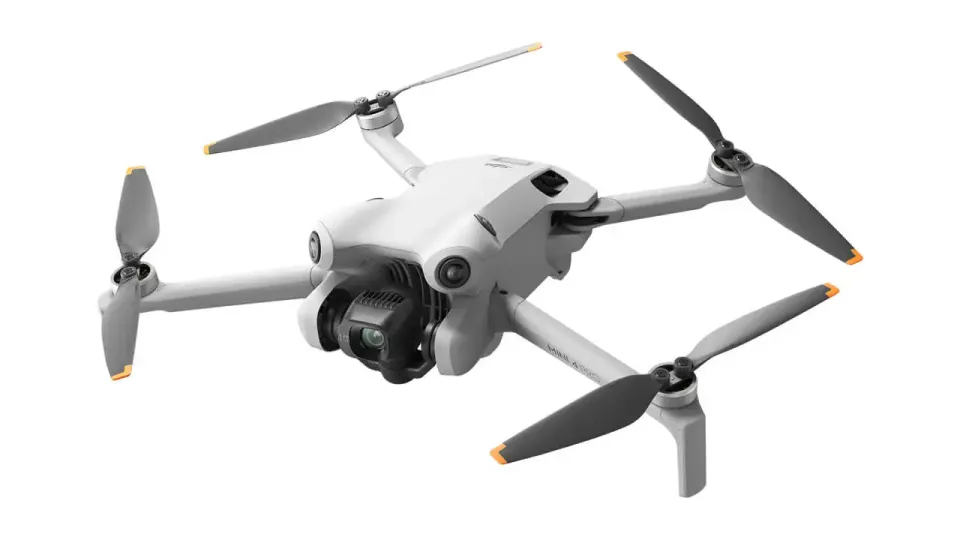
Skyrover S1 vs DJI Mini 4 Pro: Specs, Prices and FCC Status
The S1 costs less and claims longer flights. The FCC has proposed stopping its sale, and DJI's US store lists the Mini 4 Pro out of stock.
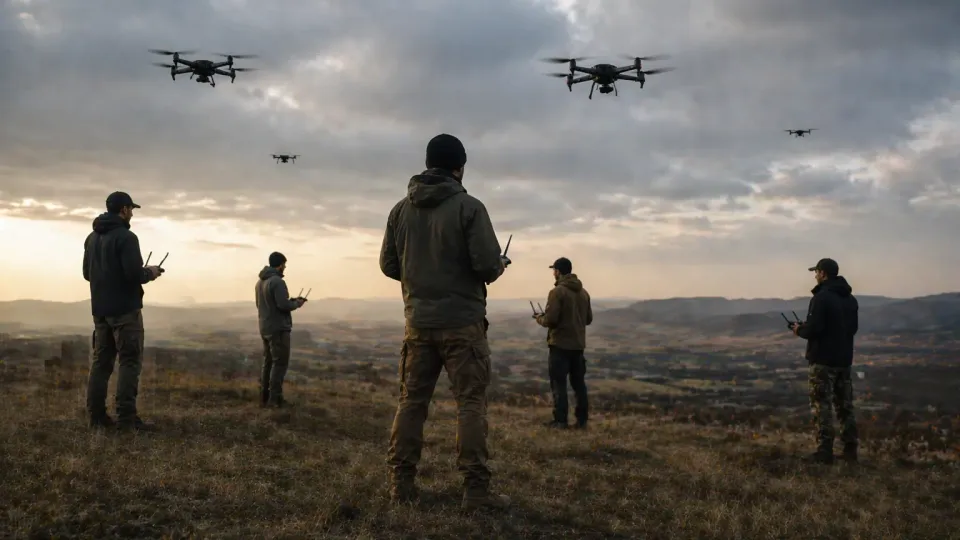
FAA Drops Criminal Threat for Drone Flights Near Vehicles
FAA rescinds NOTAM FDC 6/4375, removing criminal prosecution threats for drone pilots flying near federal law enforcement assets.
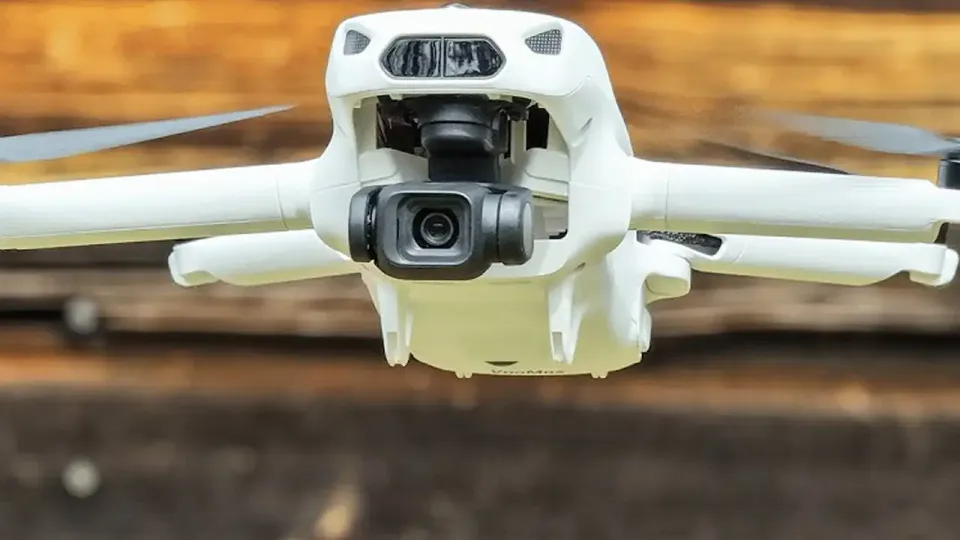
DJI Lito X1: Sub-250g Drone Launches Without the US
DJI's Lito X1 weighs under 249g with a three-axis gimbal. It launched in April outside the US, where DJI says its authorization is pending.
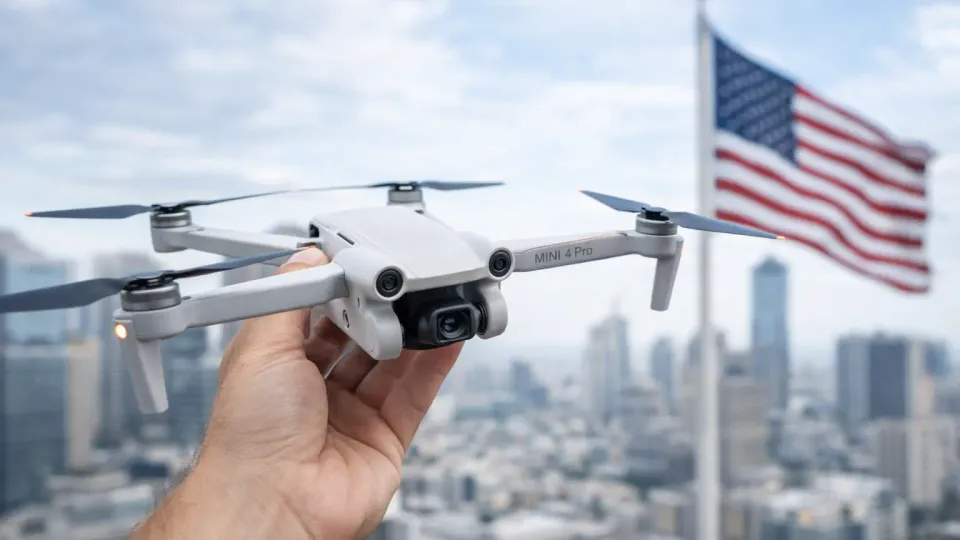
No One Is Replacing DJI in the US Consumer Market
Ten months after the FCC shut out new foreign-made drones, no American consumer drone has filled DJI's place. US makers are selling to the military.
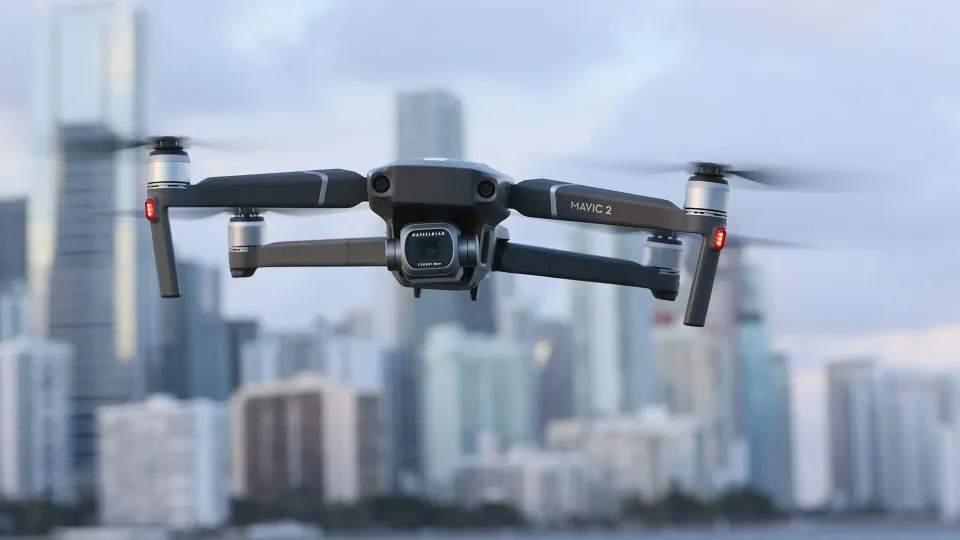
Beijing Bans Drone Sales and Storage in Urban Areas
Beijing's May 1 drone restrictions — sales bans, storage caps, mandatory registration — signal a tightening global model.
Companies
DJI
Chinese private manufacturer of consumer, enterprise and agricultural drones, cameras and imaging systems.
China
Autel Robotics
Chinese drone manufacturer producing consumer and commercial UAVs, including the EVO and Dragonfish series, with a growing defense-adjacent presence.
China
Unusual Machines
US drone manufacturer and components distributor building NDAA-compliant drones and parts to cut American dependence on Chinese supply chains.
United States
Amazon Prime Air
Amazon's drone delivery division, flying autonomous last-mile delivery in the US and UK and attempting a sixfold expansion of its service area in 2026.
United States
Flytrex
Israeli drone delivery company flying suburban restaurant orders in Texas and North Carolina for DoorDash and Uber Eats under Causey Aviation's Part 135.
Israel
Manna Aero
Irish drone delivery company operating commercial BVLOS delivery services in Ireland, Finland, and Texas with over 250,000 completed flights.
Ireland
Red Cat Holdings
US defense drone company supplying NDAA-compliant small unmanned systems for military reconnaissance through its Teal Drones subsidiary.
United States
Skydio
US drone manufacturer building AI-powered autonomous aircraft, supplying NDAA-compliant enterprise and defense drones to agencies and operators.
United States
Products
HoverAir AQUA
Zero Zero Robotics
A 249 g self-flying camera that floats, takes off from water and is rated for Level 7 wind. Nothing else does the job, it has no obstacle avoidance, and it is not sold in the United States.
DJI Avata 360
DJI
The first FPV drone with a native 360° camera and the first with omnidirectional obstacle sensing. At 455 g it lives outside every sub-250 g exemption, and 23 minutes is what you get.
Antigravity A1
Antigravity (Insta360)
The first drone with a built-in 8K 360-degree camera, flown through goggles and a one-hand grip rather than sticks, at 249 g. New enough that nobody has flown it for a year, and $1,599 buys a way of flying as much as an aircraft.
DJI Neo 2
DJI
A 151 g self-flying camera with the omnidirectional sensing and forward LiDAR its predecessor lacked, at a price that makes it the cheapest DJI worth buying. Nineteen minutes and a 1/2-inch sensor are the limits.
DJI Mini 5 Pro
DJI
The first sub-250 g drone with a 1-inch sensor, and the best consumer drone you can buy in 2026 if you live somewhere DJI will sell it to you.
DJI Mavic 4 Pro
DJI
The best camera ever put on a folding drone: a 100 MP Four Thirds Hasselblad with two telephotos behind it, 51 minutes in the air, and a gimbal that rotates through vertical. Not sold by DJI in the United States.
Funding
Series B
ARK Invest, Ireland Strategic Investment Fund, Schooner Capital, Coca-Cola HBC, Molten Ventures, Enterprise Ireland, Tapestry
Manna AeroUndisclosed
Fidelity Management & Research Company, Baillie Gifford, Valor Equity Partners, Tiger Global
ZiplineContracts
Japan Acquisition, Technology & Logistics Agency
Red Cat Holdings
173 Black Widow sUAS systems, each with two aircraft and a ground control station, for the Japan…
Powerus
Unusual Machines
Supply contract from Autonomous Power Corporation (Powerus) for US-manufactured components for…
U.S. Air Force
Skydio
Order from U.S. Air Forces Central for Skydio Dock and X10 autonomous drone systems to provide…
U.S. Army
Skydio
Order of more than $52 million for over 2,500 X10D drones, described as the largest single-vendor…