

FAA Regulation
Drone BVLOS Rules 2026: FAA Part 108 and EU U-Space
Part 108 is in final review and could make routine BVLOS legal in the US. Europe regulated first and is now simplifying. Where both stand.
Updated
33 news articles on FAA Regulation ↓
Every aircraft on the FAA’s Section 44807 approved list
The 202 aircraft on the FAA’s 2 October 2026 list under 49 U.S.C. 44807, with type, approved take-off weight and which of the two lists each sits on.
Checked· Latest addition: ABZ Innovation Kft.,
- Covers
- Every aircraft on the FAA’s Section 44807 approved list, compared revision by revision.
- Leaves out
- Permission to fly: an operator still needs its own exemption naming the aircraft.
Spotted an error? Email [email protected] with the row and the document that shows it.
202 of 202
| Maker | Model | Type | Approved MTOW | List |
|---|---|---|---|---|
| ABZ Innovation Kft.1 | L30 V2 | Multi-Rotor | 158.70 lb | Main list |
| ABZ Innovation Kft.2 | L50 V1 | Multi-Rotor | 238.10 lb | Main list |
| AgrowDrone | UAS-e-M5 | Multi-Rotor | 80.5 lb | Main list |
| AgrowDrone | UAS-e-M10 | Multi-Rotor | 146.6 lb | Main list |
| AgTS | FireEye | VTOL Hybrid | 75.8 lb | Main list |
| AiRanger | UAS | Fixed Wing | 220 lb | Main list |
| Argo | 1 | Multi-Rotor | 280 lb | Main list |
| Astraeus Aerial | V.4CS | Multi-Rotor | 75 lb | Main list |
| ASW | Heavy Lift Quadcopter | Multi-Rotor | 70.5 lb | Main list |
| ASW | Heavy Lift Hexacopter | Multi-Rotor | 99.2 lb | Main list |
| ASW | Heavy Lift Octocopter | Multi-Rotor | 158.7 lb | Main list |
| Avidrone3 | 490TL | Multi-Rotor | 130.10 lb | Main list |
| BFD Systems | GD40 | Multi-Rotor | 120 lb | Main list |
| BROUAV | U30L-6 | Multi-Rotor | 146.6 lb | Main list |
| BROUAV | 52L-8 | Multi-Rotor | 264.55 lb | Main list |
| BROUAV | U60 | Multi-Rotor | 242.5 lb | Main list |
| BROUAV | D-72L-8 | Multi-Rotor | 324.08 lb | Main list |
| CERES AIR4 | C6 | Multi-Rotor | 147 lb | Main list |
| CERES AIR | C12 | Multi-Rotor | 253.53 lb | Main list |
| CERES AIR5 | C31 | Multi-Rotor | 603.34 lb | Main list |
| CERES AIR | C40 | Multi-Rotor | 660 lb | Main list |
| Chengdu JOUAV Drone6 | CW-30 | VTOL Hybrid | 75 lb | Main list |
| DJI7 | Agras T10 | Multi-Rotor | 59.10 lb | Main list |
| DJI | Agras T16 | Multi-Rotor | 92.6 lb | Main list |
| DJI | Agras T20P | Multi-Rotor | 127.86 lb | Main list |
| DJI | Agras T20 | Multi-Rotor | 104.5 lb | Main list |
| DJI | Agras T25P | Multi-Rotor | 116.85 lb | Main list |
| DJI | Agras T25 | Multi-Rotor | 127.8 lb | Main list |
| DJI | Agras T30 | Multi-Rotor | 171.96 lb | Main list |
| DJI | Agras T40 | Multi-Rotor | 222.66 lb | Main list |
| DJI | Agras T50 | Multi-Rotor | 227.07 lb | Main list |
| DJI | Agras T70P | Multi-Rotor | 286.60 lb | Main list |
| DJI | Agras T100 | Multi-Rotor | 390.21 lb | Main list |
| DJI8 | Flycart 30 | Multi-Rotor | 209.73 lb | Main list |
| DJI | Flycart 100 | Multi-Rotor | 330 lb | Main list |
| DJI | Heavy Lift | Multi-Rotor | 99.2 lb | Main list |
| DJI | Storm UAS | Multi-Rotor | 99 lb | Main list |
| DMR Technologies Inc | Field Ranger X-50 | Multi-Rotor | 330.69 lb | Main list |
| Draganfly | Heavylift | Multi-Rotor | 174 lb | Main list |
| EAVision9 | EA-J70 (J100 EVO) | Multi-Rotor | 257.94 lb | Main list |
| EAVision | EA-J100 | Multi-Rotor | 253.53 lb | Main list |
| EAVision | EA-J150 | Multi-Rotor | 330.47 lb | Main list |
| EFT | Z50 | Multi-Rotor | 209.44 lb | Main list |
| EFT | Z50P | Multi-Rotor | 223.54 lb | Main list |
| ElectraFly | EF-3 | Multi-Rotor | 150 lb | Main list |
| Event 38 | E500 | VTOL Hybrid | 630 lb | Main list |
| Exedy Drones10 | Ayre CX | Multi-Rotor | 218.70 lb | Main list |
| FLARES | 2.0 | Multi-Rotor | 209.43 lb | Main list |
| FlyingBasket SRL | FB3 | Multi-Rotor | 393.50 lb | Main list |
| Forward Robotics Inc. | U9Q | Multi-Rotor | 330.69 lb | Main list |
| Freefly Systems11 | Alta X | Multi-Rotor | 76.9 lb | Main list |
| Freespace | Callisto 50 | Multi-Rotor | 114.64 lb | Main list |
| Gaia | 160-AG | Multi-Rotor | 115 lb | Main list |
| GCS Agri Tech | L30 | Multi-Rotor | 149.9 lb | Main list |
| GCS Agri Tech | L50 | Multi-Rotor | 218.26 lb | Main list |
| GTEEX | Revolution I-19 | Multi-Rotor | 330 lb | Main list |
| GTEEX | Revolution R-32 | Multi-Rotor | 575 lb | Main list |
| GTEEX | Revolution R-37 | Multi-Rotor | 625 lb | Main list |
| GTEEX | Revolution R-40 | Multi-Rotor | 660 lb | Main list |
| Guardian Agriculture | MOE | Multi-Rotor | 494 lb | Main list |
| Guardian Agriculture12 | SC1 UAS | Multi-Rotor | 842 lb | Main list |
| Harris Aerial | Carrier H6 HL | Multi-Rotor | 209.4 lb | Main list |
| HSE/TTA | M6A Pro G200 | Multi-Rotor | 83.8 lb | Main list |
| HSE/TTA | M8A Pro | Multi-Rotor | 98.8 lb | Main list |
| Huida Tech13 | HD540 Pro | Multi-Rotor | 209.4 lb | Main list |
| Huida Tech | HD540S | Multi-Rotor | 218.25 lb | Main list |
| Huida Tech | HD580 | Multi-Rotor | 330.69 lb | Main list |
| Hylio Inc. | AG-116/AG-216 | Multi-Rotor | 105 lb | Main list |
| Hylio Inc. | AG-122 | Multi-Rotor | 140 lb | Main list |
| Hylio Inc. | AG-130/AG-230 | Multi-Rotor | 165 lb | Main list |
| Hylio Inc. | AG-152/AG-252 | Multi-Rotor | 265 lb | Main list |
| Hylio Inc. | AG-172/AG-272 | Multi-Rotor | 400 lb | Main list |
| Hylio Inc. | H-450 | Multi-Rotor | 300 lb | Main list |
| Hylio Inc. | H-600 | Multi-Rotor | 432 lb | Main list |
| Hylio Inc. | HYL-150 | Multi-Rotor | 353 lb | Main list |
| Hylio Inc. | HYL-150 HYBRID | Multi-Rotor | 960 lb | Main list |
| Hylio Inc.14 | HYL-300 | Multi-Rotor | 960 lb | Main list |
| Joyance | JT20L-606 | Multi-Rotor | 107.14 lb | Main list |
| Joyance | JT30L-606 | Multi-Rotor | 146.6 lb | Main list |
| Joyance | JTC30 | Multi-Rotor | 147.7 lb | Main list |
| Joyance15 | JTC150 | Multi-Rotor | 150 lb | Main list |
| Joyance16 | JTC150T | Multi-Rotor | 150 lb | Main list |
| JTI | M60Q | Multi-Rotor | 154.32 lb | Main list |
| L3 Harris Technologies | FVR-55 | VTOL Hybrid | 70 lb | Main list |
| L3 Harris Technologies17 | HQ-90/FVR-90 UAS | VTOL Hybrid | 130 lb | Main list |
| Latitude | HQ-60 | VTOL Hybrid | 95 lb | Main list |
| Leigh Aerosystems | Athena A200 | VTOL Hybrid | 400 lb | Main list |
| Malloy Aeronautics | TRV-80 | Multi-Rotor | 126 lb | Main list |
| Malloy Aeronautics | TRV-150 | Multi-Rotor | 254 lb | Main list |
| MFD | 5000 | Multi-Rotor | 92 lb | Main list |
| Neany18 | Arrow | Fixed Wing | 1,350 lb | Main list |
| Offshore Aviation | OA-2E Phoenix | Fixed Wing | 70 lb | Main list |
| Offshore Aviation | OA-2G Firebird | VTOL Hybrid | 88 lb | Main list |
| Offshore Aviation | OA-2H | VTOL Hybrid | 260 lb | Main list |
| Offshore Aviation | OA-2S | Fixed Wing | 225 lb | Main list |
| Parallel Flight Technologies19 | FIREFLY | Multi-Rotor | 270 lb | Main list |
| Precision Vision | 30 (PV-30), Model SiCX-25 | Multi-Rotor | 71 lb | Main list |
| Precision Vision | 35 (PV-35) | Multi-Rotor | 79 lb | Main list |
| Precision Vision | 35X | Multi-Rotor | 74 lb | Main list |
| Precision Vision | 40X | Multi-Rotor | 114 lb | Main list |
| Precision Vision | 100X | Multi-Rotor | 210.2 lb | Main list |
| Pulse Aerospace | Vapor 55 | Helicopter | 63 lb | Main list |
| Schiebel20 | CAMCOPTER S-100 | Helicopter | 441 lb | Main list |
| Shotover | S1/U1 | Multi-Rotor | 132.2 lb | Main list |
| Shotover | U1 Series III | Multi-Rotor | 219 lb | Main list |
| Skyways | V2.50 UAS | VTOL Hybrid | 155 lb | Main list |
| Skyways | V2.7 UAS | VTOL Hybrid | 156.3 lb | Main list |
| Skyways | V3.1 UAS | VTOL Hybrid | 326.8 lb | Main list |
| Spider-i UAV | M30 | Multi-Rotor | 152.33 lb | Main list |
| Spider-i UAV | M50 | Multi-Rotor | 218.25 lb | Main list |
| Spider-i UAV | M65 | Multi-Rotor | 244.71 lb | Main list |
| Spider-i UAV | H60-4 | Multi-Rotor | 131.39 lb | Main list |
| Spider-i UAV | H160 | Multi-Rotor | 365.96 lb | Main list |
| Spider-i UAV | H200 | Multi-Rotor | 425.49 lb | Main list |
| Spider-i UAV | H300 | Multi-Rotor | 559.97 lb | Main list |
| SwissDrones | SDO 50 V2 | Helicopter | 191.8 lb | Main list |
| SwissDrones | SDO 50 V3 | Helicopter | 191.8 lb | Main list |
| Talos | T60X | Multi-Rotor | 275 lb | Main list |
| Textron Systems21 | Aerosonde Mk4.7-40 | Fixed Wing | 80 lb | Main list |
| Textron Systems | Aerosonde Mk4.7-50 | Fixed Wing | 93 lb | Main list |
| TopXGun22 | FP700 | Multi-Rotor | 330.69 lb | Main list |
| TYI Model Technology Co. | 3WTYI6-30C | Multi-Rotor | 143.3 lb | Main list |
| USI | Sandstorm | Fixed Wing | 80 lb | Main list |
| Vector | HD580 | Multi-Rotor | 330.69 lb | Main list |
| Velary | LIFT 10 | Multi-Rotor | 121 lb | Main list |
| Velary | LIFT 10 Hexa | Multi-Rotor | 154 lb | Main list |
| Velary | LIFT 10 Quad | Multi-Rotor | 143 lb | Main list |
| Vertical Autonomy LLC23 | VA-55 | VTOL Hybrid | 70 lb | Main list |
| Vertical Autonomy LLC24 | VA-60 | VTOL Hybrid | 95 lb | Main list |
| Vertical Autonomy LLC25 | VA-120 | VTOL Hybrid | 130 lb | Main list |
| Watts Innovations | AERO Sky UA | VTOL Hybrid | 85.44 lb | Main list |
| XAG26 | P40 | Multi-Rotor | 106.04 lb | Main list |
| XAG | V40 | Multi-Rotor | 105.8 lb | Main list |
| XAG | P60 | Multi-Rotor | 148.81 lb | Main list |
| XAG | P100 | Multi-Rotor | 201.72 lb | Main list |
| XAG | P100 PRO | Multi-Rotor | 243 lb | Main list |
| XAG | P100 PRO 50L | Multi-Rotor | 243 lb | Main list |
| XAG | P100 PRO 60L | Multi-Rotor | 265 lb | Main list |
| XAG | P150 | Multi-Rotor | 282.19 lb | Main list |
| XAG | P150 Max | Multi-Rotor | 308.64 lb | Main list |
| Yamaha | FAZER | Helicopter | 274 lb | Main list |
| Yamaha | FAZER R | Helicopter | 244 lb | Main list |
| Yamaha | FAZER R-AP | Helicopter | 244 lb | Main list |
| Yamaha27 | RMAX | Helicopter | 207.23 lb | Main list |
| Yamaha / Drone America Inc. | FAZER SAR | Helicopter | 244 lb | Main list |
| ZenaDrone | 1000 | Multi-Rotor | 264.56 lb | Main list |
| Zephyr | ARK-350 | VTOL Hybrid | 101.8 lb | Main list |
| Amazon | MK27 | VTOL Hybrid | 88 lb | Specific application |
| Amazon28 | MK30 | VTOL Hybrid | 83.05 lb | Specific application |
| Anduril Industries Inc29 | CPJ-100 | Fixed Wing | 120 lb | Specific application |
| Anduril Industries Inc30 | Ghost UAS | Helicopter | 80 lb | Specific application |
| BlueFlite31 | 461.001-UC Cobalt | Multi-Rotor | 54.98 lb | Specific application |
| DroneUp32 | PRISM V2 | Multi-Rotor | 54.9 lb | Specific application |
| DroneUp | PRISM V2.3 | Multi-Rotor | 54.9 lb | Specific application |
| Event 3833 | E455 | VTOL Hybrid | 74.9 lb | Specific application |
| Equinox | Falcon Heavy | Multi-Rotor | 99.99 lb | Specific application |
| FireSparrow34 | Mk10 | Multi-Rotor | 250 lb | Specific application |
| Flytrex35 | FTX-M600P | Multi-Rotor | 33 lb | Specific application |
| Flytrex | Sky2 | Multi-Rotor | 32.6 lb | Specific application |
| FulcrumAir | E7500 | Multi-Rotor | 220 lb | Specific application |
| Galaxy Unmanned Systems LLC | GC35-E2 | Airship UAS | 113.7 lb | Specific application |
| Galaxy Unmanned Systems LLC | GC35-E4 | Airship UAS | 99.5 lb | Specific application |
| Galaxy Unmanned Systems LLC | GC50-E4 | Airship UAS | 279.6 lb | Specific application |
| Hermeus | Quarterhorse Mark 1 | Fixed Wing | 9,500 lb | Specific application |
| Hermeus36 | Quarterhorse MK 2.1 | Fixed Wing | 30,000 lb | Specific application |
| Ideal Aerosmith | Group 3 UAS | Fixed Wing | 110 lb | Specific application |
| Infravision37 | HeDRA-100 | Multi-Rotor | 520 lb | Specific application |
| Infravision38 | IFD-9000 | Multi-Rotor | 244 lb | Specific application |
| KUNFIRM INNOVATIVE SERVICES LLC | VSG-HL-01 Bolt | Helicopter | 275 lb | Specific application |
| Navmar Applied Sciences Corporation | Teros UAS | Fixed Wing | 1,800 lb | Specific application |
| Matternet39 | M2-sUAS | Multi-Rotor | 29.1 lb | Specific application |
| PteroDynamics | X-P4 | VTOL Hybrid | 89 lb | Specific application |
| Pyka Inc.40 | Pelican (3 engine) | Fixed Wing | 1,125 lb | Specific application |
| Pyka Inc. | Pelican (4 engine) | Fixed Wing | 1,320 lb | Specific application |
| Rigitech | Eiger | VTOL Hybrid | 46.2 lb | Specific application |
| Rigitech | Eiger-03 | VTOL Hybrid | 46 lb | Specific application |
| Rotor Technologies Inc.41 | R220 Sprayhawk | Helicopter | 1,370 lb | Specific application |
| Rotor Technologies Inc.42 | R550 | Helicopter | 2,500 lb | Specific application |
| Shield AI43 | VBAT | VTOL Hybrid | 168.2 lb | Specific application |
| Telegrid | DE2020 | Multi-Rotor | 22.5 lb | Specific application |
| LV 144 | C17 Globemaster | Fixed Wing | 205 lb | Specific application |
| TP 1 | Falcon 8x | Fixed Wing | 80 lb | Specific application |
| TP 3 | KLM Cargo Flying Dutchman | Fixed Wing | 90 lb | Specific application |
| TP 4 | HondaJet | Fixed Wing | 60 lb | Specific application |
| TP 5 | G550 | Fixed Wing | 90 lb | Specific application |
| TP 7 | Cessna Skylane | Fixed Wing | 60 lb | Specific application |
| TP 8 | Tomahawk Bayhawk One | Fixed Wing | 200 lb | Specific application |
| TP 11 | Viper One | Fixed Wing | 80 lb | Specific application |
| TP 13 | Piper Cub | Fixed Wing | 80 lb | Specific application |
| TP 15 | Vision Jet | Fixed Wing | 250 lb | Specific application |
| TP 16 | Falcon 7x | Fixed Wing | 240 lb | Specific application |
| TP 18 | Falcon 6x | Fixed Wing | 80 lb | Specific application |
| TP 20 | Falcon F2000 | Fixed Wing | 80 lb | Specific application |
| TP 21 | 747 | Fixed Wing | 180 lb | Specific application |
| TP 22 | C17 Globemaster | Fixed Wing | 330 lb | Specific application |
| TP 23 | Boeing 777 | Fixed Wing | 650 lb | Specific application |
| Wing Aviation45 | Hummingbird | VTOL Hybrid | 14.4 lb | Specific application |
| Wing Aviation | Hummingbird 7000W-A | VTOL Hybrid | 14 lb | Specific application |
| Wing Aviation | Hummingbird 7000W-B | VTOL Hybrid | 14.4 lb | Specific application |
| Wing Aviation | Hummingbird 8000-A | VTOL Hybrid | 24.3 lb | Specific application |
| Zipline46 | P1 | Fixed Wing | 49.3 lb | Specific application |
| Zipline47 | P2 | VTOL Hybrid | 63 lb | Specific application |
| Nothing matches that search. | ||||
Notes
- ABZ Innovation Kft. Hungarian. Its larger sibling, the L50 V1, joined the list on 2 October 2026.
- ABZ Innovation Kft. Added in the 2 October 2026 revision. It also holds an FCC conditional approval (12 June 2026).
- Avidrone Approved weight raised from 125 lb in the 2 October 2026 revision.
- CERES AIR Added in the 8 July 2026 revision. Also on the FCC conditional approvals table (22 June 2026).
- CERES AIR Approved weight raised from 537.20 lb in the 8 July 2026 revision. Ceres Air also holds an FCC conditional approval for the C40, C31, C26, C20 and C6 (22 June 2026), so it is one of five makers on both lists.
- Chengdu JOUAV Drone Chinese. The only VTOL fixed-wing aircraft from a Chinese maker on the list.
- DJI The first of fifteen DJI rows. Every DJI aircraft here is cleared by the FAA to fly while DJI sits on the FCC Covered List: the two lists answer different questions, safety of flight and security of the radio, and neither agency reads the other’s.
- DJI A delivery aircraft, not a sprayer. The Flycart 100 follows it.
- EAVision Chinese sprayer maker; three rows.
- Exedy Drones FCC conditional approval on 24 July 2026 under the Exedy Globalparts name. On both lists.
- Freefly Systems The Alta X Blue Package configuration is on the Blue UAS Cleared List, which makes the airframe one of the few cleared by both the FAA and DoD.
- Guardian Agriculture Massachusetts. The heaviest electric multirotor on the main list after Hylio’s two 960 lb aircraft.
- Huida Tech Chinese sprayer maker. The Vector HD580 further down carries the same model number and the same 330.69 lb as the Huida HD580.
- Hylio Inc. Texas. Ten Hylio rows, the most of any US maker; the two 960 lb aircraft are the heaviest multirotors on the main list.
- Joyance Added in the 8 July 2026 revision.
- Joyance Added in the 8 July 2026 revision.
- L3 Harris Technologies Formerly the Latitude Engineering HQ-90; the Latitude HQ-60 row below is the same lineage.
- Neany The heaviest aircraft on the main list.
- Parallel Flight Technologies Hybrid heavy-lift aircraft. FCC conditional approval on 24 July 2026. On both lists.
- Schiebel Austrian. A military rotary UAS in a list otherwise dominated by crop sprayers.
- Textron Systems The Aerosonde is a military ISR aircraft; this is a civil safety determination for it, not an agricultural one.
- TopXGun Added in the 8 July 2026 revision.
- Vertical Autonomy LLC Added in the 8 July 2026 revision. The three Vertical Autonomy weights match the L3Harris FVR-55, Latitude HQ-60 and L3Harris FVR-90 entries.
- Vertical Autonomy LLC Added in the 8 July 2026 revision.
- Vertical Autonomy LLC Added in the 8 July 2026 revision.
- XAG Chinese. XAG has nine rows, second only to DJI, and as a foreign-produced maker is likewise covered by the FCC’s December 2025 listing.
- Yamaha The RMAX has sprayed Japanese rice fields since the 1990s and was the first drone the FAA cleared for commercial use, in 2015, under the Section 333 process that 44807 replaced.
- Amazon The aircraft Prime Air flies today; the MK27 above is its predecessor. Amazon also holds a Part 135 certificate, listed in the delivery operators table.
- Anduril Industries Inc Added in the 8 July 2026 revision, Anduril’s second aircraft in the appendix.
- Anduril Industries Inc A military helicopter drone with a civil safety determination; the only defence prime in the appendix.
- BlueFlite Michigan. Added in the 1 June 2026 revision, a week after its FCC conditional approval on 26 May. On both lists.
- DroneUp Delivery. DroneUp is in the Part 135 delivery operators table.
- Event 38 Added in the 2 October 2026 revision.
- FireSparrow Added or changed in the 1 June 2026 revision.
- Flytrex Delivery. Flytrex is in the Part 135 delivery operators table.
- Hermeus The FAA document prints the weight as “30, 000 lbs.”; read here as 30,000. The heaviest entry anywhere on the list, and a hypersonic test aircraft rather than a drone in the usual sense.
- Infravision Added or changed in the 1 June 2026 revision, with the IFD-9000 below.
- Infravision Added or changed in the 1 June 2026 revision.
- Matternet Delivery. Matternet is in the Part 135 delivery operators table and holds a type certificate for the M2, which is why it needs this list less than the others.
- Pyka Inc. Electric crop-spraying aeroplane; the four-engine variant follows.
- Rotor Technologies Inc. A converted Robinson R22 helicopter flown without a pilot. Added or changed in the 1 June 2026 revision.
- Rotor Technologies Inc. Added or changed in the 1 June 2026 revision.
- Shield AI A military VTOL fixed-wing aircraft with a civil safety determination.
- LV 1 From here to TP 23 the FAA lists what appear to be large scale-model aircraft under the codes LV and TP rather than a maker’s name. The document does not explain the codes; the rows are carried as printed.
- Wing Aviation Wing’s delivery aircraft, at 14.4 lb the lightest entries on the list. Wing is in the Part 135 delivery operators table. The FAA prints the first weight as “14.4lbs.”
- Zipline The fixed-wing Zip that flies in Rwanda and Ghana.
- Zipline The P2 Zip, the aircraft in the Houston highway landing of 2026. Zipline is in the Part 135 delivery operators table.
Where this comes from. Extracted by FlightBrief from the FAA’s List of Approved UAS under 49 U.S.C. § 44807, revision of 2 October 2026, published as attachment 1 to document FAA-2023-1271-0030 on regulations.gov, compared row by row with the 1 June 2026 revision (document 0028) from which the table was first built. The FAA publishes the list only as that PDF, with no dates and no changelog, and withdraws each revision when the next is posted; its asterisk marks only what changed since the previous one. Rows dated 2 October are the ones it asterisked in that revision. Rows dated 8 July are new since 1 June but not asterisked on 2 October, so they arrived in the withdrawn 8 July revision. Rows noting the 1 June 2026 revision carry the FAA’s asterisks from that one. Nothing earlier about when a row appeared can be established. Being on the list is a safety determination for the aircraft, not permission to fly it: an operator still needs its own grant of exemption naming the aircraft. Main list aircraft can be added to an exemption by reference; Specific application aircraft need a full petition with manuals and a safety case each time. Weights are the FAA’s figures as printed. Where a note says a maker is on the FCC conditional approvals table or the Part 135 delivery operators table, those tables are on the NDAA and drone delivery guides.
Sources
- FAA, List of Approved UAS under 49 U.S.C. § 44807, docket FAA-2023-1271 document 0030, attachment 1, updated 2 October 2026
- FAA, the same list, document 0028, attachment 2, from which the table was first built, revised 1 June 2026
- FAA docket FAA-2023-1271 on regulations.gov, where each revision is posted
Cite or reuse this table
FlightBrief, “Every aircraft on the FAA’s Section 44807 approved list”, checked Oct 8, 2026, https://flightbrief.news/topics/faa-regulation/#dataset-faa-44807-approved-uas
Free to reuse, including commercially, under CC BY 4.0. Credit FlightBrief and link to this page.
Guide
The rule that decides whether American drone operators can fly beyond visual line of sight without begging for a waiver each time has been sitting at the White House budget office since July 10. That’s the last stop before publication. When it clears, Part 108 becomes the biggest change to US drone regulation since Part 107 landed in 2016.
Europe went the other way. It wrote its framework first, adopted it in 2021, made it applicable in January 2023, and has spent the three years since discovering how few member states were ready to use it. Now Brussels is drafting a stripped-down version of its own rules to get things moving.
Two regulators, two philosophies, one shared problem: nobody has worked out how to let large numbers of drones fly out of sight of their operators without something going wrong. Here’s where each of them actually is.
Key facts
- Part 108, the FAA’s rule for routine beyond-visual-line-of-sight flight, was proposed on 7 August 2025 and has been under final review at the White House Office of Information and Regulatory Affairs since 10 July 2026. Until it publishes, BVLOS in the United States runs on Part 107 waivers and Section 44807 exemptions.
- Part 107 stops at 55 pounds. Heavier aircraft fly on Section 44807 exemptions; the FAA’s approved list, reproduced in the table on this page, runs to 202 aircraft as of its 2 October 2026 revision.
- Eight US operators hold Part 135 air carrier certificates for drone delivery. The FAA has issued environmental approvals in 2026 for Wing in Houston and Atlanta and Zipline in Dallas-Fort Worth, and published a draft for Zipline’s five-metro Texas expansion on 11 September 2026.
- The EU’s U-space regulations (2021/664, 665 and 666) have applied since 26 January 2023. There is still no pan-European U-space network, and EASA is consulting on a simplified “U-space Light” tier.
- The FAA’s proposed Part 108 would report drone accidents to the FAA, not a public docket; today an uncertified delivery drone that lands on a road with no injuries triggers no mandatory report at all.
Why BVLOS Is the Whole Game
Almost all the commercial value in drones sits beyond visual line of sight. Delivery, pipeline and powerline inspection, mapping at scale, infrastructure survey — none of it works if a human has to stand in a field watching the aircraft.
Keeping a visual observer within sight of every drone caps your operation at roughly one aircraft per person. That’s a business with no operating leverage. The moment one operator can supervise several aircraft from a desk, the unit economics change completely.
So when people argue about Part 108 or U-Space, they’re arguing about whether the drone industry gets to have a business model.
Where Part 108 Actually Stands
The FAA published its BVLOS proposal on August 7, 2025. Comments closed on October 6. The agency then reopened the window on January 28, 2026, specifically on right-of-way rules and electronic conspicuity — the two areas that drew the most disagreement — and closed it again on February 11.
On July 10, 2026, the final rule went to the Office of Information and Regulatory Affairs. Executive Order 12866 gives OIRA 90 days to review a significant rule, a window that ran to 8 October 2026; on that date OIRA still listed the rule as pending review. The order lets the review run longer, once by up to 30 days with the budget director’s approval, or at the agency’s request. No final rule has been issued.
What it does, if it lands as proposed: replaces the Part 107 waiver system with a standing framework for routine BVLOS, covering aircraft up to 1,320 pounds. Operators would qualify under a set of rules rather than applying for individual permission and waiting.
The waiver system is what everyone is trying to escape. It’s slow, it’s decided case by case, and it doesn’t scale. An operator running one route can live with it. An operator running four hundred cannot.
Until a final rule takes effect, the existing path still applies. If you want to fly BVLOS in the US today, you need a Part 107 waiver.
One caution from the agency itself. Robert Reckert, acting division manager of the FAA’s Emerging Technologies Division, said in September that “just because the rule is done doesn’t mean that the work is done.” His point was that safety and flight data, maintenance, weather and personnel all keep mattering after publication. A rule opens the door. It doesn’t fly the aircraft.
Europe Built the Framework First
U-Space is the EU’s mandatory digital system for managing drone traffic at low altitude. Three implementing regulations adopted in April 2021 replaced ad-hoc national approvals with certified service providers, automated flight authorisation and real-time traffic data.
Inside designated U-Space airspace — geo-zones each member state defines after its own risk assessment — every drone operation goes through a certified U-Space Service Provider. The USSP handles authorisation, coordination and airspace data. It’s API-driven. No human controller is managing individual drone flights.
The three regulations split the work. 2021/664 defines U-Space itself: the services, the actors, the certification requirements. 2021/665 connects U-Space to existing air traffic management so USSPs and conventional ATC can exchange data. 2021/666 covers how crewed aircraft behave inside U-Space airspace, including electronic conspicuity so drones can see them coming.
What U-Space Actually Requires
Article 5 of 2021/664 sets four mandatory services in any designated U-Space airspace.
- Network identification — continuous transmission of drone ID, position, velocity and status. Europe’s version of network Remote ID.
- Geo-awareness — real-time delivery of airspace constraints and no-fly zones to operators before and during flight.
- Flight authorisation — digital submission and automated approval of flight plans by a USSP before each operation.
- Traffic information — data on other conspicuous traffic, crewed and uncrewed, in the same airspace.
Weather information and conformance monitoring are optional, left to member states or providers. Everything past those six capabilities counts as advanced or future service.
The U1 through U4 tiers people cite come from the SESAR research roadmap, not the regulations. They describe an evolutionary path rather than four legal categories. U1 is the baseline digital layer: registration, Remote ID, geo-awareness. U2 adds flight authorisation, traffic information and basic conflict awareness, and it’s where regulated commercial operations start working at volume. U3 covers dynamic capacity management, tactical conflict resolution and automated detect-and-avoid — the deconfliction that urban delivery needs. U4 is full automation and remains conceptual, with a horizon past 2035.
SESAR targeted U3 maturity around 2025. Deployment has run well behind that.
Three Years In, Deployment Is Thin
There is no pan-European U-Space network. Member states designate airspace independently, and most are still running pilots and sandboxes.
Italy designated the first formal U-Space airspace under the framework: LIR700 San Salvo, a small Class G zone with weekday operations. The Netherlands has several zones with an emphasis on airport and port integration. Belgium runs practical drone coordination at the Port of Antwerp, though full certification under 2021/664 is still in progress. France, Finland and Sweden have active BVLOS corridor trials.
Germany published a national U-Space concept in 2022 and has been working toward a dedicated U-Space Act, which would make it the first member state with legislation written specifically for U-Space.
Certification of providers has been just as slow. ANRA Technologies became the first EASA-certified USSP in May 2025, after a two-year evaluation covering safety, cybersecurity, service reliability, operational readiness and business continuity. That process gave EASA a repeatable model for the providers behind it, but the number of certified USSPs across 27 member states remains very small. D-flight, a subsidiary of Italian ANSP ENAV, operates in LIR700. Altitude Angel, Thales, Frequentis and national ANSPs including ENAIRE and DFS are variously certified in pilot zones or working under test authorisations.
The regulation harmonised the rules. It couldn’t harmonise the pace of 27 national bureaucracies.
U-space Light: Brussels Admits the Problem
EASA and the European Commission are now proposing a simplified tier called U-space Light, and the existence of the proposal is itself the clearest statement of how the original framework has gone.
The idea is to let member states adopt an initial subset of the four mandatory services where drone traffic isn’t dense enough to need strategic deconfliction in space and time, with operational conditions and airspace constraints holding safety at an equivalent level. It would create three forms of U-Space: a basic “pre-U-space” level for rural and suburban operations that needs no additional regulation, an intermediate level reached by amending the current regulation, and the existing full framework for high-density traffic.
For operators, the significant part is that U-space Light would relieve them of the air-risk portion of SORA, the Specific Operations Risk Assessment. SORA applications are expensive and slow, and the air-risk section is where much of that cost sits. EASA also adopted SORA 2.5 in 2025 to make risk assessment more proportionate to the individual operation.
The proposal is not settled. A consultation on July 15, 2026 drew objections from at least one trade association, several member states and drone operator groups. Industry complained about being given a week to review substantial changes. Others objected that U-Space Level 1 is limited to uncontrolled airspace, excluding controlled airspace operations entirely; that a “remain well clear” criterion is imposed without a definition or regard for what the technology can now do; and that Level 1 becomes mandatory whenever multiple BVLOS operators share an operational volume, with no room for alternative risk mitigations. A decision was scheduled for the week after July 19; by 7 October 2026 EASA had published no opinion on U-space Light.
What the trade associations want is faster implementation of the earliest phases, so limited BVLOS can start in both controlled and uncontrolled airspace rather than waiting for the whole structure.
Two Regulators, Two Philosophies
The FAA experimented first and is regulating second. It ran trials through NASA and industry, built LAANC as a working authorisation service, let a decentralised market of UAS Service Suppliers develop under its oversight, and is only now writing the binding rule.
The EU regulated first and is deploying second. It defined mandatory services, built a certification regime for providers, and tied everything to ATM integration through binding regulation before anyone had to run it at scale.
Neither approach has produced the volume its designers imagined. The US has a mature waiver process and no general BVLOS rule. Europe has a complete general framework and very little designated airspace to use it in. Each has the thing the other is missing.
The two agencies are increasingly explicit that they need each other. Reckert’s answer, when asked how congested low-altitude airspace gets managed, was collaboration — regulators can’t solve airspace congestion by writing rules alone. Both sides now describe the safety outcome they’re chasing as the same one, which is a more useful basis for convergence than the harmonisation talk of a few years ago.
The Security Turn
Something else is now competing for Europe’s regulatory attention.
On February 11, 2026 the European Commission published an Action Plan on Drone and Counter Drone Security, built around four priorities: preparedness through faster industrial production, detection using AI software and 5G networks, coordinated response through EU counter-drone systems and emergency teams, and defence readiness through industrial cooperation.
The plan converts the political “drone wall” idea into the European Drone Defence Initiative, folded into the broader Defence Readiness Roadmap with a dedicated capability area for drone and counter-drone. Officials have talked about an early capability in 2026, realistically radar and sensor deployments with some light mitigation infrastructure. An EU-level legal framework for counter-UAS is targeted for 2030.
For anyone tracking civil drone rules, this raises an awkward question. The same institutions and much of the same expertise sit behind both files. Security work has political urgency that civil BVLOS approvals do not, and there’s a real concern in the industry that U-Space expansion gets crowded out by the counter-drone agenda at exactly the moment it needs attention.
The Other Route: Section 44807
Part 107 stops at 55 pounds. Everything heavier, and anything Part 107 does not allow, flies on an exemption under 49 U.S.C. 44807, the special authority that lets the FAA decide an aircraft with no airworthiness certificate can operate safely. Every crop sprayer, every delivery fleet and every heavy-lift aircraft in the US flies on it. Part 108, when it arrives, is about where a drone may go; 44807 is about whether the aircraft may fly at all.
The FAA keeps a list of the aircraft it has made that determination for. It is harder to find than it should be. The FAA’s 44807 page does not print it; it links to a docket on regulations.gov, where the list sits as a PDF attachment replaced on each revision. The document carries no dates, so nothing records when an aircraft was added, and the previous revision is not kept. The current one is dated 2 October 2026 and runs to 202 aircraft across two lists: a main list, which an operator can add to an exemption by reference, and a “specific application” appendix, where each aircraft needs a full petition with manuals and a safety case.
Two things stand out in it. The first is that fifteen DJI aircraft are on it, including the whole Agras sprayer range and both Flycart delivery aircraft, while DJI sits on the FCC’s Covered List. The lists answer different questions — safety of flight for one, security of the radio for the other — and neither agency reads the other’s. The second is who is not there: Skydio, Parrot, Teal and most of the Blue UAS roster fly under 55 pounds and never need it.
The full list is the table below.
What This Means If You Operate Drones
In the US, nothing changes until Part 108 publishes. Keep working the Part 107 waiver process, and don’t build a 2026 plan that assumes a rule that hasn’t been issued. If the rule lands in late 2026 or early 2027, expect a compliance ramp after that — operators will need to meet the new framework’s requirements, not simply inherit permission.
In Europe, the binding question isn’t the regulation. It’s whether U-Space airspace has been designated in the specific places you fly. That calendar belongs entirely to national authorities, and it’s the variable that decides when the framework becomes commercially useful to you. Watch U-space Light closely: if the simplified tiers survive the objections, the approval path for limited BVLOS gets considerably shorter and cheaper.
In both, cost is the quiet obstacle. USSP fees, Remote ID hardware, compatible software and certification work land on small operators regardless of which framework applies, and the timelines for recovering that spend remain uncertain.
What to Watch
OIRA clearing Part 108. The 90-day review from July 10 ran to 8 October 2026 with the rule still pending, and Executive Order 12866 allows it to be extended. Robert Reckert, the FAA’s acting emerging technologies division manager, told Commercial UAV Expo on 3 September that the agency hopes to publish by the end of 2026. Publication is the single most consequential event in US drone regulation this decade.
Whether U-space Light survives its objections. The July consultation went badly enough that the outcome is genuinely open. If Level 1 stays confined to uncontrolled airspace, a lot of the commercial value goes with it.
Germany’s U-Space Act. First national legislation written specifically for U-Space, and it could move German airspace designations quickly. Whether other member states follow with their own laws or stay on the 2021/664 framework tells you how fragmented the next few years look.
The EASA USSP pipeline. Each new certified provider widens geographic coverage and puts pressure on pricing. Growth from one or two to five or ten operational providers changes the commercial calculation for operators.
Whether the counter-drone agenda crowds out the civil one. The Action Plan has momentum, funding and political cover. U-Space has a deployment problem and a contested simplification proposal. Watch which one gets the institutional attention through 2027.
Is BVLOS Legal in the US?
Only with the FAA’s permission for each operation: a Part 107 waiver, or a Section 44807 exemption for aircraft over 55 pounds. Part 108, the rule that would make beyond-visual-line-of-sight flight routine, was proposed on 7 August 2025 and has been under White House review since 10 July 2026.
When Will Part 108 Be Published?
It has not been. The Office of Information and Regulatory Affairs’ 90-day review window from 10 July 2026 ran to 8 October with the rule still listed as pending; the review can be extended once by 30 days, or longer at the FAA’s request. Robert Reckert, the FAA’s acting emerging technologies division manager, told Commercial UAV Expo on 3 September 2026 that the agency hopes to publish by the end of the year.
What Is the Difference Between Part 107 and Section 44807?
Part 107 is the standing rule for drones under 55 pounds flown within visual line of sight. Section 44807 lets the FAA decide that an aircraft with no airworthiness certificate, in practice mostly one over 55 pounds, can fly safely under an exemption; its approved list ran to 202 aircraft as of the 2 October 2026 revision.
What Is U-space?
U-space is the EU’s mandatory system for managing drone traffic at low altitude, set by Regulations 2021/664, 2021/665 and 2021/666 and applicable since 26 January 2023. Inside airspace a member state designates as U-space, every flight goes through a certified U-space Service Provider; three years in there is still no pan-European network, and EASA is consulting on a simplified “U-space Light” tier.
Sources
- FAA, List of Approved UAS under 49 U.S.C. § 44807, revised 1 June 2026, in docket FAA-2023-1271.
- FAA, Normalizing Unmanned Aircraft Systems Beyond Visual Line of Sight Operations (proposed Part 108), notice of proposed rulemaking, 7 August 2025; under review at the Office of Information and Regulatory Affairs since 10 July 2026 (RIN 2120-AL82 on OIRA’s list of rules under review).
- Executive Order 12866, section 6(b)(2), which sets the 90-day review and its extensions.
- FAA, Public Involvement and Environmental Review for Drone Operations, including the Zipline Texas draft assessment of 11 September 2026 and the Wing Houston and Atlanta findings of August 2026.
- FAA, Package Delivery by Drone (Part 135).
- Commission Implementing Regulations (EU) 2021/664, 2021/665 and 2021/666 on U-space, applicable since 26 January 2023; EASA’s U-space Light consultation, 2026.
Coverage
FAA Lets Tower-Inspection Drones Fly Above Airport Grids
From 31 October, one authorization can run nationwide for two years, with no air traffic sign-off for each job.
Dallas Man Faces 8 Years for Drone Flights at Two Airports
Prosecutors say his drone crossed an active runway at Love Field one night and entered DFW's restricted airspace the next.
Amazon's Drone Hit 82 dB at 20 Feet in Tests It Gave the FAA
Amazon tells towns its delivery drone makes about 68 decibels. Its own measurements put that level about 75 feet away.
FAA Pays $11.7m for Drone Tests While Its BVLOS Rule Waits
The FAA announced $12 million for 19 companies. Contract records show 19 awards to 14 recipients, four of them to one firm.
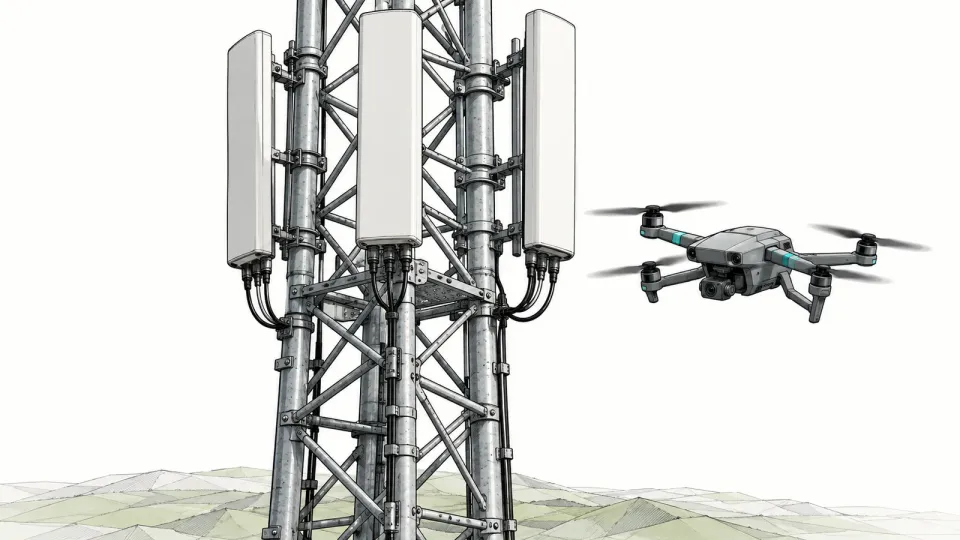
FCC Moves to Let Drones Use the 800 MHz Mobile Phone Band
The 1991 ban was aimed at phones on planes. AT&T and Verizon, which hold licences in the band, asked for the change.
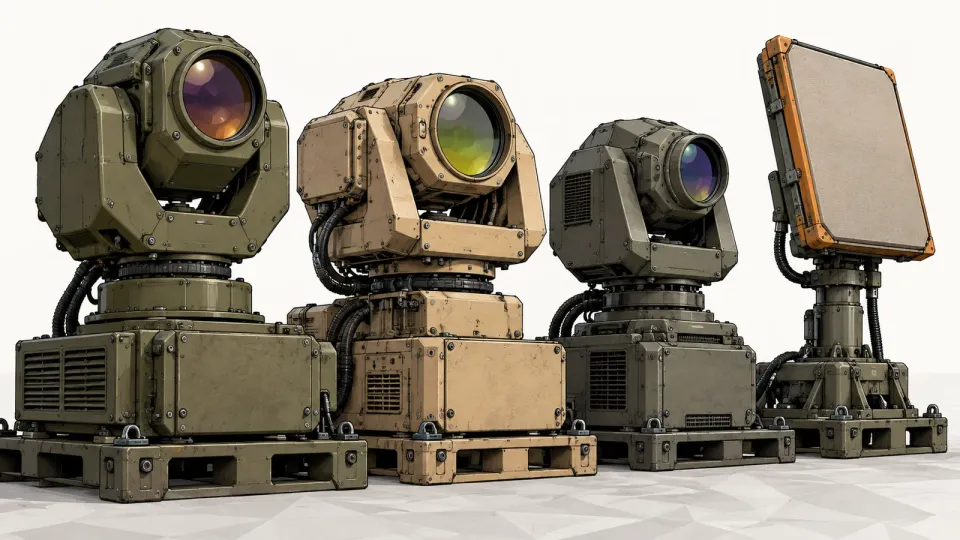
Pentagon Picks Three Lasers and a Microwave for US Bases
A year-long trial at US bases follows February's El Paso airspace closure. The Pentagon has not said which weapon goes where, how many, or the cost.
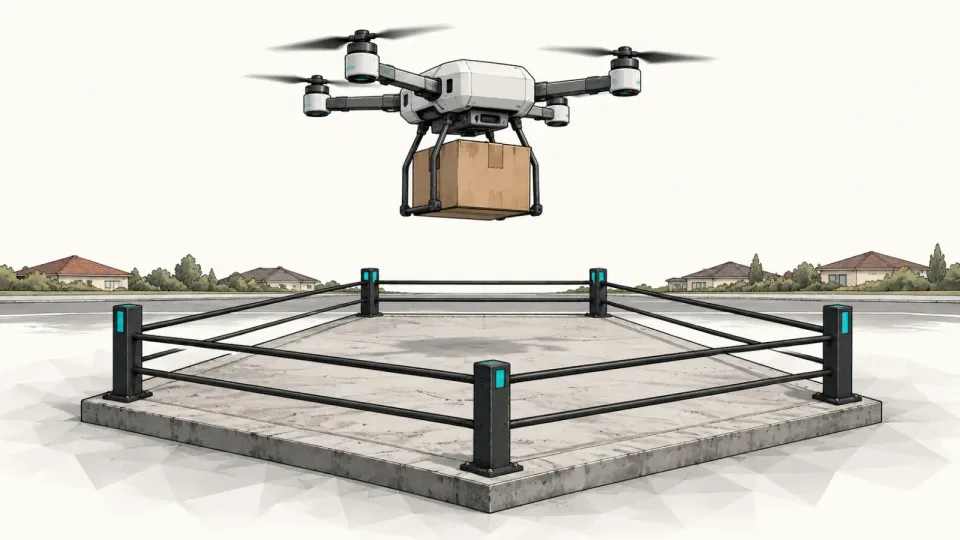
Wing heads to Denver as suburbs write drone hub rules
Walmart had sought hub sites in Longmont, which does not allow them. Northglenn votes this month on keeping launch pads 200 feet from homes.
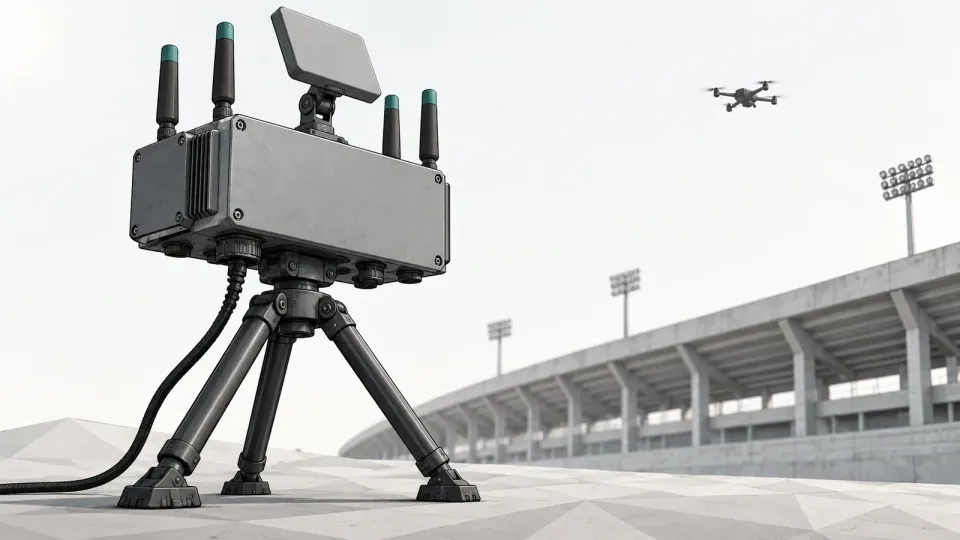
Police Can Now Take Over Drones Above Jaguars Games
The NFL logged 10,852 drone violations near its stadiums in five seasons. Until July, only federal agents could bring one down.
15 States Sue FAA Over Drone Delivery Environmental Finding
The petition asks an appeals court to throw out the July finding that lets the FAA approve delivery hubs without a separate review for each site.
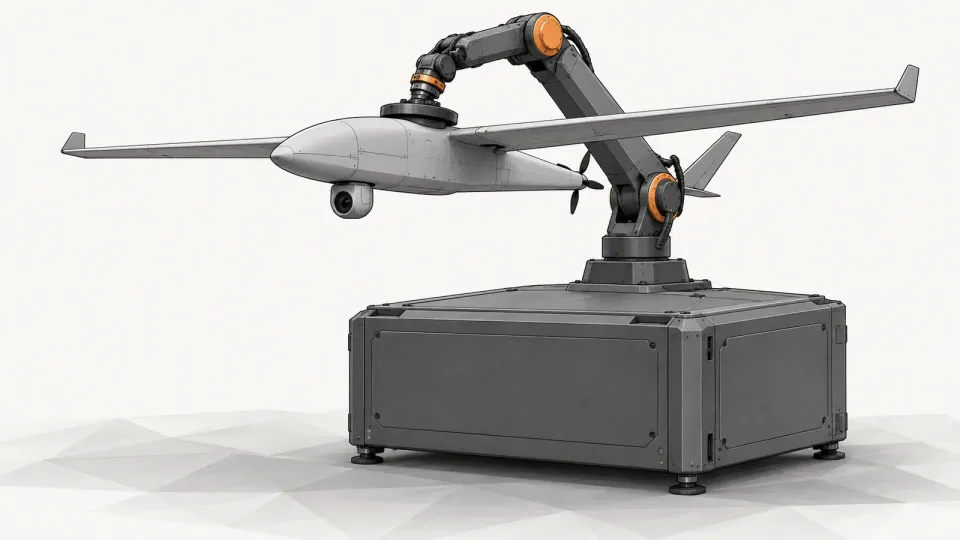
Skydio Unveils F10 Lightrunner, a 100 mph Fixed-Wing Drone
It launches from a robotic arm with no crew on site, but it reaches customers in 2027 and has no price or flight data yet.
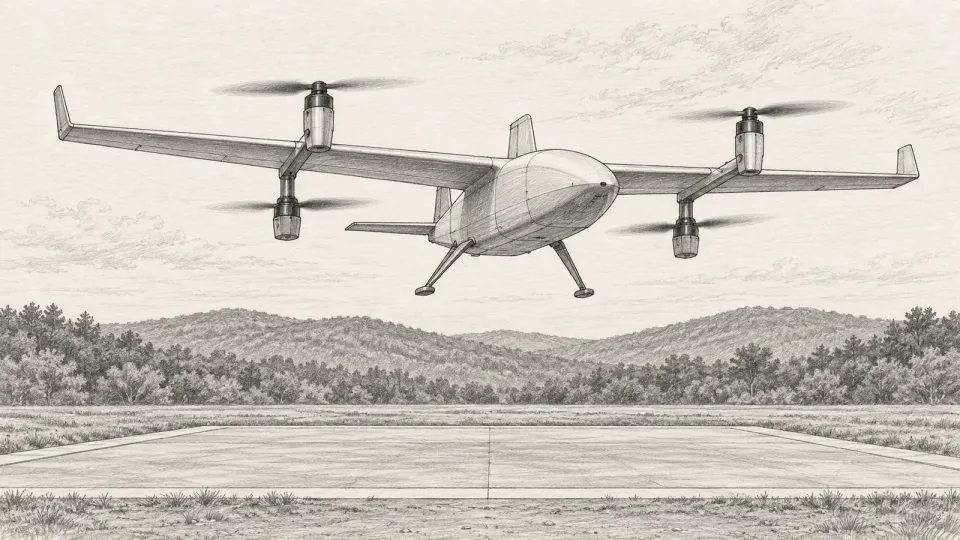
Textron Flies Military Drone Between Virginia Vertiports
The first-ever claim is Textron's own, and the state network the drone was testing is being built for passenger and cargo aircraft.
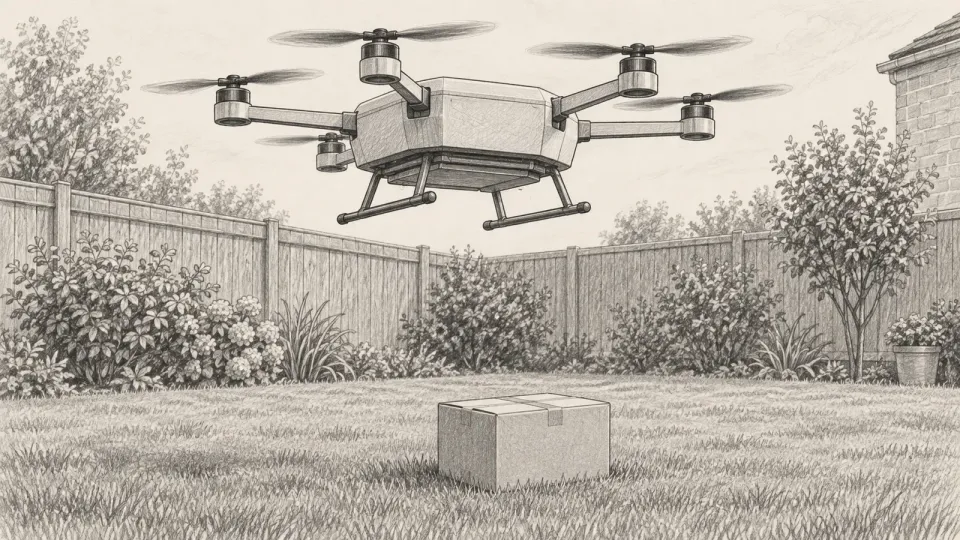
Amazon's Omaha Drones Flew 6,000 Trips in Two Months
Twelve aircraft at one site, against an internal target of a million deliveries this year. The gap explains the expansion plan.
FCC Lets 200 Drones and 2,000 Pilots Test Cellular in Flight
A waiver to October 2029 lets DOT measure whether commercial mobile networks work at altitude, in bands that otherwise ban airborne use.
Zipline Seeks 220,000 Drone Deliveries a Day in Texas
An FAA draft assessment would let Zipline fly 220,000 deliveries a day from 220 Chargers in five Texas metros, seven times its Dallas-Fort Worth ceiling.
FAA Clears 15 DJI Drones the FCC Proposes to Ban
Fifteen DJI aircraft sit on the FAA's Section 44807 approved list. Every one meets the FCC's proposed definition of a military-grade drone.
Drone Delivery Hubs Now Face City Hall, Not the FAA
The FAA's July environmental finding removed site-by-site review for drone delivery hubs. City zoning and a court challenge are what is left.
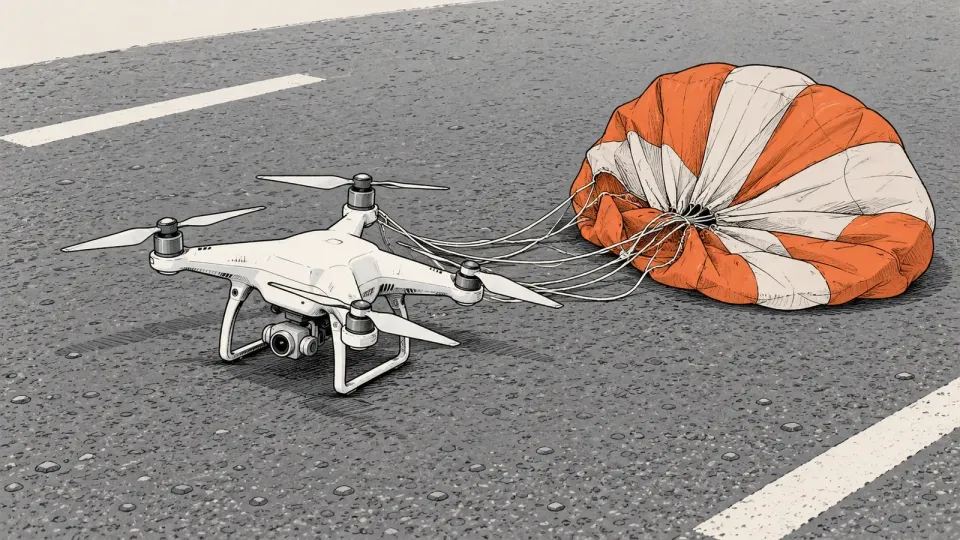
Why a Drone on a Houston Highway Triggered No FAA Report
A Zipline drone parachuted onto Highway 6 on 4 September. No injury, no $500 of damage and no airworthiness certificate means no mandatory report.
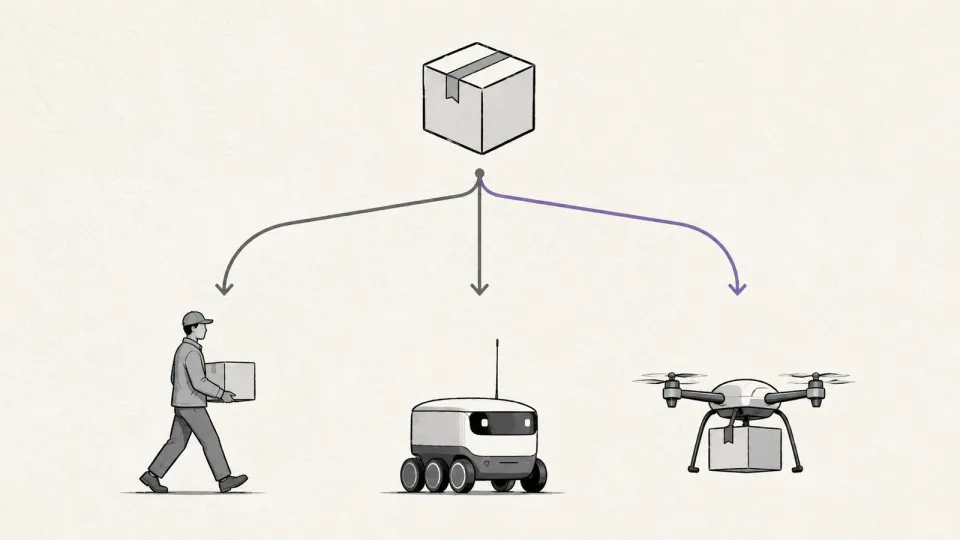
DoorDash got an airline licence and kept its drone partners
DoorDash won FAA Part 135 certification in July and starts flying its own drones this autumn. Wing and Flytrex are partners, and now suppliers.
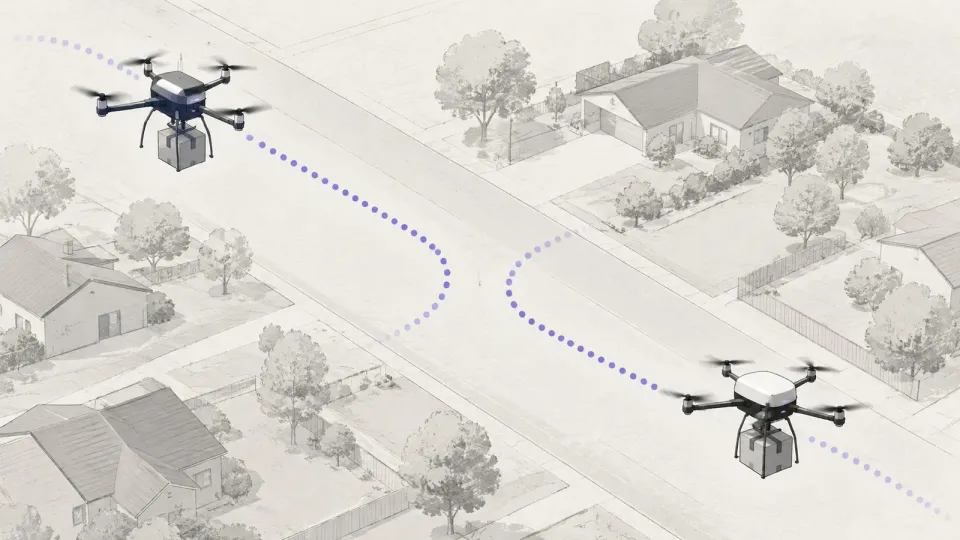
Wing and Flytrex share Dallas airspace, but not emergencies
The two flew 8,000 overlapping flights over two Texas suburbs with no conflicts. Neither system tells the other when an aircraft is in trouble.
Matternet Warns on Going Concern With Revenue Under $400,000
Matternet's SEC filings show $392,739 of revenue in the year to 30 September 2025, a $145.7M accumulated deficit and an auditor going-concern opinion.
Companies
Wing
Alphabet's drone delivery subsidiary, operating commercial package delivery in the United States and abroad, largely with Walmart.
United States
Zipline
US operator of autonomous drone delivery networks, running medical logistics in Africa and consumer delivery in the United States.
United States
Amazon Prime Air
Amazon's drone delivery division, flying autonomous last-mile delivery in the US and UK and attempting a sixfold expansion of its service area in 2026.
United States
Flytrex
Israeli drone delivery company flying suburban restaurant orders in Texas and North Carolina for DoorDash and Uber Eats under Causey Aviation's Part 135.
Israel
Skydio
US drone manufacturer building AI-powered autonomous aircraft, supplying NDAA-compliant enterprise and defense drones to agencies and operators.
United States
Archer Aviation
US eVTOL company developing the Midnight air taxi, now acquiring Boeing's Wisk Aero, Insitu and SkyGrid to add autonomy and defense manufacturing.
United States
DJI
Chinese private manufacturer of consumer, enterprise and agricultural drones, cameras and imaging systems.
China
DroneUp
US company that left drone delivery in 2025 after Walmart ended its contract, now selling airspace management and autonomy software to operators.
United States
Products
Antigravity A1
Antigravity (Insta360)
The first drone with a built-in 8K 360-degree camera, flown through goggles and a one-hand grip rather than sticks, at 249 g. New enough that nobody has flown it for a year, and $1,599 buys a way of flying as much as an aircraft.
DJI Mini 5 Pro
DJI
The first sub-250 g drone with a 1-inch sensor, and the best consumer drone you can buy in 2026 if you live somewhere DJI will sell it to you.
Potensic ATOM 2
Potensic
The most credible budget drone under 250 g, and the one non-DJI sub-250 g camera drone an American can still buy from a shop. Know that it has no obstacle avoidance before you buy.
DJI Air 3S
DJI
The best all-round camera drone DJI sells in the United States: a 1-inch main sensor, a 70 mm telephoto, 45 minutes and forward LiDAR, at a price that undercuts the Mavic line by half.
DJI Mini 4 Pro
DJI
The most capable sub-250g drone DJI has sold in the US, and the right choice for anyone who wants serious image quality without triggering registration for recreational flying in the US or Canada.
DJI Air 3
DJI
A dual-camera mid-range drone that covers most shooting scenarios for enthusiast creators, sitting cleanly between the Mini 4 Pro and Mavic 3 Pro in capability and price.
Funding
Seed
Mucker Capital, AI Fund, SaaS Ventures, Halogen, HBS Alumni Angels, New York Angels
SkyfireAISeries B
ARK Invest, Ireland Strategic Investment Fund, Schooner Capital, Coca-Cola HBC, Molten Ventures, Enterprise Ireland, Tapestry
Manna AeroUndisclosed
Fidelity Management & Research Company, Baillie Gifford, Valor Equity Partners, Tiger Global
ZiplineContracts
U.S. Navy
Boeing
Not-to-exceed undefinitized modification for three MQ-25A Stingray low-rate initial production Lot 1…
U.S. Army
AeroVironment
Production of LOCUST X3 30 kW laser weapon systems under the Enduring-High Energy Laser programme…
Federal Aviation Administration
General Atomics Aeronautical Systems, Lighthouse Avionics, ResilienX, NAVMAR Applied Sciences, Devorto Corporation, ANRA Technologies, SPS Aerial Remote Sensing, DroneUp, OneRadio, Frequentis USA, Censys Technologies, Aerial Vantage, Skydweller US, Oklahoma State University
19 UAS Broad Agency Announcement research contracts for detect-and-avoid and airspace-integration…
U.S. Air Force
General Atomics
Contractor logistics support for Spain's MQ-9A drones at Badajoz, a Foreign Military Sale…
U.S. Navy
Boeing
Engineering and integration of an updated radio-frequency blanker and encrypted mass storage for the…