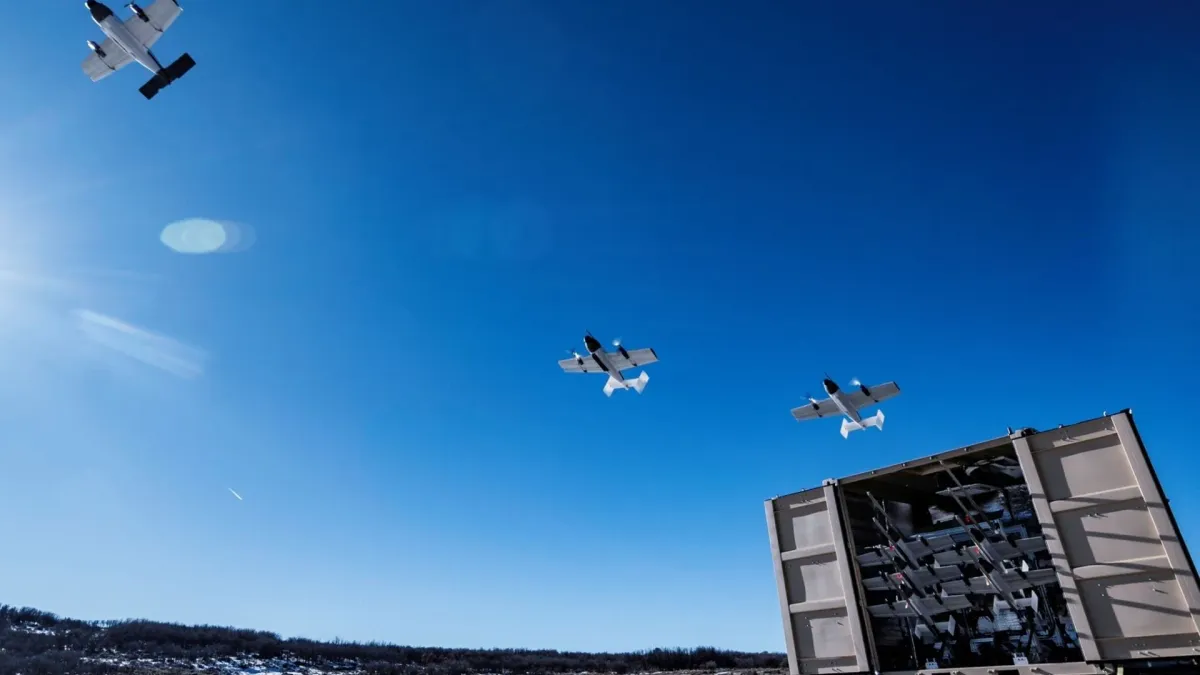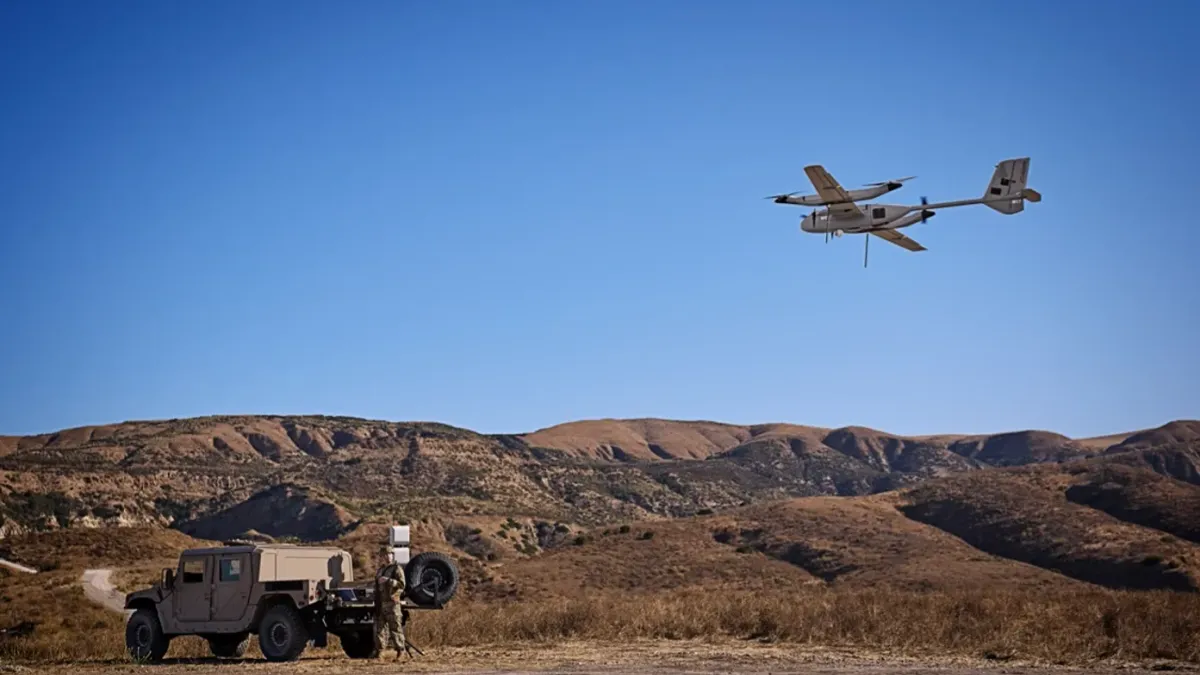

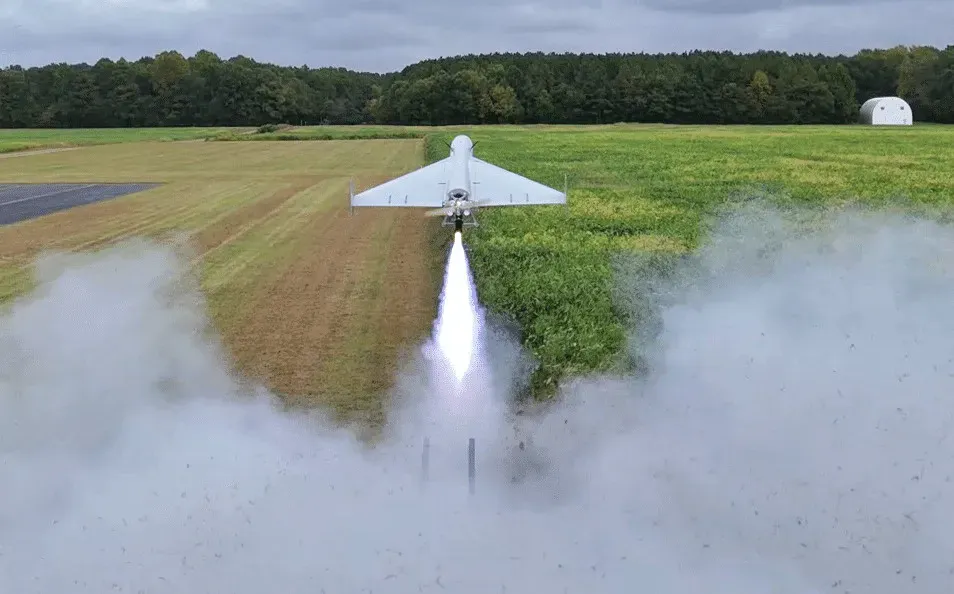
The US military is now striking Iran with a loitering munition that costs $35,000, runs on an internal combustion engine, and was explicitly designed to replicate the economics of the weapon it was built to counter. The FLM-136 LUCAS — Low-Cost Uncrewed Combat Attack System — developed by Arizona-based SpektreWorks, has entered combat for the first time under Task Force Scorpion Strike, a US Central Command unit operating in the Middle East.
The timing matters. LUCAS’s combat debut comes as the Pentagon pushes aggressively to build attritable drone capacity at scale, and as the US military has spent years absorbing the cost asymmetry problem the Shahed created: a $20,000–$50,000 Iranian drone intercepted by a $4 million Patriot missile.
How Does LUCAS Compare to the Shahed-136?
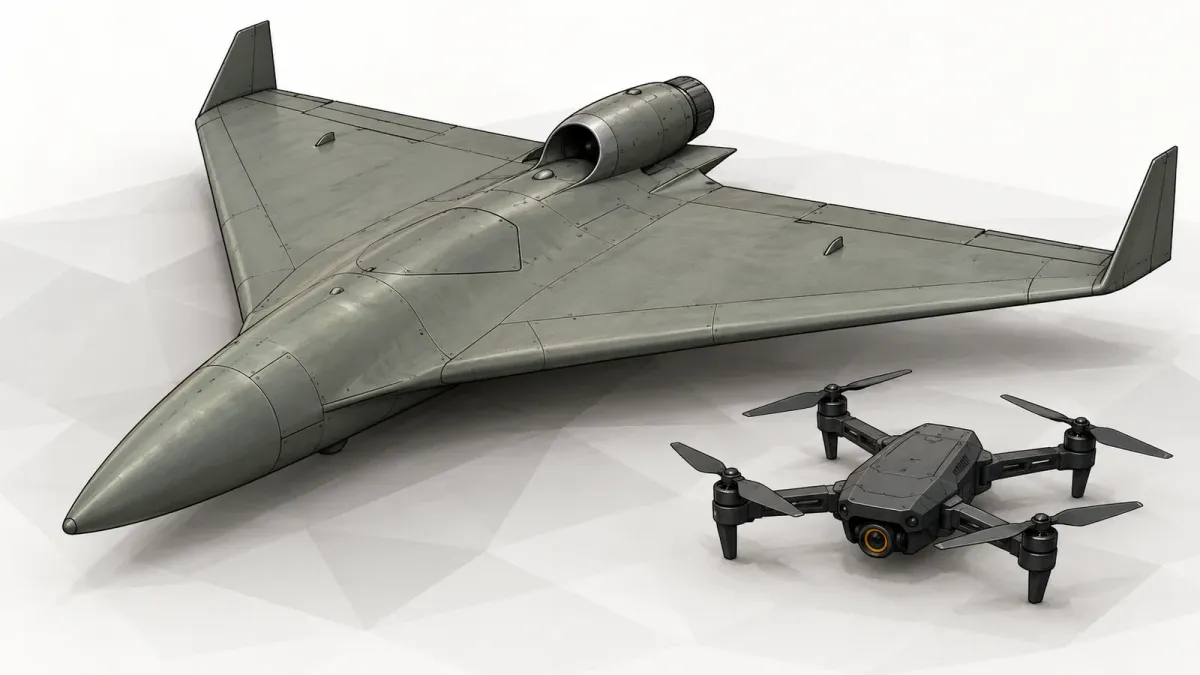
The FLM-136 is a deliberate functional copy of the Shahed-136 in concept, if not in specification. At 3 metres long and 2.5 metres wide, the airframe dimensions are nearly identical to the Iranian original. The weight diverges significantly — LUCAS comes in at 81.5 kg versus the Shahed’s 200 kg — which means a lighter payload of 18 kg compared to the Shahed’s 50 kg. Range is 444 nautical miles, endurance is six hours, cruise speed is 137 kph with a top speed of 194 kph, and operating ceiling is 15,000 feet.
The cost is the point. At approximately $35,000 per unit, LUCAS sits squarely in the same price bracket as the Shahed-136. The Pentagon’s calculus is straightforward: if the threat is a cheap drone, the response should also be a cheap drone — not a missile that costs 80 times more per intercept.
What Is Task Force Scorpion Strike?
LUCAS is being launched from the ground by Task Force Scorpion Strike, a dedicated US Central Command unit deployed in the Middle East for one-way attack drone operations. The unit represents the US military’s institutionalization of the attritable strike drone as a standing operational capability rather than an experimental one. Defense Secretary Pete Hegseth declared this week that Iran is “losing drone dominance” and that the US has “total air dominance” — language that reflects how central the drone cost equation has become to the broader Iran confrontation narrative.
SpektreWorks was among 12 drone manufacturers showcased at a Pentagon event organized by Hegseth in July 2025, held in the wake of Trump’s “Unleashing American Drone Dominance” executive order. The FLM-136 going from Pentagon showcase to combat deployment in under a year is a procurement timeline that would have been unusual before the Drone Dominance directive accelerated acquisition.
The Broader Production Race
The FLM-136’s combat debut is one data point in a larger production mobilization. In December 2025, the DoD issued a request for the US drone industry to deliver 300,000 drones quickly and inexpensively. SpektreWorks is one of multiple companies responding to that requirement. The same week as LUCAS’s combat disclosure, the Army awarded AeroVironment a $17 million contract for its Red Dragon — a longer-range one-way attack drone with a 400-plus kilometer range and 10 kg payload — demonstrating that the Pentagon is building a layered attritable strike portfolio rather than concentrating on a single platform.
At $35,000 per unit, producing LUCAS at the scale the DoD is targeting involves real industrial capacity. Whether SpektreWorks can manufacture at that volume and price point while maintaining quality is the question the coming contract awards will answer.