

Loitering Munitions
Loitering Munitions 2026: Systems, Costs and Who Builds Them
What a loitering munition is, how it differs from an FPV drone and a cruise missile, what the systems actually cost, and who is buying them in 2026.
Updated
20 news articles on Loitering Munitions ↓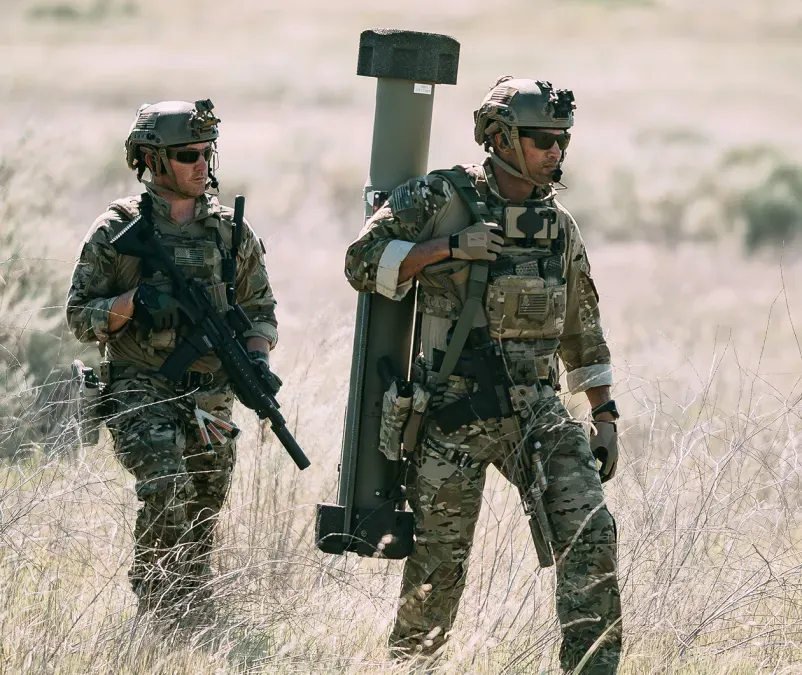
Loitering munitions in service and on order
Twenty-four systems and one European programme, with the range, warhead and cost figures their builders or buyers have actually stated.
Checked· Latest addition: SkyStriker,
- Covers
- Loitering munitions in service or on order, with operators a government or maker has confirmed.
- Leaves out
- Unconfirmed operators. No official register of these weapons exists, so the list may be incomplete.
Spotted an error? Email [email protected] with the row and the document that shows it.
25 of 25
| System | Builder | Country | Class | Reported range | Reported unit cost |
|---|---|---|---|---|---|
| Switchblade 300 Block 201 | AeroVironment | United States | Man-portable | 30 km, 20+ min | Not published |
| Switchblade 4002 | AeroVironment | United States | Tactical | Up to 65 km, 35 min | Not published |
| Switchblade 6003 | AeroVironment | United States | Tactical | 40 km+ standoff, 80 km total, 40 min | Not published |
| Red Dragon4 | AeroVironment | United States | Long-range strike | 400 km+ autonomous | Not published |
| LUCAS FLM-1365 | SpektreWorks | United States | Long-range strike | About 800 km reported | About $35,000 reported |
| Bolt-M6 | Anduril Industries | United States | Man-portable | 20 km+, 40+ min | Not published |
| Phoenix Ghost (Dominator, Disruptor)7 | Aevex Aerospace | United States | Long-range strike | 6+ hr endurance; range not stated | Not published |
| Hero-308 | UVision | Israel | Man-portable | 30 min; range not stated | Not published |
| Hero-909 | UVision | Israel | Man-portable | Not published | Not published |
| Hero-12010 | UVision | Israel | Tactical | 40 km, 60 min | Not published |
| Hero-400EC11 | UVision | Israel | Tactical | 60 km, 2 hr | Not published |
| Harop12 | Israel Aerospace Industries | Israel | Long-range strike | 200 km, 6+ hr | Not published |
| SkyStriker13 | Elbit Systems | Israel | Long-range strike | Over 200 km, over 2 hr (2026); 100 km, 2 hr (2023) | Not published |
| Warmate and Warmate 314 | WB Group | Poland | Man-portable | Not published for Warmate 3 | Not published |
| Warmate 515 | WB Group | Poland | Tactical | About 100 km | Not published |
| Lancet-316 | ZALA Aero (Kalashnikov) | Russia | Tactical | 40 km stated; 70 km+ reported in combat | About $75,000 to $80,000 reported |
| Kub-BLA17 | ZALA Aero (Kalashnikov) | Russia | Tactical | 30 min; range not stated | Not published |
| Shahed-136 / Geran-218 | HESA; Alabuga and Kupol under licencecontested | Iran / Russia | Long-range strike | Up to 2,500 km (Jane’s) | Contested: $10,000 to $50,000 (domestic estimates); $30,000 to $80,000 (RUSI, Russian production); $193,000 (leaked export price) |
| Geran-3, Geran-4, Geran-519 | Alabuga and Kupol | Russia | Long-range strike | Not published | Not published |
| Dan-T20 | Rostec (via Rosoboronexport) | Russia | Long-range strike | Up to 450 km at up to 500 km/h (Rostec) | Not published |
| HX-2 Karma21 | Helsing | Germany | Tactical | Up to 100 km | Not published |
| Virtus (OWE-V)22 | Stark | Germany | Tactical | 130 km, 75 min (Stark) | Not published |
| FV-01423 | Rheinmetall | Germany | Tactical | Up to 100 km, about 60 km datalink, 70 min | Not published |
| Kargu-224 | STM | Turkey | Man-portable | 10 km, 30+ min | Not published |
| One Way Effector 500 Plus25 | ELSA programme | France, Germany, Poland, Italy, UK, Sweden | Long-range strike | Beyond 500 km (requirement) | Not published |
| Nothing matches that search. | |||||
Notes
- Switchblade 300 Block 20 The reference man-portable design. Under 5 lb, tube-launched, modular bay taking a fragmentation or explosively formed penetrator warhead. Block 20 was part of the $186 million Army delivery order of February 2026 under a $990 million IDIQ; unit counts were not disclosed.
- Switchblade 400 About 39 lb all-up with the Javelin multi-purpose warhead, built to the Army’s LASSO requirement of 40 km under 40 lb. Selected for a LASSO prototype agreement in May 2026. Fills the gap between the 300 and the 600.
- Switchblade 600 Javelin-derived anti-armour warhead. Block 2 adds roughly 20% endurance and a 100 km+ relay range. AeroVironment says it has reached more than 20 brigade combat teams since 2025. A $51 million Army order in August 2026 covered Block 2 plus older Block 1 rounds for an unnamed ally under Foreign Military Sales.
- Red Dragon About 20 kg with a 10 kg modular payload bay; the standard load is a 5 lb explosively formed penetrator. Navigates visually without GPS beyond a 65 km operator link. $17 million Army contract in March 2026. Nearly four times the reach of the Switchblade 600.
- LUCAS FLM-136 A US-built derivative of the Shahed-136 airframe. First combat use disclosed by US Central Command’s Task Force Scorpion Strike against Iran in 2026. The $35,000 figure is reported, not a published price, and puts it in the Shahed’s bracket.
- Bolt-M Quadcopter, 13 to 15 lb all-up, warhead up to 1.4 kg in anti-personnel, anti-materiel or anti-armour form. Selected for the Marine Corps Organic Precision Fires-Light programme in January 2026: $23.9 million for more than 600 systems after 13 months of testing, deliveries running to April 2027.
- Phoenix Ghost (Dominator, Disruptor) A family of Group 3 one-way attack aircraft supplied to Ukraine from 2022, with the design withheld from public view until October 2024. Visual navigation without GPS. Aevex says it has delivered more than 6,200.
- Hero-30 3 kg with a 0.5 kg warhead, for dismounted teams. First order from an undisclosed European NATO force in July 2022. UVision partners with Rheinmetall in Europe.
- Hero-90 Admitted to the US Army’s LASSO programme in January 2026 through UVision’s US partner Mistral, giving the man-portable anti-armour requirement a second contender against Switchblade. UVision has not published its figures.
- Hero-120 12 kg with a 4.5 kg warhead, for armour, vehicles and fortifications. Operators include the US Marine Corps, US Special Operations Command ($73.5 million, 2024) and the US Army under a $982 million IDIQ from 2025; Hungary has also bought it. Hero-120SF is the special-forces variant.
- Hero-400EC 40 kg with a 10 kg warhead, launched from vehicles, ships and helicopters. The family continues up through the Hero-900 (90 kg, 25 kg warhead, 150 km) and Hero-1250 (125 kg, 50 kg warhead, 200 km), for which no operators are named.
- Harop Developed from the Harpy anti-radar drone. 16 kg warhead, man-in-the-loop attack on static or moving targets. Used by Azerbaijan in Nagorno-Karabakh in 2016 and 2020. India agreed a 10-aircraft deal reported at $100 million in 2009 and ordered 54 more in 2019; that total covers the whole system, not a unit price.
- SkyStriker Electric, canister-launched, with a warhead of up to 10 kg, also fired from Elbit’s PULS and EuroPULS rocket launchers. Elbit sold “several hundred” to an unnamed European country for $95 million in September 2023, when it stated 100 km. On 14 September 2026 Diehl Defence and Elbit said a September demonstration handed control over at 80 km and gave the range as over 200 km; Diehl is to build it in Germany under a June 2026 ILA agreement. Both range figures are the makers’ claims.
- Warmate and Warmate 3 Interchangeable thermobaric, fragmentation and anti-armour warheads. Poland has confirmed thousands of Warmates delivered to Ukraine. WB Group announced 1,000 Warmate 3s for non-European customers, including a new customer in Asia, on 7 November 2025, citing extended range and NATO-compliant warheads without publishing numbers.
- Warmate 5 35 kg take-off weight with a 5 to 10 kg interchangeable warhead, three independent navigation systems, cruise about 90 km/h and dive above 250 km/h. Delivered to Ukraine; combat footage points to the Defence Intelligence directorate as the operator, which is an attribution, not a confirmation. A Warmate 30 was unveiled at MSPO 2026.
- Lancet-3 Up to 12 kg with a 1 to 3 kg high-explosive, fragmentation or shaped-charge warhead; cruise 110 km/h, dive 300 km/h. The most widely documented Russian tactical munition of the war. Shown as the Lancet-E export version at the El Alamein airshow in September 2026. Cost is an estimate from reporting, not a contract.
- Kub-BLA Flying-wing design with a 3 kg payload and 80 to 130 km/h speed, used in Syria and in the Kyiv region in 2022. Export variants Kub-10E and Kub-2E were on the Rosoboronexport stand at El Alamein in September 2026.
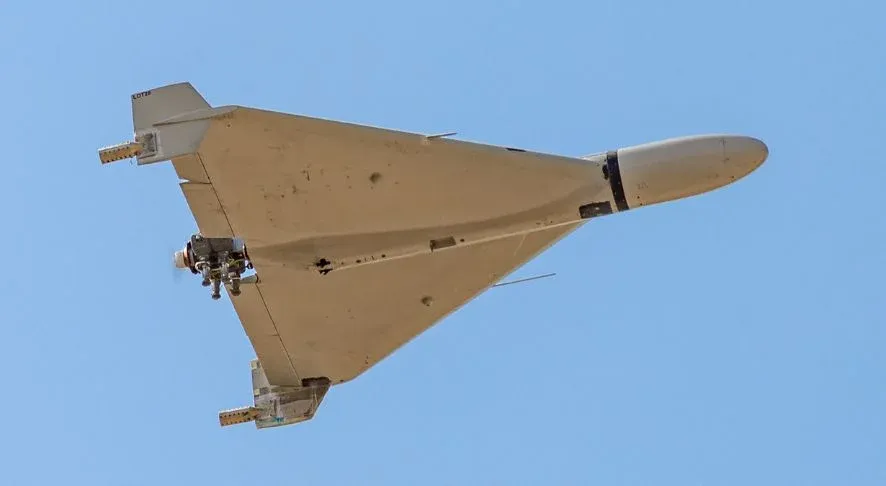
- Shahed-136 / Geran-2 The system that defined the category. About 200 kg with a 50 kg warhead at roughly 185 km/h on a piston engine; later Russian builds carry 90 kg. Russia took its first Shahed-131 and -136 kits from Iran in 2022 and now builds the Geran-2 at Alabuga in Tatarstan and at IEMZ Kupol. The tenfold spread in reported cost is the reason this row is marked contested.
- Geran-3, Geran-4, Geran-5 Jet-powered successors to the Geran-2. Geran-3 introduced a turbojet at 330 to 500 km/h; Geran-4 flies at roughly 500 km/h at shorter range; Geran-5 reaches roughly 600 km/h with a 90 kg warhead. Ukrainian military intelligence assessed in August 2026 that jet airframes had overtaken piston ones at Alabuga, about 3,000 a month against 2,800. Ukraine’s Air Force spokesperson put jet-drone launches at about 350 in June, about 2,850 in August and 3,177 in September to the 29th; by FlightBrief’s count of six Air Force daytime reports that month, 64% of jet drones were shot down or suppressed against 91% of other strike drones.
- Dan-T Turbojet, up to 270 kg, launched from helicopters and aircraft. Shown at the El Alamein airshow in Egypt in September 2026 and described by Rosoboronexport as a loitering munition. A TASS-quoted analyst called it "visually similar" to the Banderol; the obvious reading is an export version, which Rostec has not confirmed.
- HX-2 Karma Electric X-wing, 12 kg, 220 km/h according to Helsing, anti-armour and anti-structure loads. Germany ordered 6,000 for Ukraine, and 4,000 of the related HF-1 preceded them. One of the two sources in the €540 million medium-range package the Bundestag approved on 25 February 2026, aimed at the German brigade in Lithuania.
- Virtus (OWE-V) Electric VTOL, about 30 kg with a 5 kg modular payload, cruise 120 km/h and dive 250 km/h, set up in under ten minutes without a launcher. The other source in the €540 million Bundestag package; the Bundeswehr signed a framework contract with Stark on 26 February 2026. Flown with Quantum Systems’ Vector in the Bundeswehr’s AI recce-strike swarm exercise in 2026.
- FV-014 20 kg electric airframe with a 6 kg dual-purpose warhead rated against more than 600 mm of armour. Bundeswehr framework agreement of 22 April 2026, reported ceiling about €2.4 billion, first call-off about €300 million for around 2,500 systems with options beyond 10,000. Deliveries from the first half of 2027. The call-off covers systems and support, so it does not yield a unit price.
- Kargu-2 A 7 kg quadcopter with a 300 g fragmentation warhead that can be swapped in the field for an armour-piercing one; about 72 km/h. STM announced a second export contract in 2025 and an electronic-warfare upgrade for the family.
- One Way Effector 500 Plus A programme, not a fielded weapon. Six states signed a Letter of Intent under the European Long-range Strike Approach in February 2026 for a standardised low-cost effector with a warhead of around 50 kg. Letters of intent are not production contracts; listed so the row exists when one is signed.
Where this comes from. Assembled by FlightBrief from manufacturer specifications, ministry announcements and named reporting. No official register of loitering munitions exists and no manufacturer publishes a unit price, so ranges are the builder’s claim unless the note says otherwise, and costs are reported estimates or "Not published". No unit cost has been derived from a contract total. Class is our grouping, matching the guide above, not a procurement category. Operators are those a government or manufacturer has confirmed; combat-footage attributions are labelled as such.
Sources
- AeroVironment product pages for the Switchblade 300 Block 20, 600 and 400
- Anduril, Bolt-M; Army Technology, Hero family of loitering munition systems; UVision product pages; WB Group, New Contracts for WARMATE Loitering Munition (7 November 2025); Army Recognition and Janes data sheets, as named row by row in the dossier
- Elbit Systems, $95 million SkyStriker contract with a European country, 18 September 2023
- Diehl Defence and Elbit Systems, SkyStriker demonstration, 14 September 2026
- Ukrinform, Air Force spokesperson Yurii Ihnat on jet-drone launches, 29 September 2026
- Ukrainian Air Force daytime reports on its Telegram channel, 1-29 September 2026
- Contract announcements: US Army (LASSO, May 2026), US Marine Corps (OPF-L, January 2026), Polish Armament Agency, German Bundestag budget committee (25 February 2026), Rheinmetall (22 April 2026)
Cite or reuse this table
FlightBrief, “Loitering munitions in service and on order”, checked Oct 7, 2026, https://flightbrief.news/topics/loitering-munitions/#dataset-loitering-munitions-roster
Free to reuse, including commercially, under CC BY 4.0. Credit FlightBrief and link to this page.
Every European government order for loitering munitions
Twenty-four orders, approvals, frameworks and letters of intent from thirteen European buyers since 2022, with quantity, value and how firm each one is.
Checked· Latest addition: Romania,
- Covers
- European government orders for loitering munitions, with approved sales, funding votes, frameworks, tenders and letters of intent marked by status.
- Leaves out
- Countries with no published order, and unit prices worked out from contract totals.
Spotted an error? Email [email protected] with the row and the document that shows it.
24 of 24
| Buyer | System | Builder | Quantity | Value | Date | Status |
|---|---|---|---|---|---|---|
| Italy1 | Hero-30 | RWM Italia / UVision | Classified | Single-digit millions of euros | July 2022 | Signed |
| Lithuania2 | Switchblade 600, with Switchblade 300 | AeroVironment | Not disclosed | €45 million | December 2022 | Signed |
| Estonia3 | IAI loitering munitions, type not named | Israel Aerospace Industries | Not disclosed | Over €100 million | 2 May 2023 | Signed |
| Hungary4 | Hero-120 | Rheinmetall / UVision | 40 systems, 400 munitions (reported) | Low three-digit millions of euros | 20 July 2023 | Signed |
| Unnamed European country5 | SkyStriker, canister configuration | Elbit Systemscontested | Several hundred | $95 million | 18 September 2023 | Signed |
| France6 | MX-10 Damocles | KNDS / Delair | 2,270 over seven years; first tranche 460 | Not published | July 2024 | Signed |
| Romania7 | Switchblade 300 and Switchblade 600 | AeroVironment | 25 Switchblade 300 systems, 1 Switchblade 600 | 176 million lei (about $38.6 million) | 16 July 2024 | Signed |
| Sweden8 | Switchblade, variant not published | AeroVironment | Not disclosed | Not broken out | 26 September 2024 | Signed |
| Lithuania9 | Switchblade 300 | AeroVironment | Not disclosed | Not broken out | 26 September 2024 | Signed |
| Netherlands10 | Harop | Israel Aerospace Industries | More than 100 (analyst estimate) | Not published | 26 September 2024 | Announced |
| Germany, for Ukraine11 | HF-1, then HX-2 | Helsing | 4,000 HF-1, then 6,000 HX-2 | Not published | 18 November 2024 and 13 February 2025 | Paused |
| Estonia12 | Short- and long-range loitering munitions, FPV drones and support | Multiple suppliers sought | Not specified | €400 million ceiling | 6 December 2024 | Tender |
| Poland13 | Warmate, various versions | WB Group | Nearly 10,000 munitions in nearly 1,000 sets | Not published | 15 May 2025 | Framework |
| France14 | MV-100 Veloce 330 | EOS Technologie / KNDS | 17 | Not published | By June 2025 | Signed |
| Spain15 | Q-SLAM-40 | Arquimea | Not specified | €767,000 before VAT | 14 October 2025 | Signed |
| France, Germany, Poland, Italy, UK and Sweden16 | One Way Effector 500 Plus | Not yet selected | None | None | 16 February 2026 | Letter of intent |
| Germany17 | HX-2 and Virtus | Helsing and Stark | 6,500 in the first call-offs: 4,300 HX-2 and 2,200 Virtus | First call-offs about €270 million each; two frameworks €4.3 billion combined, each capped at €1 billion | 25 and 26 February 2026 | Framework, contracts signed |
| Germany18 | FV-014 | Rheinmetall | About 2,500 first call-off (reported); options for a five-figure number | Up to about €2.4 billion (reported); first call-off about €300 million | 22 April 2026 | Framework, first call-off signed |
| Poland19 | Warmate sets and Gladius fire units | WB Group | More than 400 Warmate systems; 12 Gladius battery-level units | Not published | 28 May 2026 | Signed |
| Greece20 | Switchblade 300 Block 20 | AeroVironment | 350 systems, 35 fire control units | $80.1 million | 16 July 2026 | US approval of a possible sale |
| United Kingdom21 | Switchblade 300 | AeroVironment | Not published | Not published | By July 2026 | Signed |
| Sweden22 | Raptor 2, with the Astero reconnaissance drone | Nordic Wing | Not disclosed | Not published; SEK 350 million reported | 19 August 2026 | Signed |
| Romania23 | Loitering-munition strike system, not named | Not named | Not published | Not published; to be funded through SAFE | 30 September 2026 | Letter of intent |
| Unnamed NATO member24 | Hero series | Rheinmetall / UVisioncontested | Several hundred systems | Low three-digit millions of euros | 28 November 2025 | Signed |
| Nothing matches that search. | ||||||
Notes
- Italy An urgent requirement for Italian special forces, revealed by contract documents Defense News published in January 2023; Rheinmetall had announced only “a major European NATO partner” in September 2022. Munitions, training rounds, a simulator and support. RWM Italia is Rheinmetall’s Italian subsidiary and holds a licence to build the Hero family.
- Lithuania Government-to-government under US Foreign Military Sales; the Lithuanian defence ministry called itself the first foreign buyer of the Switchblade 600. Includes launch and control equipment, a training simulator and maintenance. The ministry did not publish the count or the delivery date.
- Estonia The Estonian Centre for Defence Investments would say only “products from the IAI family of loitering munitions”; IAI’s own photographs showed the Mini Harpy and Harop, and Janes reported the signing with a Mini Harpy mock-up. First deliveries were expected in 2024. Defence minister Hanno Pevkur had announced the purchase in February.
- Hungary Rheinmetall’s release gave the value only as “a figure in the low three-digit million-euro range” and no counts; the 40 systems, 400 munitions and €140 million appear in trade reporting and are carried as reported. Deliveries 2024 to 2025 under Hungary’s Zrínyi 2026 programme.
- Unnamed European country Elbit announced the contract from Haifa without naming the buyer: two years of deliveries of canister-launched SkyStrikers, with Yoram Shmuely, general manager of Elbit Systems Aerospace, quoted. Included because the value and count are the seller’s own, marked because a row without a buyer fails the test every other row passes.
- France Ordered by the DGA, France’s procurement agency, per Breaking Defense in June 2025. A small remotely operated munition from the Mataris family that KNDS markets alongside its loitering munitions; the DGA has said it wants 2,000 a year produced. The MV-25 Oskar from the earlier Colibri programme has gone to Ukraine.
- Romania Announced by defence minister Angel Tîlvăr on 16 July 2024 and placed on contract through the US Army’s $54.9 million Switchblade delivery order of 26 September 2024, which also covers Lithuania and Sweden. The lei figure is Romania’s; the Army order does not break out the three countries.
- Sweden Sweden’s share of the US Army’s $54,861,545 delivery order to AeroVironment, funded partly by Foreign Military Sales for Lithuania, Romania and Sweden, with completion by 30 June 2026. No Swedish announcement was found; the contract notice is the only source.
- Lithuania Lithuania’s second Switchblade buy, through the same $54.9 million US Army delivery order as Romania and Sweden. MILMAG reported it as Switchblade 300; the Army notice names only the countries.
- Netherlands State secretary Gijs Tuinman told parliament the navy’s two new Damen support vessels, the “sailing toolboxes”, would carry Harop alongside Barak ER interceptors, with IAI as sole source. The count is Shephard’s estimate, not the ministry’s; the vessel programme sits in a €250 million to €1 billion budget band. Deliveries were expected between 2025 and 2027.
- Germany, for Ukraine Defence minister Boris Pistorius confirmed the 4,000 on 18 November 2024 and Helsing announced the 6,000 HX-2 on 13 February 2025, both financed from German military aid. In January 2026 Ukraine and Germany suspended further HX-2 orders after an internal German army assessment reported aircraft that failed to take off and lacked promised guidance features; Helsing rejected the findings. How many of the 6,000 were delivered before the pause has not been published.
- Estonia A seven-year framework tender from the Estonian Centre for Defence Investments, which said it wanted several providers rather than one. No awards under it had been published by September 2026. The IAI contract above predates it.
- Poland Signed by WB Group’s Piotr Wojciechowski and Colonel Piotr Paluch of the Armament Agency, to run to 2035; WB Group calls it the largest loitering-munition order in the world. Deputy prime minister Władysław Kosiniak-Kamysz described it as “10,000 drones, approximately one thousand sets”. A framework is a ceiling; the May 2026 contract below is the first call against it that WB Group has announced.
- France For testing and training across the air force, navy and army under the Larinae programme, per Breaking Defense; 100 km range and 200 km/h cruise as KNDS states them. The DGA flew its first Larinae trials in July 2025. A trials buy, not a fielding order.
- Spain The navy and marine infantry, by negotiated procedure without publication, for delivery before the end of 2025. Training and maintenance systems rather than live munitions, per the reporting. The army has budgeted about €13.3 million for medium-range loitering munitions in its 2025 contracting plan and had not announced an award.
- France, Germany, Poland, Italy, UK and Sweden Under the European Long-range Strike Approach, for a standardised low-cost effector beyond 500 km with a warhead of around 50 kg. A letter of intent commits no money and names no builder; the row exists so the programme has a place when a contract follows.
- Germany The Bundestag budget committee approved the package on 25 February with a stated focus on the German brigade in Lithuania, and the Bundeswehr signed purchase contracts with Helsing and Stark the next day. They are framework agreements with milestones at which the Bundeswehr can cancel if a maker fails to prove performance; Panzerbrigade 45 in Lithuania is first to receive the systems, from 2027. Counts and values are from ESUT’s report of the committee papers; the Bundeswehr has not published them. The committee capped each seven-year framework at €1 billion and will approve further call-offs only after qualification. Approved five weeks after the HX-2 pause for Ukraine. Source
- Germany Rheinmetall’s release says the framework is worth billions, with a first call-off of about €300 million gross and options for a five-figure number of drones. The €2.4 billion ceiling and the 2,500 count were reported by Hartpunkt from the budget committee papers (https://www.hartpunkt.de/24-milliarden-euro-bundeswehr-will-loitering-munition-von-rheinmetall-beschaffen/). Series deliveries from Rheinmetall’s Neuss plant are due from the first half of 2027. Only the €300 million call-off is an order. Source
- Poland Signed by Piotr Wojciechowski and General Artur Kuptel of the Armament Agency and funded through the EU’s SAFE instrument, alongside 190 FlyEye reconnaissance systems. Gladius pairs a reconnaissance drone with the Warmate 5 effector; deliveries by 2030. Neither WB Group nor the ministry gave a value.
- Greece The Defense Security Cooperation Agency notified Congress; that is permission, not a contract. Greek reporting describes a wider plan of 592 rounds, 390 Switchblade 300 and 202 Switchblade 600, for the Special Warfare Command with deliveries targeted for late 2026, which no US document confirms. The notification lists Switchblade 600 munitions and fire control systems among the additional items, without a count.
- United Kingdom Confirmed by an AeroVironment representative to Janes at Farnborough in July 2026 as a Foreign Military Sales purchase. No Ministry of Defence announcement, quantity or value has been found; the row rests on that one confirmation.
- Sweden FMV’s first published loitering-munition contract, bought as an opportunity purchase of an in-service system from the Danish builder, with operator laptops and radios, simulators and workshop containers; delivery to FMV and hand-over to the Armed Forces planned for the second quarter of 2027. Eric Holmberg, head of FMV’s artillery and mortar systems unit, is quoted. The SEK 350 million figure is SVT’s, not in FMV’s release.
- Romania Signed in Bucharest by the armaments chiefs of the Romanian and Polish defence ministries, who agreed to work closely on Romania’s purchase of a loitering-munition strike system, one of the projects the ministry will fund through the EU’s SAFE loans. The Romanian release names no system or supplier. A letter of intent is not an order.
- Unnamed NATO member Rheinmetall announced the order without naming the buyer; production at RWM Italia with deliveries from early 2026. Included because the value and count are the seller’s own, marked because a row without a buyer fails the test every other row passes. Replace the buyer when one is named.
Where this comes from. Assembled by FlightBrief from ministry and agency announcements, US Defense Security Cooperation Agency notifications and Army contract notices, manufacturer releases and trade reporting, cited row by row in the dossier. Quantities and values are as the buyer, seller or US government stated them; where a row carries a figure that only a reporter or analyst has put on it, the note says so. Status distinguishes a signed contract from a US approval of a possible sale, a parliamentary funding vote, a framework ceiling, a tender or a letter of intent, none of which is an order until the next step is taken. Orders funded by a European government for delivery to Ukraine are included and say so. Unit prices are never derived from a contract total. Buyers with no published order — the Nordic countries other than Sweden, Spain’s army, the Baltic states beyond Estonia and Lithuania — are absent because nothing citable exists, not because nothing was bought.
Sources
- Romanian Ministry of National Defence, letter of intent with Poland under SAFE, 30 September 2026
- Bundeswehr, Loitering Munition: contracts with Helsing, Stark and Rheinmetall, 2 June 2026
- Ministry and agency releases: Polish Armament Agency, German Federal Ministry of Defence and Bundestag budget committee, Estonian Centre for Defence Investments, Hellenic Ministry of National Defence, Swedish Defence Materiel Administration (FMV)
- FMV, purchase of a reconnaissance and loitering-munition system from Nordic Wing, 19 August 2026
- Elbit Systems, $95 million SkyStriker contract with a European country, 18 September 2023
- US Department of State, Foreign Military Sales notifications to Congress (Switchblade cases; DSCA press releases moved to the State Department site on 6 February 2026)
- Company releases: Rheinmetall, AeroVironment, WB Group, Helsing, Stark, UVision
Cite or reuse this table
FlightBrief, “Every European government order for loitering munitions”, checked Oct 7, 2026, https://flightbrief.news/topics/loitering-munitions/#dataset-european-loitering-munition-orders
Free to reuse, including commercially, under CC BY 4.0. Credit FlightBrief and link to this page.
Guide
A loitering munition is a weapon that flies to a target area, waits there under its own power while a sensor looks for something worth hitting, and then destroys itself and the target together. The waiting is the defining part. A cruise missile is committed the moment it launches. A loitering munition can circle, observe, be redirected, and in some designs be recalled and recovered without detonating.
That single capability sits between two categories that already existed — the armed reconnaissance drone and the precision-guided missile — and it has turned out to be one of the most consequential weapons developments of the last decade, mostly because it is cheap.
Key facts
- A loitering munition is a purpose-built weapon with an integrated warhead, guidance and some onboard autonomy that can circle a target area before striking. An FPV attack drone is a racing airframe with an explosive attached, flown by hand over a live radio link.
- Published unit prices are rare. The reported estimates run from about $2,100 for Ukraine’s Sting interceptor to $35,000 for the US LUCAS and $75,000–80,000 for Russia’s Lancet; Shahed-136 estimates span $20,000 to $193,000 depending on who is counting.
- The US Army selected AeroVironment’s Switchblade 400 for its LASSO programme in May 2026; Army plans put LASSO at roughly $1.2 billion across fiscal 2026 to 2031.
- Germany’s parliament approved €540 million for Helsing and Stark loitering munitions on 25 February 2026, and Rheinmetall’s FV-014 framework of up to €2.4 billion, with a first €300 million call-off, was signed on 22 April 2026. Poland’s Warmate framework runs to nearly 10,000 units.
- The roster on this page lists 24 systems and one European programme with only the range, warhead and cost figures their builders or buyers have stated; Ukrainian and Chinese systems are left out for want of citable specifications.
What Separates It From an FPV Drone
A loitering munition is a purpose-built weapon with an integrated warhead, a guidance package and some onboard autonomy; an FPV attack drone is a racing airframe with an explosive strapped to it, flown by hand. The two are constantly conflated, including by people buying them.
An FPV attack drone is a first-person-view racing airframe with an explosive strapped to it, flown manually by an operator watching a video feed. It is improvised in origin, extremely cheap, and entirely dependent on a live radio link to a human pilot. Jam the link and it fails.
A loitering munition is a purpose-built weapon with an integrated warhead, a guidance package, and some degree of onboard autonomy in the terminal phase. It is designed to be stored, transported and issued as ammunition. Many can complete an attack after the operator’s link is lost.
In practice the line has blurred from both directions — FPV drones have acquired better autonomy, and manufacturers have built cheaper munitions to compete with them — but the procurement distinction holds. One is a consumable a unit assembles; the other is a round a ministry buys.
Against a cruise missile the difference is speed, cost and persistence. Cruise missiles fly faster, carry more, and cost one to two orders of magnitude more. Loitering munitions are slower and lighter, and they can wait.
The Terminology Is Changing
If you are searching procurement documents, note that the vocabulary has shifted. NATO and European programmes increasingly use one-way effector or one-way attack drone rather than loitering munition, particularly for longer-range systems.
The shift is not purely cosmetic. “One-way effector” describes the economics — the airframe is expended — without implying the loitering behaviour, which some long-range systems barely do. A weapon that flies 500 km to a fixed coordinate is not really loitering. Expect both terms in tenders, often in the same document.
The Categories
There is no formal classification, but systems group roughly by range and what carries them.
Man-portable / squad level. Tube-launched, carried by an individual or a two-person team, engaging vehicles and personnel at a few kilometres. The AeroVironment Switchblade 300 is the reference design. Warheads are small, comparable to a grenade or a light anti-armour round.
Tactical. Vehicle- or team-carried, tens of kilometres of range, anti-armour warheads. The Switchblade 600 and the Russian Lancet series sit here. This is the band that has done most of the visible damage in Ukraine.
Long-range strike. Hundreds to a thousand-plus kilometres, targeting infrastructure, logistics and air defence rather than vehicles. The Iranian Shahed-136 defined the category. These are barely loitering munitions in the original sense — they are cheap one-way cruise missiles.
Air-launched. Released from an aircraft or a larger drone, extending reach without a ground launcher.
Jet-powered. A growing subcategory aimed at cutting time-to-target, which is the main tactical weakness of a propeller-driven munition.
What They Cost
This is the most-asked question about loitering munitions and the one with the least reliable answer. Treat every figure below as a reported estimate, not a price list. Manufacturers rarely publish unit prices, defence contracts bundle training, spares and support into totals, and figures for Russian and Iranian systems come from intelligence assessments and captured examples rather than invoices.
With that stated, the reported ranges:
| System | Reported unit cost | Basis |
|---|---|---|
| Shahed-136 (Iran) | ~$20,000–$50,000 | Widely reported estimates; export pricing has been cited far higher, around $193,000 |
| Lancet series (Russia) | ~$75,000–$80,000 | Reported estimates |
| LUCAS (US) | ~$35,000 | Reported unit cost |
| Sting interceptor (Ukraine) | ~$2,100 | Reported unit cost |
The spread on the Shahed-136 — a factor of ten between the low domestic estimate and the cited export price — is a fair illustration of how soft these numbers are. Anyone citing a single confident figure for an Iranian or Russian system is repeating someone else’s estimate.
For US systems, contract totals are firmer than unit prices. AeroVironment received a $186 million order for Switchblade 600 Block 2 and Switchblade 300 Block 20, under a $990 million IDIQ. Army procurement plans for the LASSO programme run to roughly $1.2 billion across fiscal years 2026 to 2031. Unit counts were not disclosed, so unit costs cannot be derived from them.
The Cost Asymmetry
The reason these weapons matter strategically is not what they cost but what it costs to stop them. A Patriot PAC-3 interceptor runs to roughly $4 million and a THAAD interceptor as much as $12 million, against a target that may have cost $20,000 to build.
That exchange ratio is unsustainable for the defender in any sustained campaign, and it is the central problem in air defence today. We covered the mechanics of it in The $50,000 Problem, and the emerging counter — cheap interceptors like Ukraine’s $2,100 Sting — in the counter-drone technology guide.
Who Builds Them
The table at the end of this page lists every system below with the range, warhead and cost figures its builder or buyer has actually stated, and it is the only such list we know of. Most of the cost cells say “not published”, which is the honest answer. The summary by country:
United States. AeroVironment dominates with the Switchblade family, now including the Switchblade 400 selected for the Army’s LASSO programme in May 2026. SpektreWorks builds the LUCAS FLM-136. DZYNE Technologies and Anduril are both in the category.
Israel. Long-established, with the IAI Harop and the Elbit Hero series. Elbit Systems exports widely.
Russia. The Lancet series, plus licensed and locally built Shahed derivatives.
Iran. The Shahed family, exported and licensed at scale.
Europe. The fastest-moving region right now. Rheinmetall demonstrated its FV-014 to a prospective NATO customer in February 2026. Germany’s parliament approved an initial €540 million package for medium-range loitering munitions on 25 February 2026, sourced from Helsing and Stark, with a stated focus on equipping the German brigade in Lithuania; the Bundeswehr signed framework contracts with both companies the next day, with first deliveries to the brigade from 2027. Poland’s WB Group builds the Warmate.
Ukraine. A domestic industry built under wartime conditions, now exporting expertise as much as hardware.
What Europe Is Buying in 2026
The significant development is collective. France, Germany, Poland, Italy, the United Kingdom and Sweden signed a Letter of Intent under the European Long-range Strike Approach (ELSA) to jointly develop a standardised low-cost capability beyond 500 km, based on one-way attack effectors. The resulting weapon, designated One Way Effector 500 Plus, is expected to carry a warhead of around 50 kg.
Standardisation is the point. Europe’s problem has not been an inability to build these weapons but a proliferation of incompatible national programmes at volumes too low to get the unit cost down. Whether ELSA solves that is the open question; letters of intent are not production contracts.
The national orders are in the second table above, by buyer. The pattern it shows is a handful of large commitments — Poland’s framework for nearly 10,000 Warmates, Germany’s €2.4 billion Rheinmetall ceiling and €540 million Helsing and Stark package, Estonia’s €400 million tender — and a long tail of Switchblade buys through US Foreign Military Sales in the low tens of millions. Most of the big numbers are ceilings and approvals rather than signed orders, and the table says which.
The Honest Limitations
Loitering munitions are not a general-purpose answer, and the enthusiasm around them outruns the evidence in three places.
They are slow. A propeller-driven munition takes minutes to reach a target that a missile reaches in seconds. Against a moving or time-sensitive target that is often disqualifying, which is why the jet-powered subcategory exists.
They are jammable. Electronic warfare degrades them badly, and the systems that resist it — inertial and visual navigation, terminal autonomy — cost more, which erodes the cheapness that is the whole argument.
The cheap ones are cheap for a reason. Small warheads, limited sensors, and high failure rates in the field. Published range and endurance figures are almost always measured in benign conditions.
The category is genuinely reshaping land warfare. It is also the subject of a great deal of marketing, and the gap between a demonstration and a fielded, jam-resistant, mass-produced round is where most programmes fail.
What Is a Loitering Munition?
A weapon that flies to a target area, waits there under its own power while a sensor looks for a target, and then destroys itself and the target together. It sits between an armed reconnaissance drone and a precision-guided missile, and unlike a cruise missile many designs can be redirected after launch or recalled without detonating.
What Is the Difference Between a Loitering Munition and an FPV Drone?
A loitering munition is a purpose-built round with an integrated warhead, a guidance package and enough onboard autonomy to finish an attack after the operator’s link is lost. An FPV attack drone is a racing airframe with an explosive attached, flown by hand over a live radio link, and it fails when that link is jammed.
How Much Does a Loitering Munition Cost?
Manufacturers rarely publish a unit price, so every figure is a reported estimate. The estimates run from about $2,100 for Ukraine’s Sting interceptor to $35,000 for the US LUCAS and $75,000 to $80,000 for Russia’s Lancet, while Shahed-136 estimates span $20,000 to $193,000 depending on who is counting.
Which European Countries Are Buying Loitering Munitions?
Germany approved €540 million for Helsing and Stark munitions on 25 February 2026 and signed a Rheinmetall framework of up to €2.4 billion on 22 April 2026; Poland’s Warmate framework runs to nearly 10,000 units; Estonia has a €400 million tender open. France, Germany, Poland, Italy, the United Kingdom and Sweden have also signed a letter of intent to develop a common one-way effector with a range beyond 500 km.
Sources
- AeroVironment, Switchblade 600 and the Switchblade 300 Block 20 and 400 product pages, for stated range, endurance and warhead figures.
- US Army LASSO selection of the Switchblade 400, May 2026; US Marine Corps OPF-L award to Anduril, 15 January 2026; German Bundestag budget committee approval, 25 February 2026; Bundeswehr, Loitering Munition, on the contracts with Helsing, Stark and Rheinmetall; Rheinmetall, FV-014 framework contract, 22 April 2026; WB Group, New Contracts for WARMATE Loitering Munition, 7 November 2025.
- US Department of State, arms sales congressional notifications, for Foreign Military Sales cases since February 2026 (earlier cases on dsca.mil).
- Manufacturer and reporting sources for each row are named in the notes under the two tables above; cost figures are carried only as the source states them.
Coverage
Jet Shaheds Get Past Ukraine's Defenses Four Times as Often
In the Air Force's September daytime reports, 36% of Russia's jet drones were not shot down or jammed, against 9% of the rest.
Five Loitering Munitions Face EU Field Trials in Portugal
The prize is €1.8 million and no one commits to buying the winner, which the European Defence Agency names only in 2027.
Pentagon Accepts 12,080 of 30,000 Drone Dominance Drones
Six weeks after the delivery window closed, the programme's own leaderboard shows 12,080 drones accepted, and Gauntlet I winner Skycutter with none.
MSPO 2026 Hits 1,000 Exhibitors With Canada as Lead Nation
Poland's defence exhibition sold out two months early and drew a record field, with 25 Ukrainian firms and the first non-European lead nation.
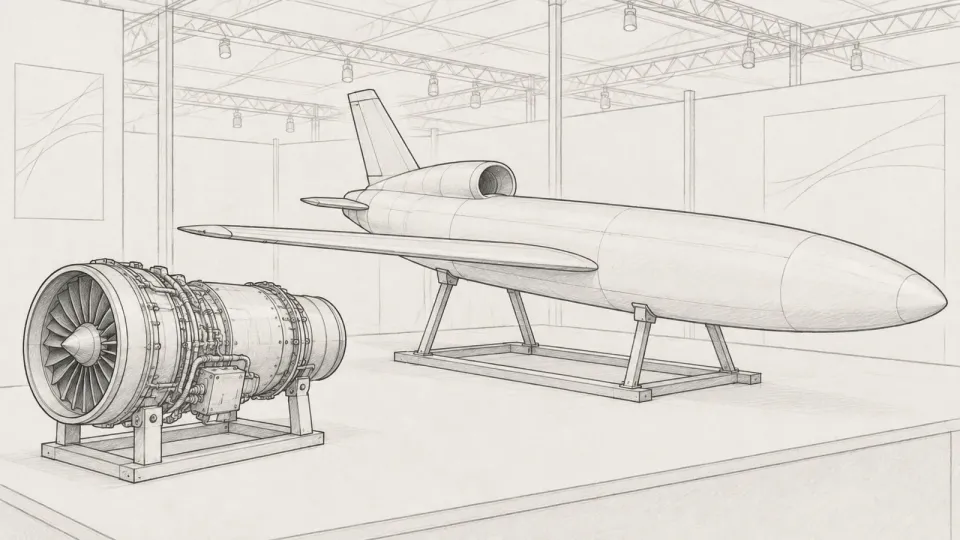
Russia Unveils Dan-T Loitering Munition at Egypt Airshow
Rosoboronexport showed the Dan-T at El Alamein, calling it a loitering munition. On its own figures it flies 450 km at 500 km/h.
Army orders $51M more Switchblades as rivals enter LASSO
AeroVironment took a $51M Switchblade order on August 26. In the same seven months the Army let a rival into LASSO and the Marines picked Anduril.
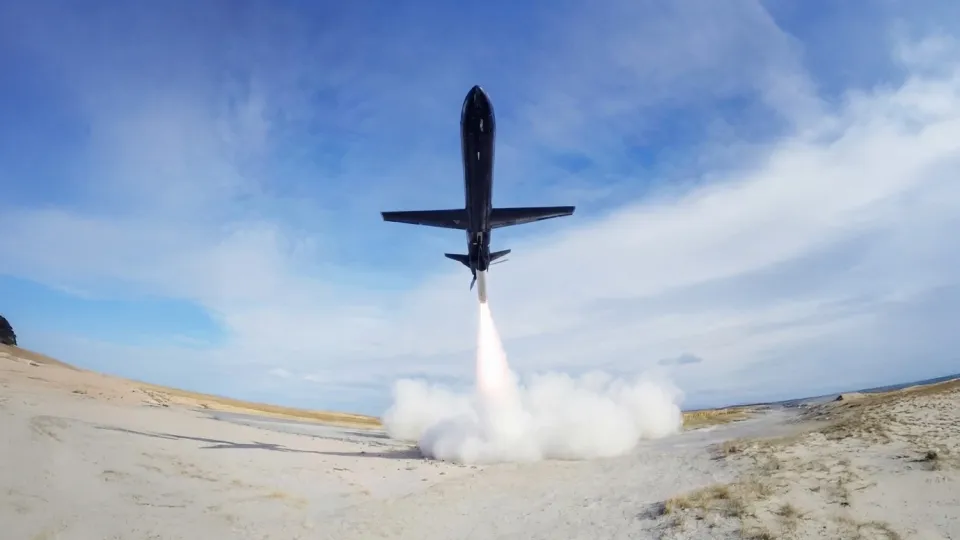
Rotron SkyLance Loitering Munition Passes First Tests
Rotron Aerospace completes demonstration tests of SkyLance, a low-cost long-range loitering munition, days after Ondas bought the British firm.
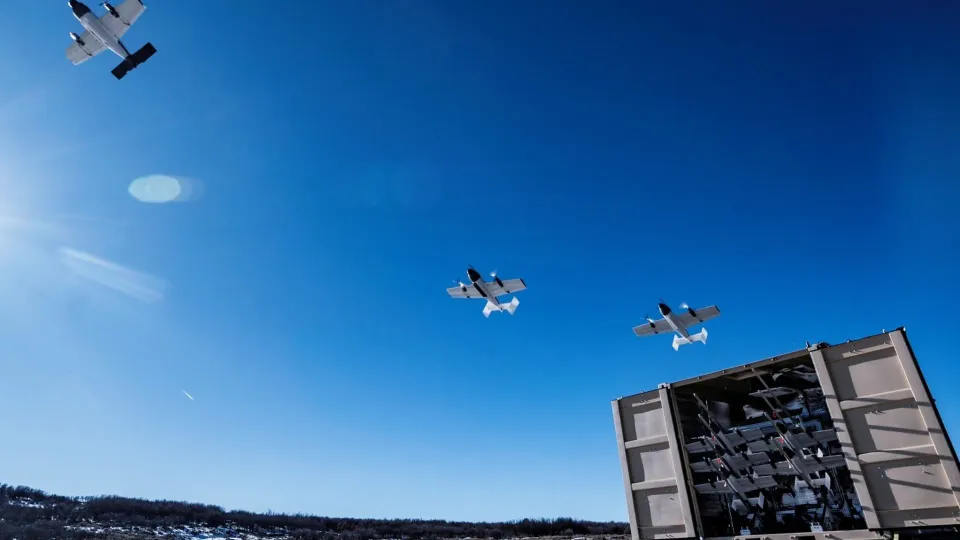
DZYNE Unveils Blitz, a Mass-Producible Kamikaze Drone
DZYNE's Blitz is a Group 1 one-way attack drone with 80–150 km range, launched in swarms from a BlitzBox container, aimed at Drone Dominance.

How Europe Is Integrating AI Into Its Military in 2026
Germany, France and the UK lead Europe's military AI integration, from Helsing loitering munitions to Palantir deals, with Ukraine as the live test.
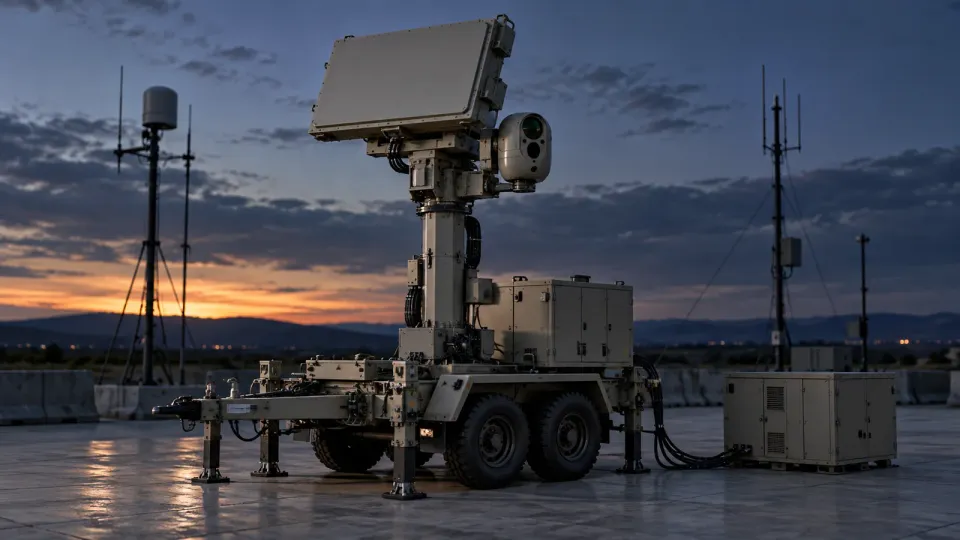
How $50,000 Drones Are Breaking Modern Air Defenses
A $50,000 Shahed forces a $4 million Patriot shot, and Russia launched 6,583 of them in April. The economics of drone warfare have shifted.

Chinese Firms Still Ship Drone Parts to Iran and Russia: WSJ
Chinese exporters are openly shipping drone engines, batteries and microchips to Iran and Russia despite US sanctions, the WSJ reports.
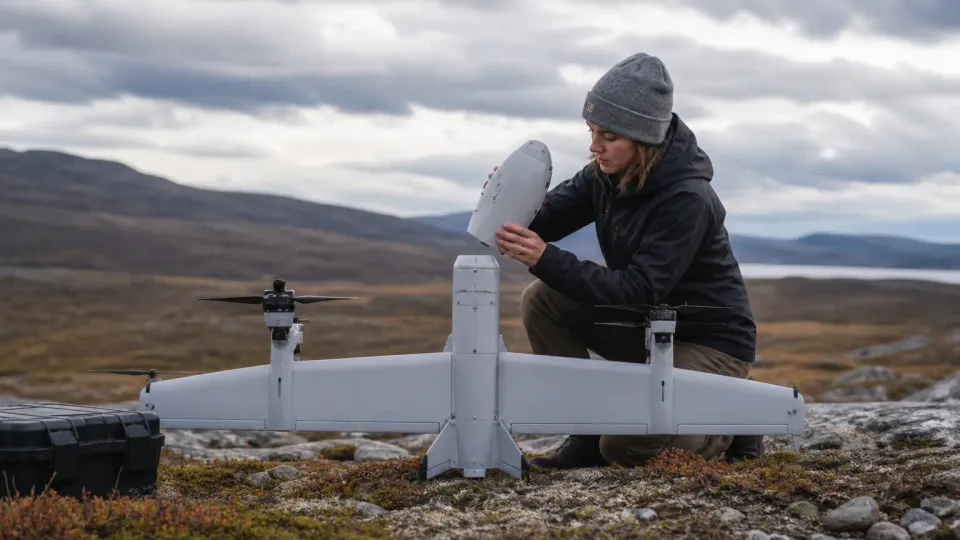
Bundeswehr Tests AI Drone Swarms with STARK Munitions
Germany's Bundeswehr tested AI-enabled recce-strike drone swarms with STARK's Virtus munition and Minerva C2 software.
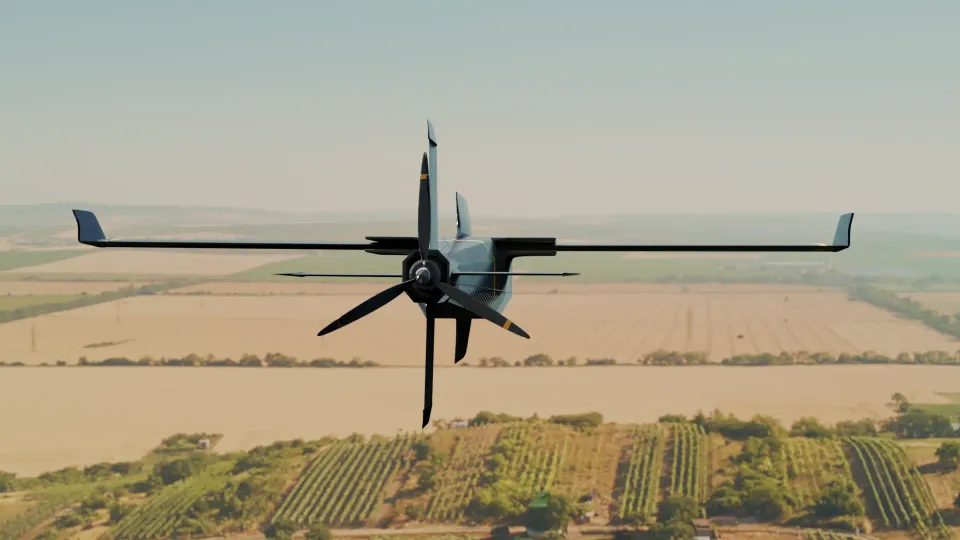
Rheinmetall's €2.4B Drone Contract Can't Stop Stock Slide
Rheinmetall wins a €2.4B loitering munition contract for Germany but shares hit a 52-week low on valuation concerns.
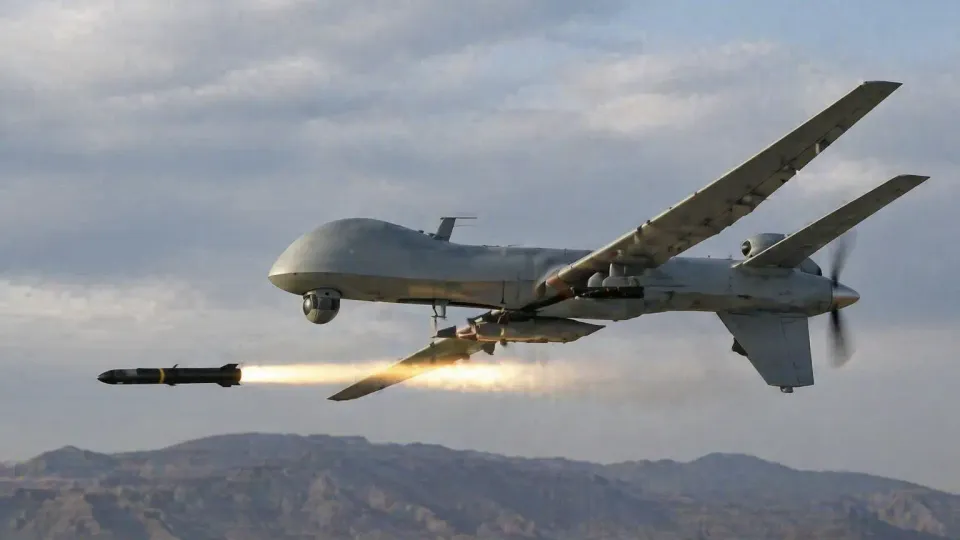
Sixth-Generation C-UAS: How the Drone War Is Evolving
AI interceptors, networked kill chains, and Ukraine's Drone Line define the next stage of counter-drone warfare in 2026.
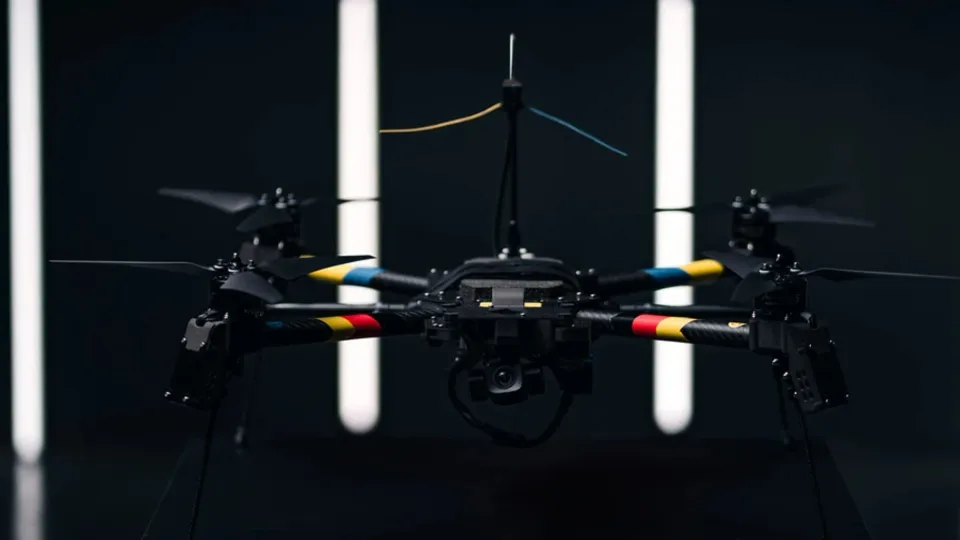
Frontline Robotics Begins Drone Production in Germany
Frontline Robotics and Quantum Systems launched a joint venture in Germany — Ukraine's first official military tech export.
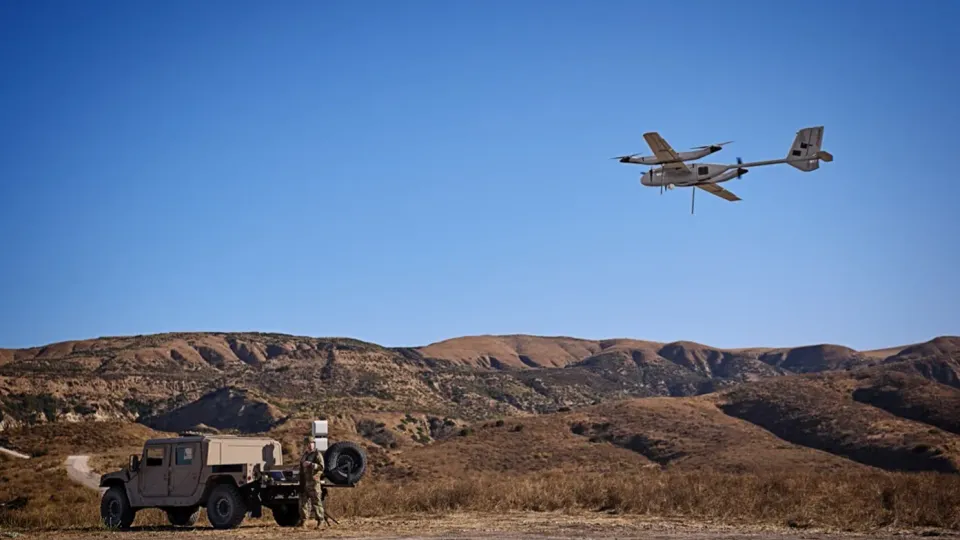
Army Awards AeroVironment $134M for Red Dragon, P550
The US Army has contracted AeroVironment for its Red Dragon one-way attack drone and P550 reconnaissance platform in deals totaling over $134 million.

LUCAS FLM-136: The US Answer to the Shahed
SpektreWorks' FLM-136 LUCAS is a $35,000 US loitering munition modelled on Iran's Shahed-136, now used in combat against Iran by US Central Command.

Russia Launches 172 Drones at Ukraine in Single Night Attack
Russia hit Ukraine with 172 Shahed and Gerbera drones overnight April 1-2. Air defenses downed 147. Twenty-two drones struck targets across 12 locations.
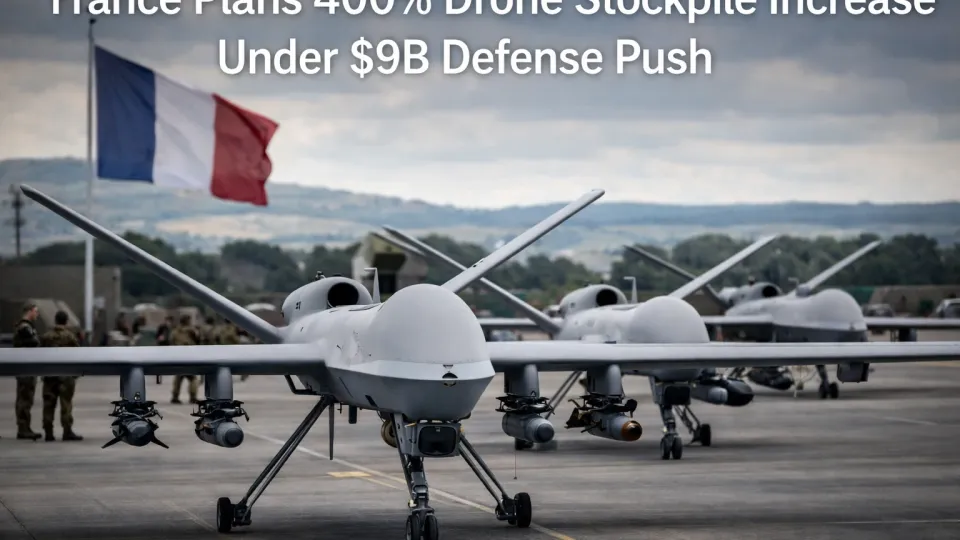
France Plans Up to 400% More Explosive Drones by 2030
The rise covers explosive drones, not the whole fleet. A Senate report says most of France's drone money still goes to a few big programmes.
Russia is shipping upgraded Shahed drones back to Iran
Russia is transferring improved Shahed drone variants to Iran, including versions with better navigation and anti-jamming.
Companies
AeroVironment
US manufacturer of small tactical UAS, loitering munitions and counter-UAS systems, transformed in scale by its 2025 acquisition of BlueHalo.
United States
Anduril Industries
US defense technology company building autonomous weapons, counter-UAS, and AI command software, and manufacturing them at its own Arsenal-1 plant in Ohio.
United States
Baykar
Turkish defense company behind the Bayraktar TB2, the most widely exported armed drone of the past decade, now also the owner of Italy's Piaggio Aerospace.
Turkey
Helsing
Munich defence company building AI software, the HX-2 strike drone, the SG-1 Fathom underwater glider and the CA-1 Europa uncrewed combat jet.
Germany
Quantum Systems
German maker of VTOL reconnaissance drones and autonomy software for European and US defense customers, with large-scale deployment in Ukraine.
Germany
Rheinmetall
German defense and automotive group producing armored vehicles, ammunition, air defense systems, and military drone platforms.
Germany
Airbus
European aerospace group building commercial aircraft, military aircraft, helicopters, satellites, and uncrewed systems including the Wingman combat drone.
Netherlands
Auterion
Drone software company whose AuterionOS operating system and Skynode flight computers turn other makers' drones into autonomous strike systems.
United States
Funding
Series C
Sequoia Capital, American Strategic Technology Fund, Interlagos, Valor Equity Partners, Allen & Company, Thiel Capital, Spark Capital, Dylan Field
Neros TechnologiesGrowth
Dragoneer Investment Group, Lightspeed Venture Partners, Disruptive, Iconiq, Goldman Sachs Alternatives, JPMorganChase, CPP Investments, General Catalyst, Plural, StepStone
HelsingSeries D
Blackstone, Noteus, Airbus, Advent, BOND, Fidelity Management & Research Company, Wellington Management, A.P. Moller Holding, Elephant Lake Ventures, Balderton, HV Capital
Quantum SystemsUndisclosed
Sequoia Capital, Founders Fund, NATO Innovation Fund, Project A, Air Street Capital, 201 Ventures, Advent, Döpfner Capital
STARKContracts
U.S. Air Force
DZYNE Technologies
Modification P00005 to the same Long-Endurance Tactical Reconnaissance Aircraft assessment contract…
U.S. Air Force
Leidos
Engineering and integration support for the Medusa counter-small-drone system of systems.
U.S. Air Force
DZYNE Technologies
Modification P00003 to FA8691-26-C-B007 for operational assessment of uncrewed Long-Endurance…
U.S. Army
AeroVironment
Production of LOCUST X3 30 kW laser weapon systems under the Enduring-High Energy Laser programme…
Federal Aviation Administration
General Atomics Aeronautical Systems, Lighthouse Avionics, ResilienX, NAVMAR Applied Sciences, Devorto Corporation, ANRA Technologies, SPS Aerial Remote Sensing, DroneUp, OneRadio, Frequentis USA, Censys Technologies, Aerial Vantage, Skydweller US, Oklahoma State University
19 UAS Broad Agency Announcement research contracts for detect-and-avoid and airspace-integration…