
The Pentagon’s Drone Dominance Program will spend $450 million on about 60,000 one-way attack drones in its third round, at prices it has set in advance. A long-range drone costs $5,000 and a short-range one $3,000, with the warhead paid separately. Bids closed on 12 October.
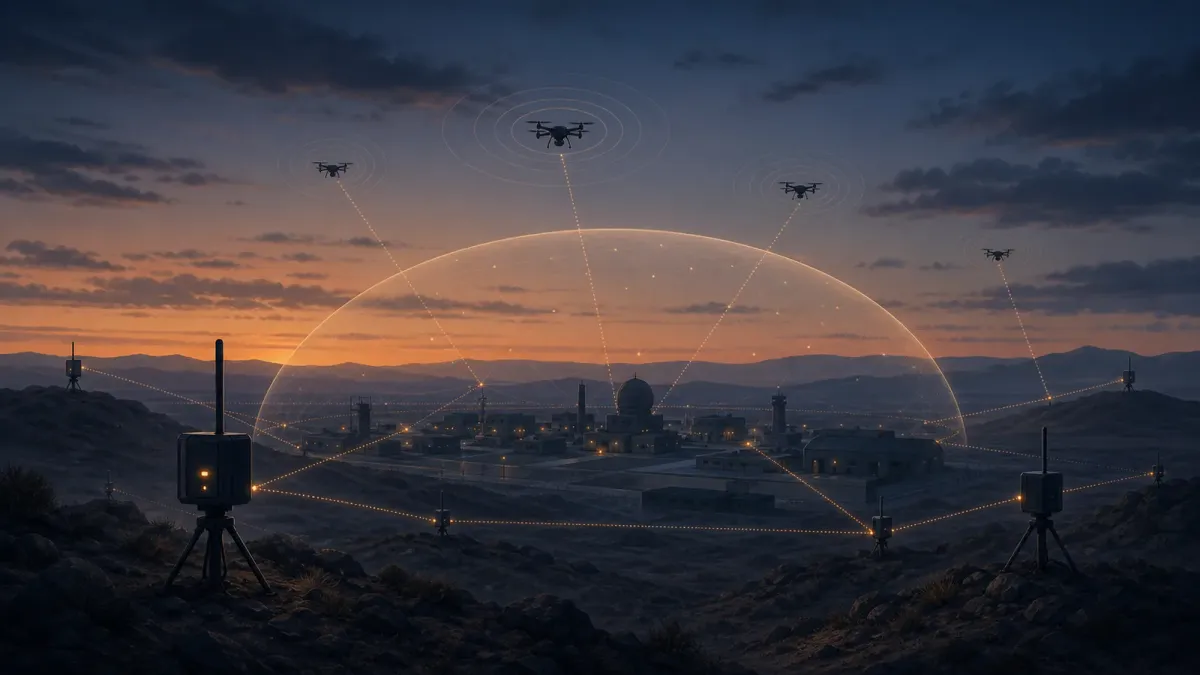
Every drone has to keep working when the enemy jams it. The request lists one condition for both missions: systems must be “resilient to RF jamming and GNSS denial”, meaning they must fly on when radio links are blocked and satellite navigation is gone.
The fibre option
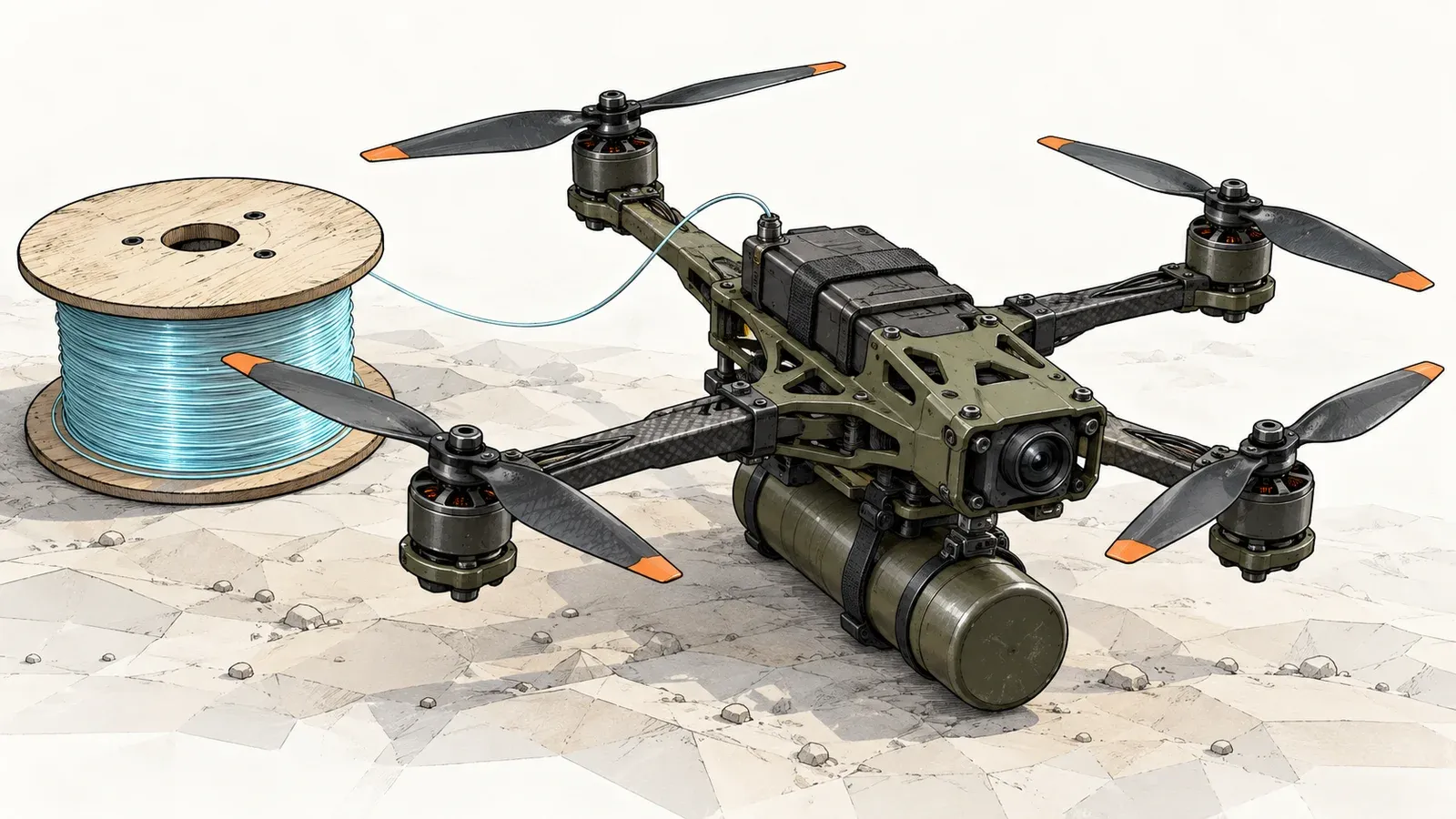
The request does not demand fibre-optic control, but it says fibre is “encouraged”. A drone steered down a thin glass cable has no radio link to jam. The programme calls fibre “a jam-resistant alternative to RF”.
Fibre drones will be tested with the cable and without it. A company that wins with fibre must deliver a fifth of its order with spools of at least 20 km for long-range drones and 3 km for short-range ones.
How the 60,000 split
The round covers two missions. Deep Strike drones hunt targets 15 to 20 km away. Close-Quarters Battle drones work under 3 km, in buildings, trenches and bunkers.
Each mission gets 30,000 drones: 12,000 to the top-ranked company, then 10,000 and 8,000. No order will be smaller than 8,000.
Warheads cost $3,000 each for the long-range drones and $2,750 for the short-range ones. The order counts 45,000 live payloads and 15,000 for training. The programme may later buy up to 40,000 more drones at prices the companies propose.
The calendar
Pitch sessions, about four companies per mission, are planned for early November. The ten companies that won the second Gauntlet skip that step. Awards for a first production order are expected by mid-December, and every bidder must show it can build 8,000 drones in five months.
Neros, first for close-quarters and third for deep strike on the programme’s Gauntlet II leaderboard, said on 30 September that its order from that round is 14,000 drones “valued at over $100 million”. Chief executive Soren Monroe-Anderson called the programme “a test of two things”: building good drones, and building them fast.
The first round is still being delivered. Of the 30,000 drones ordered after Gauntlet I, 16,680 had passed government inspection on the programme’s leaderboard as read on 15 October, up from 12,080 in September. Gauntlet III, where the 60,000 will be decided, is planned for March 2027.