

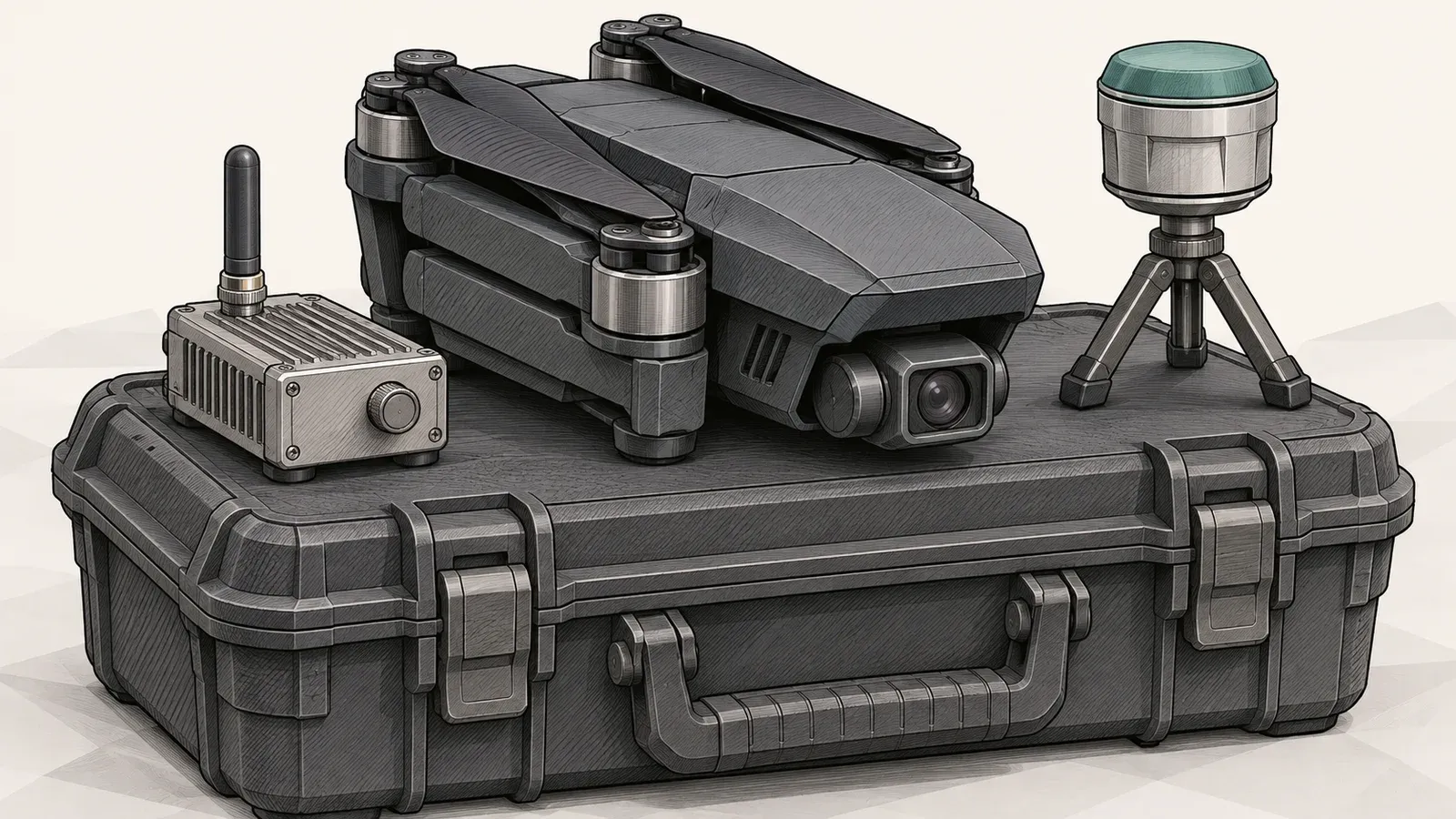
Red Cat announced on 2 November a memorandum of understanding with Sine Engineering, a company founded in Ukraine that builds radio links and navigation for drones that must keep working when GPS is jammed. The deal is not exclusive, and Red Cat gave no value.
The memorandum, signed with Sine’s US business, sets out a framework for fitting Sine’s technology to Red Cat’s Blue Ops uncrewed boats and its Red Cat Aerial drones. The first work is at sea: the boats, and networks of buoys and beacons. Red Cat says integration is already under way, and that Sine’s technology was “crucial” to its Hellcat drone in Ukraine.
“Ukraine has become one of the world’s most important proving grounds for drone communications and electronic warfare,” said Jeff Thompson, Red Cat’s chief executive. Sine says it has worked on the problem since 2022, has offices in Ukraine, the US and Finland, and this year became the first investment of the US-Ukraine Reconstruction Investment Fund.
Red Cat’s own product page has changed on the same subject. Until late October, the page for the Black Widow, the drone the US Army chose for its Short Range Reconnaissance programme, listed a GPS toggle “to fly fully GPS-denied from power-on”. FlightBrief’s archive saved the page with that line on 19 October and without it on 26 October. The standard Black Widow still lists Palantir’s visual navigation software as an option.
The page now gives that job to a second version, the Black Widow AiN. It uses the same airframe and payload, and is meant “for operating where GPS cannot be relied on”. It adds what Red Cat calls assured positioning, navigation and timing, an offset radio, and a fit for the US Army’s new battlefield network, Next Generation Command and Control. Its specifications have not been published.
Red Cat has not said whether Sine’s technology will go into the AiN. The company reports its third-quarter results on 16 November.