

Ukraine
Ukraine Drone Warfare: How Drones Changed Modern Combat
Jet-powered Shaheds, $1,000 interceptors, fibre-optic FPV and electronic warfare: the state of drone warfare in Ukraine and what it taught every military.
Updated
26 news articles on Ukraine ↓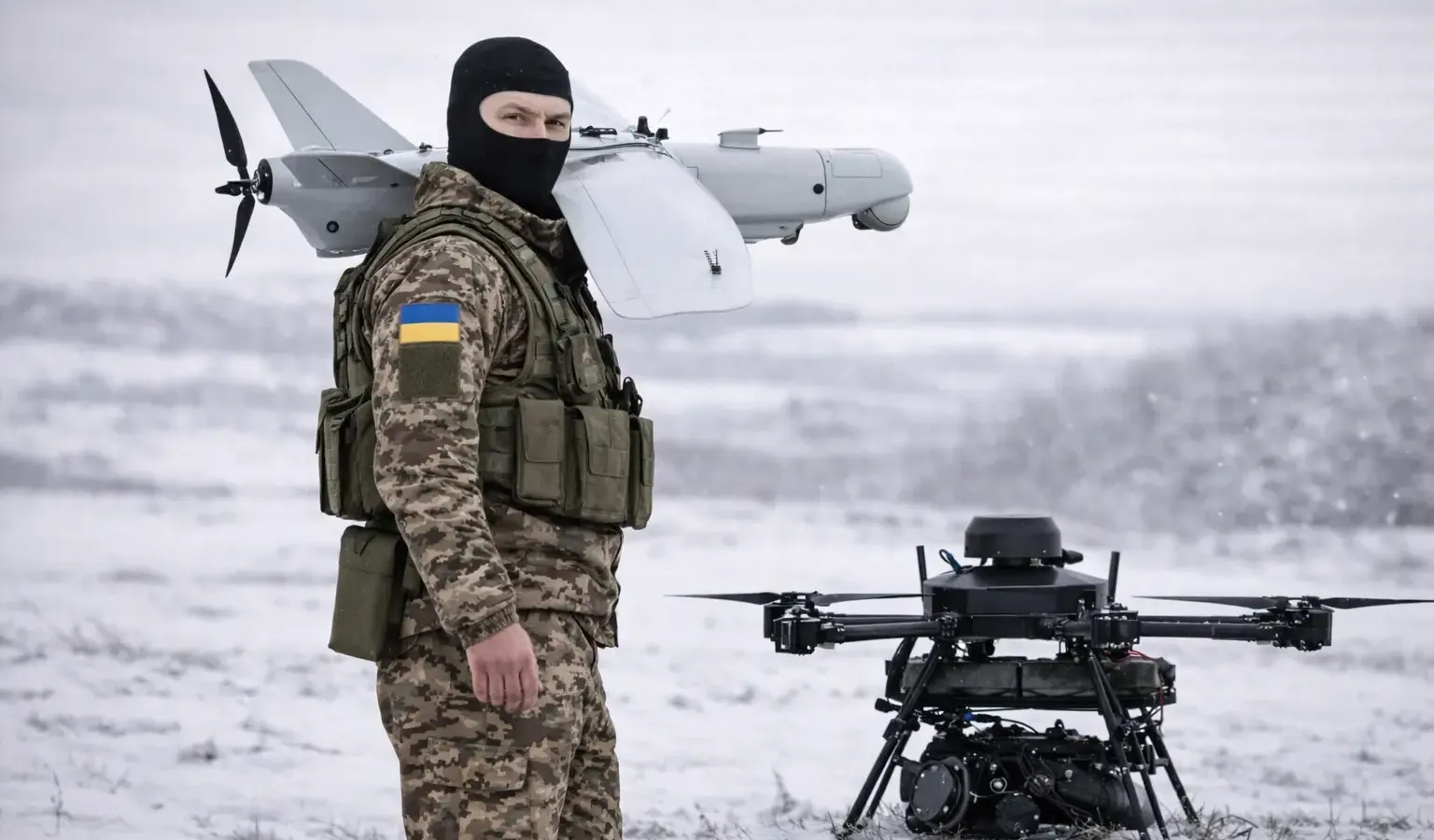
Guide
Ukraine is the most drone-intensive war in history. Its shape changed again in 2026. The war began with modified hobby quadcopters. It is now a contest between jet-powered one-way attack drones arriving at about 400 km/h and the interceptors Ukraine is racing to build fast enough to catch them.
Both sides build and lose aircraft at industrial scale. Every major military is reading the results.
Key facts
- Russia’s jet-powered Geran-4 and Geran-5 output at Yelabuga passed its piston-engined Geran-2 output by August 2026, at roughly 3,000 jet airframes a month against 2,800, according to Ukrainian military intelligence. By late September about half the Shaheds launched at Ukraine were jet-powered: 3,177 in September to the 29th, said the Air Force’s spokesman, against about 2,850 in August and about 350 in June.
- Russia launches 5,000 to 6,000 Shahed-type drones a month and peaked at nearly 7,500 in May 2026. In January 2026 commander-in-chief Oleksandr Syrskyi put Russian output at 404 a day.
- Ukraine’s interceptor drone production passed 10,000 a month by March 2026. SkyFall’s P1-SUN costs frontline units about $1,000 and Wild Hornets’ STING about $2,300, against $35,000 to $70,000 for a Geran-2.
- Alexa Spatium, Ukraine’s first jet-powered interceptor, entered service on 21 August 2026 by Ministry of Defence announcement. On 2 October Zelensky said Ukraine aimed to make up to 400 of one jet-interceptor model by the end of October, with engines the bottleneck.
- Ukraine still stops more than 90 percent of the propeller Shaheds, but only 55 to 64 percent of the jet ones in September, by President Zelensky’s figures and FlightBrief’s count of the Air Force’s daytime reports. The jet drones fly at about 400 km/h, too fast and high for most of the cheap defences built against the 185 km/h original.
- Fibre-optic FPV drones, guided by a cable rather than a radio link, appeared in spring 2024 and cannot be jammed. NATO analysts attribute more than 65 percent of Russian tank losses to Ukrainian drones.
Where Things Stand in 2026
Three things define this phase.
Russia went jet-powered. By August 2026, Ukrainian military intelligence assessed that Russian production of jet-powered Geran-4 and Geran-5 airframes at Yelabuga had passed production of the piston-engined Geran-2 — roughly 3,000 jet units a month against about 2,800 piston.
The launches followed. Yurii Ihnat, the Air Force spokesman, put jet launches at about 350 in June, about 2,850 in August and 3,177 in September to the 29th. “About half of the Shaheds are now jet-powered,” he said on 23 September. Ukraine’s own weapons testers had counted 180 in the whole of 2025.
A standard Shahed cruises near 185 km/h. The jet versions usually fly at about 400 km/h and high, the Ministry of Defence says, and Russia sends them in small groups to different regions. Every air defense system tuned to the slow, low profile of the original has to be re-tuned.
The design keeps changing too. On 5 October Ukrainian military intelligence described a Geran-4 variant that Russia began using this autumn. It navigates by matching camera images to maps, carries a warhead meant for bridges and power-line pylons, and runs on a Russian-made engine in place of the Chinese one.
Volume climbed with it. Russia has generally launched 5,000 to 6,000 Shahed-type drones a month. Launches peaked at nearly 7,500 in May 2026. In January 2026 Ukraine’s commander-in-chief, Oleksandr Syrskyi, put Russian output at 404 drones a day and warned it was heading toward 1,000.
Ukraine answered with interceptors, not missiles. It did not spend surface-to-air missiles on cheap drones. It made drone-on-drone interception a primary layer of air defense.
Production reached roughly 1,500 FPV-based interceptors a day in early January 2026 and passed 10,000 units a month by March. Those interceptors were built for the propeller Shahed; against the jet version the defence has had to lean on missiles and fighters again.
The Interceptor Economy
The interceptor is the most important thing Ukraine has built in this war. It fixes the cost arithmetic that was running against Ukraine.
SkyFall’s P1-SUN is a fibre-optic Shahed hunter on a 3D-printed modular airframe. It costs frontline units about $1,000. Wild Hornets’ STING costs around $2,300.
A Geran-2 costs $35,000 to $70,000, so for the first time in the war the exchange favours the defender. That is the reverse of firing a $4 million Patriot interceptor at a $50,000 drone.
The jet variants forced a second generation. On 21 August 2026 Ukraine’s Ministry of Defence announced that Alexa Spatium had entered service. It is Ukraine’s first jet-powered interceptor. SkyFall says its JetKiller entered mass production in August 2026. On 18 September Zelensky said new interceptors from two companies had passed combat tests, without naming them, and on 2 October he said Ukraine aimed to build up to 400 of one model by the end of the month. Engines, he said, are what limits the number.
SkyFall says JetKiller destroyed more than a dozen jet-powered Shaheds during combat testing. In April 2026, Ukraine also showed an interceptor launched from an uncrewed surface vessel destroying a Shahed. That pushed the engagement line out over the Black Sea.
Against the propeller Shahed, interception rates held up better than expected: around 95 percent at peak, 85 to 90 percent on a routine night, and still above 90 percent in September. The jet version broke that. Zelensky said on 26 September that more than 2,730 jet Shaheds had been launched that month and more than 1,500 stopped, about 55 percent. In the Air Force’s daytime reports for September, which list jet drones separately, 64 percent were stopped against 91 percent of the others: the jet drones got through four times as often. On 28 September Zelensky called the rate “much lower than it needs to be”.
The Pentagon noticed. By March 2026 US officials were publicly interested in buying Ukrainian-designed $1,000 interceptors, an unusual direction for technology transfer. FlightBrief’s interceptor drones table lists the systems in service or on order, in Ukraine and elsewhere, with the document behind each.
How FPV Drones Took Over the Front Line
FPV drones entered the conflict in late 2022 as modified commercial quadcopters. They were used for strikes and munition drops.
They became tactically decisive in 2023, filling the gap left by Ukraine’s artillery shortage. They made precision attacks possible on armour and troops beyond line of sight. Russia sped up its own programme in response.
Both sides made the technology official in 2024. Ukraine built drones into its forces through the Unmanned Systems Forces. Russia created the Rubikon Center for Advanced Unmanned Technologies. Volunteer experiments became an industrial priority.
Ukraine’s production model is deliberately spread out. The Army of Drones programme was launched in 2022 through the Ministry of Digital Transformation. It spread production, training and repair across more than 800 companies and volunteer groups.
Volunteer networks such as Aerorozvidka, an IT collective operating since 2014, supplied reconnaissance and strike capability before state programmes caught up. That structure has proven more resilient under attrition than central factory output.
The state now runs the pipeline at scale. The Ministry of Defence cleared 650 new drone models for use between January and 22 September 2026, 231 of them fibre-optic, and units ordered more than 590,000 drones through the Brave1 Market platform in the first nine months of the year. The money increasingly comes from Europe: on 7 October the European Commission paid €1.24 billion for Ukrainian-made drones, interceptors and missiles, the fifth such payment from its €90 billion loan since June. Ukraine has also begun letting its makers export under licence, and in a first reading on 12 October parliament backed a law sending all export-permit fees to the armed forces.
The Fibre-Optic Turn
The biggest tactical shift came in spring 2024, when Russia deployed fibre-optic FPV drones guided by a physical cable rather than a radio link. That made them immune to jamming. Ukraine adopted the technology within months.
Fibre-optic FPV gives up speed, agility and payload. In return it gets full immunity to electronic warfare and a clean video feed. The cost is range, and a snapped cable. It also broke the assumption under most counter-drone spending: a drone with no radio link cannot be jammed, only shot.
Tactics kept building on each other. Single-drone strikes gave way to formations and mother-drone relays. In these, agricultural drones launch two or three FPVs mid-flight to push engagement range out to 60 to 70 kilometres. Operators also land drones in ambush mode to wait for targets.
NATO analysts estimate that Ukrainian drones, mostly FPV, destroyed more than 65 percent of Russian tanks lost in the conflict.
Shahed and Geran: Iran’s Design, Russia’s Factory
Russia received its first Shahed-131 and Shahed-136 kits from Iran in 2022 under a deal estimated at $1.75 billion for technology transfer and thousands of units. Iran’s export price was $193,000 to $370,000 against a production cost of $20,000 to $50,000. Russia then built its own.
The main line runs at the Alabuga Special Economic Zone in Tatarstan, where the drone is branded the Geran-2, with more built at IEMZ Kupol. On 17 September Ukrainian military intelligence published 20 foreign machine tools and robots it says are used on the Alabuga line, from China, Germany, Japan, Switzerland and Iran.
The Russian version added heavier warheads of up to 80 to 90 kilograms, including incendiary types. It also improved resistance to electronic warfare. Design simplifications brought unit cost down to $35,000 to $70,000. An estimated 60 to 80 percent of components are still Chinese-origin.
Russia also fields Gerbera and Parodya decoys alongside the strike versions. They are designed to wear out Ukrainian air defenses before the real wave arrives. The targets have stayed the same throughout: energy infrastructure, logistics nodes and civilian systems, hit in nightly waves. The waves are intended to erode morale and drain defensive resources.
Electronic Warfare: The Invisible Front
Russia operates the densest electronic warfare environment in any active conflict. GPS jamming, spoofing and broadband RF suppression affect drone operations along the whole front.
Key Russian systems include the Krasukha-4, a broadband jammer that works against radar and satellite links beyond 200 kilometres. Another is the Pole-21, which suppresses GPS across wide sectors. Portable frontline systems include Repellent-1, Silok-01, Lesochek and Shipovnik-Aero. In 2024, before Ukraine’s fibre-optic shift, Russian jamming caused an estimated 60 to 80 percent FPV loss rate.
Ukraine’s countermeasures built up in layers. They include frequency-hopping protocols and mesh relay networks, which reduce the risk of jamming at a single point. The decisive move was to fibre optics.
The cycle runs in weeks to months. Russia pioneered fibre-optic FPV to beat its own jamming, and Ukraine adopted it almost at once. Both sides now train operators for jammed conditions. Both also field AI-assisted autonomy as a fallback when the link drops.
Counter-Drone: The Cost-Exchange Problem
Ukraine runs a layered defense. Patriot and NASAMS cover high-value targets. Gepard 35mm anti-aircraft guns handle the Geran profile cheaply and remain the workhorse against the piston variants.
Mobile hunter teams with thermal optics, machine guns and shotguns respond to drone alerts across the country. Vehicle-mounted jammers and handheld drone rifles provide electronic defeat.
The economics drove everything. A Patriot interceptor costs more than $4 million. A Geran-2 costs $35,000 to $70,000.
Firing missiles at drones cannot be sustained at scale. Russia exploits that on purpose through saturation. The shift toward guns, interceptor drones and electronic defeat is a direct response.
Jet-powered Gerans reopen the question. Gepard was well matched to a 185 km/h target. At 600 km/h the problem is much harder. That is why the jet interceptor programmes matter more than their small numbers suggest.
On the Russian side, defense rests on electronic warfare saturation and unit-level jammers including the Multik. Russia also uses physical countermeasures such as nets and cage armour, and develops its own interceptors. Against fibre-optic FPV, which cannot be jammed, physical hardening is most of what is left.
What Other Militaries Are Taking From This
Armour has to be rethought. FPV strikes hit the roof and rear plate, the thinnest armour on any tank. Russian tank tactics shifted from armoured assault to standoff support 3 to 10 kilometres behind the contact line.
Cage armour and reactive netting are standard on both sides. Their value against fibre-optic FPV, which cannot be jammed, is limited.
Infantry lives inside a kill zone. The 15 to 20 kilometres around the front line is effectively saturated with drones. Adaptations include electromagnetic silence, camouflage over positions and vehicles, small dispersed units, overhead cover, and shotguns or nets for close defence. Movement discipline is now as basic as fire discipline.
Mass beats exquisite. NATO exercises including Hedgehog-25 took in Ukrainian drone doctrine directly. Ukrainian operators showed that small drone and mine combinations could defeat conventional NATO force structures.
NATO and the US Department of Defense have reached the same conclusions each time. Low-cost attritable systems outperform sole reliance on expensive platforms in high-intensity conflict. Layered cheap air defense survives better than a SAM-heavy one. And the agility of the production base matters as much as any single platform.
The Numbers
Production figures mix official statements, OSINT and think tank estimates. Precise numbers are classified on both sides and often contested. Treat these as orders of magnitude.
| Measure | Figure |
|---|---|
| Russian jet Geran-4/5 output | ~3,000 per month (August 2026) |
| Russian piston Geran-2 output | ~2,800 per month (August 2026) |
| Russian Shahed-type launches | 5,000–6,000 per month; ~7,500 peak in May 2026 |
| Russian jet Shahed launches | ~350 (June), ~2,850 (August), 3,177 (September to the 29th) |
| Shaheds destroyed, September 2026 | 2,722 propeller and 1,935 jet (Air Force) |
| Ukrainian interceptor production | ~1,500 per day (January 2026); 10,000+ per month (March 2026) |
| Ukrainian interception rate | Propeller Shaheds: 85–90% routine, ~95% peak, 90%+ in September; jet Shaheds: 55–64% in September |
| Interceptor unit cost | $1,000 (SkyFall P1-SUN) to $2,300 (Wild Hornets STING) |
| Geran-2 unit cost | $35,000–$70,000 |
| Ukrainian drone production | ~2.2M in 2024; 4.5M FPV purchases targeted for 2025; 5M+ annual capacity |
| Russian FPV production | ~2M in 2025 (estimated) |
| Share of losses attributed to drones | 60–85% of equipment and personnel across the conflict |
How Many Drones Does Russia Launch at Ukraine Each Month?
Between 5,000 and 6,000 Shahed-type drones a month through 2026, with a peak of nearly 7,500 in May. About half are now jet-powered: 3,177 jet drones in September to the 29th, by the Air Force spokesman’s count. The largest single attack since September came on the night of 12 to 13 September, with 453 strike drones and decoys, of which the Air Force said 405 were downed or suppressed. In August Ukrainian military intelligence assessed that Russia was building about 3,000 jet-powered Geran-4 and Geran-5 airframes a month, on top of 2,800 piston-engined Geran-2s.
What Does a Shahed Drone Cost?
A Russian-built Geran-2, the local version of the Shahed-136, costs $35,000 to $70,000 a unit. Iran’s original export price was $193,000 to $370,000 against a production cost of $20,000 to $50,000. A Patriot interceptor fired at one costs more than $4 million. That is why Ukraine moved to guns and interceptor drones.
How Does Ukraine Shoot Down Shahed Drones?
In layers. Against the propeller Shahed, interceptor drones costing $1,000 to $2,300 are now the primary layer. Behind them are Gepard 35 mm guns, mobile fire teams with thermal optics, and vehicle-mounted jammers. That combination stops more than 90 percent of them.
The jet Shahed mostly flies past those layers, so it falls to surface-to-air missiles and fighters, F-16s, Mirages and MiG-29s among them, while jet-powered interceptors come into production. Ukraine stopped 55 to 64 percent of jet Shaheds in September.
Why Are Fibre-Optic FPV Drones Used in Ukraine?
Because a drone guided by a physical cable has no radio link to jam. Russia fielded them in spring 2024 to beat its own dense electronic-warfare environment. Ukraine adopted them within months. The trade is range, speed and payload for a clean video feed, and a snapped cable ends the flight.
What to Watch
The jet interceptor race is the live question. Russia launched more than 3,000 jet Shaheds in September; Ukraine’s target is up to 400 of one jet-interceptor model by the end of October. Whether that gap closes, and how fast the engines can be made, decides whether the cost-exchange advantage survives the speed increase.
Three other questions follow. The first is whether Russia can hold jet production rates at Yelabuga under sustained Ukrainian deep strikes. Ukraine’s General Staff has reported hitting drone sites elsewhere since September, including the Atlant Aero plant in Taganrog on 15 September, but has claimed no new strike on Alabuga. The second is whether AI-assisted terminal autonomy crosses into routine engagement without an operator in the loop. It is already fielded as a fallback for jammed conditions.
The third is whether NATO’s industrial response can match the production agility Ukraine showed under fire. That agility remains the hardest lesson of the war to copy.
Sources
- Ministry of Defence of Ukraine, “Defence Forces arsenal expands with the addition of Ukraine’s first jet-powered drone interceptor, Alexa Spatium”, 21 August 2026, as reproduced by GlobalSecurity.org; the ministry’s own newsroom is at mod.gov.ua.
- Defence Intelligence of Ukraine (HUR), August 2026 assessment of Geran production at the Alabuga Special Economic Zone, its machine-tool list of 17 September and its description of the new Geran-4 variant, 5 October 2026; Commander-in-Chief Oleksandr Syrskyi’s January 2026 statement on Russian output.
- Ukraine’s Air Force, September 2026 interception totals and its report of the night of 12 to 13 September; the Air Force spokesman’s and President Zelensky’s September statements on jet Shahed launches and interception, as reported in FlightBrief’s article of 30 September.
- Ministry of Defence of Ukraine, 650 drone models codified (22 September 2026), 590,000 drones ordered through Brave1 Market (25 September 2026) and export permit fees; General Staff of Ukraine, strike on Atlant Aero, 15 September 2026; European Commission payment of 7 October 2026 under the Ukraine Support Loan.
- SkyFall (P1-SUN, JetKiller) and Wild Hornets (STING) manufacturer statements on unit cost and production; Brave1, Ukraine’s defence-technology platform, for the interceptor programme.
- NATO and RUSI analyses of FPV attrition and Russian electronic warfare, 2024 to 2026. Production and loss figures in the table are orders of magnitude drawn from official statements, open-source intelligence and think-tank estimates, and are contested on both sides.
Coverage
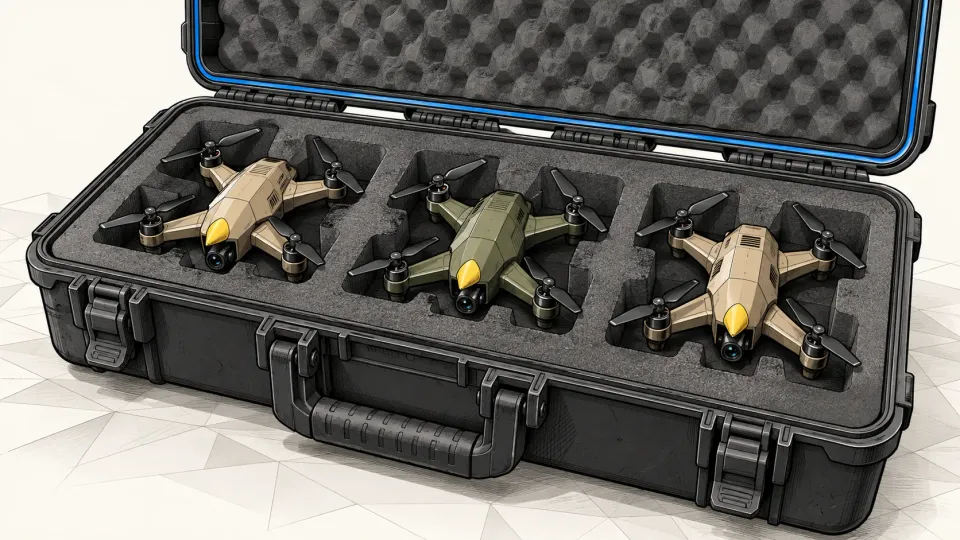
Japan Buys Ukrainian Interceptor Drones From SkyFall
Defence Minister Koizumi named no model, number or price. Japan sends Ukraine no weapons, but now buys one of its anti-Shahed drones.
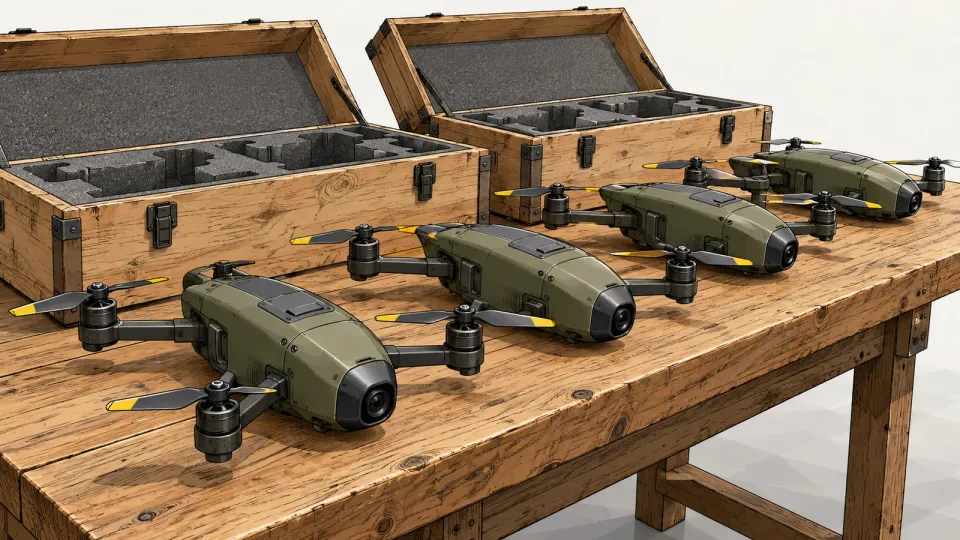
EU Pays €1.24B for Ukrainian-Made Drones and Interceptors
It is the fifth defence payment from the €90 billion loan, and €15.4 billion of this year's defence money is still unpaid.
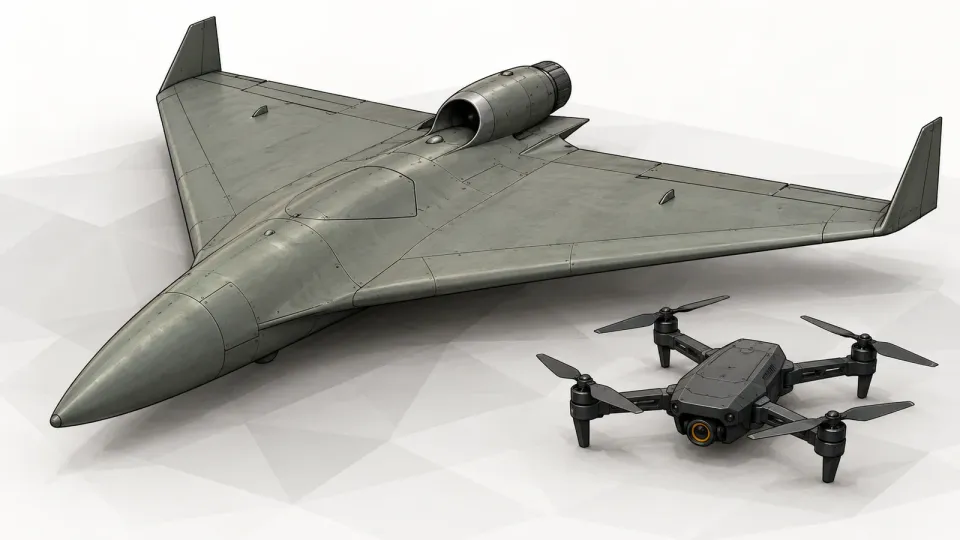
Jet Shaheds Get Past Ukraine's Defenses Four Times as Often
In the Air Force's September daytime reports, 36% of Russia's jet drones were not shot down or jammed, against 9% of the rest.
Ukraine Clears 650 New Drone Models for Its Forces in 2026
Cleared means approved for supply, not built or delivered. The ministry has not said how many of any model its forces have received.
Pentagon Invites 17 Firms to Test $20,000 Bomber Drones
Four build drones for Ukraine or belong to Ukrainian groups. Each drone must drop 8 kg of munitions and come back for at least 30 missions.
Canada Orders First Marketplace Drones, Signs Ukraine Deal
Six Canadian firms won up to C$50 million through a Brave1-style marketplace as Carney and Zelenskyy agreed joint drone production. Ukraine gets 30%.
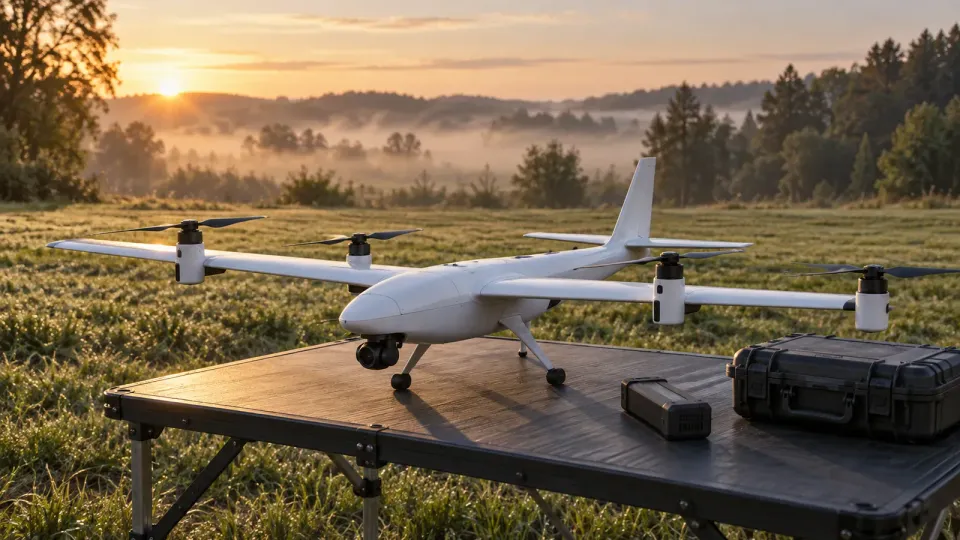
Wingcopter Launches 262 Recon Drone and Moves Into Defence
The German delivery drone maker unveiled a 10 kg tactical reconnaissance aircraft, a defence unit, and a production deal with Ukraine's TAF Industries.
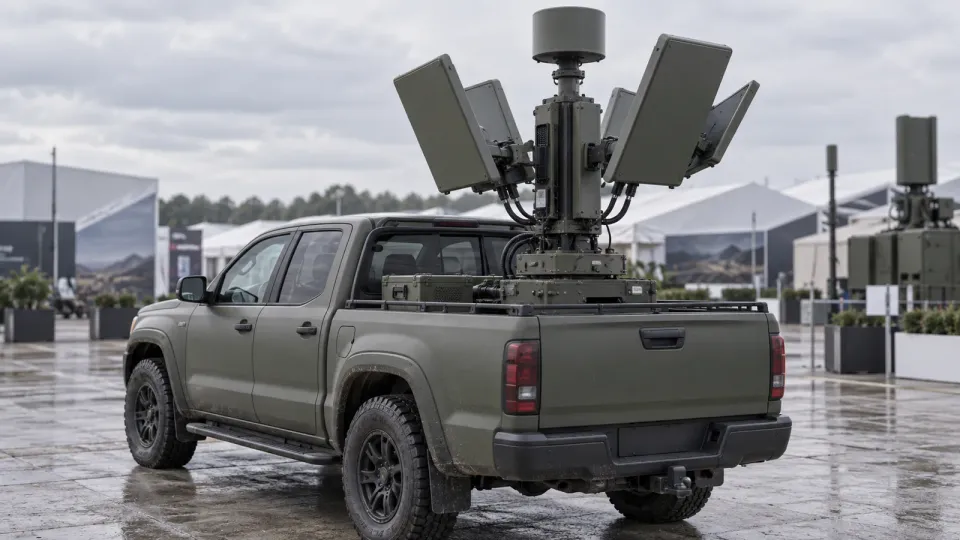
Ukraine's Ai-Petri Jammer Makes Its Export Debut in Poland
The Ai-Petri electronic warfare system, in Ukrainian service since 2024, was shown abroad for the first time at MSPO 2026 in Kielce.
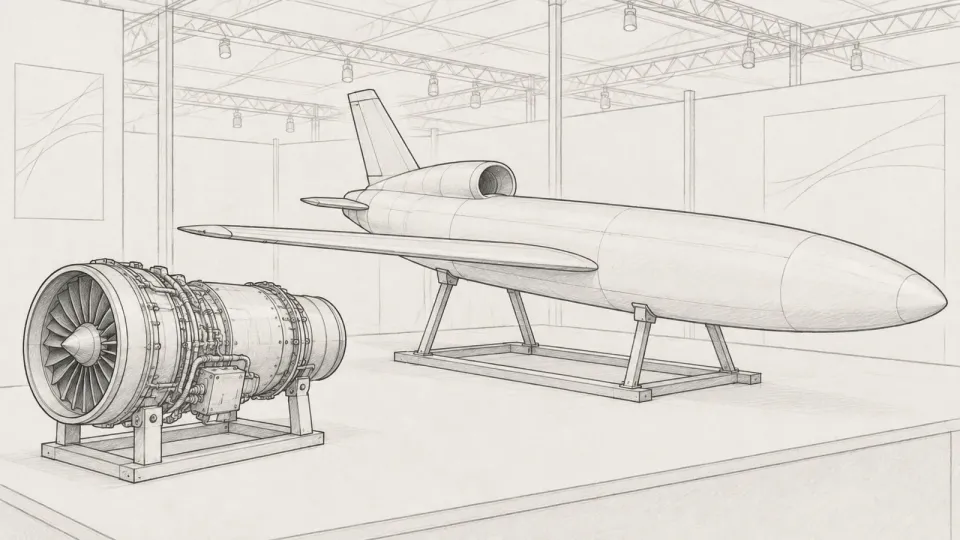
Russia Unveils Dan-T Loitering Munition at Egypt Airshow
Rosoboronexport showed the Dan-T at El Alamein, calling it a loitering munition. On its own figures it flies 450 km at 500 km/h.
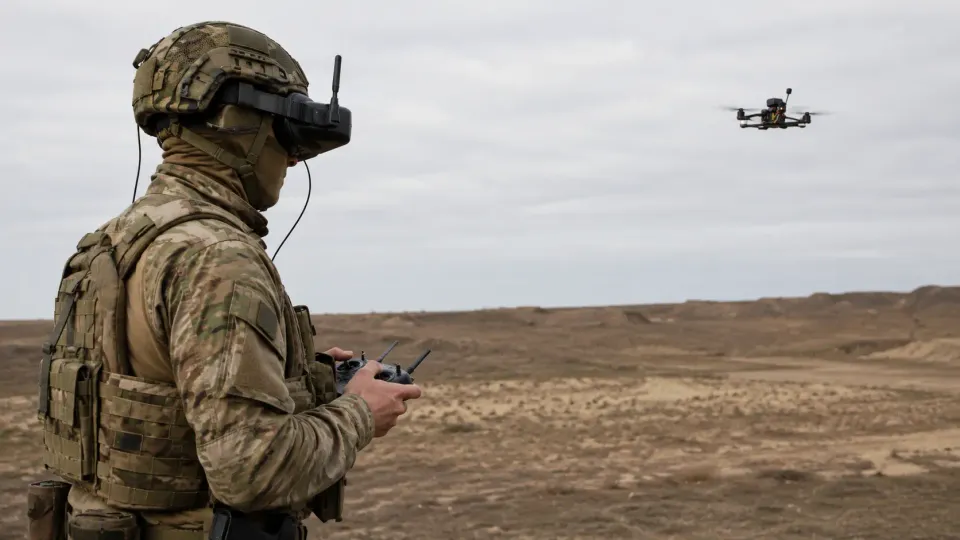
Pentagon Sends Personnel to Ukraine to Study Drone Warfare
Defense Secretary Hegseth confirmed US personnel are in Ukraine studying drone combat tactics, battlefield experience no NATO ally has.
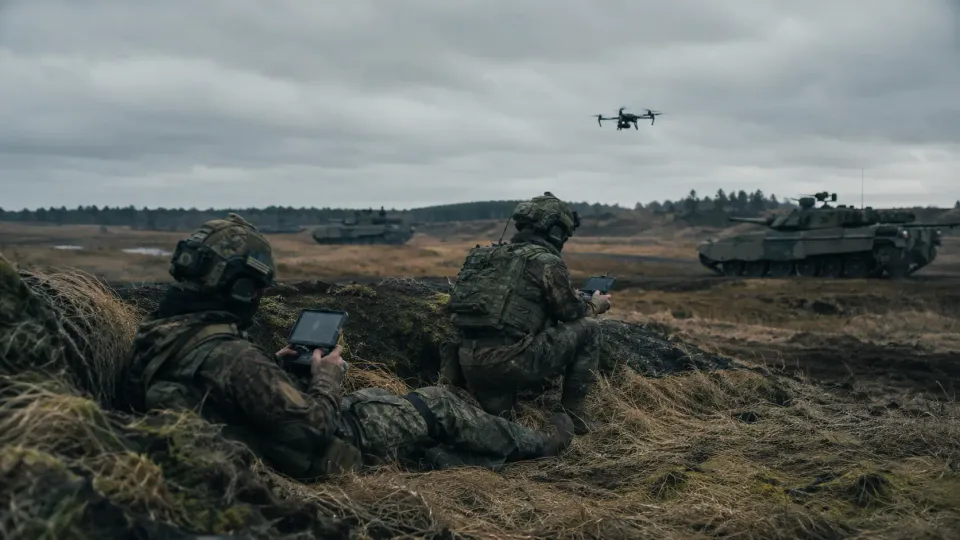
Ukrainian Drone Teams Beat NATO Forces in Aurora 2026 Drill
Fewer than 20 Ukrainian FPV pilots repeatedly shut down Aurora 2026, destroying 28 of 32 vehicles in one engagement and an airfield in 20 minutes.
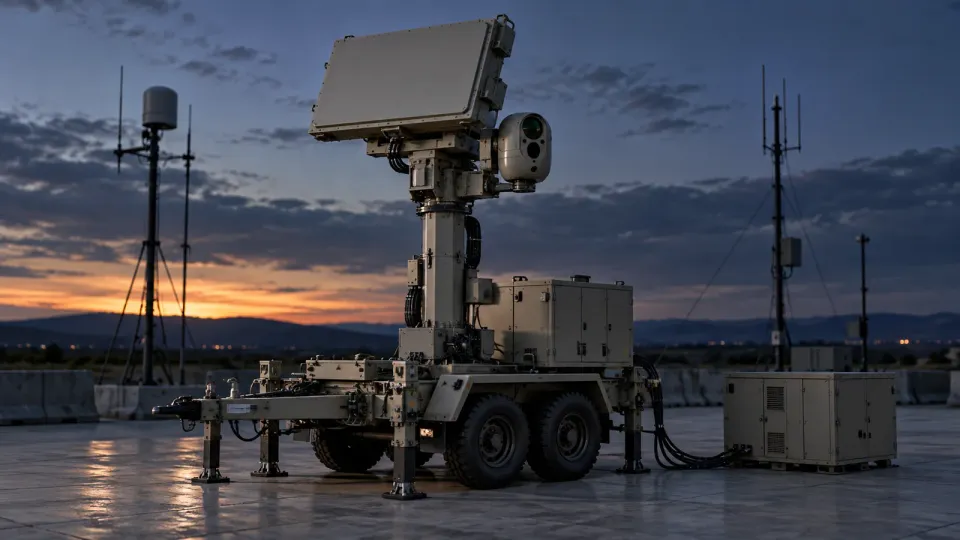
How $50,000 Drones Are Breaking Modern Air Defenses
A $50,000 Shahed forces a $4 million Patriot shot, and Russia launched 6,583 of them in April. The economics of drone warfare have shifted.
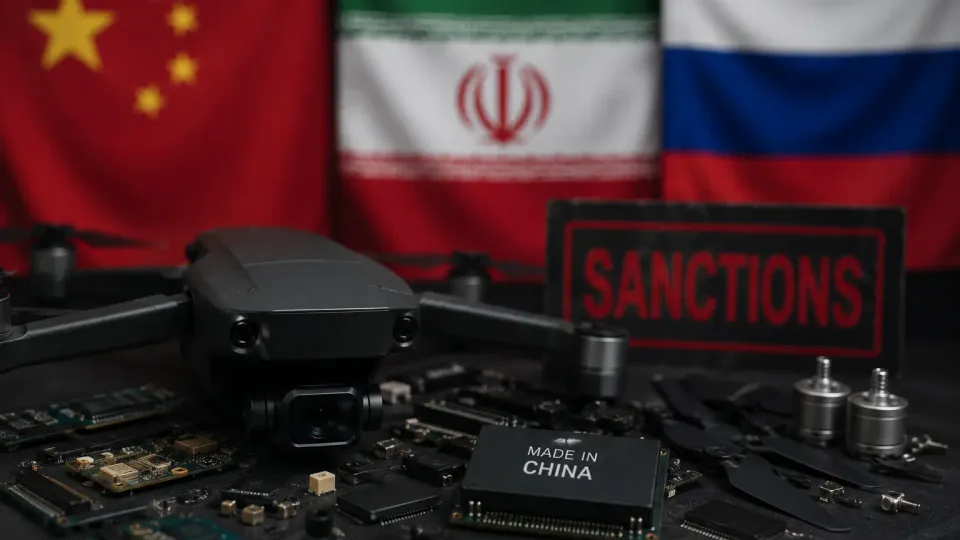
Chinese Firms Still Ship Drone Parts to Iran and Russia: WSJ
Chinese exporters are openly shipping drone engines, batteries and microchips to Iran and Russia despite US sanctions, the WSJ reports.
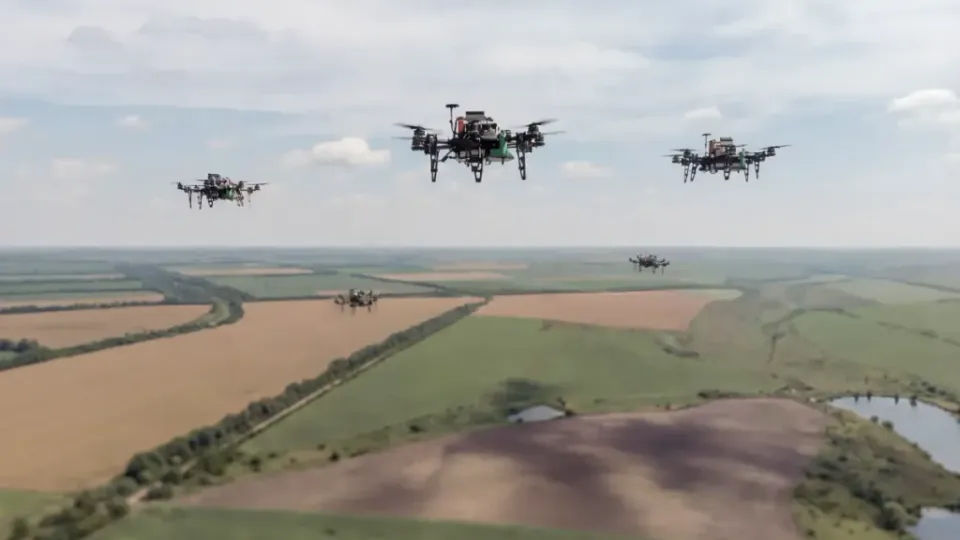
Swarmer Logs 100,000 Combat Missions in Ukraine
Ukrainian drone autonomy startup Swarmer has logged over 100,000 real-world combat missions since April 2024, coordinating swarms of up to 690 drones.
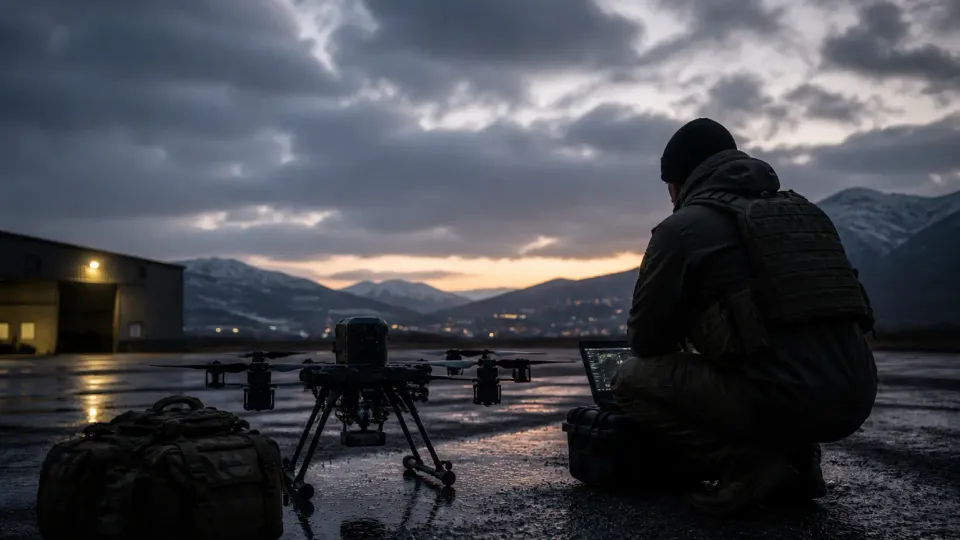
Ukraine's Drone Deal: Exporting Battle-Tested Weapons
Ukraine is launching a structured arms export program selling combat-proven drones and electronic warfare systems to allies.
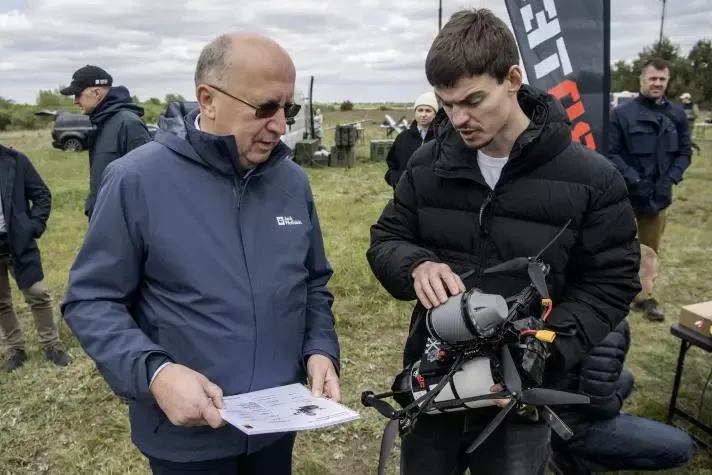
EU and Ukraine Launch €100M BraveTech Weapons Program
The EU and Ukraine's Brave1 platform launched BraveTech EU, a €100M initiative to fast-track combat-tested weapons.
Netherlands Commits €248M to Drone Production for Ukraine
The Netherlands will fund €248M in drone production for Ukraine, covering Dutch-made and Ukrainian-made UAVs.
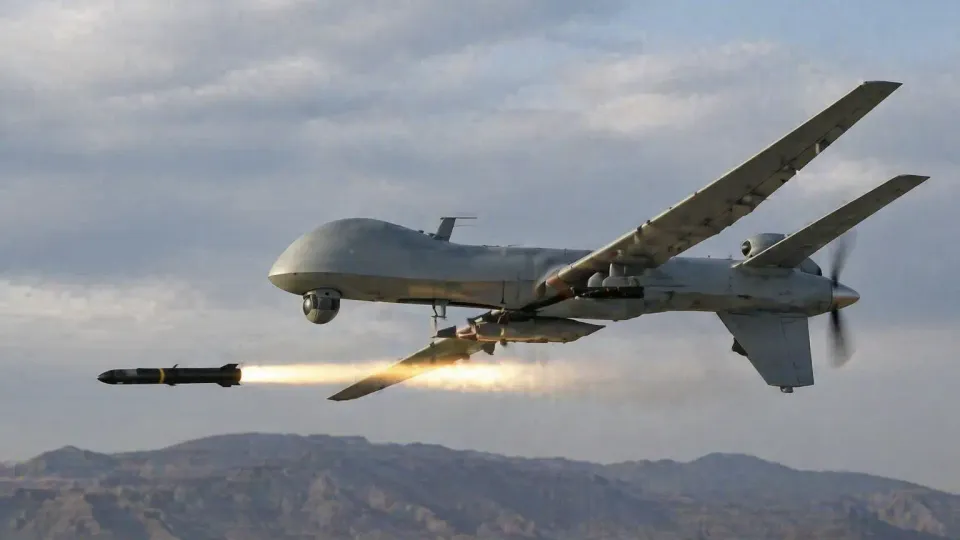
Sixth-Generation C-UAS: How the Drone War Is Evolving
AI interceptors, networked kill chains, and Ukraine's Drone Line define the next stage of counter-drone warfare in 2026.
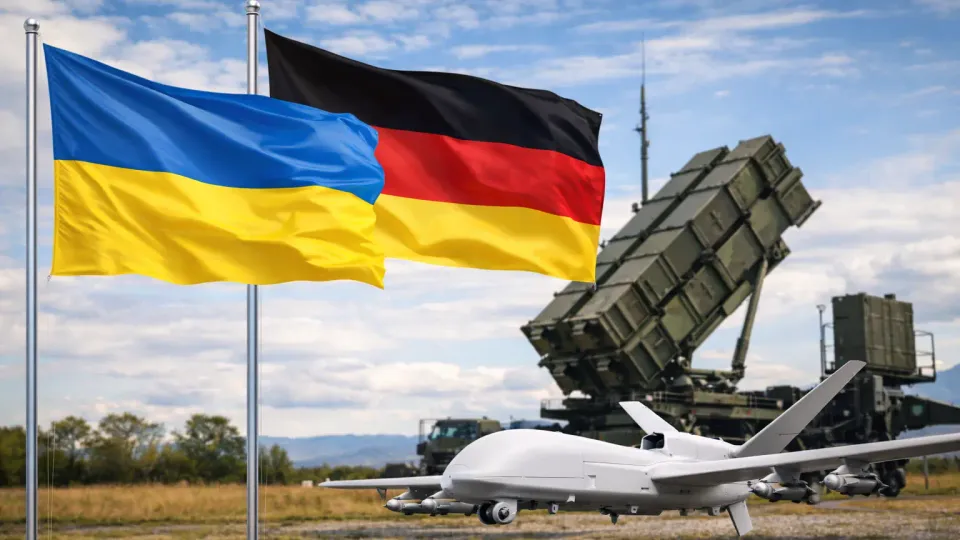
Germany Commits €4B to Ukraine: Patriots, IRIS-T, Drones
Germany's €4B defense package for Ukraine covers Patriot missiles, 36 IRIS-T launchers, €300M in long-range weapons, and 5,000 AI-guided strike drones.
Frontline Robotics Begins Drone Production in Germany
Frontline Robotics and Quantum Systems launched a joint venture in Germany — Ukraine's first official military tech export.
Companies
Baykar
Turkish defense company behind the Bayraktar TB2, the most widely exported armed drone of the past decade, now also the owner of Italy's Piaggio Aerospace.
Turkey
Quantum Systems
German maker of VTOL reconnaissance drones and autonomy software for European and US defense customers, with large-scale deployment in Ukraine.
Germany
Airbus
European aerospace group building commercial aircraft, military aircraft, helicopters, satellites, and uncrewed systems including the Wingman combat drone.
Netherlands
Anduril Industries
US defense technology company building autonomous weapons, counter-UAS, and AI command software, and manufacturing them at its own Arsenal-1 plant in Ohio.
United States
Draganfly
Canadian drone company producing aircraft, payloads, software and services for public safety, defense and commercial users.
Canada
Frontline Robotics
Ukrainian defense robotics company making the Zoom reconnaissance drone, the Linza bomber and logistics drone, and the Buria remote weapon module.
Ukraine
General Atomics
Privately held US defense contractor whose GA-ASI division builds the Predator and Reaper families of large military uncrewed aircraft.
United States
General Cherry
Ukrainian maker of FPV and interceptor drones, expanding production into the United States through a partnership with Wilcox Industries.
Ukraine
Funding
Series D
Blackstone, Noteus, Airbus, Advent, BOND, Fidelity Management & Research Company, Wellington Management, A.P. Moller Holding, Elephant Lake Ventures, Balderton, HV Capital
Quantum SystemsContracts
U.S. Air Force
Leidos
Engineering and integration support for the Medusa counter-small-drone system of systems.
Government of Canada
AVSS, Volatus Aerospace, Draganfly, Objexis AI, Twenty20 Insight, Beonyx
First contracts under the Defence Drone Initiative Marketplace: up to C$50 million across six…
U.S. Navy
General Dynamics Mission Systems
Options for the Mining Expendable Delivery Unmanned Submarine Asset (MEDUSA) on contract…
Federal Aviation Administration
General Atomics Aeronautical Systems, Lighthouse Avionics, ResilienX, NAVMAR Applied Sciences, Devorto Corporation, ANRA Technologies, SPS Aerial Remote Sensing, DroneUp, OneRadio, Frequentis USA, Censys Technologies, Aerial Vantage, Skydweller US, Oklahoma State University
19 UAS Broad Agency Announcement research contracts for detect-and-avoid and airspace-integration…
U.S. Air Force
General Atomics
Contractor logistics support for Spain's MQ-9A drones at Badajoz, a Foreign Military Sale…