Motorola Solutions
US public-safety communications company, listed on the NYSE, which bought counter-drone specialist D-Fend Solutions for $1.5 billion in 2026 and now sells counter-drone systems alongside police radios and dispatch software.
1 article
Motorola Solutions
Motorola Solutions is a US public-safety technology company, listed on the NYSE as MSI, formed in the 2011 split of Motorola Inc. Its core business is land mobile radio, command-centre and dispatch software, video security and evidence management sold to police, fire, emergency services and government agencies. It became a counter-drone company in 2026 by acquisition.
Counter-drone
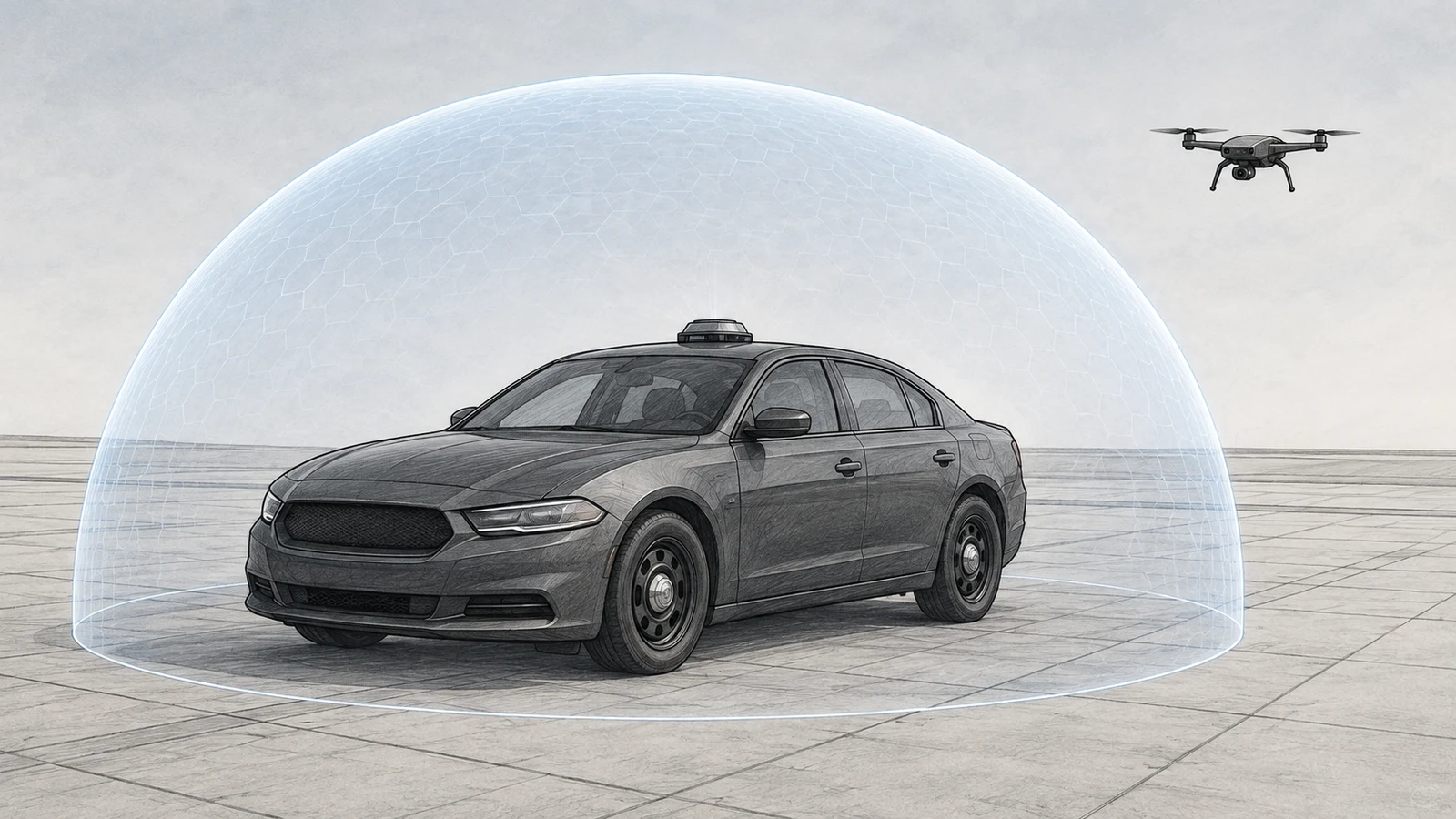
Motorola announced on 1 June 2026 that it had agreed to acquire D-Fend Solutions for $1.5 billion, and completed the purchase on 20 August 2026. D-Fend’s EnforceAir uses radio-frequency cyber-takeover: rather than jamming or shooting down an intruding drone, it takes over the aircraft’s control link and lands it, which is the property that makes it usable in populated areas where debris and interference are unacceptable.
D-Fend continues under CEO Zohar Halachmi, who also leads Motorola’s counter-drone platform as senior vice president, Counter-Drone Solutions. Motorola cited expected 2026 D-Fend revenue of about $185 million and revenue growth above 50% a year over the preceding three years.
D-Fend separately holds a Track 1 position on the Department of Homeland Security’s five-year, $1.5 billion counter-UAS IDIQ awarded in August 2026.
Why It Matters
Motorola already sells into essentially every American police department. The SAFER SKIES Act, whose implementing rule took effect on 1 July 2026, gave certified state and local agencies authority to detect and in some cases bring down drones for the first time — creating a domestic counter-drone market where none had existed.
Buying D-Fend gave Motorola a counter-drone product to sell through procurement relationships it already had, rather than building one and finding customers. That is a different competitive logic from the defence primes that have dominated counter-UAS, and it puts Motorola in direct competition with Axon, whose Dedrone subsidiary occupies a similar position. Whether homeland counter-drone ends up being won by defence contractors or by public-safety incumbents is now an open question, and Motorola is the strongest evidence for the second answer.