
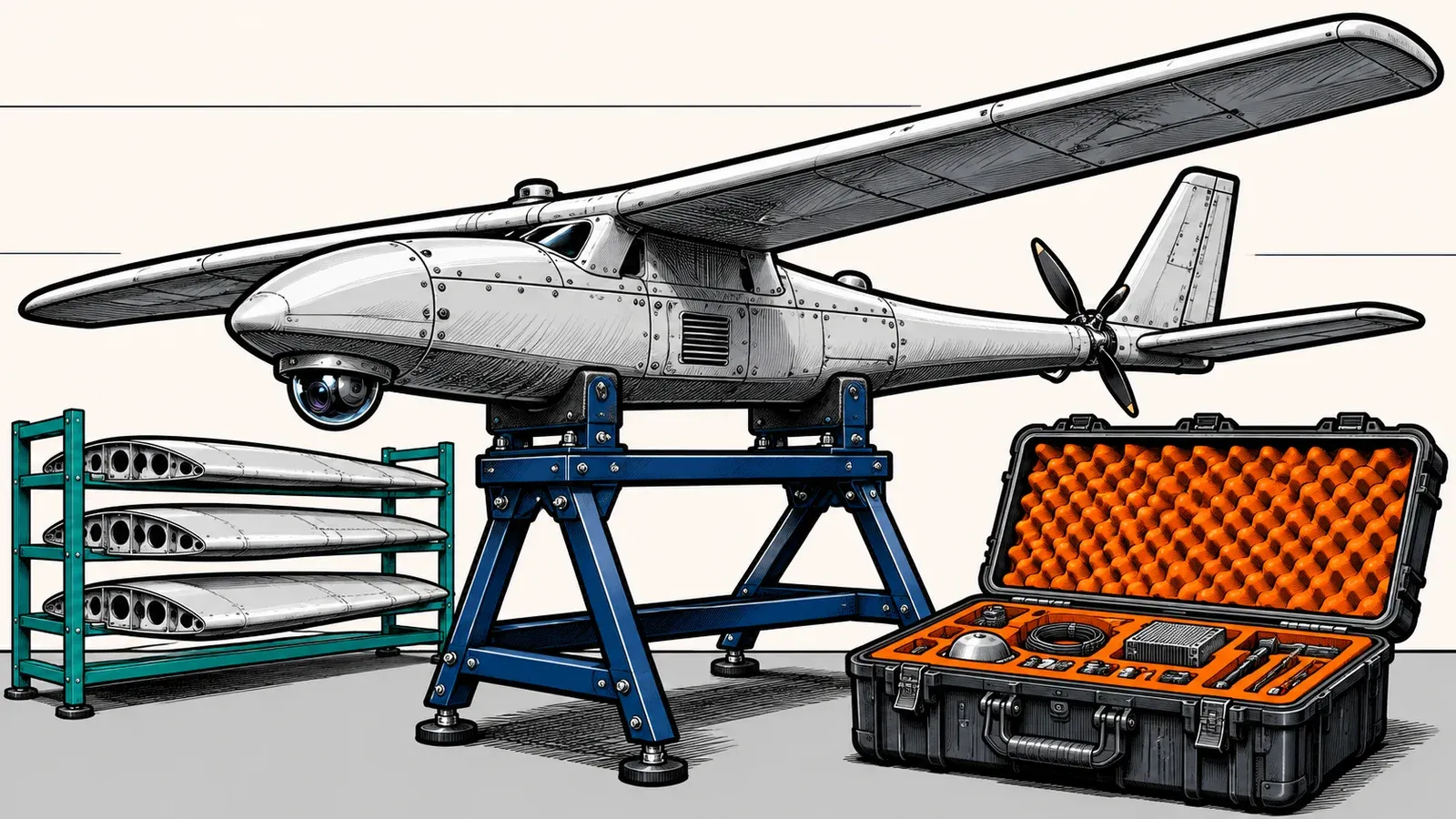
Germany will pay about €34 million to set up production of Ukraine’s Babka reconnaissance drone on German soil. Defence Minister Boris Pistorius announced it in Berlin after receiving his Ukrainian counterpart, Evgeniy Khmara, on 23 November.
Each government told half of the story. Germany’s defence ministry named the drone and the sum. Ukraine’s ministry gave neither, but said the joint venture plans to build “several thousand” drones in 2027. Germany, it said, will finance production, the factory capacity and later support.
Neither ministry named the companies. Wingcopter did, a day later. The drones will come from its joint venture with Ukraine’s TAF Industries, set up in Germany earlier this year.
A three-kilogram aircraft
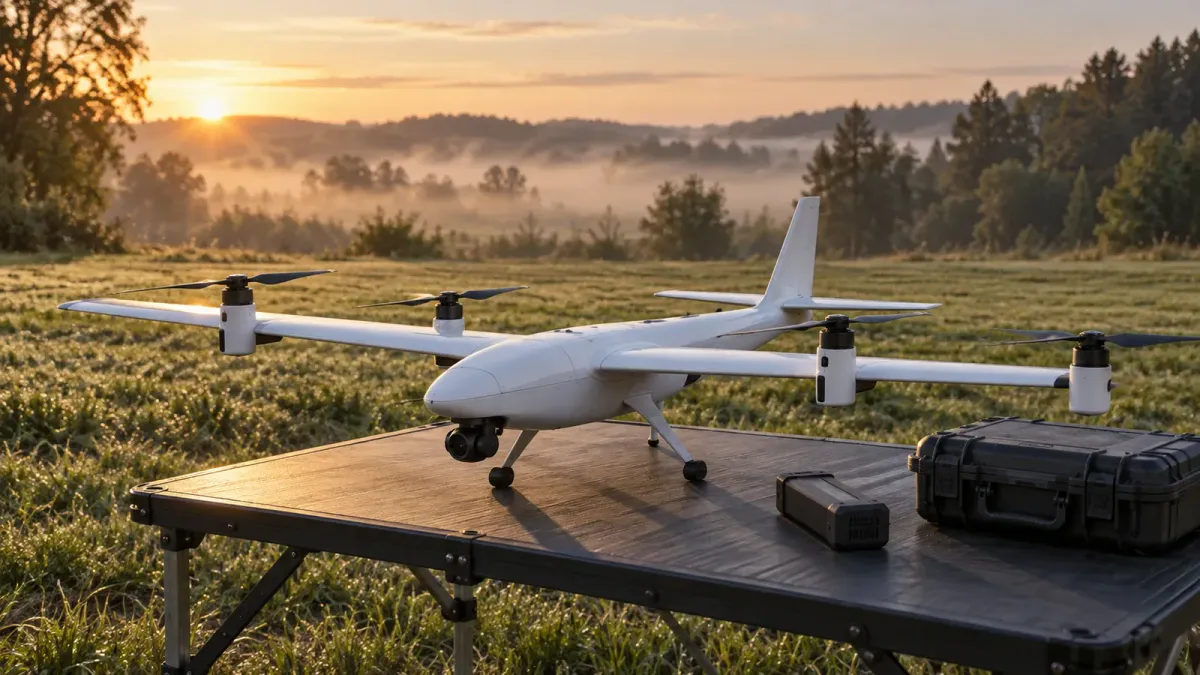
The Babka is small and cheap by design. Wingcopter gives it a weight of 3 kilograms, a wingspan of 130 centimetres, three hours of flight and a tactical range of 50 kilometres. It carries a camera with 30x zoom.
Pistorius called such drones “especially important right now, this winter”, in remarks quoted by Wingcopter.
The venture will also build the Wingcopter 262, the 10-kilogram reconnaissance aircraft the German company launched in September. Wingcopter said then that it would supply Ukraine, but not who would pay. The German money announced this week is for the Babka.
The factories will be at “undisclosed new locations in Germany”, Wingcopter says. Ukraine’s forces are the first customer. The drones will also be offered to German and NATO forces.
The sixth German venture
Babka is the sixth Ukrainian production project Germany has agreed to fund at home. Ukraine’s ministry lists the other five, signed since December 2025: Linza drones, Anubis and Seth-X drones, TerMIT ground robots, the jet-powered Bars drone and Rys PRO ground robots. It values those five at €1.1 billion together.
The first of them is already running. Quantum Frontline Industries, owned by Germany’s Quantum Systems and Ukraine’s Frontline Robotics, builds the Linza in Germany.
Against €1.1 billion, €34 million is small. Germany’s figure is for setting up production. Ukraine’s ministry says Germany will also finance the drones’ production, and gives no sum. That comparison is FlightBrief’s, not either ministry’s.
Ukraine now counts 12 joint production projects with partner countries, six of them with Germany.
TAF is taking the same model to Canada. On 23 November Draganfly said it had signed a memorandum with TAF at the Canadian embassy in Kyiv. The two will explore building Ukrainian unmanned systems in Canada.
DELTA, without the data
The ministers also signed a letter of intent on DELTA, the software Ukraine’s forces use to plan and run operations. Ukraine’s ministry says Germany will be the first country to get access to it.
Germany may use DELTA for its own forces, adapt it and help build new features, the ministry said. It will not receive Ukraine’s combat or operational data. The Bundeswehr has already trialled the system, according to Germany’s ministry.
A letter of intent is not a contract. The practical, technical and legal terms go into a separate agreement that has yet to be signed.
Kyiv sets the same condition on its drone footage. On 26 November the ministry said it will combine two platforms for training military AI. Avengers Labs holds more than 5 million labelled frames of battlefield video. Brave1 Dataroom is where more than 130 companies have built over 1,000 models for intercepting air targets.
Britain and Denmark already work inside Avengers Labs. They can train and test models on the footage, the ministry said, but they cannot take it out of the secure environment.