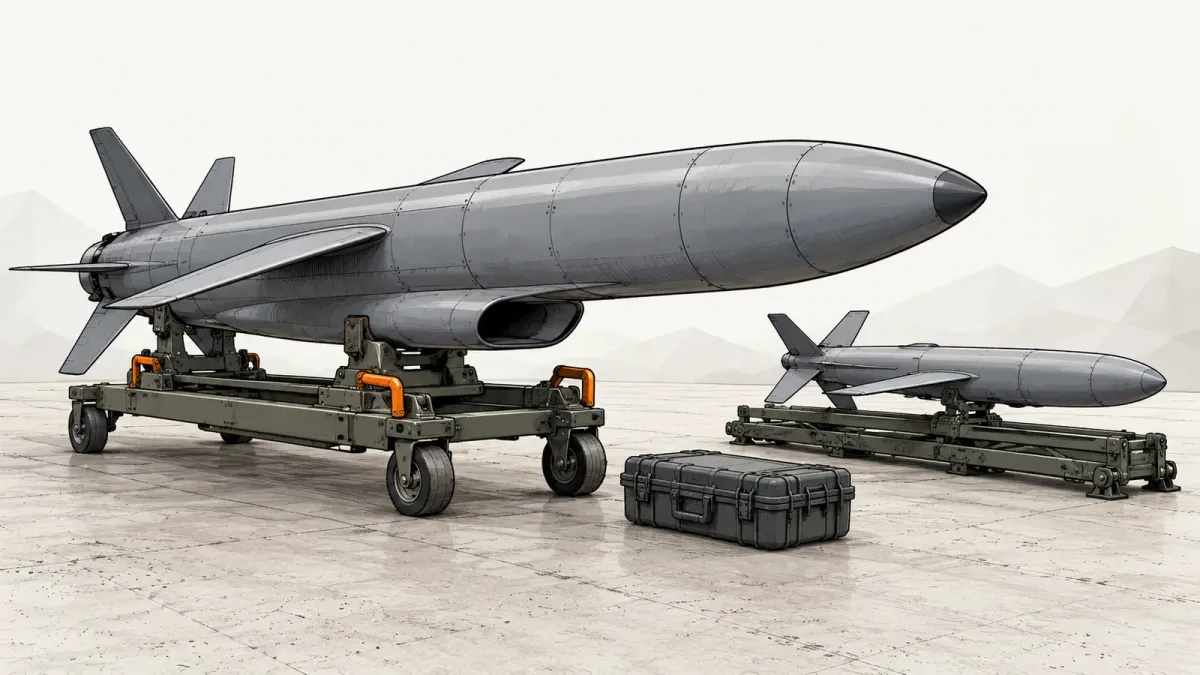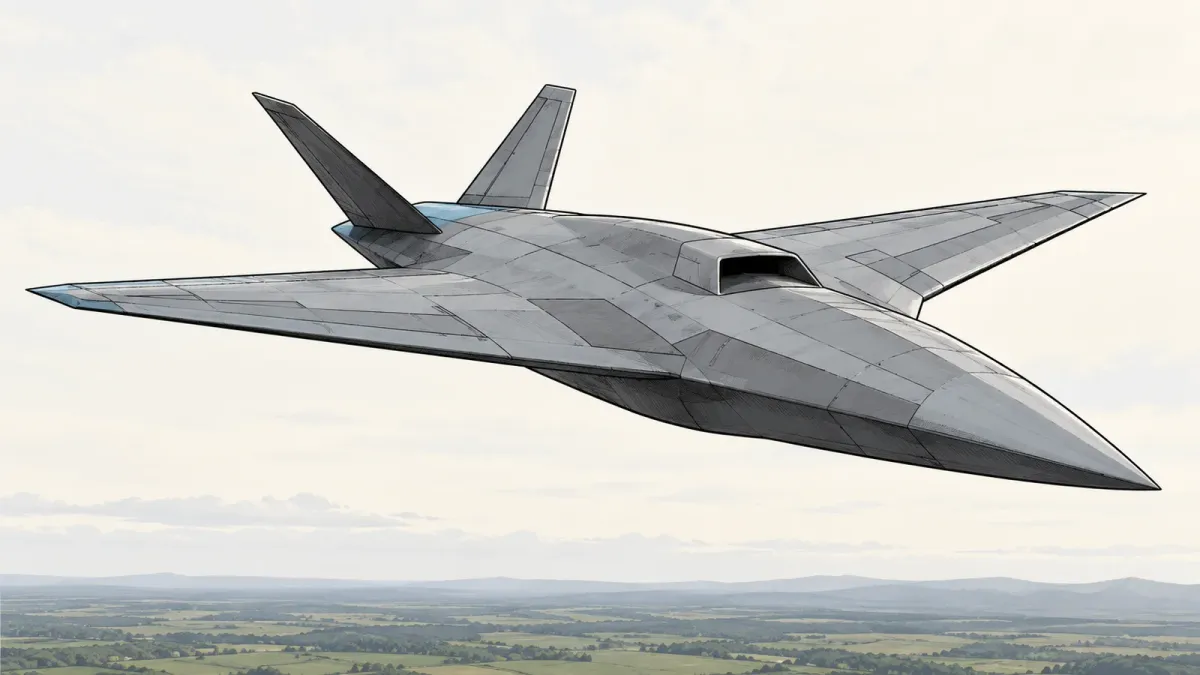

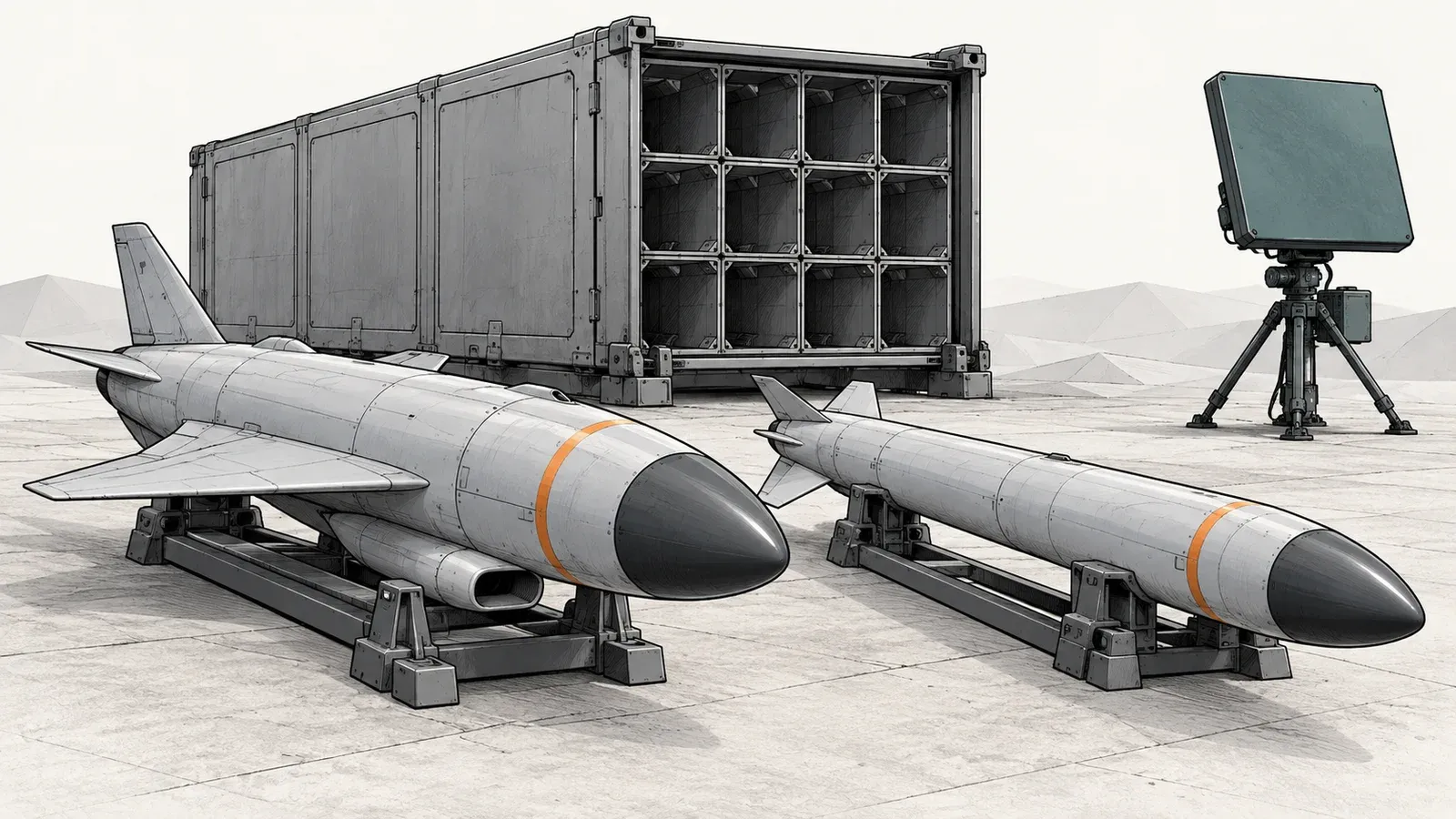
Helsing, the German military AI company, unveiled an air defence system called Contra in Berlin on 26 October. It comes with two interceptors that Helsing says will cost “significantly” less than today’s missiles. Both have a stated range of 20 km or more.
The AD-1 Inferno is jet-powered and the AD-2 Ambush uses a solid rocket motor. Niklas Köhler, Helsing’s co-founder and president, said Contra “ends the air defence dilemma”. He described that dilemma as a choice between slow, fair-weather drones and “million-euro missiles” fired at cheap targets.
How Contra is meant to work
Contra runs on Altra, Helsing’s command software. Helsing says it merges radar, camera, infrared and acoustic sensors from any maker into one air picture. It can also direct other makers’ guns, lasers and nets.
Ground radars guide both interceptors for most of the flight. A radar seeker in the nose then takes over. Helsing says this works in darkness, cloud and fog, where the camera seekers on cheaper interceptors fail.
On its product page, Helsing gives the AD-1 a top speed above 700 km/h and a ceiling above 9,000 m. The AD-1 can loiter, swarm and attack again if it misses, more like a drone than a missile. The release gives the AD-2 a speed of Mach 2.5, but the product page says only “above Mach 2”. Neither page gives a price, weight or warhead.
The threat Helsing names is Russia’s jet-powered Geran-4 and Geran-5 attack drones. Citing unnamed intelligence reports, it says Russia now builds 4,000 of them a month.
No buyer yet
The release says Helsing “is also developing” the two interceptors and names no buyer. Gundbert Scherf, Helsing’s co-chief executive, gave more at a media briefing, according to the German defence site hartpunkt. Both interceptors are in early flight tests and should be ready for sale in the second half of 2027. He put the price of each below €100,000.
Scherf said the Contra command system already has a customer, which he did not name. That contract is for the software, not the interceptors.
Helsing has promised mass production before. Its first drone plant, completed in December 2024, was built to make more than 1,000 HX-2 strike drones a month. In January 2026, Bloomberg reported an internal German army presentation that described HX-2s failing to take off. Helsing rejected the findings.
The Bundeswehr still bought the HX-2 in February 2026. It used framework contracts it can cancel if a maker fails to prove performance at set milestones. The first of those drones go to the German brigade in Lithuania from 2027.