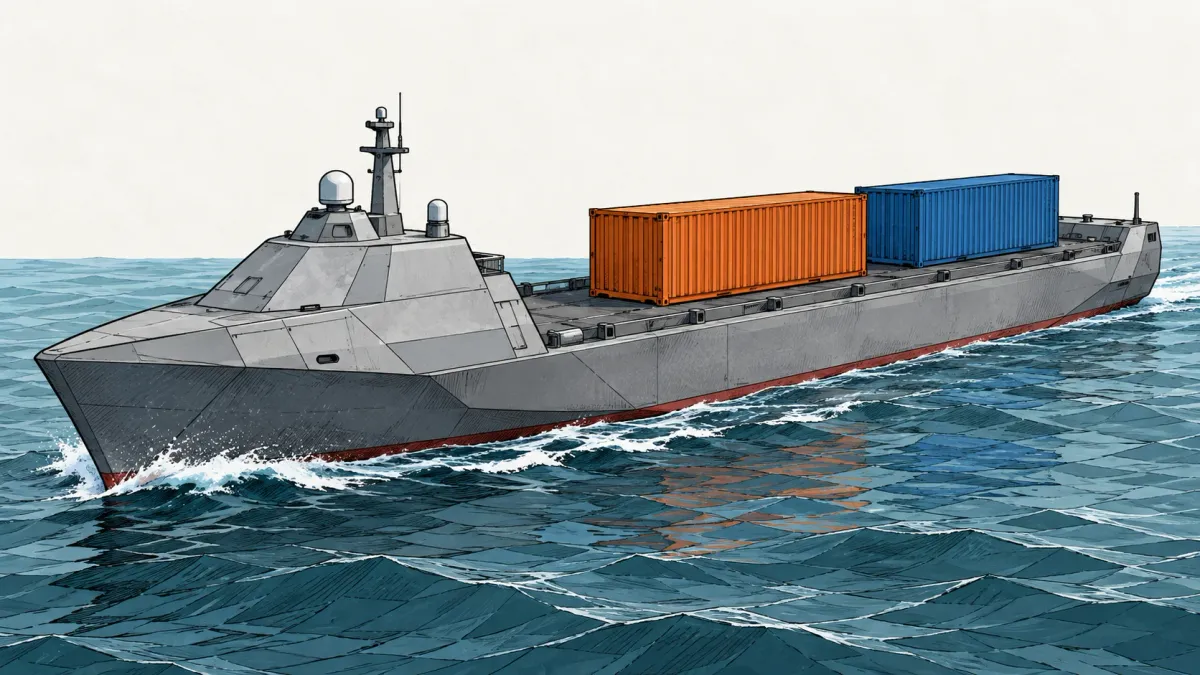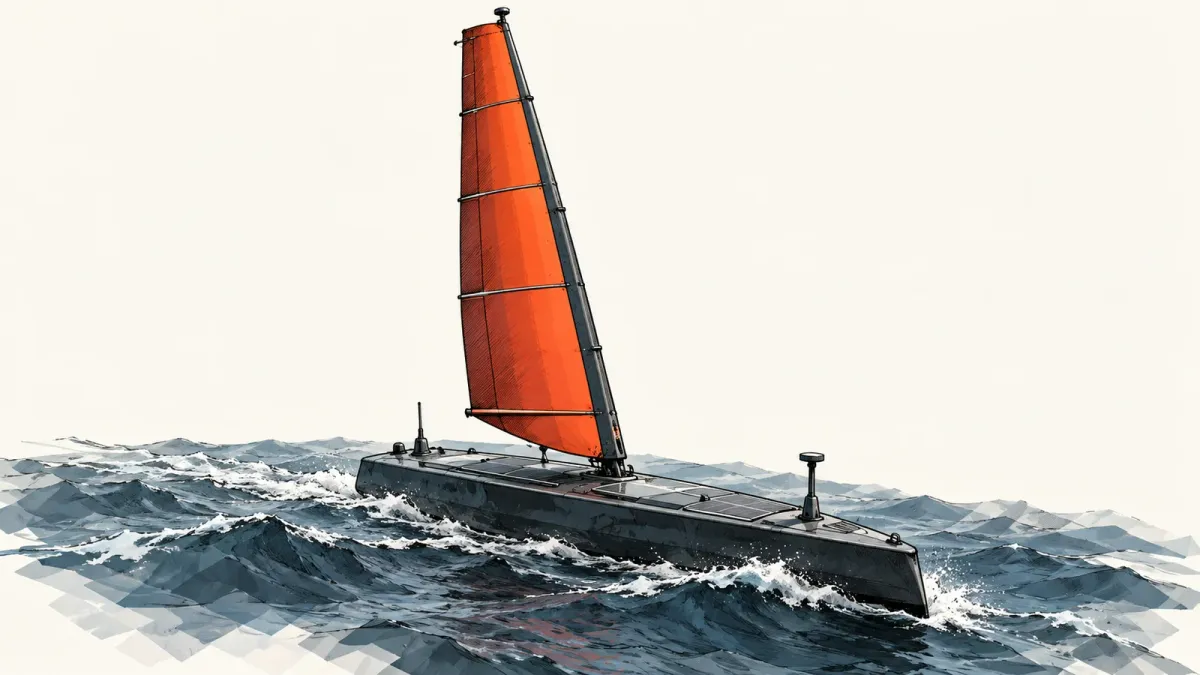


A federal judge has ordered the Navy to re-evaluate Saildrone’s bid in its $2.1 billion programme for medium drone ships. The Navy threw it out on a ground it did not apply to a rival, the judge ruled. Until the Navy decides again, it may commit no more than $1.5 billion of the money Congress set aside.
Judge Philip Hadji of the US Court of Federal Claims issued the opinion under seal on 30 October. He published it in full on 3 November, after none of the parties asked for anything to be blacked out.
The same mistake, two outcomes
The Navy asked each bidder to sum up its ship on a one-page form. Saildrone’s form gave a maximum displacement of 231 tonnes. It also gave 256 tonnes with a 25-tonne load and 303 tonnes with two 40-foot containers. The Navy ruled the design infeasible.
Sea Machines, which went through, made the same kind of slip. One of its two forms also put the loaded weights above the maximum; the other left those boxes empty. The government did not dispute that the two companies made “similar errors”, the opinion says.
Nothing in the Navy’s evaluation explained why one error was fatal and the other was not. Government lawyers offered reasons in court, such as the detail in Sea Machines’ wider proposal. The judge said those reasons appear nowhere in the Navy’s own records, so the court could not rely on them.
He did not decide whether Saildrone’s ship, a 52-metre design it calls Spectre, meets the Navy’s requirements. That stays a technical call for the Navy. The Navy had also failed Saildrone on two other criteria, then dropped both findings during the case.
What the Navy must do now
The Navy has 60 days to judge Saildrone again, the way it judged the seven bids it let through out of 25. If Saildrone passes, it joins the at-sea test on the same terms, with a new date, since the 30 September deadline has gone. A company that completes the test earns about $15 million.
The cap cancels nothing. The opinion says production orders already made to Galliano Marine Services, HII and Saronic Technologies come to about $1.245 billion. The Navy published no total when it announced those 30 ships in September. Leidos, PacMar and Sea Machines keep their $15 million awards for finishing the test.
A Navy spokesperson told Breaking Defense the service “will comply with the court’s order”. Richard Jenkins, Saildrone’s founder and chief executive, called the ruling “a win for fair competition”.
Blue Water loses
Blue Water Autonomy, which sued a day before Saildrone, lost. It tested on a twin-hulled catamaran but proposed a single-hulled production ship with a different engine layout. The Navy judged the test boat unrepresentative, and the judge found that a reasonable call.
Within 14 days of the ruling, the government must tell the court how much of the $2.1 billion the Navy has committed, and to whom.