Lucid Bots raised a $20 million Series B in March to build more of its Sherpa cleaning drones, taking its total funding to $34 million. Cubit Capital and Idea Fund Partners co-led the round, the Charlotte, North Carolina company announced on 25 March.
Almost every number about the business is Lucid’s own, and its pages do not always agree. The round’s announcement put nearly 1,000 robots in the field. Its website shows more than 600 drones. A release on 1 October counts more than 400 operators in more than 40 states.
Lucid says operators using its machines have completed more than $75 million of cleaning jobs. That is the value of the jobs, not Lucid’s revenue.
The Sherpa
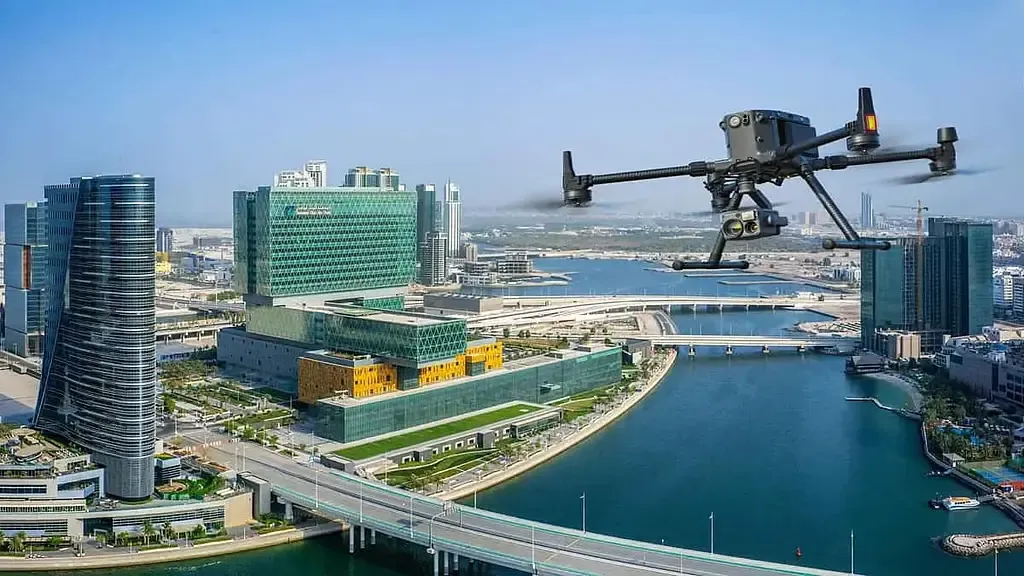
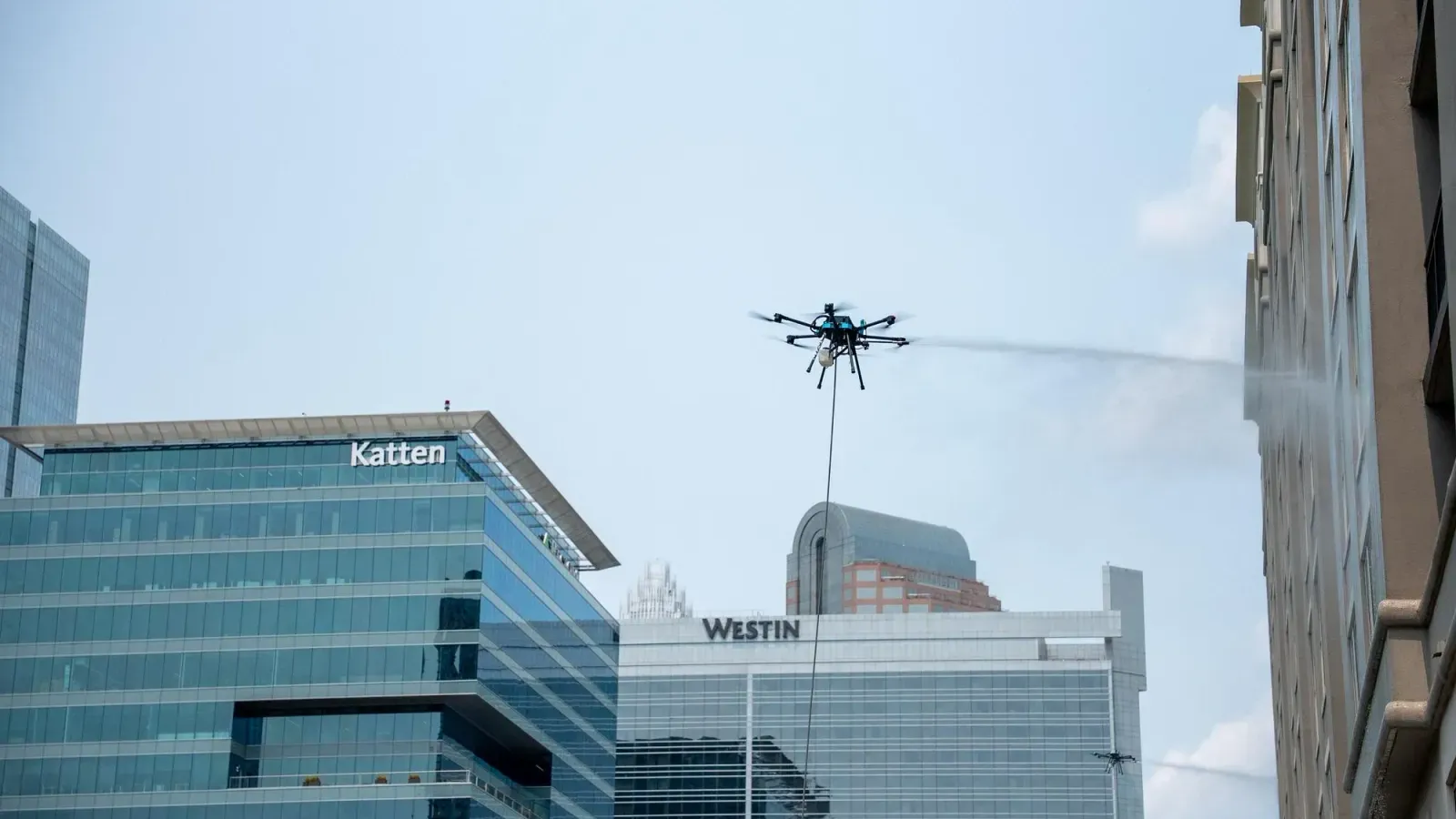
The Sherpa is a six-rotor drone that washes building fronts. Lucid lists a 19-minute battery flight, more than 300 square feet cleaned a minute, and a pressure washer rated to 4,500 PSI, with 300 PSI for soft washing.
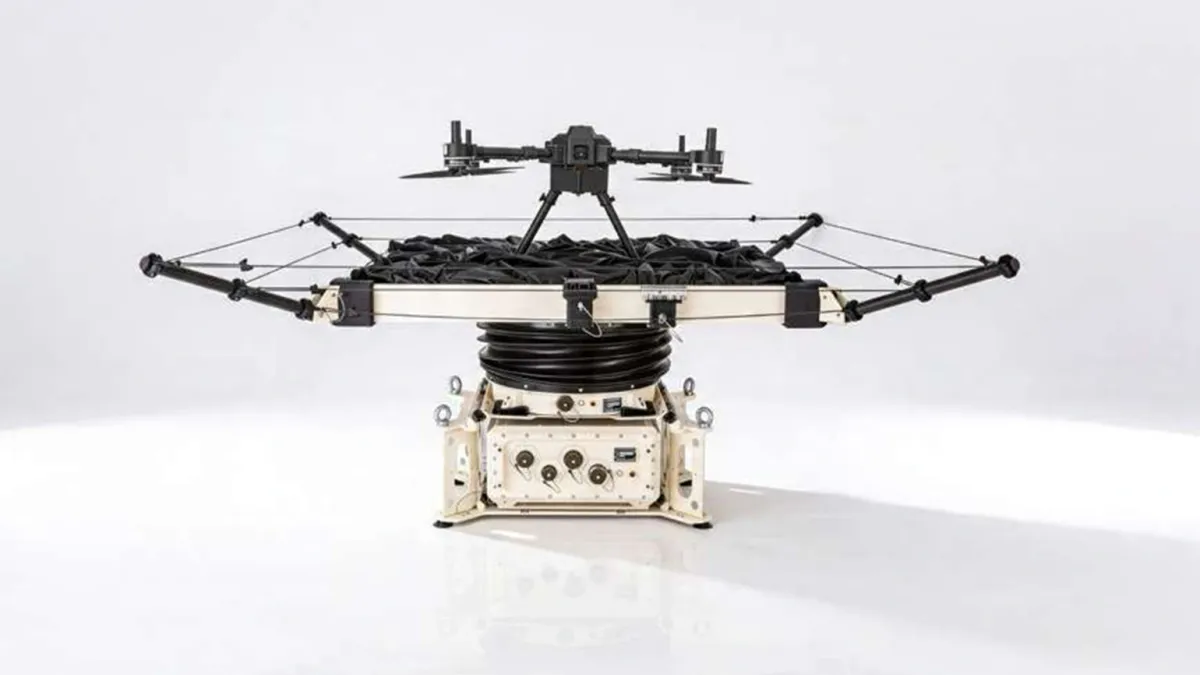
On a hose tether it reaches 150 feet, and Lucid says tethered flights have run more than eight hours in testing. On 1 October it showed the Sherpa HighLine, a rooftop pulley that took the drone to 280 feet on the Monarch Casino in Colorado. A limited release is planned for the fourth quarter and full production for early 2027.
Lucid’s Refresh plan rents the Sherpa from $2,950 a month over 24 months, its pricing page showed on 14 October. Commercial pilots need an FAA Part 107 certificate.
The company
Andrew Ashur started Lucid in 2018 as a cleaning contractor while a student at Davidson College. It has about 80 employees, sells in 18 other countries and builds about 25 spraying drones a month, DroneLife reported on 8 October. A painting attachment is in late development.
Other makers of cleaning drones include Apellix, which sells a power-wash drone, and Aerones.