

Enterprise Drones
Best Enterprise Drones for 2026: Every Platform Compared
Tariffs of 25-100% landed on 3 September and DJI replaced its enterprise lineup. What to buy now, what compliance actually costs, and what changed.
Updated
26 news articles on Enterprise Drones ↓
Guide
Two things happened this year that break most enterprise drone buying advice written before them.
On 3 September, Section 232 tariffs took effect. Drones weighing 25 kg or less got 25% duty. Anything heavier, anything with a thermal imager regardless of weight, docking stations and a list of critical components got 100%. If you buy thermal for public safety, your platform just doubled in landed cost.
And DJI replaced its enterprise lineup. The Matrice 350 RTK, the workhorse everyone recommended, has been superseded by the Matrice 400. The Mavic 3 Enterprise series was replaced by the Matrice 4 series.
The old question was whether you could live with the 2-4x premium on an NDAA-compliant platform. That premium has narrowed sharply, and not because compliant drones got cheaper.
Key facts
- Any operation spending federal money has been barred from buying DJI or Autel aircraft since 22 December 2025, under the American Security Drone Act; the FCC added all foreign-made drones to its Covered List the same day, which blocks new models but grounds nothing already authorised.
- Section 232 tariffs since 3 September 2026: 25 percent on imported drones of 25 kg or less, 100 percent on heavier aircraft, on anything with a thermal imager and on docking stations. A second component tranche of 25 percent lands on 9 February 2027.
- US-built platforms carry no import duty. Skydio, Freefly and Inspired Flight build domestically; Wingtra imports under a 15 percent allied cap that depends on a “substantially all” origin test Commerce has not defined. Parrot markets the ANAFI USA as made in the USA but does not say where current units are assembled.
- The compliance premium has narrowed from the wrong end: a DJI Matrice 4T listed around $7,849 before September and now carries 100 percent duty, while a Skydio X10D was published on GSA by DHS at $28,382 with no duty.
- DJI replaced its enterprise line in 2026: the Matrice 400 supersedes the Matrice 350 RTK and the Matrice 4 series replaces the Mavic 3 Enterprise. DJI told the Ninth Circuit the Covered List action blocks 25 planned 2026 launches and costs it about $1.56 billion of US revenue this year.
- List prices on this page are pre-tariff; ask a reseller whether a quote is old inventory or a landed cost.
The Question That Still Comes First
Does your operation touch federal money?
If yes, DJI and Autel are out for new procurement, and have been since December 2025. NDAA Section 848 bars federal agencies and the DoD from buying Chinese-made drones. The American Security Drone Act extended that to any entity using federal funds, with full enforcement from 22 December 2025.
The FCC closed the other door on the same date, adding foreign-made drones and components to its Covered List one day ahead of the Section 1709 deadline in the FY2025 NDAA. That blocks new equipment authorizations. It does not ground anything you already own — hundreds of thousands of aircraft including the Mavic 3 Enterprise, Matrice 4 Enterprise and Dock 2 and 3 keep their existing authorizations and can be flown.
DJI is fighting it. The company filed a petition for reconsideration on 21 January 2026, Autel filed a parallel application for review the same day, and the comment cycle closed on 11 May. In filings before the Ninth Circuit, DJI said the Covered List action blocks 25 planned 2026 product launches and costs it roughly $1.56 billion in US revenue this calendar year.
Nothing has been reversed. Plan on the restrictions holding.
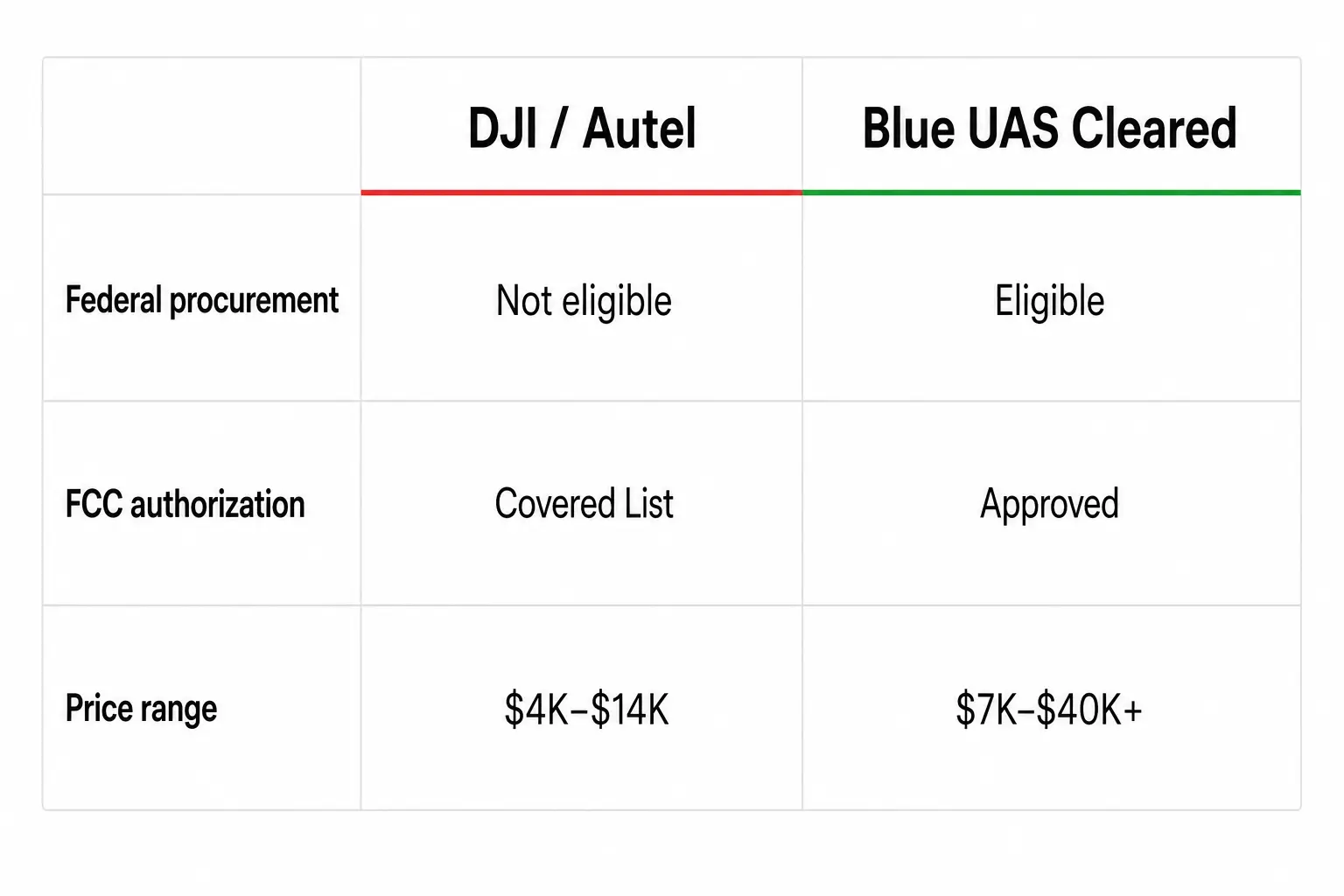
What the Tariffs Did to the Compliance Premium
The guide used to say a compliant platform cost two to four times its DJI equivalent. That gap is closing from the wrong end.
Work through a thermal example. A Matrice 4T listed around $7,849 before September. It carries a thermal imager, so it falls under the 100% tranche. A Skydio X10D on GSA was published by DHS at $28,382. The compliant platform is still more expensive, but the multiple is not what it was, and the Skydio is built in the United States so no import duty touches it at all.
That last point is the one buyers keep missing. Tariffs are a tax on importing. Skydio, Freefly and Inspired Flight manufacture domestically, so the duties simply don’t apply to them. The compliant platforms that are imported, such as Wingtra’s from Switzerland, face allied caps of 15%, and they also got a 180-day delay because platforms on the Blue UAS Cleared List or the FCC Conditional Approval List as of 2 September were granted one.
The allied cap has a catch. It requires an importer to certify that substantially all critical components and technology originate in the US or a qualifying jurisdiction, and Commerce has not defined “substantially all”. Until it does, a European manufacturer whose motors and radios route through China may not be able to claim it.
A second tranche of component duties lands on 9 February 2027, so component-heavy builds get more expensive again next year.
DJI Enterprise Platforms
Still the benchmark for capability per dollar if compliance isn’t a constraint, and still holding roughly 70-90% of the US commercial market. Prices below are pre-tariff list; add the applicable duty.
DJI Matrice 400
The M400 replaced the Matrice 350 RTK as DJI’s flagship and shipped in June 2025. It flies 59 minutes in forward flight, carries up to 6 kg, and supports up to seven mounted payloads with as many as four in a single flight. Obstacle sensing pairs rotating LiDAR with six-direction mmWave radar that picks up power lines through rain, fog and snow, plus low-light vision. IP55, rated -20°C to 50°C.
Body only runs about $10,450. Payloads — the Zenmuse H30T, L3, P1 — are extra. Anything above 25 kg or carrying thermal draws the 100% rate, which covers most useful M400 configurations.
DJI Matrice 4E and Matrice 4T
The Matrice 4 series replaced the Mavic 3 Enterprise line and, for the 4T, the Matrice 30T. Both fly roughly 49 minutes at 1.22 kg with integrated multi-sensor payloads. The 4E is the mapping and survey variant: 20 MP wide, 48 MP medium tele, 48 MP tele, laser rangefinder to 1,800 m. The 4T adds a 640×512 thermal imager and NIR light for public safety.
Pre-tariff, the 4E listed around $5,499 and the 4T around $7,849. The 4T’s thermal sensor puts it in the 100% bracket. The 4E does not carry thermal, so at 1.22 kg it takes the 25% rate — a genuinely large difference between two drones that sit next to each other in a catalogue.
There are also docked variants, the 4D and 4TD, which pair with Dock 3 for autonomous mapping and thermal inspection. Docking stations are named explicitly in the 100% tranche.
DJI Matrice 350 RTK
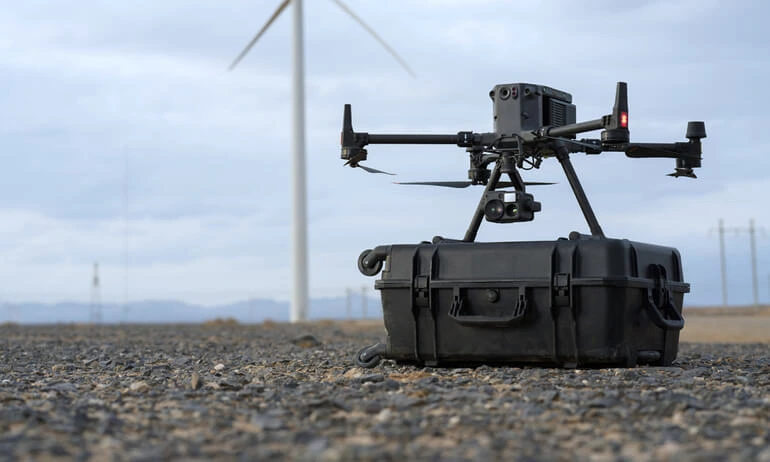
Superseded but widely deployed and still supported. 55 minutes without payload, 2.7 kg on a single gimbal, 6.47 kg with dual TB65 batteries, IP55, 20 km control link. The sensor range remains the widest in the industry: Zenmuse H30/H30T, L2 and L1 LiDAR, P1 full-frame mapping, plus third-party payloads through the Payload SDK.
If you already run M350s, keep flying them. Existing FCC authorizations stand. Buying more means buying a discontinued flagship into a closing market.
Autel Enterprise Platforms
Autel sits in the same NDAA and FCC category as DJI, and its US position has not improved. For federally funded work it is not a viable fleet bet. For private commercial buyers the hardware is still competitive, with the same tariff arithmetic.
Autel EVO Max 4T
Autel’s strongest enterprise offering: 42 minutes, 20 km control link over SkyLink 3.0, IP43, and a four-sensor payload combining a 50 MP wide camera, 48 MP 8K 10× optical zoom, 640×512 thermal and a laser rangefinder in a 1.6 kg airframe with 720-degree obstacle avoidance. Pre-tariff $6,499-$8,999. Thermal puts it at 100%.
Autel EVO II Enterprise
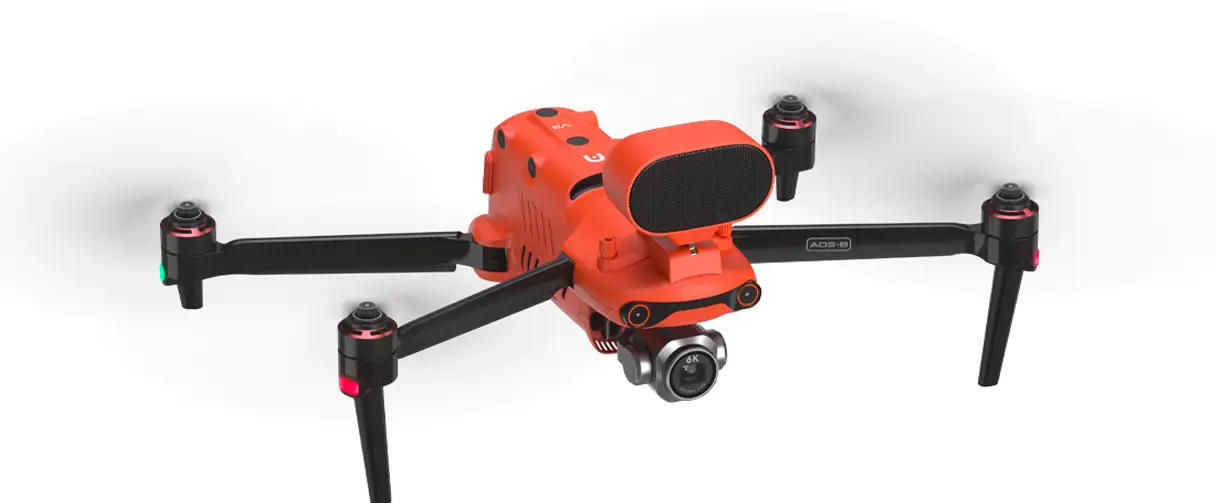
The V3 series runs 38-40 minutes at roughly 1.1 kg with 15 km range, in thermal and zoom configurations from around $3,149-$5,299 pre-tariff. The Dual 640T pairs a 50 MP wide camera with 640×512 thermal, and takes the 100% rate for it.
Autel Dragonfish
A VTOL fixed-wing in its own category: 120 minutes endurance, 30 km video range, 30 m/s, 1.5 kg payload, 9 kg MTOW. Starting around $99,000 with payload. Not NDAA compliant, and at 9 kg it stays under the 25 kg threshold, though thermal configurations do not.
Blue UAS and NDAA-Compliant Platforms
A word of caution on counting. Figures circulating for how many models sit on the Blue UAS Cleared List — including the “54 models” this guide previously carried — do not trace back to a published DoD source. The last count the Defense Innovation Unit published was 39 certified systems and 165 components, in November 2025, before the list moved to the Defense Contract Management Agency. Check the DCMA portal before committing to a purchase rather than trusting any number in an article, this one included. Our Blue UAS Cleared List guide covers how to actually reach it.
Skydio X10 and X10D
Skydio is the anchor US manufacturer and had a strong year. It raised a $110 million Series F in late April 2026 at a $4.4 billion valuation — deliberately small, with CEO Adam Bry framing the modest raise as evidence the core business increasingly funds itself — and announced SkyForge, a planned $3.5 billion US manufacturing investment over five years.
In March 2026 the US Army ordered more than 2,500 X10D units for over $52 million, the largest single-vendor tactical small UAS order in Army history. It went from bid to award in under 72 hours through Atlantic Diving Supply.
The X10D flies 40 minutes, ranges 12 km on Connect SL and effectively without limit on 5G cellular, tops 45 mph, and is rated IP55 from -20°C to 45°C. Sensors are modular: 50 MP wide, 48 MP telephoto, 64 MP narrow, FLIR Boson+ 640×512 thermal. True 360-degree obstacle avoidance down to 13 cm clearance makes it the platform for close-quarters autonomous inspection — under bridges, inside structures, in GPS-denied spaces.
DHS published a GSA price of $28,382 per X10D system for first responders. Sold direct and through government resellers including ADS Inc. and DefenseSync, not through consumer retailers.
Inspired Flight IF800 Tomcat
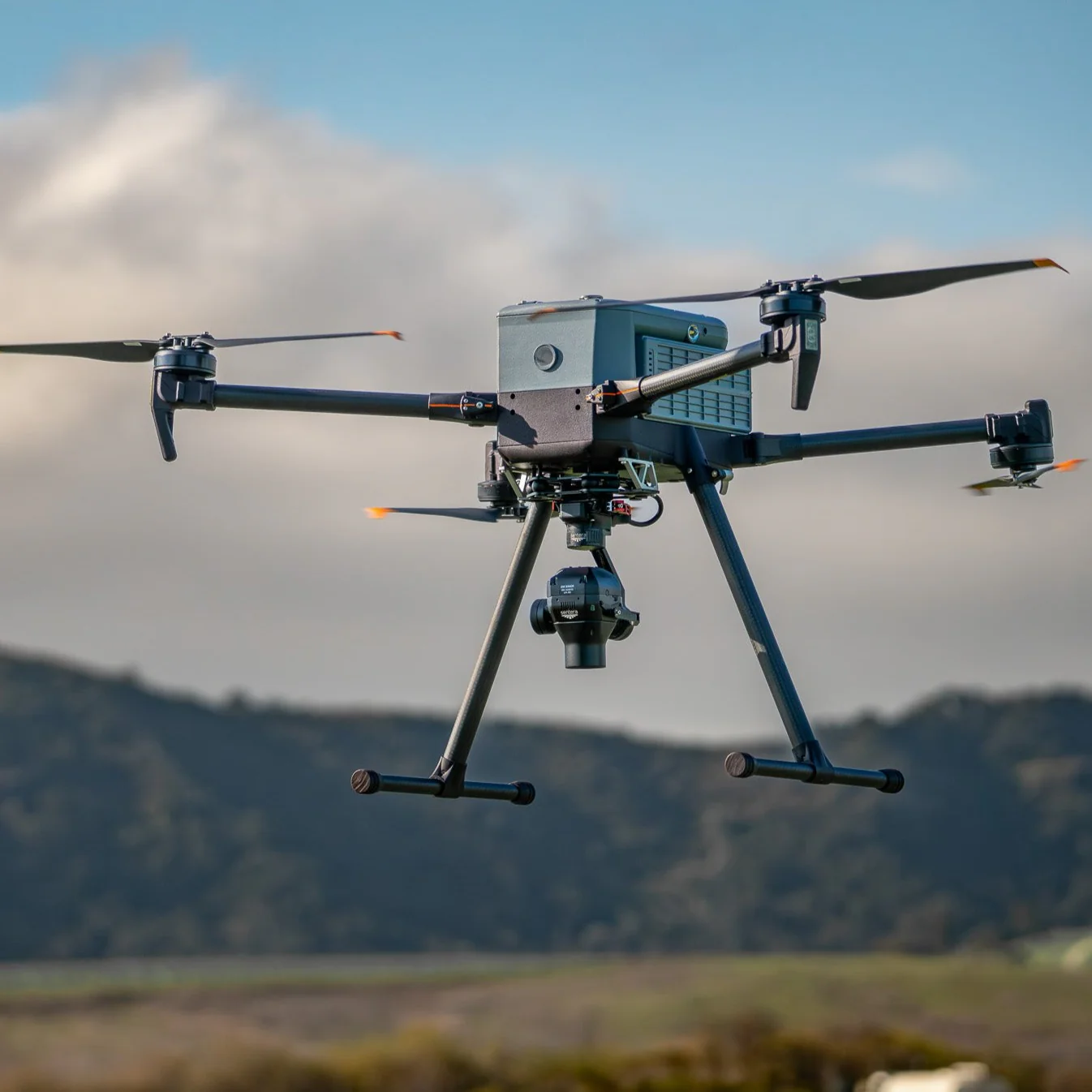
The most versatile mid-range compliant platform, and the clearest alternative to a Matrice 400 for buyers who need open payload compatibility. Blue UAS, Green UAS and NDAA compliant. 54 minutes on hot-swappable dual batteries, 3 kg payload, 22 m/s, IP43. The universal payload interface takes EO/IR, LiDAR, multispectral and third-party gimbals from Sony, Sentera and Gremsy. $23,000 to $34,500 on Inspired Flight’s store before payload, depending on the ground station and support plan. Available through B&H, Drone Nerds, Advexure, DroneFly and Duncan-Parnell, all listing it as GSA-approved.
Freefly Astro, Astro Max and Alta X
Freefly covers the heavy end of the compliant market. The Astro carries 3-4 kg, the Astro Max extends that with cinema and LiDAR configurations, and both fly 39-43 minutes depending on setup. Payloads include the LR1 65 MP Sony RGB, thermal, laser rangefinder, optical gas imaging, LiDAR and multispectral. $20,000-$35,000, GSA-eligible.
The Alta X is the heavy-lift outlier: up to 15.88 kg payload, 30-50 minutes depending on load, and an open frame that takes RED cinema bodies, heavy LiDAR and custom industrial sensors nothing else in the compliant market can carry. $25,000-$40,000 and up. Built in the US, so no import duty.
Parrot ANAFI USA GOV
Still the cheapest credible compliant thermal option, and now the one most exposed to tariff ambiguity. Roughly 500 g, 32 minutes per battery, integrated 32× zoom and FLIR Boson 320 thermal, IP53, around $7,000-$14,000 depending on configuration.
Parrot is a French company, but it markets the ANAFI USA as made in the USA and does not say where current units are assembled. A unit that is imported falls under the 180-day Blue UAS duty delay and the 15% cap on EU-origin goods, which depends on the undefined “substantially all” origin test. For a small department budgeting a compliant thermal purchase, ask the reseller for the country of origin before you commit.
WingtraOne Gen II
The benchmark mapping VTOL. Vertical launch and landing, then fixed-wing cruise: 59 minutes, up to 890 acres per flight at 120 m AGL. Sensors include the 61 MP full-frame Sony RX1R II, multispectral and LiDAR, with PPK GNSS giving 3 cm ground accuracy without ground control points. 3.5-4.5 kg depending on configuration. $34,899-$84,994 by sensor package.
Swiss-manufactured, with the WingtraOne Gen II and WingtraRAY on the Blue UAS Cleared List. It is imported, so the tariff caveat above applies.
Wingtra says the Gen II was its flagship from 2017 to 2025 and that the WingtraRAY now replaces it: up to 59 minutes and up to 550 hectares a flight, with 3 cm accuracy using PPK, by Wingtra’s figures.
FlightWave Edge 130 Blue
A hybrid VTOL tricopter from FlightWave, a Red Cat subsidiary: 1.2 kg, 130 cm wingspan, 60-plus minutes cruise endurance, 20 km range, swappable EO/IR and mapping payloads, one-minute assembly, hand-launchable. Blue UAS approved, roughly $10,000-$15,000. It fills the gap between the ANAFI USA and the WingtraOne for agencies needing long-endurance coverage in a light package.
A correction on the eBee
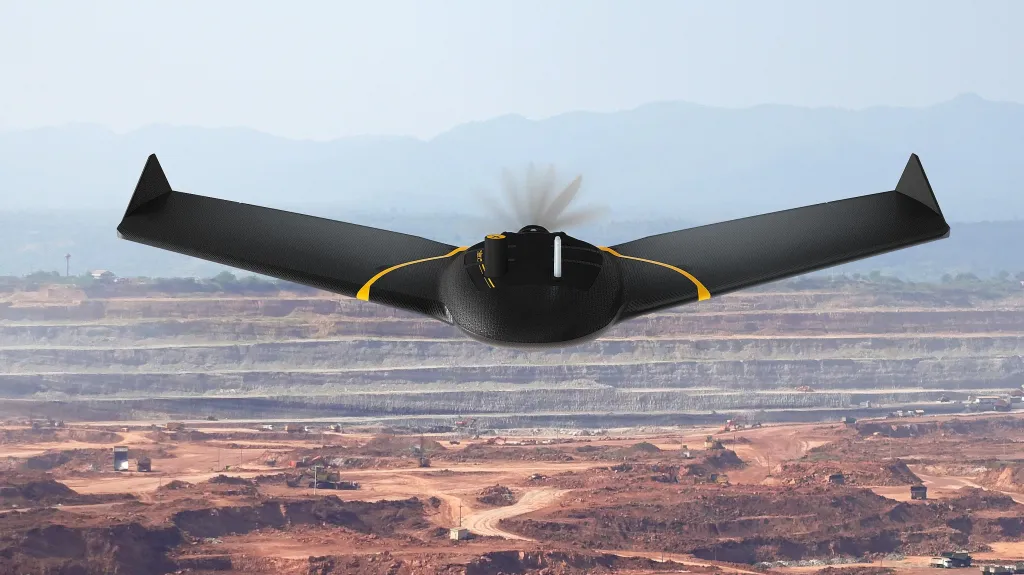
Earlier versions of this guide listed AgEagle’s senseFly eBee TAC as Blue UAS cleared. It came off the list in the 2025 refresh. The eBee X remains a capable NDAA-compliant mapping aircraft — 90 minutes with the S.O.D.A. camera and endurance battery, 500 hectares per flight, 1.6 kg, RTK/PPK — and AgEagle continues to sell to defense customers, including recent orders from the French Army and UAE security forces. But NDAA compliance and Blue UAS listing are different things, and only the second one satisfies a federal procurement officer. Verify current status on the DCMA portal.
Which Enterprise Drone Is Best for Each Use Case?
Infrastructure Inspection
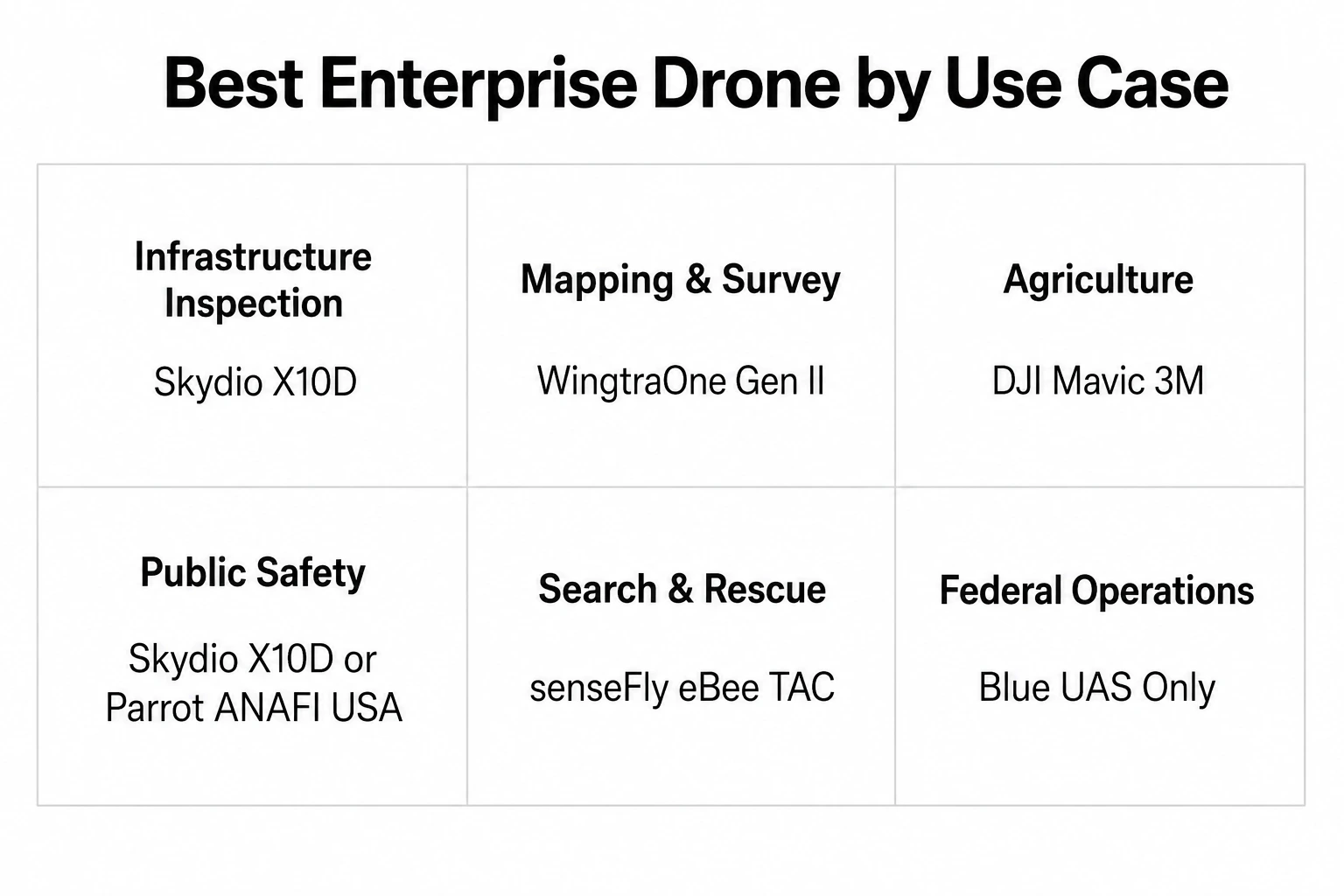
For autonomous close inspection in GPS-denied or congested spaces, the Skydio X10D still has no peer. Nothing else automates 13 cm clearance work safely. For heavy payload inspection needing LiDAR, optical gas imaging or custom sensors, the Freefly Astro Max or an IF800 with third-party gimbals is the compliant answer. Without compliance requirements, a Matrice 400 with H30T or L3 is the most capable option — priced with duty.
Mapping and Surveying
The WingtraOne Gen II, now succeeded by the WingtraRAY, is the best compliant platform and among the best available regardless of compliance. The eBee X matches it on endurance and beats it on area per flight, if NDAA compliance without Blue UAS listing meets your requirement. For DJI buyers, the Matrice 4E with RTK is the compact value pick and takes only the 25% rate; the M400 with P1 is the high-resolution option.
Agriculture
DJI’s Mavic 3M remains the dominant multispectral platform — RGB plus four bands with RTK — though it is now a previous-generation product in a lineup DJI has moved on from. For large fields, the eBee X with a multispectral payload covers 500 hectares per flight. Compliant options in agriculture stay thin; the IF800 with Sentera 6X or 65R is the primary choice for federally funded agricultural research.
Public Safety and Search and Rescue
This is the category the tariffs hit hardest, because thermal draws the 100% rate and thermal is the whole point. Departments that budgeted a Matrice 4T in July are looking at a very different number in September.
The compliant options are the Skydio X10D at $28,382 GSA, and the Parrot ANAFI USA GOV at $7,000-$14,000 as the budget entry — with the origin caveat above. For wide-area search where endurance beats hovering, the FlightWave Edge 130 Blue covers more ground per flight than any quadcopter.
If you are a US department buying thermal now, run the numbers on a domestically built compliant platform before assuming DJI is cheaper. That comparison has changed, and it may not have changed back by the time your grant cycle closes.
Federally Funded Operations
No DJI. No Autel. Shortlist: Skydio X10D, Inspired Flight IF800, Freefly Alta X, Freefly Astro Max (NDAA compliant but not on the DCMA list on 8 October 2026), Parrot ANAFI USA GOV, WingtraOne Gen II, FlightWave Edge 130 Blue. Confirm current listing on the DCMA portal before you commit.
Enterprise Drone Price Ladder — 2026
These are pre-tariff list prices from reseller and GSA listings. For imported platforms, add 25% or 100% depending on weight and whether the configuration carries thermal or a dock. US-built platforms carry no import duty.
- $4,000-$6,000 — DJI Matrice 4E, DJI Mavic 3M (imported, 25%)
- $6,000-$10,000 — DJI Matrice 4T, Autel EVO Max 4T (imported, 100% — thermal)
- $10,000-$18,000 — DJI Matrice 400 body, Parrot ANAFI USA GOV, FlightWave Edge 130 Blue, senseFly eBee X
- $20,000-$35,000 — Skydio X10/X10D, Inspired Flight IF800, Freefly Astro Max (US-built, no duty)
- $35,000-$100,000+ — Freefly Alta X heavy-lift kits, WingtraOne Gen II with full sensor packages, Autel Dragonfish
The structural premium on compliant hardware is real and comes from production volume: US manufacturers build a fraction of what DJI builds. But the gap a buyer actually pays is now the premium minus the duty, and for thermal work that arithmetic has moved a long way.
Where to Buy
B&H Photo and Adorama carry DJI enterprise. Drone Nerds, DSLR Pros, Advexure and DroneFly cover multi-brand including Parrot, IF800, Freefly and eBee. Skydio sells direct and through authorized government resellers, not consumer retail.
For government procurement, the X10D is on GSA and DLA schedules, the IF800 is GSA-approved through Duncan-Parnell and others, and the ANAFI USA GOV goes through Florida Drone Supply and GenPac Drones. Blue UAS platforms can be bought through existing government contract vehicles without a separate competitive tender.
Ask any reseller two questions before you order right now: what duty rate they are applying to your specific configuration, and whether the quoted price is pre-tariff inventory or a landed cost. Stockpiled pre-September inventory is being sold at old prices in places, and it will not last.
Can Government Agencies Still Buy DJI Drones?
Not with federal money. Federal agencies, contractors and grant recipients have been barred since 22 December 2025, and twelve states restrict their own agencies and local governments too, on definitions that differ from state to state. A purely private buyer faces no legal ban, only the tariff and the end of new DJI models in the United States.
What Is the Best NDAA-Compliant Enterprise Drone?
For thermal public-safety work the Skydio X10D, built in the United States and on GSA at $28,382; for heavy lift the Freefly Astro Max and Alta X; for mapping the WingtraOne Gen II or its successor, the WingtraRAY; and for a budget compliant airframe the Parrot ANAFI USA GOV or Inspired Flight IF800. Each is compared by use case below.
How Much Do the Tariffs Add to an Enterprise Drone?
25 percent on an imported aircraft of 25 kg or less, and 100 percent if it carries a thermal imager, weighs more than 25 kg or is a docking station, on top of existing duties. A US-built platform pays nothing. Blue UAS and FCC-approved platforms listed as of 2 September 2026 got a 180-day delay.
What to Watch Through 2027
The 9 February 2027 component tranche. A further 25% lands on a second list of components. Anyone building or maintaining fleets from parts should plan procurement around that date.
Whether the FCC reconsideration goes anywhere. DJI and Autel both filed in January and the comment cycle closed in May. A reversal would reopen the US market. Nothing suggests one is coming, but the $1.56 billion DJI says it is losing this year buys a lot of legal effort.
Skydio’s SkyForge build-out. $3.5 billion over five years aimed squarely at manufacturing volume, which is the actual source of the compliance premium. If domestic volume rises, prices come down in a way no tariff can deliver.
Blue UAS listings. More platforms means more competition and pressure on the premium. Manufacturers now have two reasons to pursue listing: federal procurement access, and the tariff delay that comes with being on the list.
Whether Commerce defines “substantially all”. Until it does, the 15% allied cap is a provision without a test, and importers claiming it are guessing at a threshold they will later be audited against. That affects every European compliant platform on this page.
Sources
- Proclamation adjusting imports of unmanned aircraft systems, signed 13 August 2026, in force 3 September 2026, with Annexes I to III.
- FCC public notice DA 25-1086, 22 December 2025, adding foreign-produced UAS to the Covered List, and DA 26-761, 21 July 2026, extending the Blue UAS and Buy American exemptions to 1 January 2028.
- DJI’s petition for reconsideration of 21 January 2026 and its Ninth Circuit filings (case 26-1029) for the 25 launches and $1.56 billion figures.
- DIU’s Blue UAS Cleared List page, which points at the DCMA portal; the roster itself is on the Blue UAS guide.
- Manufacturer specification pages for every aircraft named, including Skydio X10D, DJI Matrice 4 series, Parrot ANAFI USA (“made in USA”), WingtraOne Gen II and WingtraRAY; GSA and DHS published pricing for the X10D; reseller listings for pre-tariff list prices.
Coverage
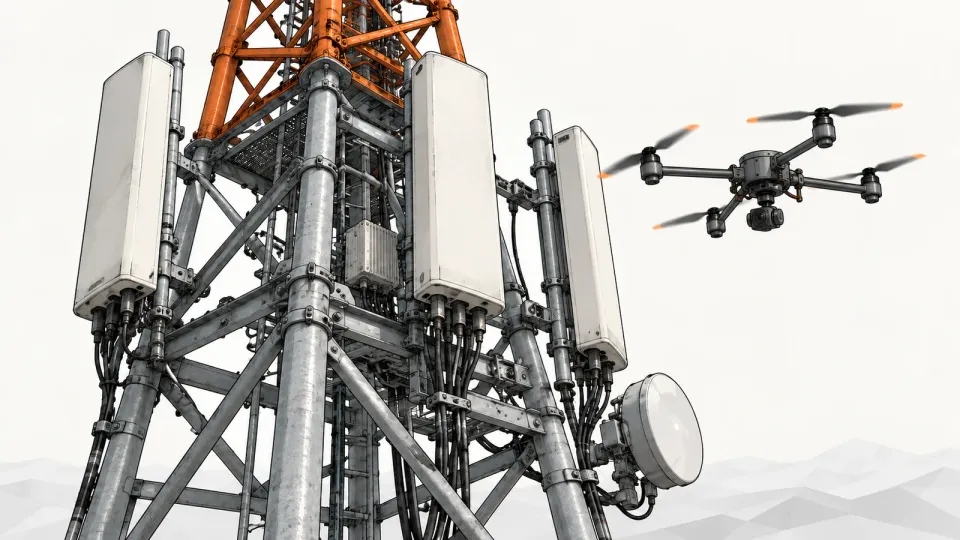
FAA Lets Tower-Inspection Drones Fly Above Airport Grids
From 31 October, one authorization can run nationwide for two years, with no air traffic sign-off for each job.
Amazon's Drone Hit 82 dB at 20 Feet in Tests It Gave the FAA
Amazon tells towns its delivery drone makes about 68 decibels. Its own measurements put that level about 75 feet away.
FAA Pays $11.7m for Drone Tests While Its BVLOS Rule Waits
The FAA announced $12 million for 19 companies. Contract records show 19 awards to 14 recipients, four of them to one firm.
FCC Moves to Let Drones Use the 800 MHz Mobile Phone Band
The 1991 ban was aimed at phones on planes. AT&T and Verizon, which hold licences in the band, asked for the change.
15 States Sue FAA Over Drone Delivery Environmental Finding
The petition asks an appeals court to throw out the July finding that lets the FAA approve delivery hubs without a separate review for each site.
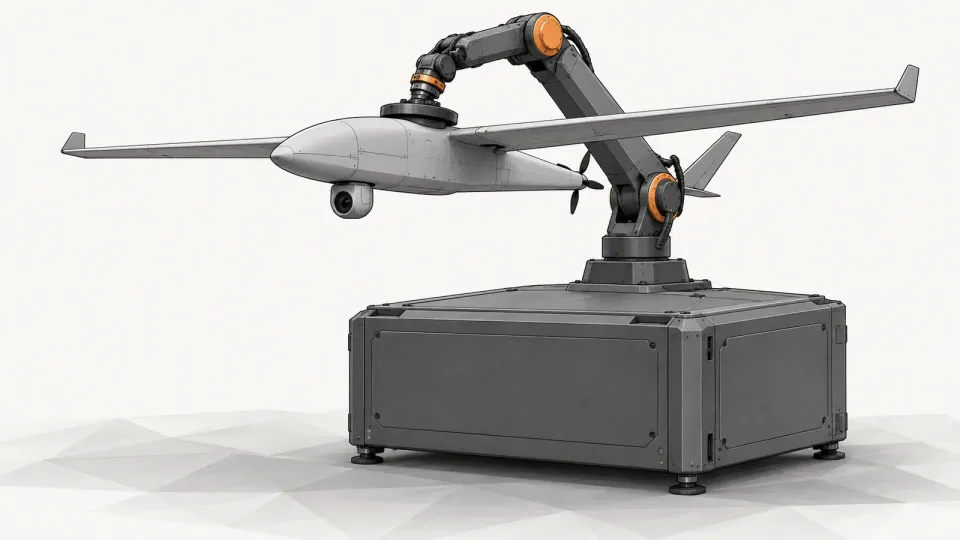
Skydio Unveils F10 Lightrunner, a 100 mph Fixed-Wing Drone
It launches from a robotic arm with no crew on site, but it reaches customers in 2027 and has no price or flight data yet.
Procore Completes $845 Million Purchase of DroneDeploy
DroneDeploy now answers to a construction software firm that plans to sell it to its own customers and feed its site imagery to AI.
FCC Moves to Bar Anzu Raptor Drones Over DJI Licence
Comments close on 23 September on a proposal that would stop import and sale of a drone the maker already withdrew in February.
XAG Tells FCC That Banning Its Farm Drones Is Arbitrary
Eight of the nine firms in the FCC's July proposal ignored its investigators. The ninth answered, and is the only one arguing back.
FCC Lets 200 Drones and 2,000 Pilots Test Cellular in Flight
A waiver to October 2029 lets DOT measure whether commercial mobile networks work at altitude, in bands that otherwise ban airborne use.
Twelve States Restrict Chinese Drones for Public Agencies
Twelve states, not the six usually counted, restrict public agencies buying Chinese-made drones; Connecticut's municipal ban starts 1 October.
FAA Clears 15 DJI Drones the FCC Proposes to Ban
Fifteen DJI aircraft sit on the FAA's Section 44807 approved list. Every one meets the FCC's proposed definition of a military-grade drone.
Drone Delivery Hubs Now Face City Hall, Not the FAA
The FAA's July environmental finding removed site-by-site review for drone delivery hubs. City zoning and a court challenge are what is left.

FCC Drone Ban Comment Record: 3,770 Opposed, 16 For
The FCC drone ban proposal drew 3,829 comments before the record closed on 2 September. Sixteen of them supported it.

XTI Aerospace Warns of Going-Concern Doubt After CEO Resigns
XTI Aerospace told the SEC its late second-quarter 10-Q is expected to disclose going-concern doubt, days after chairman and CEO Scott Pomeroy resigned.

AVPL's Drone City in Hisar Has Named No Tenants Yet
AVPL opened 23 sheds for drone makers in May. None has been named, and part of the site's money is to come from AVPL's planned share sale.
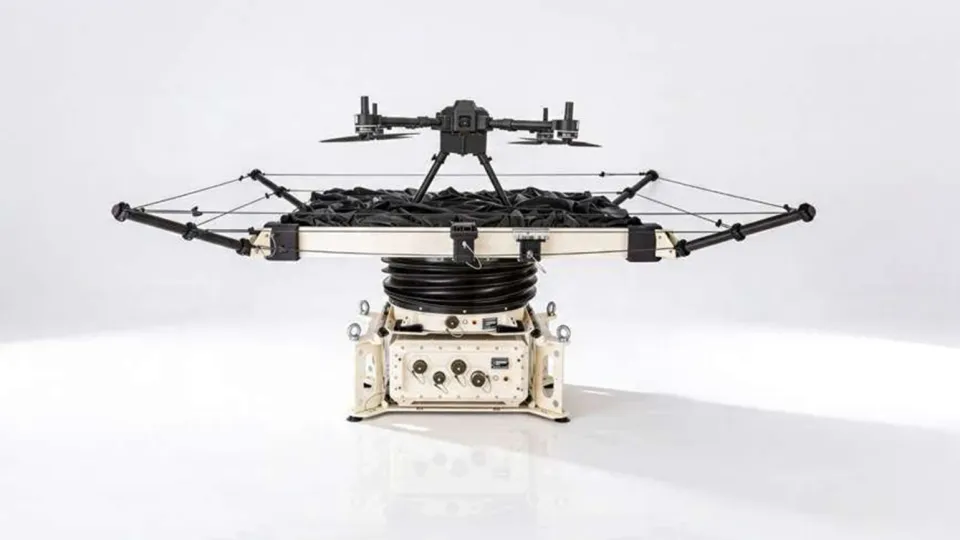
WaiV Robotics Raises $7.5M for Maritime VTOL Landing Pad
WaiV Robotics launches a gyro-stabilized landing pad for VTOL drones on vessels as small as 10 meters, backed by $7.5M in seed funding.
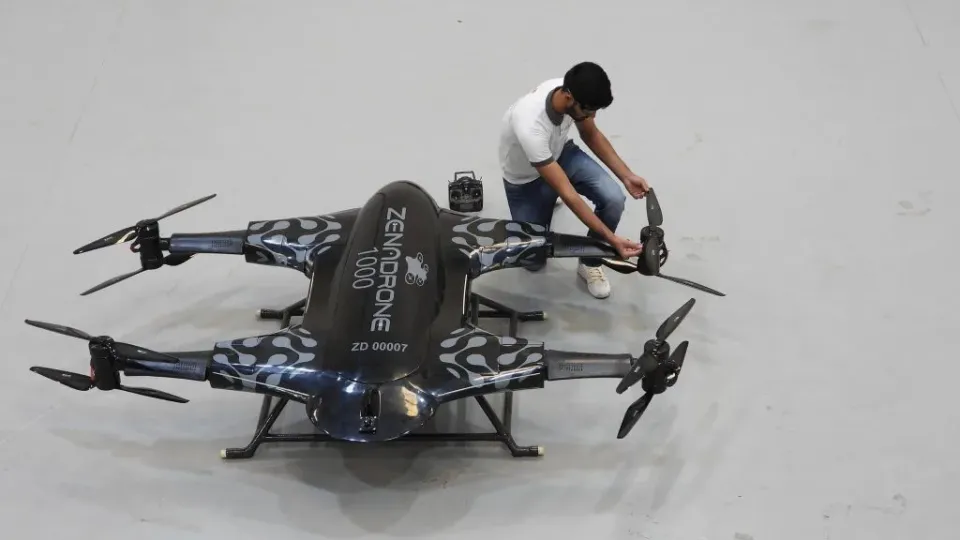
ZenaTech Revenue Rises 558% to $12.9M on Drone-as-a-Service
ZenaTech posted $12.9M in 2025 revenue, up 558%, driven by 20 acquisitions and a new Drone as a Service segment that generated $10.1M in its first year.
SkyfireAI Raises $11M for Autonomous Multi-Drone Operations
SkyfireAI raised $11M to build AI software that lets one operator manage multiple drones for 911 and rescue missions.
FAA Drops Criminal Threat for Drone Flights Near Vehicles
FAA rescinds NOTAM FDC 6/4375, removing criminal prosecution threats for drone pilots flying near federal law enforcement assets.
Companies
DJI
Chinese private manufacturer of consumer, enterprise and agricultural drones, cameras and imaging systems.
China
Skydio
US drone manufacturer building AI-powered autonomous aircraft, supplying NDAA-compliant enterprise and defense drones to agencies and operators.
United States
Amazon Prime Air
Amazon's drone delivery division, flying autonomous last-mile delivery in the US and UK and attempting a sixfold expansion of its service area in 2026.
United States
Anzu Robotics
US drone company that built the Raptor series under licence from DJI, now owned by XTI Aerospace and developing a replacement after ending production.
United States
Autel Robotics
Chinese drone manufacturer producing consumer and commercial UAVs, including the EVO and Dragonfish series, with a growing defense-adjacent presence.
China
Drone Nerds
US drone distributor and enterprise solutions provider, bought by XTI Aerospace in November 2025 and now the source of almost all its revenue.
United States
Unusual Machines
US drone manufacturer and components distributor building NDAA-compliant drones and parts to cut American dependence on Chinese supply chains.
United States
Wing
Alphabet's drone delivery subsidiary, operating commercial package delivery in the United States and abroad, largely with Walmart.
United States
Products
DJI Matrice 400
DJI
DJI's heavy-lift flagship: 59 minutes with a thermal camera fitted, a 6 kg payload, 40 km of link and a LiDAR-and-radar sensing set no rival matches at the price. Barred from federal buyers, and since September its import carries 25 percent duty, with 100 percent on the thermal payload.
Autel EVO Max 4T V2
Autel Robotics
The other Chinese thermal drone American public safety bought: a 640 × 512 thermal, a 10x optical zoom, a 1.2 km rangefinder and radar-backed obstacle sensing in a 1.7 kg folding airframe, for about $2,000 less than a Matrice 4T. Autel is named on the FCC Covered List and the aircraft draws 100 percent import duty.
DJI Matrice 4E
DJI
The mapping half of DJI's Matrice 4 series: a mechanical-shutter 20 MP Four Thirds camera, two 48 MP telephotos, a laser rangefinder and 49 minutes in a folding airframe. No thermal camera, which keeps it in the lower tariff band, and still barred to federally funded buyers.
DJI Matrice 4T
DJI
The compact enterprise drone the Mavic 3 Thermal buyers moved to: three cameras, a 640 × 512 radiometric thermal, a laser rangefinder and 49 minutes in a 1.4 kg folding airframe. Barred from federal buyers and, since September, taxed at 100 percent on import.
Skydio X10
Skydio
A serious U.S.-made enterprise platform built around autonomy, sensors, and government-grade deployment rather than mass-market volume.
DJI Matrice 350 RTK
DJI
The benchmark enterprise inspection platform — IP55-rated, dual-operator capable, and compatible with the broadest payload ecosystem available, but off-limits for US federal government use under NDAA restrictions.
Funding
Seed
Mucker Capital, AI Fund, SaaS Ventures, Halogen, HBS Alumni Angels, New York Angels
SkyfireAISeries B
Cubit Capital, Idea Fund Partners, WaterStone Impact Fund, Front Porch Ventures, Taylor Rhodes
Lucid BotsContracts
Federal Aviation Administration
General Atomics Aeronautical Systems, Lighthouse Avionics, ResilienX, NAVMAR Applied Sciences, Devorto Corporation, ANRA Technologies, SPS Aerial Remote Sensing, DroneUp, OneRadio, Frequentis USA, Censys Technologies, Aerial Vantage, Skydweller US, Oklahoma State University
19 UAS Broad Agency Announcement research contracts for detect-and-avoid and airspace-integration…
U.S. Air Force
General Atomics
Contractor logistics support for Spain's MQ-9A drones at Badajoz, a Foreign Military Sale…
U.S. Navy
General Atomics
Options for engineering and logistics support of the Marine Corps' MQ-9A Reaper drones; order…
U.S. Department of Homeland Security
Dedrone Defense, D-Fend Solutions, Leidos, Fortem Technologies, CACI, BAE Systems, EMS Defense Technologies, Booz Allen Hamilton, General Dynamics Information Technology, Parsons, Anduril Industries, Astrion
Five-year multiple-award counter-UAS IDIQ led by the DHS Science and Technology Directorate…
U.S. Air Force
General Atomics, Anduril Industries
Engineering and manufacturing development and production contracts for Collaborative Combat Aircraft…