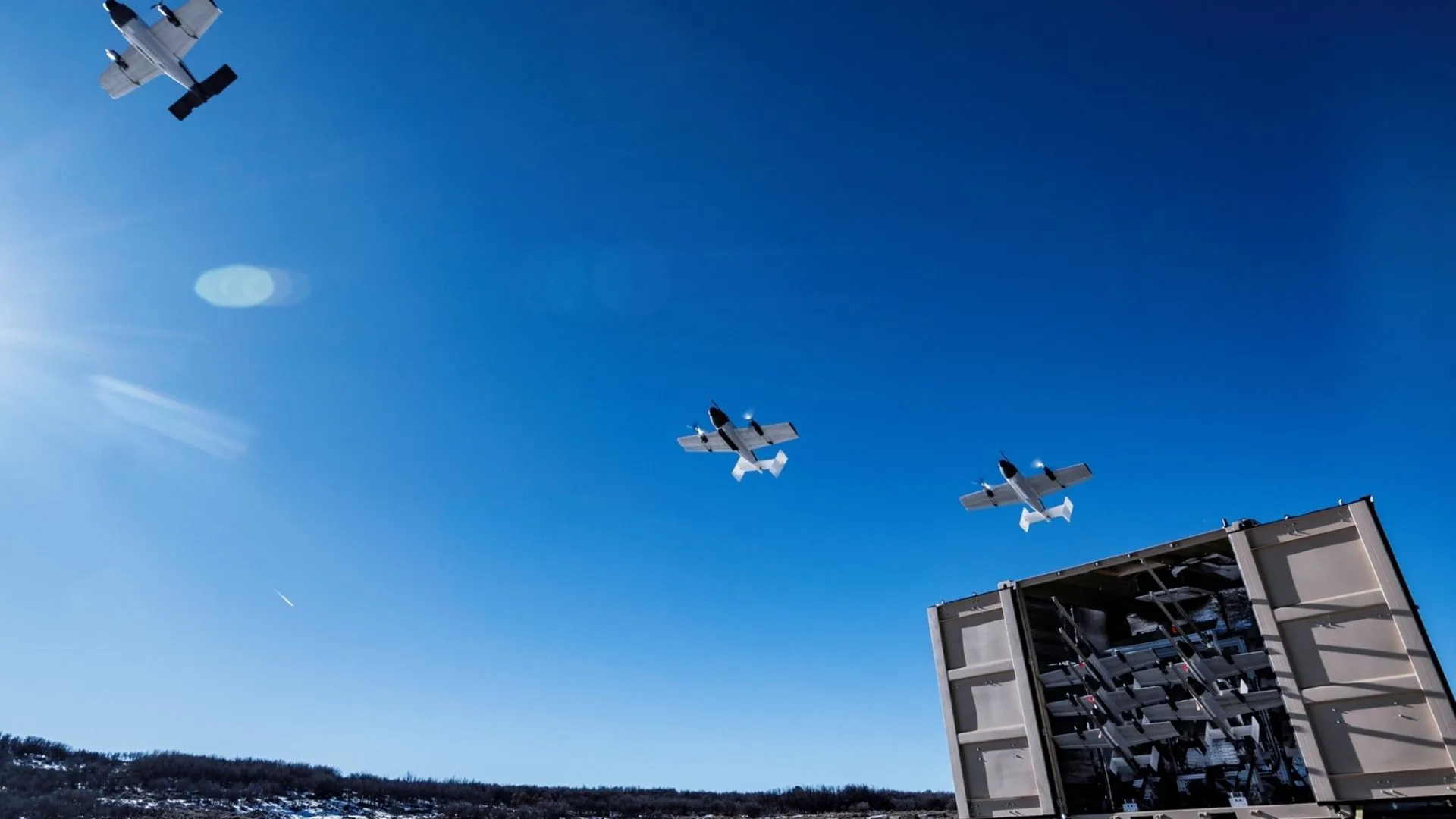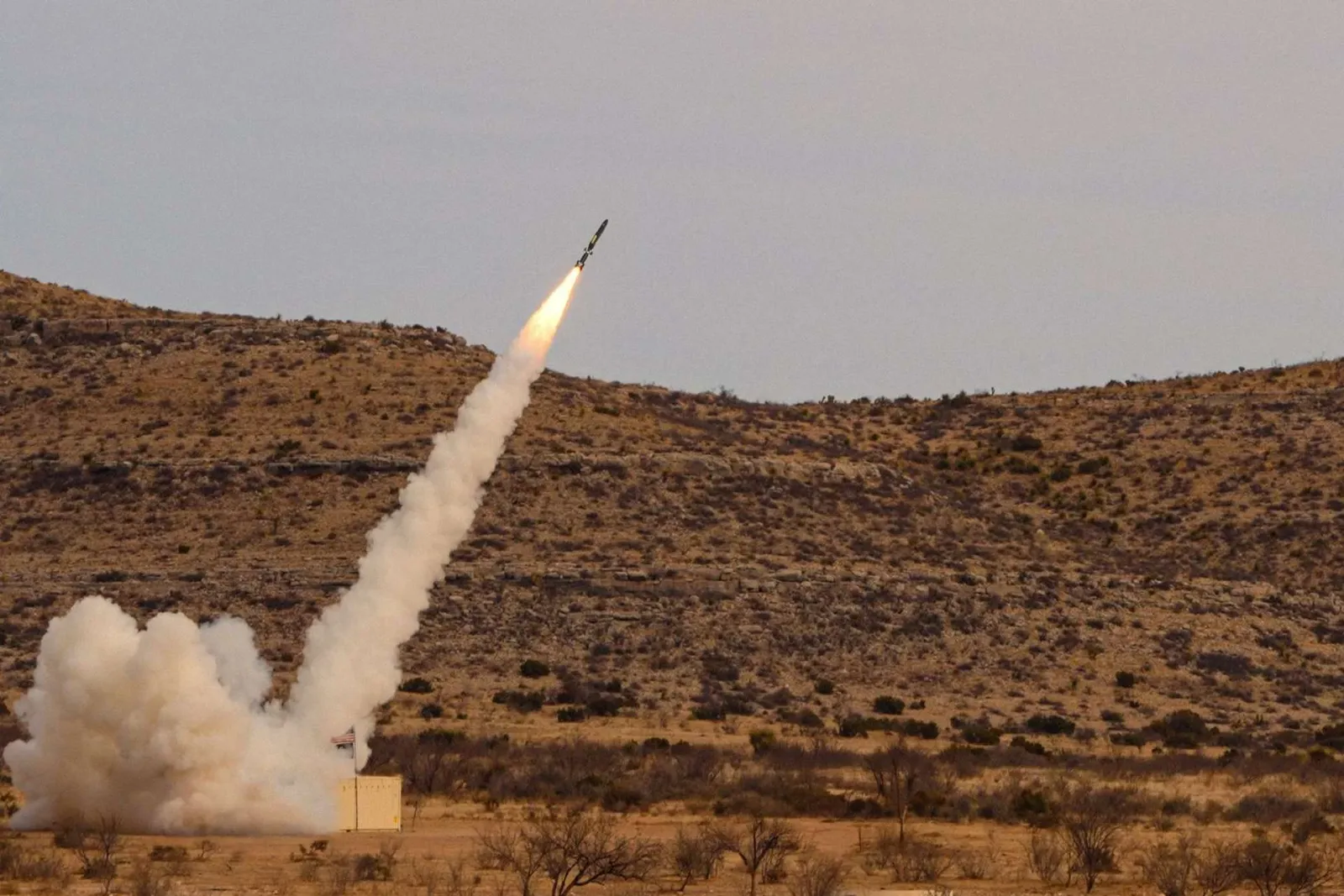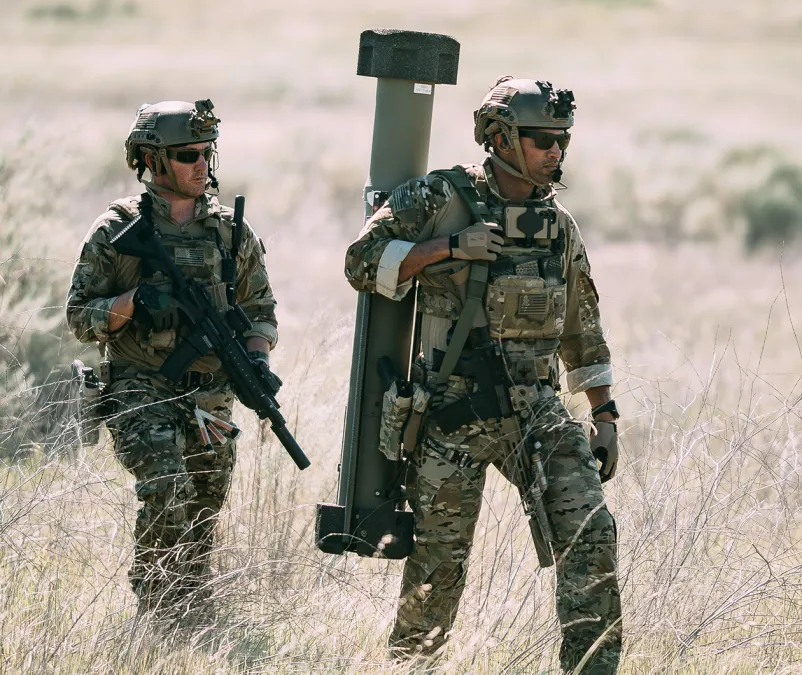
AeroVironment announced a $51 million US Army delivery order for Switchblade 600 loitering munitions on 26 August. It covers additional Block 2 systems plus Block 1 systems supporting a Foreign Military Sale to an unnamed American ally, and it comes out of the five-year, $990 million Lethal Unmanned Systems IDIQ the Army awarded in August 2024.
Nothing about that is surprising on its own. What is worth noticing is what the Army has been doing with everyone else at the same time.
Three suppliers, seven months
In January, Program Executive Office Soldier selected the HERO-90 — built by Israel’s UVision with Mistral Inc. — to take part in the Low Altitude Stalking and Strike Ordnance programme, the Army’s effort to give dismounted infantry a man-portable anti-armour munition. LASSO was the programme Switchblade had largely to itself.
In May the Army selected AeroVironment’s Switchblade 400 for a LASSO prototype agreement, adding a second AeroVironment product rather than replacing anything.
And the Marine Corps went elsewhere entirely. Anduril’s Bolt-M won Organic Precision Fires-Light in January under a $23.9 million contract for more than 600 man-packable systems, delivered between February 2026 and April 2027, after 13 months of testing that included an initial tranche of more than 250 units.
So within seven months the US bought loitering munitions from three suppliers across two services, and none of those decisions displaced another.
Buying through vehicles, not programme starts
The $51 million is a delivery order, not a new contract. That distinction is the more useful thing in the announcement.
The Army is not running a fresh competition every time it wants more munitions. It is drawing against a $990 million ceiling agreed in 2024, which is why orders keep appearing at intervals — $186 million in February, $51 million in August — without a corresponding procurement fight. AeroVironment says Switchblade 600 has been deployed across more than 20 brigade combat teams since 2025, with hundreds of soldiers trained on it.
That is what a munition looks like once it stops being a programme and becomes inventory.
What Block 2 adds
Block 2 was developed with US Special Operations Command. The changes are aimed at the two things that have degraded loitering munition performance in Ukraine: electronic warfare, and the operator workload of finding a target through a soda-straw video feed.
It carries upgraded avionics and SPOTR automatic target recognition, intended to speed detection and identification. Silvus MANET radios provide resilient communications and longer handoff ranges for distributed operations. Navigation has been reworked for GPS-challenged environments.
Whether that survives contact with a peer jamming environment is a separate question from whether it demonstrates well. Automatic target recognition in particular is a capability the whole sector claims and very few have shown under contested conditions.
The foreign sale is the quieter signal
The Block 1 element supports a Foreign Military Sale to an ally the release does not name.
Bundling an export order into a domestic delivery order is routine administratively. It also means older Block 1 inventory has a buyer while the US Army moves to Block 2 — a two-tier arrangement in which allies take the previous generation. Israel has run that model for years. The US is now doing it in loitering munitions, and given how many European states are standing up one-way attack drone programmes, there is likely to be more of it.
Why this matters for AeroVironment specifically
Loitering munitions are the part of AeroVironment that has kept working.
The company lost roughly $1.5 billion of unfunded backlog when the Space Force terminated its SCAR antenna agreement in March, took a $240.7 million goodwill impairment across fiscal 2026, and finished the year with a $265.1 million net loss. The share price is down around 65% from its high.
Against that, the munitions line keeps drawing orders, and on 2 September the Army awarded the company $464.8 million for LOCUST X3 laser weapons — the first production contract for a high-energy laser in US history.
AeroVironment reports quarterly results on 9 September. The $51 million order lands four days before that, and the question those results will answer is whether the businesses that are working are growing fast enough to cover the one that broke.
What to watch
Whether HERO-90 converts. Selection for LASSO participation is not a production order. If UVision’s system moves to procurement, Switchblade stops being the default.
Whether the ceiling gets raised. The August order names the LUS vehicle explicitly; February’s $186 million was reported against a $990 million IDIQ of the same size. Taken together that is at least $237 million drawn this year against a five-year ceiling set in 2024. A raise would signal the Army expects these to be consumed rather than stockpiled.
Which ally bought Block 1. Foreign Military Sales are eventually disclosed. The buyer tells you more about where the US expects these to be used than the dollar figure does.