
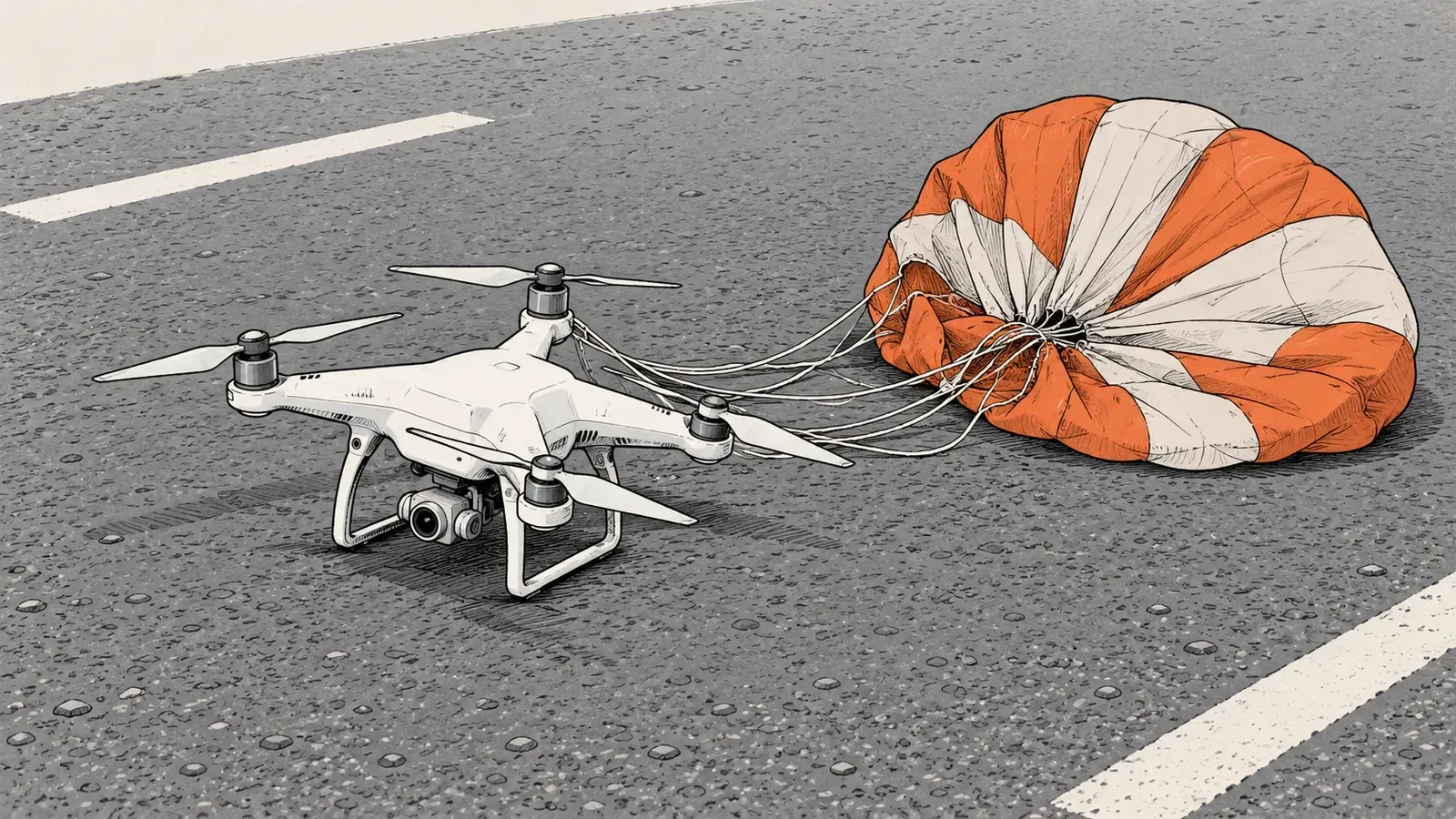
A Zipline delivery drone came down under its parachute onto the southbound lanes of Highway 6 in Cypress, northwest of Houston, on the morning of Friday 4 September. Nobody was hurt, nothing was damaged, and no federal rule obliged anyone to make the event public.
Zipline told KPRC 2 News the aircraft was on its way to collect an order when it encountered a “midflight issue” and deployed its parachute. The company said no one was injured and no property was damaged, and that it did not believe weather played a part despite storms in Houston that day. It has not said what went wrong. Law enforcement agencies told the station they never received a call about an aircraft sitting in a traffic lane.
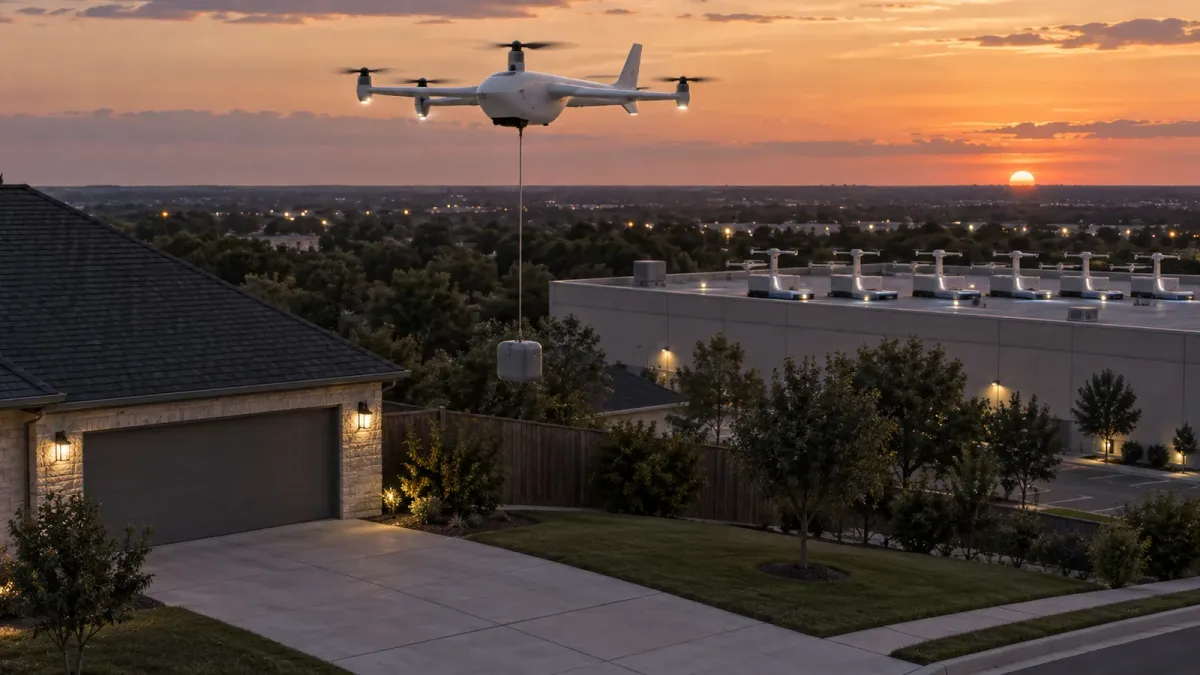
The aircraft is a P2 Zip. In its own environmental assessment for Zipline’s Dallas-Fort Worth expansion, published in December 2025, the FAA puts it at approximately 55 pounds with a maximum payload of eight. Zipline flies it on a Part 135 air carrier certificate paired with an exemption issued under 49 U.S.C. 44807.
That exemption is what makes the reporting question interesting. When the FAA granted Zipline the first of these in May 2022, it wrote that the exemption “addresses the statutory requirement that a civil aircraft in air commerce operate with an airworthiness certificate,” and that the relief would let the aircraft “operate in cargo delivery operations without an airworthiness certificate.” The FAA’s aircraft registry says the same thing from the other end: its entry for N837DM, a P2 Zip registered to Zipline International, lists no type certificate data sheet, no type certificate holder and no airworthiness date.
What 49 CFR 830 actually catches
Accident notification for civil aircraft, drones included, runs through the National Transportation Safety Board’s rule at 49 CFR 830. It defines an unmanned aircraft accident as an occurrence in which any person suffers death or serious injury, or in which “the aircraft holds an airworthiness certificate and sustains substantial damage.”
Nobody was injured on Highway 6. The second limb cannot be reached at all by an aircraft that holds no airworthiness certificate, however badly it is broken. For the delivery fleets flying on 44807 exemptions today, that half of the definition is inert.
The rule that would change this is at the White House
The FAA published its beyond-visual-line-of-sight proposal, Part 108, on 7 August 2025. Proposed section 108.45(g) would require an operator to report to the FAA any operation involving damage to property other than the aircraft exceeding $500, and any malfunction or failure of a system that leads to operations into an unauthorised area, within ten days.
The FAA then explained what it was not doing. Those reports, it wrote, “are in addition to the reporting of aircraft accidents and serious incidents required under 49 CFR 830,” and the agency “chose not to add a duplicative reporting requirement” because it would receive those notifications “in due course” through that process.
FlightBrief’s reading is that the backstop does not hold. The 49 CFR 830 damage test turns on a certificate the aircraft doing BVLOS package delivery do not carry, so for that fleet the proposed rule’s own two triggers are the whole of it: $500 of damage to someone else’s property, or a failure that puts the aircraft somewhere it was not authorised to be. Whether a parachute descent into a live traffic lane is the second of those is not a question the proposal answers.
None of it would be published either. Reports under 108.45 go to the FAA, not to a public docket, and Zipline’s operations specifications and the conditions attached to its exemptions are not public documents, so any obligation it has to notify the agency privately cannot be checked from outside the company.
Eight American operators now hold Part 135 certificates for drone delivery, and Zipline has been flying in Cypress since late April. Part 108 has been sitting at the White House Office of Information and Regulatory Affairs since 10 July; review of a significant rule can run 90 days, which puts a decision around 8 October. KPRC asked the FAA about the Cypress landing. The agency had not answered by the time the station published.