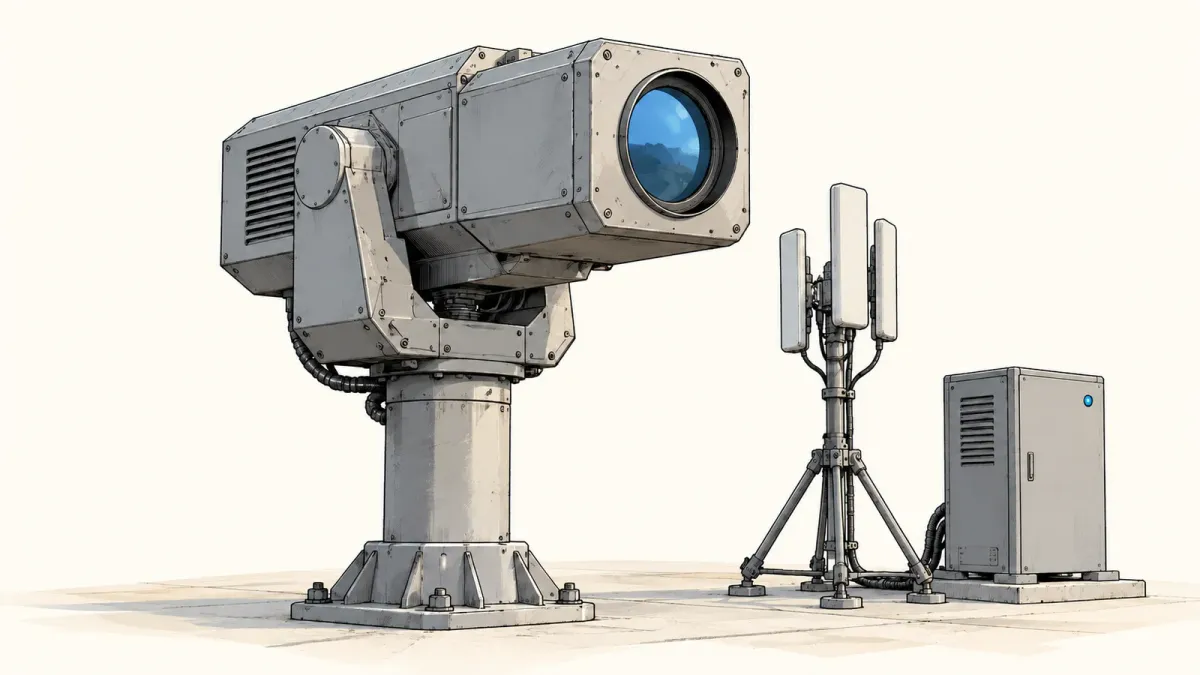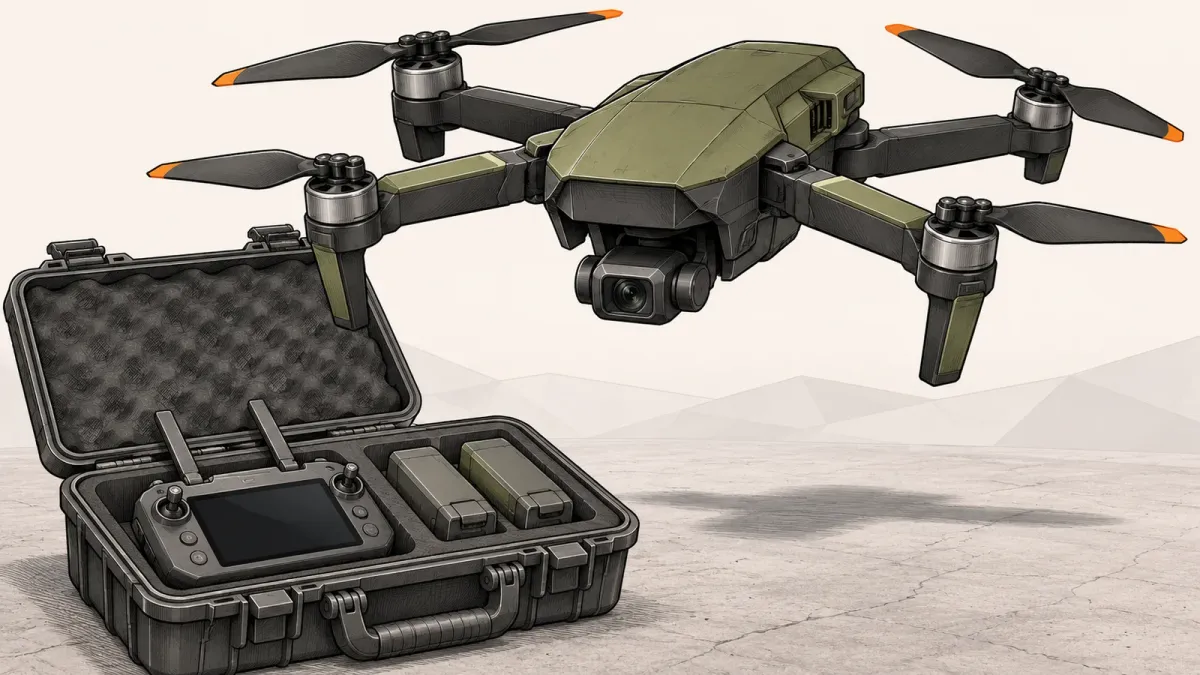

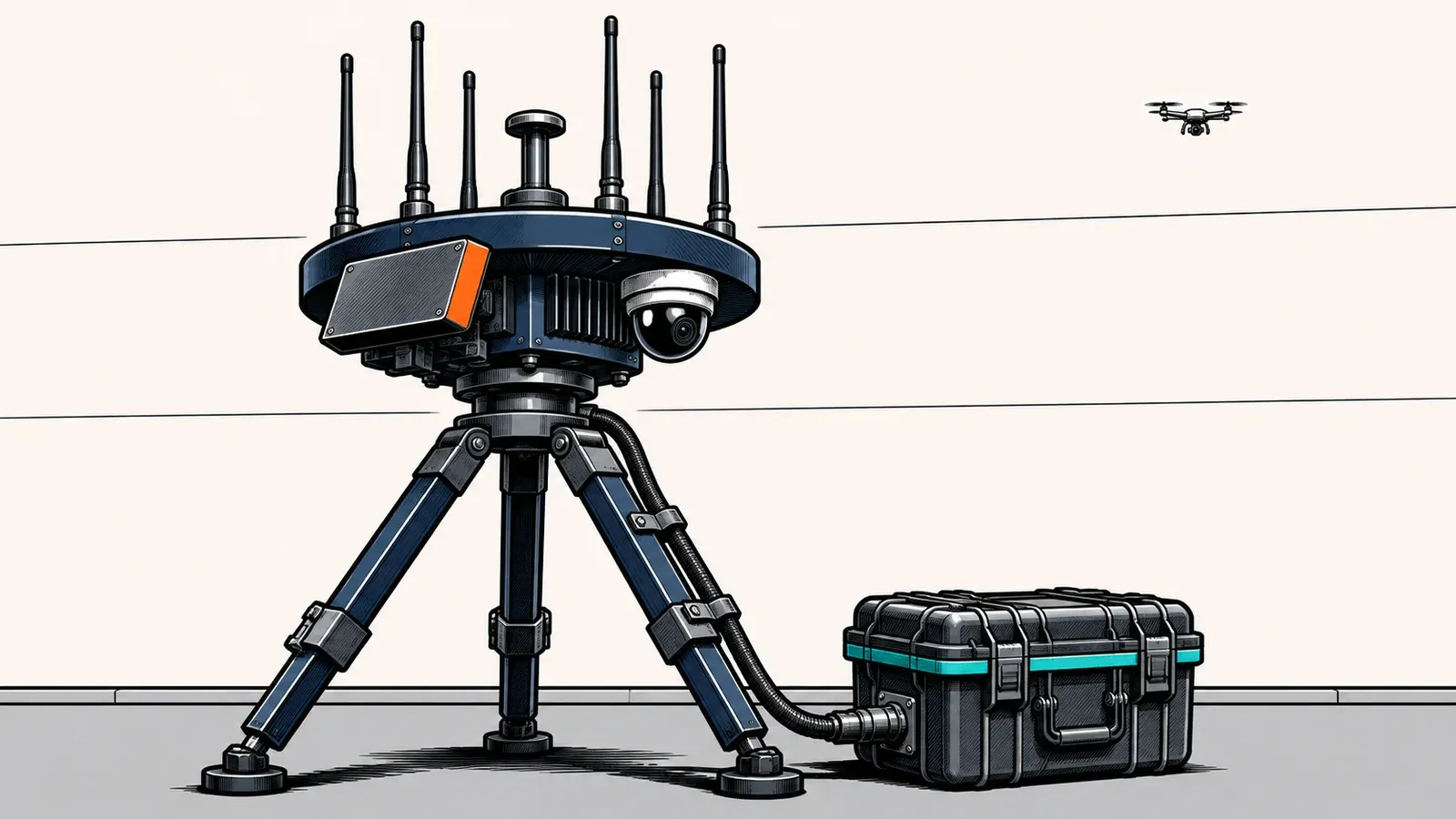
American police can use radar, cameras, microphones and radio scanners to find drones without a federal counter-drone certificate, a 55-page Justice Department opinion concludes. They can also read a drone’s Remote ID broadcast without a wiretap order.
The opinion, from the department’s Office of Legal Counsel, is dated 24 November and answers a question from the White House counsel. It is signed by T. Elliot Gaiser, the assistant attorney general who heads the office. It sets out the department’s legal position; it is not a statute or a rule.
What the certificate was for
The SAFER SKIES Act gave state and local police their own counter-drone powers, and a joint Justice and Homeland Security rule put it into effect in July. Police need one of two certificates: detection and warning, earned online, or mitigation, earned in person at the FBI’s training centre.
The rule already said cameras, acoustic sensors and radar sat outside the requirement, because they intercept no communications. It did not say the same of radio-frequency detectors, which pick up the link between a drone and its controller and can point to the pilot as well as the aircraft.
In its September filing with the Office of Management and Budget, the department expected about 1,500 agencies to seek the detection certificate and 350 the mitigation one. In July the rule counted 61 certified officers at about 46 agencies.
Listening without reading
The opinion draws its line at the contents of a message. A radio detector that only notices a signal, measures it and works out where it came from reads nothing, the office concluded. It breaks neither the Wiretap Act nor the law on pen registers, the devices that record who is calling whom. Three or more such sensors can fix both a drone and its operator, the opinion notes.
Remote ID is content. The FAA requires a drone in flight to broadcast its serial number, position, speed and the location of its controller or take-off point once a second. It also requires that broadcast to use open Bluetooth or Wi-Fi, so that any phone can read it, and forbids securing it with encryption or passwords.
That makes Remote ID “readily accessible to the general public” under the Wiretap Act, the office said. Police may capture it.
Where DJI comes in
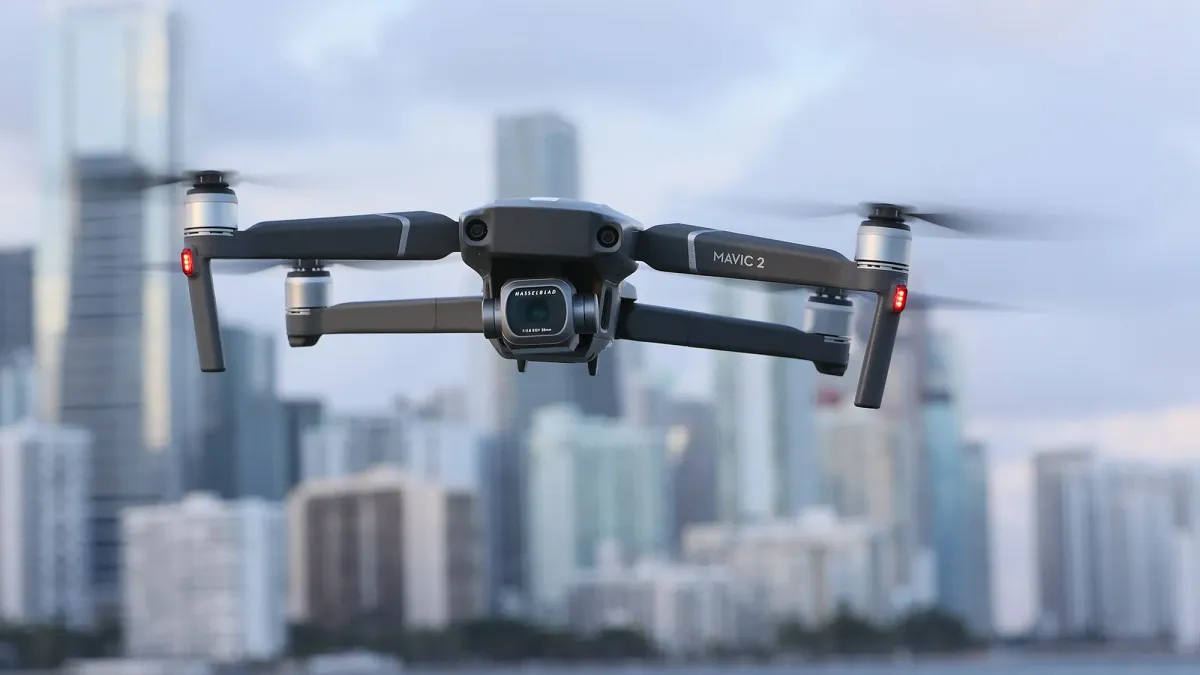
Decoding a drone’s own control or video link is different. DJI’s OcuSync and Lightbridge links use radio techniques the company has not published, the office said, and so show “indicia of intended privacy”. So does ExpressLRS, an open-source control link, because it runs on a proprietary radio technique and private settings.
Police who decode those links outside the counter-drone law may be breaking the Wiretap Act, the opinion warns.
One DJI tool is spared. Certain DJI drones send an encrypted packet meant for the company’s AeroScope receivers, and the office treats AeroScope users as a party to that message, so they may read it. Systems that rely on “reverse-engineered encryption keys” are not.
Two limits remain. State eavesdropping laws may still apply to local officers working outside the federal law, and the office did not interpret them. Any detector that transmits, such as radar, still needs FCC approval before a local agency switches it on.
On FlightBrief’s reading, the certificate now matters for detection only when a sensor decodes a drone’s own link. Many of the 1,500 agencies the department expected may be able to start with sensors that need no federal certificate at all.
FEMA awarded $250 million in the 2026 fiscal year to help state and local agencies detect, identify and track drones, the July rule records.