
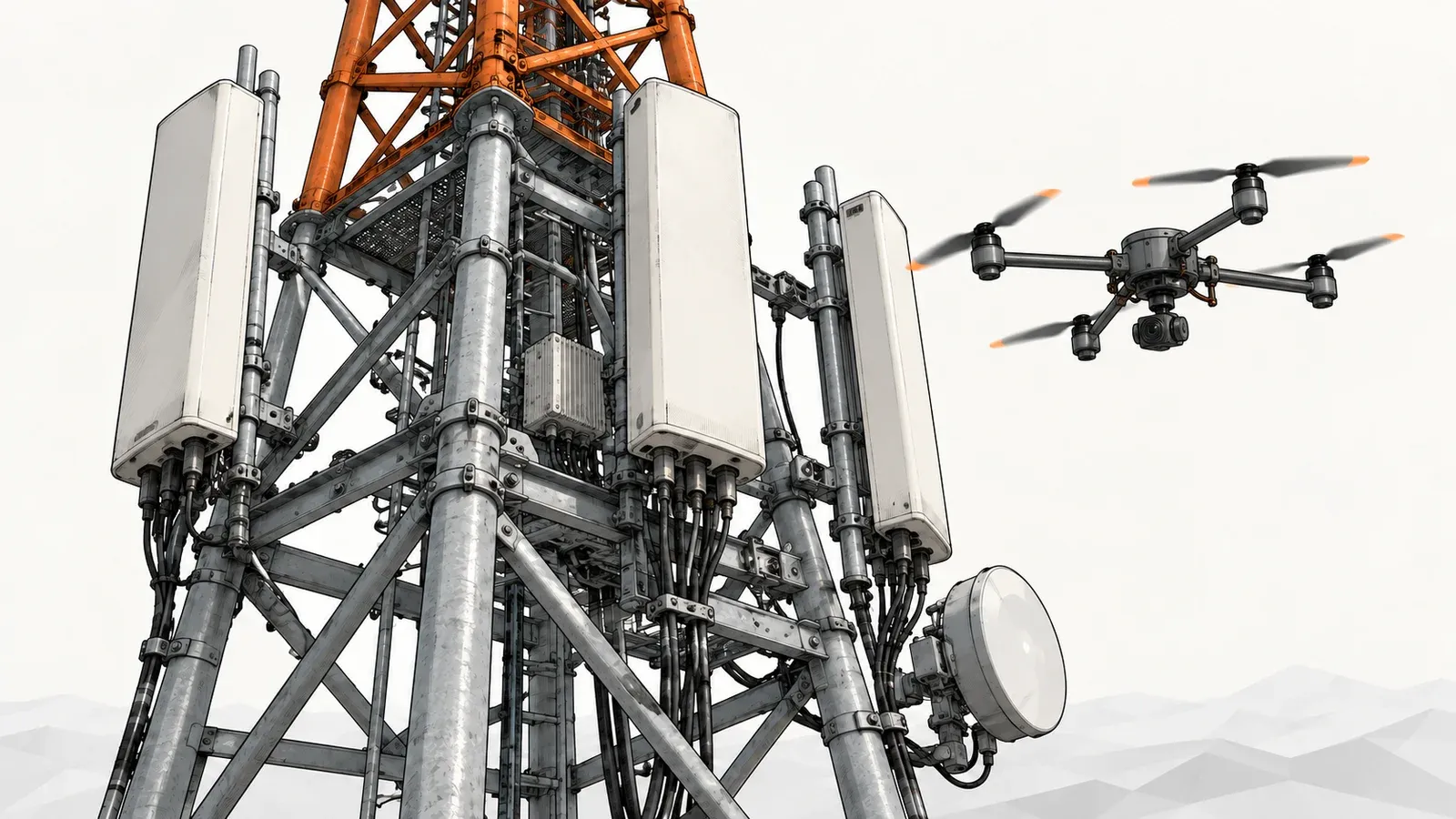
Drone pilots who inspect cell towers and tall buildings near airports will be able to fly up to 100 feet above the top without the local air traffic facility approving each job. The change comes in a Federal Aviation Administration order that takes effect on 31 October. One authorization can cover the whole country and last 24 months.
The order, JO 7200.23E, tells FAA staff how to handle drone operators’ requests for airspace and waivers. It replaces the 2023 version and lists 36 changes. Crystal Ball, acting policy director in the FAA’s Air Traffic Organization, signed it.
The grid and the tower
Around controlled airports, the FAA divides the sky into grid squares, each with a ceiling for drones of between zero and 400 feet. Below the ceiling, a pilot can get near-real-time approval through LAANC, the FAA’s automated system. Above it, the request goes to the air traffic facility for a decision.
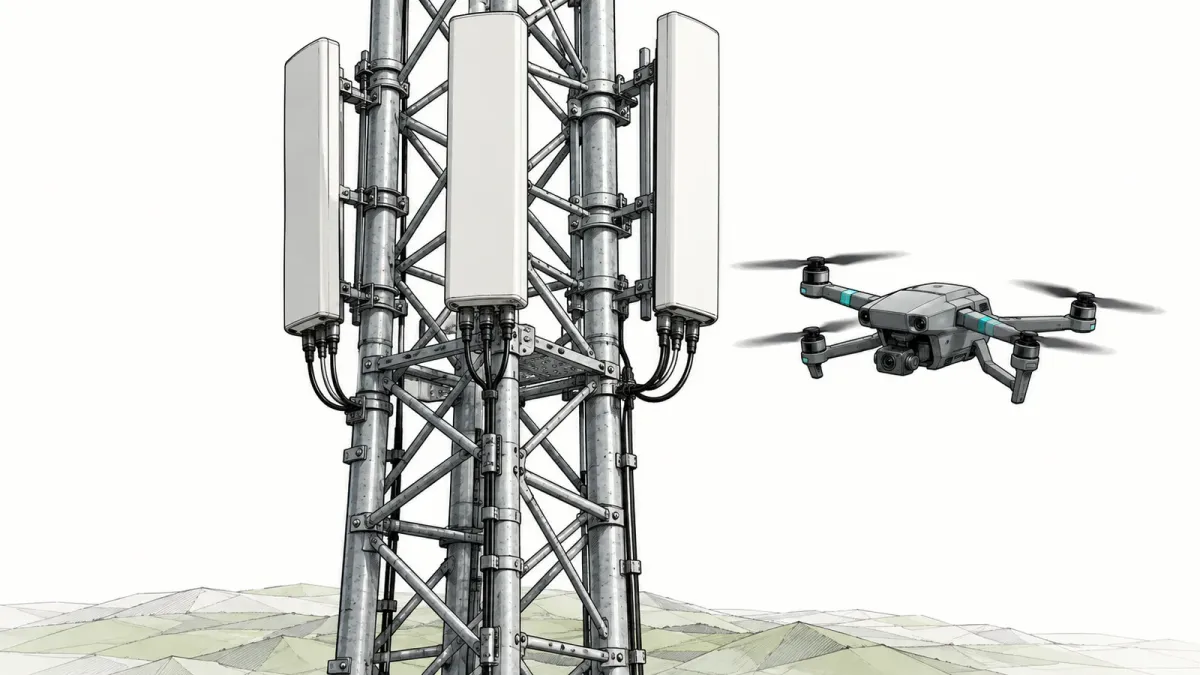
Under the new order, the facility drops out for vertical structures: cell towers, communications towers and high-rise buildings. The drone must stay in the pilot’s sight, within 100 feet of the structure and no more than 100 feet above its top. It must keep at least 2 nautical miles from any runway, heliport, seaplane base or vertiport. Bridges and power lines do not qualify.
At airports that use LAANC, a manual authorization within the grid normally lasts one day, and the FAA refuses wide-area requests such as an airport’s whole Class D airspace. Tower inspectors now join first responders among the exceptions. They can ask for one site or the whole country, for up to 24 months, through the FAA’s DroneZone portal. Airspace the Department of War controls is excluded.
The other changes
Model aircraft clubs’ fixed flying sites will be approved with an airspace authorization instead of a letter of agreement. A project approved to fly above the grid can get up to 14 extra days for bad weather, if the air traffic facility agrees. And every drone approval under Part 91, the general flight rules, must now include a waiver of the rule that pilots see and avoid other aircraft.
None of this touches flights beyond the pilot’s sight. Part 108, the rule meant to make those routine, has been under review at the White House budget office since 10 July.