
The Federal Communications Commission votes on 29 October on whether to let drones use the 800 MHz cellular band, 50 megahertz of low-band spectrum closed to them since 1991. Chairman Brendan Carr put the order on the agenda on 7 October, calling it “a huge swath of spectrum” for commercial drones. The draft was published the next day.
The ban was never written with drones in mind. The FCC adopted it as policy in 1984 and wrote it into its rules in 1991, when most phones were analogue. A handset in a climbing aircraft can see many cell towers at once, and its signal can tie up the network below.
What the order changes
The rule, section 22.925, bars any airborne use of the band. The draft lifts that for unmanned aircraft only. Airline passengers still may not use their phones in the band in flight.
The draft also writes drone use into the national table of frequency allocations. Drones in the band must stay inside a licensee’s service area. A drone acting as a base station faces the band’s existing power limits.
Who asked for it
AT&T and Verizon both filed in favour, along with the industry group CTIA, Qualcomm and Ericsson. Skydio, the American drone maker, also filed in support. AT&T told the FCC it had passed up customer projects because airborne bans add development and supply-chain costs.
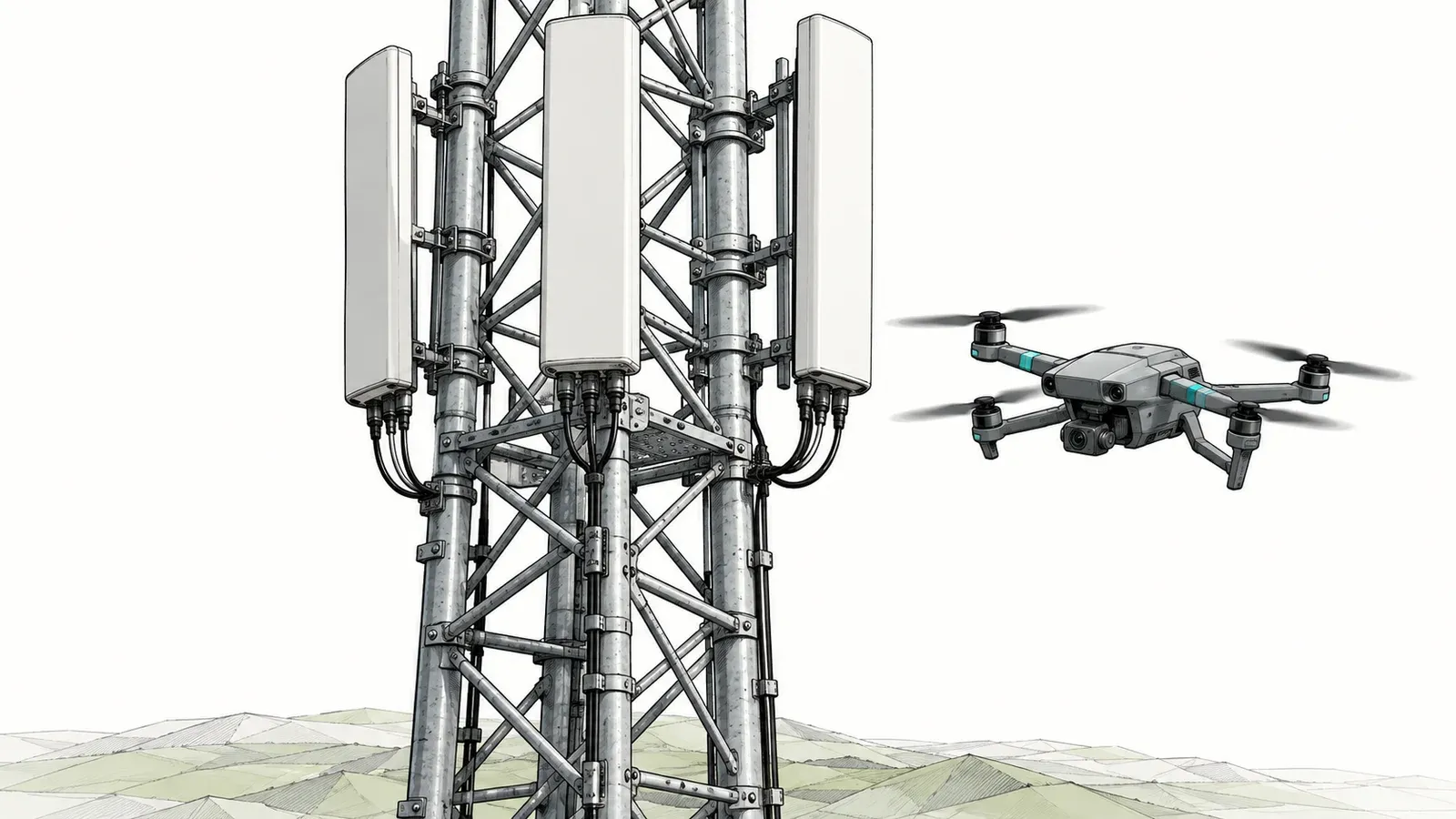
Drones already fly on mobile networks in the 700 MHz and PCS bands, which never had an airborne ban. The draft says the FCC knows of no interference from them. Mobile standards have also changed: 3GPP’s Release 15 added drone identification and height reporting, so a network can tell a drone from a phone and manage it.
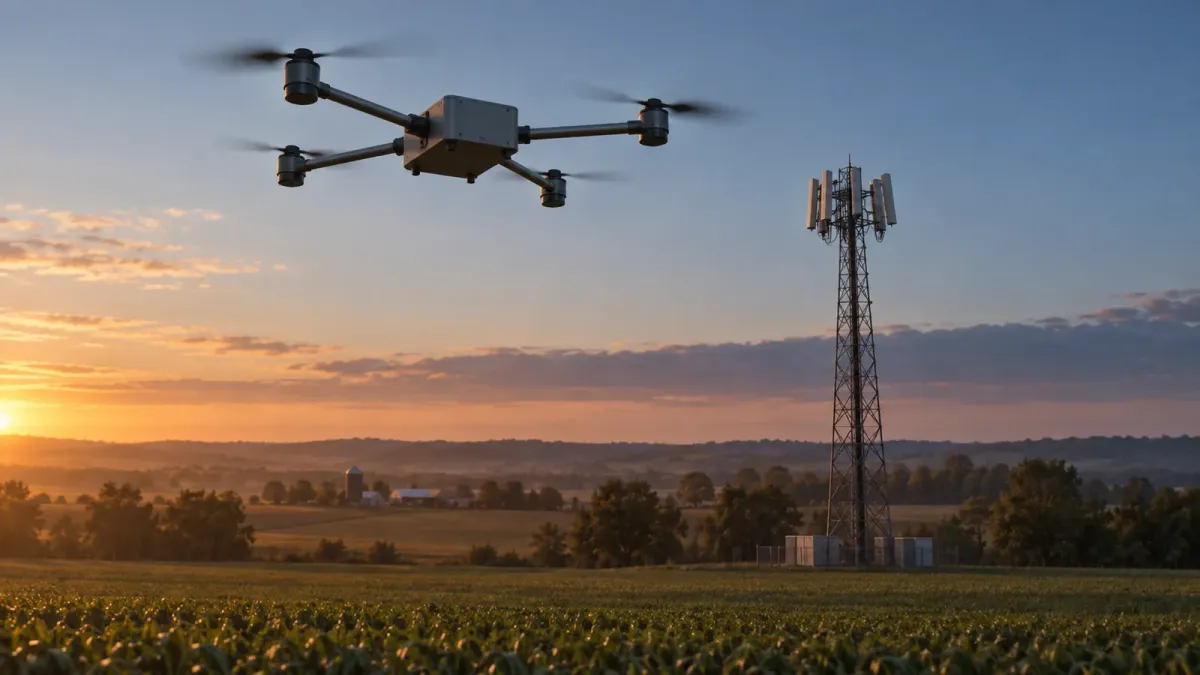
Verizon told the FCC that the 800 MHz band’s long reach suits flights over rural and suburban areas. The draft lists the work it expects: precision farming, utility and pipeline inspection, search and rescue, wildfire monitoring and parcel delivery.
What it leaves to the FAA
A mobile signal does not give a drone permission to fly. The draft says operators remain bound by FAA rules, and most of those uses mean flying beyond the pilot’s sight, which today needs a case-by-case FAA waiver. Part 108, the FAA rule that would make those flights routine, has been under White House review since 10 July.
A draft can change before the vote. The Transportation Department is already testing drones on mobile networks, under an FCC waiver granted on 11 September for its Mobile Network Aviation Assessment Program.