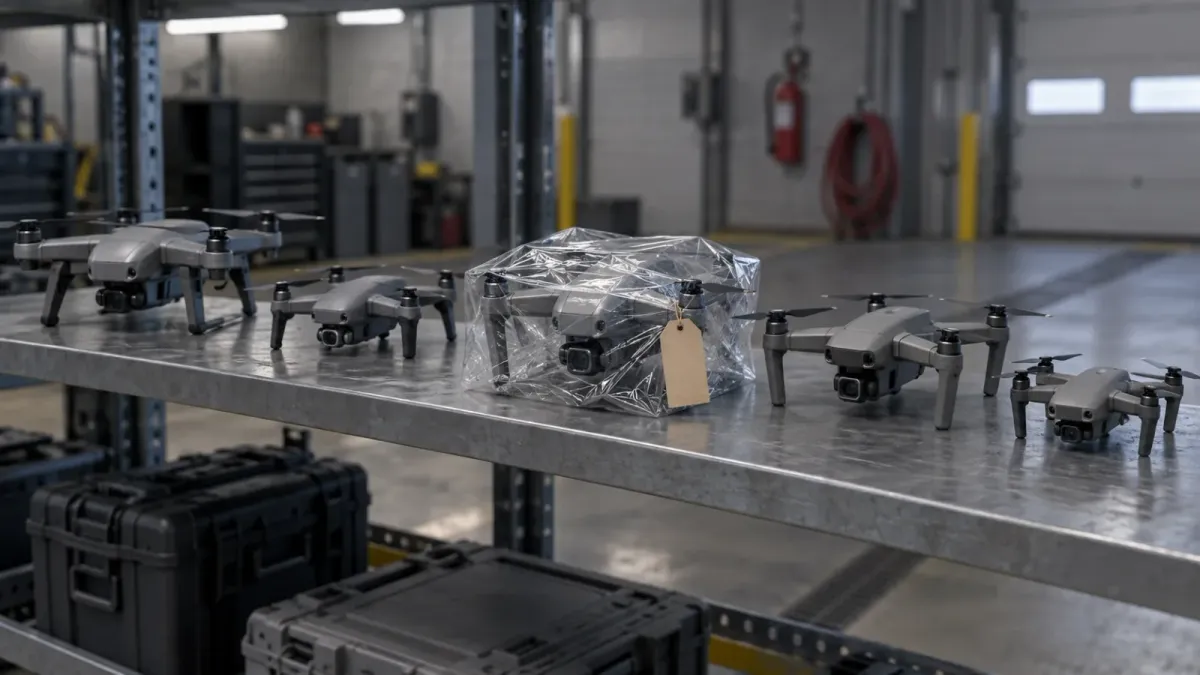

Fifteen DJI aircraft are on the FAA’s list of drones approved to fly under Section 44807, the June 2026 revision shows. Every one of them weighs more than 55 pounds at take-off, which is the first of seven tests the FCC proposed on 21 July for calling a foreign drone “military-grade” and stopping its import and sale.
The FAA list is the safety register for aircraft too heavy for Part 107 or flown without an airworthiness certificate. It runs to 192 aircraft, most of them crop sprayers, and DJI has more rows on it than any other maker: eleven Agras sprayers from the 59-pound T10 to the 390-pound T100, both Flycart delivery aircraft, and two entries the FAA records only as “Heavy Lift” and “Storm UAS”. XAG, the other large Chinese sprayer maker, has nine.
An FAA listing is a finding that the aircraft can operate safely. It is not permission to fly; an operator still needs its own exemption naming the aircraft. Since 22 December 2025 DJI has also been on the FCC’s Covered List, which blocks new equipment authorisations for anything the company makes. Aircraft authorised before that date stay legal to sell and fly, and the FAA does not say which of its fifteen DJI rows those are. Its footnote tells operators to obtain FCC authorisation “prior to operating” and leaves the checking to them.
Two definitions of the same aircraft
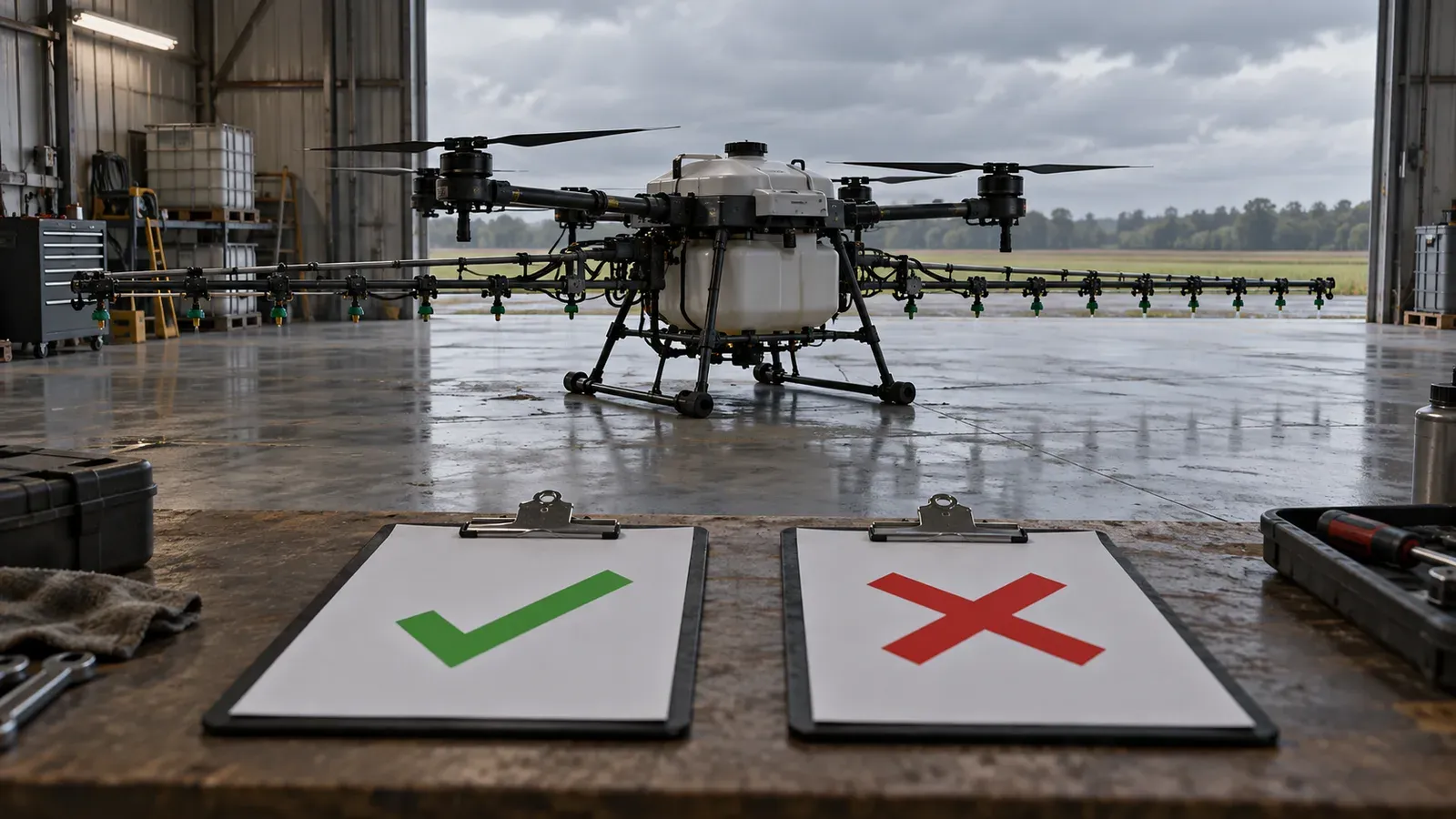
The FCC proposal in PS Docket 26-189 would go further than the Covered List and pull already-authorised foreign drones off the market if they qualify as military-grade. Its definition is by capability: 55 pounds or more at take-off, spray equipment, a thermal imager, LiDAR, a docking station, a Munitions List component, or swarm flight. An Agras sprayer meets the first two on the FAA’s own numbers.
So the same aircraft is, on one federal list, cleared as safe to fly above the weight Part 107 allows, and under another agency’s proposal, military-grade because it is above that weight. Neither document mentions the other. The FAA list is a PDF attached to a regulations.gov docket with no dates on it; the FCC notice cites no FAA determination.
The comment record on the FCC proposal closed on 2 September with 3,770 filings against and 16 for, by the count of Greg Reverdiau of Pilot Institute, who read every one. Of the 1,584 that addressed the definition, 1,575 called it overbroad. Reverdiau counted 175 filers in agriculture, the sector where nearly every working aircraft is over 55 pounds because the tank alone weighs that much when full.
What a sprayer costs to import now
The tariff side has already moved. Since 3 September a Section 232 proclamation applies a 100 percent duty to imported uncrewed aircraft above 25 kilograms, roughly 55 pounds, so every DJI and XAG aircraft on the FAA list now costs twice what it did to bring in. The FCC order would remove the option of importing them at all.
There is a route around both. An FCC conditional approval, the exemption a foreign-made drone can earn against an onshoring plan, takes an aircraft off the Covered List, and holders as of 2 September were also given a 180-day delay on the tariff. Five makers hold one and a place on the FAA list: ABZ Innovation of Hungary, Blueflite of Michigan, Ceres Air of Vermont, Exedy’s US drone arm and Parallel Flight Technologies of California. Ceres Air’s C31 and C40 are sprayers with FAA-approved take-off weights of 537 and 660 pounds. Hylio, which builds its sprayers in Texas, has ten rows on the FAA list, more than any maker except DJI.
DJI’s own position is that drones are not communications equipment under the law the FCC is using, an argument it took to the Ninth Circuit as case 26-1029 in February. In an April brief it put its 2026 US losses at about $1.56 billion. The FCC bureaus have said they can issue an order at any time and have not said when; the FAA list was last revised on 1 June and carries no schedule for the next one.