

NDAA
NDAA Compliant Drones: The Complete Guide for 2026
What NDAA compliance requires, who the law applies to, which platforms qualify, and what the September tariffs did to the compliance premium.
Updated
19 news articles on NDAA ↓
Every drone the FCC has conditionally approved
Nineteen conditional approvals exempting named foreign-made drones and components from the Covered List, each with the notice that granted it, and the six rule changes around them.
Checked· Latest addition: Dronus,
- Covers
- Every foreign-produced drone product with an FCC conditional approval, from the FCC’s public notices.
- Leaves out
- Products exempt as a class (Blue UAS list, Buy American), which need no approval and are not listed.
Spotted an error? Email [email protected] with the row and the document that shows it.
25 of 25
Notes
- FCC One day ahead of the statutory deadline. Blocks new FCC equipment authorisations for anything in scope; it does not touch hardware already authorised. The notice invited the Department of War and DHS to carve out products they judged safe, which is where every row below comes from. Official record
- FCC Originally until 1 January 2027. The domestic end product test is 65 percent domestic content by cost, which leaves room for foreign motors, cells and magnets. Official record
- FCC An Office of Engineering and Technology waiver, at least until 1 January 2027. Without it a security patch to an existing DJI aircraft would have counted as a prohibited change to covered equipment. Official record
- SiFly Aviation One of the first four approvals, announced 18 March. Long-endurance quadcopter from a California company. Official record
- Mobilicom The only entry that is not an aircraft: datalinks, ground controllers and cybersecurity software sold to other drone makers. Mobilicom is Israeli-founded and listed in Australia and on Nasdaq. Official record
- ScoutDI Norwegian tethered drone for inspecting the inside of tanks and ships. Official record
- Verge Aero Listed by the FCC as Verge, Inc. A drone-show aircraft, which makes it the only entertainment product on the list. Official record
- Sees.ai British remote-operations company. The product name suggests a US-specific build; the notice gives no detail. Official record
- Air6 Systems German multirotor maker (Air6 Systems GmbH). Seven airframes in one approval, the largest single grant on the list. Official record
- Elevon Aerial Agricultural aircraft. The notice reads “Elevon Aerial, LLC, doing business as Elevon Aerial AG, Z30, Z50, and Z80”, so whether AG is part of the trading name or a fourth model cannot be settled from the FCC text. Official record
- Blueflite Michigan logistics drone maker. The only aircraft approval that names the components alongside the airframe. The Cobalt 461 was added to the FAA’s section 44807 approved list on 1 June 2026, a week later. Official record
- Verity Swiss (Verity AG). Warehouse inventory drones that never leave the building, which is a reminder that the Covered List is about radios and data, not airspace. Official record
- Air VEV Israeli company, reported by DroneLife; the notice gives no technical detail on either aircraft. Official record
- Innovation First International The VEX Robotics education company, Texas. A classroom drone, and the approval that showed the process was open to products with no defence or enterprise use. Official record
- Flock Safety Listed as Flock Group, Inc. Flock sells drone-as-first-responder systems to police departments, the buyers most exposed to the Covered List and to state DJI bans. Announced in its own notice the same day as the ABZ approval. Official record
- ABZ Innovation Hungarian (ABZ Innovation Kft.). Agricultural spraying drone, one of three crop-spraying makers on the list with Elevon and Ceres Air. Official record
- FCC A toy drone must meet every test: 150 grams or less, line of sight within 100 metres, 300 feet or lower, no GPS or return-to-home, and no internet, app or network connection. Almost nothing sold as a camera drone qualifies. Official record
- Real-Time Robotics Multi-use commercial platform; GeoCue certified its TrueView 641 lidar for the HERA in July 2026. Official record
- Ceres Air Vermont maker of heavy agricultural sprayers; it rates the C31 to lift 397 lb, which puts the aircraft far outside Part 107 and into the FAA’s section 44807 territory. Official record
- FCC The Department of War determination of the same day supersedes the January one. Approvals now last as long as the holder follows its onshoring plan and passes updated vetting; a false statement in the application restores the product to the Covered List. Router approvals kept their dates. Official record
- FCC A proposal, not a rule. Comments closed 2 September 2026 with 3,770 filings against and 16 for. It would reach hardware the December listing left alone. Official record
- Exedy Globalparts The US arm of Exedy, the Japanese clutch and drivetrain manufacturer. First approval issued without a termination date. Official record
- Parallel Flight Technologies Californian maker of hybrid heavy-lift drones for wildfire and logistics work. Official record
- Ascento Ascento is a Swiss company known for wheeled-legged security patrol robots, and the FCC has since created a separate robotics category. The notice gives no specification, so whether this is an aircraft or a ground robot filed under the UAS heading is not established. Carried as the FCC lists it. Official record
- Dronus Italian maker (Dronus S.p.A.) of the NEST drone-in-a-box, a dock that mounts on poles, walls and towers; the approval covers the aircraft and its dock together. The first UAS approval since 21 August, announced in a notice that also covered a router line and a floor-cleaning robot. Official record
Where this comes from. Assembled by FlightBrief from the FCC Public Safety and Homeland Security Bureau public notices, cited by DA number in each row, and checked against the roster at fcc.gov/supplychain/coveredlist as it stood on 7 October 2026. A conditional approval is a Department of War determination that a named foreign-produced product does not pose an unacceptable risk, granted against an onshoring plan the applicant filed; it exempts that product from the Covered List and nothing else the company makes. Every approval granted before 21 July 2026 was issued with a termination date of 31 December 2026; the notice of that day removed the dates, and approvals now run for as long as the holder keeps to its onshoring plan and passes re-vetting. What the vetting examines has not been published. Products on the Blue UAS Cleared List or meeting the Buy American domestic end product test are exempt as a class until 1 January 2028 and do not appear here.
Sources
Cite or reuse this table
FlightBrief, “Every drone the FCC has conditionally approved”, checked Oct 7, 2026, https://flightbrief.news/topics/ndaa/#dataset-fcc-conditional-approvals
Free to reuse, including commercially, under CC BY 4.0. Credit FlightBrief and link to this page.
Every US state that restricts public agencies buying Chinese-made drones
Twelve states, from Florida in 2021 to New Hampshire in 2026: ten statutes, one regulation and one executive list, each with who it binds, what it treats as foreign and when the purchase and operation bans bite.
Checked· Latest addition: New Hampshire,
- Covers
- State laws, regulations and executive lists in force that restrict public bodies buying or flying drones by country of origin or a covered list.
- Leaves out
- Bills that died, were vetoed or are still in committee.
Spotted an error? Email [email protected] with the row and the document that shows it.
12 of 12
| State | Instrument | Type | Who it binds | What it covers | Purchase ban from | Operation ban from |
|---|---|---|---|---|---|---|
| Florida1 | Fla. Stat. 934.50(7), from SB 44 (ch. 2021-165); DMS rule 60GG-2.0075 | Statute | Any state, county, local or municipal governmental entity using a drone for any purpose | Drones not from a manufacturer meeting the Department of Management Services security standard | 1 January 2022 | 1 January 2023 |
| Arkansas2 | Ark. Code 25-1-129, Act 525 of 2023 (HB 1653) | Statute | The state and every political subdivision, including university departments | Small UAS (under 55 lb) manufactured or assembled by a covered foreign entity: on the Commerce Consolidated Screening or Entity List, domiciled in or controlled by China or Russia, or an affiliate | 2023 | 1 May 2027 |
| Tennessee3 | Tenn. Code 4-56-112 and 12-4-120, Public Chapter 223 of 2023 (SB 776) | Statute | State agencies; counties, municipalities, public utilities, utility districts and interlocal entities; law enforcement | Drones produced by a manufacturer banned under Section 889 of the FY2019 NDAA | 1 July 2023 | None |
| Mississippi4 | Miss. Code 31-7-67, ch. 460 of 2023 (SB 2853), amended ch. 498 of 2024 (HB 297) | Statute | The state and every agency and political subdivision; contractors inspecting state infrastructure | Drones manufactured in China, including those assembled elsewhere with more than a negligible amount of Chinese parts, software or materials; from 2025, anything not from a domestic manufacturer | 1 July 2023 | 1 July 2023 |
| Utah5 | Utah Code 72-10-1201 and 1202, ch. 483 of 2024 (SB 135) | Statute | Public entities and contractors working directly for them, for critical infrastructure inspection only | UAS manufactured or assembled by a covered foreign entity (Commerce lists, China or Russia domicile or control, affiliates) | 1 January 2025 | 1 January 2025 |
| Nevada6 | Department of Public Safety regulation R111-23, a new section of NAC 493, under SB 11 (ch. 446 of 2023) | Regulation | Public agencies and law enforcement agencies | UAV or related equipment or services from an entity on the Defense Department’s Section 1260H list of Chinese military companies as it stood on 31 January 2024; also vendors barred by the state chief information officer, and anything the Department judges inappropriate | 1 January 2025 | Banned for equipment bought on or after 1 January 2025 |
| Kansas7 | 2025 Session Laws ch. 68, sections 12 and 13 (House Substitute for SB 9) | Statute | The state and any political or taxing subdivision | Drones, services or equipment whose critical components were produced in a country of concern (China, Cuba, Iran, North Korea, Russia, Venezuela; Taiwan excluded) or by a foreign principal | 1 July 2025 | None |
| Connecticut8 | Public Act 25-1, section 5 (HB 7066) | Statute | State agencies, municipalities, their contractors, and any state or federal funds including grants | Small UAS (under 55 lb) assembled or manufactured by a covered foreign entity (Commerce lists, China or Russia, their instrumentalities, anyone they control, affiliates) | 1 October 2026 | 1 October 2028 |
| Nebraska9 | Secure Drone Purchasing Act, Neb. Rev. Stat. 73-1001 to 73-1005 (LB 660, 2025) | Statute | State agencies; political subdivisions only “to the extent practicable” | Any drone not on the Division of Aeronautics’ List of Secure Drones Authorized for Purchase: Blue UAS, FY2024 NDAA-compliant, or meeting the act’s own cybersecurity test | 1 January 2027 | None |
| Texas10 | Prohibited Technologies list, Texas Cyber Command and DIR, under the Governor’s directive of 7 December 2022 | Executive list | State agencies, for state-owned devices and networks | Named manufacturers: SZ DJI Technology and Autel Robotics are on the hardware list, with their subsidiaries and affiliates | Listed; updated 4 February 2026 | On state devices and networks |
| Ohio11 | Ohio Rev. Code 5501.84, enacted by Substitute HB 251 (136th General Assembly) | Statute | The state and all its political subdivisions, and state funds including grants | Drones manufactured or assembled by a foreign adversary, per a registry the Secretary of State publishes from federal lists | 6 October 2030 | Banned for drones bought on or after 6 October 2030 |
| New Hampshire12 | RSA 162-V, enacted by HB 1444 of 2026 (chapter 95) | Statute | State agencies and state funds; counties, cities, towns and other political subdivisions | Drones that do not meet the requirements of the FY2024 NDAA or are on the FCC Covered List | 1 January 2028 | None |
| Nothing matches that search. | ||||||
Notes
- Florida The first state to act, and it grounded fleets already in service: agencies had to file discontinuation plans by 1 July 2022 and stop flying non-compliant aircraft by 1 January 2023. The statute speaks of an approved-manufacturer list, but the December 2021 list (Skydio, Parrot, Altavian, Teal, Vantage Robotics) was archived on 5 April 2023 and replaced by rule 60GG-2.0075, a security standard an agency applies itself. A replacement grant programme in 934.50(7)(f) expired on 1 July 2026; the Drone as First Responder grant runs to 1 July 2027. Source
- Arkansas Approved 10 April 2023. The purchase ban is flat; the operation ban gives agencies four years. The waiver, from the Secretary of Transformation and Shared Services for exigent circumstances, counter-UAS or criminal investigation, reaches only the two state-funds clauses, not the purchase or operation bans themselves — a drafting gap the act does not address. Source
- Tennessee Approved 25 April 2023. Purchase and acquisition only, and a contract in breach is void. The trigger is the Section 889 list — Huawei, ZTE, Hytera, Hikvision and Dahua — which does not name DJI or Autel, so the law is narrower than the coverage of it. A second law, the Tennessee Procurement Protection Act (Public Chapter 768, Tenn. Code 4-56-204, in force 1 July 2026), bars foreign adversary companies from information and communications technology contracts with state agencies and political subdivisions; whether that reaches a drone is not settled in the text FlightBrief could read. Source
- Mississippi Approved 12 April 2023. Two tests stacked: a purchase-and-operate ban on Chinese-made aircraft from 1 July 2023, and from 1 January 2025 a requirement that every drone bought be from a US-incorporated, US-headquartered, majority-American-owned manufacturer with a collision avoidance system, serviced by a domestic company. The 2024 amendment exempted Chinese-made aircraft bought before 1 January 2025. Mississippi manufacturers get a 10 percent bid preference; a university with a federally designated research centre is exempt for research. Source
- Utah The narrowest law on the list. It reaches only critical infrastructure inspection, and a covered aircraft may still be flown for that if it is kept off the internet during the flight, its data is removed before it reconnects and any live video goes through US-developed or NDAA-approved software. It is not a general procurement ban. Official record
- Nevada Filed 19 December 2024. The regulation bars agencies from operating, buying or acquiring covered drones, but exempts anything bought before 1 January 2025. The statute, NRS 493.118, is a registry provision; the ban lives in the regulation, which had no NAC section number in the published code as of January 2026. With Texas’s list, this is one of two triggers on the table that name DJI directly; DJI has been on the 1260H list since October 2022. Source
- Kansas Approved 7 April 2025. Keyed to critical components — parts that record, store or transmit data, and any software — rather than to the airframe’s maker. Components acquired before 1 July 2025 may stay in use and be replaced from pre-2025 stock; contracts signed before that date are untouched. The Secretary of Administration may approve an otherwise prohibited purchase after consulting the Adjutant General where there is no reasonable alternative. Official record
- Connecticut Approved 3 March 2025. The broadest law on the list because it reaches contractors and grant money. The state police went first: no purchases from 1 October 2025 and no operation from 1 October 2027. Waivers for exigent circumstances, counter-UAS or criminal investigation run to 31 December 2034 and need a certified written statement within seven days, held by the Department of Emergency Services and Public Protection and open under freedom of information law. Official record
- Nebraska Approved 20 May 2025, operative 3 September 2025. The only state that publishes an approved list rather than a banned one; the Division of Aeronautics had to create it by 1 January 2026 and update it every six months. The hard ban binds state agencies alone — a county is asked to comply where practicable, which is a preference, not a prohibition. Electric suppliers meeting NERC critical infrastructure protection rules are exempt outright. Official record
- Texas Texas has no drone procurement statute. HB 41 of 2025, which would have banned covered foreign drones for governmental entities with a grace period to 2031, died in the Calendars Committee, and the legislature does not sit in 2026. What exists is the governor’s prohibited technologies list, which bars the named makers from state-owned devices and networks; whether it binds a city police department buying with city money is unresolved. The “SB 2114 (2023)” cited in trade coverage as a Texas drone ban is an education ombudsman bill. Official record
- Ohio Signed in July 2026; the section takes effect on 6 October 2030. Division (C) switches the ban off if federal law or regulation allows these drones to go on being bought and operated. The registry draws on the Commerce foreign-adversary list and three other federal lists, updated every six months. Do not quote SB 180 or HB 317, the standalone drone bills, as Ohio law; both are still in committee. Official record
- New Hampshire Signed by Governor Ayotte on 28 May 2026, effective 27 July 2026. State agencies may buy only drones that pass the local test, and are told to do so “to the extent practicable” before 2028. A purchase contract that breaks the law is void and unenforceable. Official record
Where this comes from. Assembled by FlightBrief from the enacted text of each state law, regulation or executive list, fetched from the state legislature, secretary of state or agency on the verification date and linked from each row. The test for a row is an instrument in force that restricts a state or local public body from purchasing or operating drones by reference to country of origin, a covered-entity list or a state-approved list. Bills that died, were vetoed or are still in committee are not rows; the dossier names them. The definitions differ more than the headlines suggest: Tennessee keys to the Section 889 telecoms list, which does not name DJI; Nevada keys to the Pentagon’s Section 1260H list; Kansas, Mississippi and Nebraska each use a test of their own. Where the enacted text could not be read, the row is marked contested and its note says what it rests on.
Sources
- Florida Statutes 934.50, Searches and seizure using a drone, subsection (7), 2026 Florida Statutes
- Florida Administrative Code rule 60GG-2.0075, Unmanned Aerial Systems Minimum Security Requirements, 5 April 2023
- Arkansas Act 525 of 2023 (HB 1653), 10 April 2023
- Tennessee Public Chapter 223 of 2023 (SB 776), 25 April 2023
- Mississippi SB 2853 of 2023, as sent to the Governor, and HB 297 of 2024 amending 31-7-67, 12 April 2023 and 2024
- Utah Code 72-10-1201 and 72-10-1202, chapter 483 of the 2024 General Session, effective 1 January 2025
- Nevada Department of Public Safety, approved regulation LCB File R111-23, filed 19 December 2024
- Kansas 2025 Session Laws chapter 68, House Substitute for SB 9, from the Secretary of State, 7 April 2025
- Connecticut Public Act 25-1 (HB 7066), 3 March 2025
- Nebraska LB 660 of 2025, slip law, sections 20 to 24, 20 May 2025
- Texas Department of Information Resources, Covered Applications and Prohibited Technologies, list updated 4 February 2026
- Ohio Revised Code 5501.84, enacted by House Bill 251, 136th General Assembly, effective 6 October 2030
- New Hampshire RSA chapter 162-V, enacted by 2026 chapter 95 (HB 1444), effective 27 July 2026
Cite or reuse this table
FlightBrief, “Every US state that restricts public agencies buying Chinese-made drones”, checked Oct 7, 2026, https://flightbrief.news/topics/ndaa/#dataset-state-drone-procurement-laws
Free to reuse, including commercially, under CC BY 4.0. Credit FlightBrief and link to this page.
Guide
An NDAA compliant drone is one whose aircraft and critical components are not built by a covered foreign entity. In practice, that means China. Since 22 December 2025 the restriction has reached beyond the Department of Defense. It now applies to every federal agency, contractor and recipient of federal funds.
DJI and Autel are also blocked from new FCC equipment authorizations. That closes the door on future US market entry for both.
Most compliance advice has not caught up with one change in September. Section 232 tariffs took effect on 3 September. The rate is 25% on drones at or below 25 kg. It is 100% on anything heavier, anything with a thermal imager at any weight, docking stations and a list of critical components.
Compliance used to cost you a premium. Now non-compliance carries a tax of its own. For thermal work the gap has narrowed sharply.
Key facts
- An NDAA compliant drone is one whose airframe and critical components are not made or assembled by a company based in or controlled by China, Russia, Iran or North Korea. The list of critical components is in Section 848 of the FY2020 NDAA.
- The American Security Drone Act has applied to every federal agency, contractor and grant recipient since 22 December 2025.
- DJI and Autel have been on the FCC Covered List by name since 22 December 2025, so no new DJI or Autel model can receive FCC authorisation. Aircraft authorised before that date remain legal to sell and fly.
- From 13 October 2026 the FCC will also refuse authorisation to any new device that contains a DJI or Autel logic-bearing component, whoever assembled it (Third Report and Order, FCC 26-50).
- Every drone “produced in a foreign country” is on the Covered List too, with exemptions for the Blue UAS Cleared List and for Buy American domestic end products that run to 1 January 2028 (extended from 2027 by FCC notice DA 26-761 on 21 July 2026).
- Section 232 tariffs since 3 September 2026: 25% on imported drones at or below 25 kg, 100% on heavier aircraft, anything with a thermal imager, and docking stations.
- Twelve states restrict their own agencies or local governments from buying Chinese-made drones, from Florida (2021) to New Hampshire (2026); the second table on this page lists each law, who it binds and when its purchase and operation bans start. They do not agree on what counts as Chinese: five different tests are in use.
What Does “NDAA Compliant” Actually Mean?
A drone is NDAA compliant if it and its critical components are not manufactured or assembled by a covered foreign entity. That means a company based in or controlled by China, Russia, Iran or North Korea. Marketing uses the phrase loosely. The legal definition is that one.
Critical components go deep into the build. They include flight controllers, radios, data transmission devices, cameras and gimbals, network connectivity hardware, data storage, ground control systems and operating software. A drone assembled in the United States with a Chinese flight controller is not compliant.
The statute does not require Blue UAS certification. An operator can self-certify.
In practice, federal procurement officials rarely accept self-declaration. Blue UAS listing is the standard they actually ask for. That is why the two terms get used as if they were one, though they are not the same thing.
What Is NDAA Section 848?
Section 848 of the FY2020 NDAA was the original statutory basis. It barred the Department of Defense from procuring, using or funding some unmanned aircraft or components. The bar covered those made by DJI, Autel, Parrot, Yuneec, or any entity owned or controlled by the governments of China, Russia, Iran or North Korea.
Section 848 applied only to DoD. The American Security Drone Act of 2023 extended the same restrictions government-wide. It was carried in the FY2024 NDAA. Section 848 started it; ASDA finished it.
Who Does the Law Apply To?
The American Security Drone Act covers every federal agency and every federal contractor. It also covers every recipient of federal grants or cooperative agreements. That is a much larger group than people assume. The two-year transition ended on 22 December 2025 and full enforcement is in effect.
Most buyers miss the funding hook. Take a university running a federally funded research programme, a utility on a federal infrastructure grant, or a fire department with DHS money. All are covered. They are covered because federal money is involved, not because they are federal agencies.
Purely private buyers with no federal funding or contracting relationship face no direct legal mandate. Market pressure is a separate matter, and it is real.
Is the Autel EVO Max 4T NDAA Compliant?
No. Autel Robotics is headquartered in Bothell, Washington. But Autel Intelligent Technology of Shenzhen owns a majority of it. That puts it inside the covered foreign entity definition.
Autel is also on the FCC Covered List and blocked from new equipment authorizations. Units already deployed are not retroactively banned. Federal agencies and contractors cannot buy new ones.
This is one of the most searched questions in this area. The answer catches people out. Operators who moved from DJI to Autel believing it was the safe alternative did not solve their compliance problem.
How the Law Changed, Year by Year
FY2020 NDAA — Section 848. A DoD-only ban on procuring and operating foreign-manufactured UAS and critical components. It set up the “covered” concept everything else builds on.
FY2023 NDAA — Section 817. It pushed restrictions deeper into the DoD supply chain. It also tightened component definitions.
FY2024 NDAA — American Security Drone Act. The big one. It extended the bans government-wide, to agencies, contractors and grant recipients. It added operational prohibitions as well as procurement bans, and it attached funding restrictions. Full enforcement began on 22 December 2025.
FY2025 NDAA — Section 1709. It directed the FCC to add DJI and Autel to the Covered List unless a national security determination exempted them. No determination was made. The FCC added foreign-made drones and components one day ahead of the deadline in December 2025.
FY2026 NDAA. No new procurement bans. The focus moved to counter-UAS authorities, spectrum access, onshoring small UAS production, and international collaboration. The counter-UAS part includes the SAFER SKIES Act, which lets certified state and local police mitigate drones.
The restriction framework is now set. Since then, the legislative story has been about building the domestic supply chain to replace what was banned.
What Is the FCC Covered List?
The Covered List operates under the Secure and Trusted Communications Networks Act. It controls which products can receive FCC equipment authorization. That is the clearance required to sell or import electronics in the US.
In December 2025 the FCC extended it to foreign-produced UAS and critical components broadly, not just named brands. New foreign-made models cannot receive authorization. That blocks them from entering the market through normal channels.
Existing authorizations survive. Hundreds of thousands of aircraft already in service remain legal to operate. The Mavic 3 Enterprise, Matrice 4 Enterprise and Docks 2 and 3, for example, are among them.
Two class exemptions run to 1 January 2028. One covers platforms and components on the Blue UAS Cleared List. The other covers domestic end products meeting Buy American standards, generally more than 65% US content.
The exemptions were first due to lapse on 1 January 2027 — then the FCC extended them a year. It did so on 21 July 2026 on a fresh Department of War determination.
That date is still the most consequential in the framework. If the exemptions lapse without a further extension, the compliant platforms relying on them all lose their carve-out at once.
A separate conditional approval track exists for individual foreign-made products. The first four were granted on 17 March 2026: SiFly Aviation Q12, Mobilicom SkyHopper Series, ScoutDI Scout 137 and Verge Aero X1. By 7 October nineteen companies held one. Eighteen were for aircraft and one, Mobilicom, for datalinks and software. The latest, on 2 October, went to Dronus, an Italian maker of drone docks.
Each was issued to expire on 31 December 2026 — until the 21 July notice removed those dates. An approval now lasts as long as the holder keeps to the onshoring plan it filed and passes re-vetting.
The full list, with the notice behind each row, is in the table below. Conditional approval holders also received the tariff delay described further down.
Which Drones Are on the Blue UAS Cleared List?
The Blue UAS Cleared List is the DoD’s vetted roster of platforms and components approved for federal procurement. To get on it, a product must pass government vetting on NDAA compliance, cybersecurity, supply-chain integrity and operational performance. Listing is not permanent. Platforms come off for cybersecurity failures, unapproved design changes or end-of-life.
Management moved from the Defense Innovation Unit to the Defense Contract Management Agency. A Secretary of War memo of 10 July 2025 set that in motion. The transfer was announced on 3 December 2025, ahead of the ASDA enforcement deadline. DCMA’s Unmanned Systems-Experimental command in Palmdale now maintains the list.
We do not reproduce the platform roster here. An earlier version of this guide carried its own copy, and it drifted. It listed AgEagle’s eBee VISION and eBee TAC after they came off the list. It left out PDW’s C100, WISPR’s SkyScout 2+ and Ondas’ Optimus.
It also claimed “over 50 platforms”, a figure that does not trace to any published DoD source. Keeping two lists produced one wrong list.
Our Blue UAS Cleared List guide is the version we keep current. It covers the current roster, how a platform gets on it and why platforms come off. It also covers the awkward business of actually reaching the DCMA portal. Manufacturers represented include Skydio, Red Cat and Teal Drones, Parrot, AeroVironment, Anduril, Shield AI, Inspired Flight, Freefly, Wingtra, Neros, Quantum Systems, Teledyne FLIR and Ondas, among others.
Check the DCMA portal before committing to a purchase, whatever any article tells you — this one included.
What Is Green UAS?
Green UAS is AUVSI’s industry-run certification. It is aligned with Blue UAS requirements but aimed at commercial, public safety and enterprise buyers rather than DoD procurement.
It mirrors the Blue UAS cybersecurity and supply-chain standards. It adds requirements for corporate cyber hygiene, product and device security, and remote operations connectivity. AUVSI positions it as a pathway into Blue UAS Cleared status. Green certification alone does not satisfy DoD procurement.
It gives enterprise buyers with no direct DoD relationship a recognised compliance signal, without the full government vetting timeline. Utilities, infrastructure operators and public safety agencies increasingly use it as an RFP filter.
What Is DJI’s Status in 2026?
DJI is on the FCC Covered List. New models cannot receive equipment authorization. Under enforcement since December 2025 federal agencies cannot procure or operate DJI aircraft. No broad waivers have been announced.
Existing hardware authorized before the listing can still be sold and used by non-federal buyers.
DJI is contesting the listing. It filed a petition for reconsideration on 21 January 2026 and the comment cycle closed on 11 May. In filings before the Ninth Circuit, DJI said the Covered List action blocks 25 planned 2026 product launches. It said the action costs it roughly $1.56 billion in US revenue this calendar year.
Nothing has been reversed, and nothing in the current posture suggests it will be. Plan on the restrictions holding.
What Is Autel’s Status in 2026?
Autel is on the FCC Covered List on the same terms as DJI. No new model can receive equipment authorisation, and federal agencies cannot procure or operate its aircraft. Autel filed a parallel application for review on 21 January 2026, on the same schedule as DJI’s petition. The proceedings have not altered its Covered List status.
What Does Compliance Cost Now?
A compliant platform costs roughly three to four times what the equivalent DJI aircraft did before the tariffs, by our arithmetic from the figures here. DHS recorded a Skydio X10D at $28,382 on the GSA schedule in its 2025 assessment. A compliant Freefly Astro Max is $28,995 on Freefly’s store, and an Inspired Flight IF800 Tomcat $23,000 on Inspired Flight’s (September 2026).
Since 3 September the imported DJI side of that comparison carries a 25 or 100 percent duty. This section works through what that does.
The other side of the comparison changed on 3 September. A DJI Matrice 4T sold for about $7,849 at US retailers before the tariffs. It carries a thermal imager, which puts it in the 100% bracket. A Matrice 4E, with no thermal, takes 25%.
Docking stations are named in the 100% tranche. A further 25% hits a second list of components on 9 February 2027.
A tariff taxes importing, and buyers keep missing that. Skydio, Freefly and Inspired Flight build domestically, so no import duty touches them at all.
Imported compliant platforms — Parrot’s ANAFI USA from France, Wingtra from Switzerland — face allied caps of 15%. They also got a 180-day delay. That delay went to platforms on the Blue UAS Cleared List or the FCC Conditional Approval List as of 2 September.
The allied cap has a catch to raise with your reseller. It requires certifying that substantially all critical components and technology originate in the US or a qualifying jurisdiction. Commerce has not defined “substantially all”.
The structural premium is still real. It comes from volume: US manufacturers build a fraction of what DJI builds. But the gap you actually pay is now the premium minus the duty. For thermal work in particular, run that comparison before assuming the Chinese platform is cheaper.
Our enterprise drones guide works through the specific platforms.
Which US Companies Are Leading the Compliant Market?
Skydio is the most prominent US compliant manufacturer. The X10 covers enterprise, public safety and drone-as-first-responder work. The X10D is the defense variant on the Blue UAS Cleared List.
In March 2026 the Army ordered more than 2,500 X10D units for over $52 million. It was the largest single-vendor tactical small UAS order in Army history. It was awarded in under 72 hours.
Skydio raised a $110 million Series F in late April 2026 at a $4.4 billion valuation. It also announced SkyForge, a planned $3.5 billion US manufacturing investment over five years. SkyForge matters most for compliance costs. Production volume is the actual source of the premium.
Red Cat and Teal Drones produce the Teal 2 and Fang F7, both cleared. They also make the Black Widow, which won the Army’s Short Range Reconnaissance programme of record.
Red Cat’s second-quarter 2026 revenue was $20.2 million, up 527% year over year. It affirmed full-year guidance of $150-180 million. But gross margin was 16.1%, and the company is still lossmaking.
Red Cat named Chinese export bans on critical components as a specific 2026 headwind. That is the compliance problem seen from the maker’s side.
Unusual Machines does not build complete platforms. It makes compliant components in Florida: flight controllers, ESCs, motors, cameras and video transmission.
Its argument has been that it can reach cost parity with Chinese-made components. It now has numbers behind the claim. Second-quarter 2026 revenue was $16.7 million against consensus of $9.19 million, up 687% year over year.
Gross margin was 34.7%. The company has a stated target of $250 million in annual revenue by 2027. That target is a company projection, not a booked order.
Parrot has the ANAFI UKR on the Blue UAS list. Trade reports named Parrot among the vendors removed in March 2025, which leaves the ANAFI USA GOV/MIL in doubt. Whether it is still listed is not established; the Blue UAS guide sets out the evidence.
European manufacture satisfies the covered-country exclusion. As above, though, the tariff treatment of an imported compliant platform is less settled than a domestic one.
Does NDAA Compliance Matter for Private Companies?
Legally, no. With no federal funding, contracts or grants, the restrictions do not apply to you.
In practice, increasingly yes. Utilities, critical infrastructure operators, public safety agencies, energy companies and insurers have moved to compliant platforms regardless of mandate. Cyber risk policy, insurance requirements and the expectation of tighter rules drove the move.
Enterprise procurement teams use Green UAS or Blue UAS listing as a baseline RFP filter. The market for non-compliant systems in those sectors is shrinking without any law requiring it.
The tariffs add a plain commercial reason on top of the regulatory one.
Which States Ban Chinese-Made Drones for Public Agencies?
Twelve, as of September 2026: Florida, Arkansas, Tennessee, Mississippi, Utah, Nevada, Kansas, Connecticut, Nebraska, Texas, Ohio and New Hampshire, in the order they acted. Ten did it by statute and Nevada by regulation. Texas did it by the governor’s prohibited technologies list, which binds state-owned devices and nothing else. The table above carries each one with its trigger and its dates.
The federal law only reaches federal money. A county sheriff buying with county funds answers to state law. The state laws are not alike.
Tennessee’s 2023 statute keys to the Section 889 telecoms list. That list names Huawei and Hikvision but not DJI, so the law bars less than its coverage suggests. Nevada’s regulation keys to the Pentagon’s Section 1260H list, which does name DJI.
Kansas looks at where the critical components were made. Mississippi looks at whether the airframe contains more than a negligible amount of Chinese parts. Nebraska publishes an approved list instead of a banned one.
The dates spread as widely. Florida grounded non-compliant fleets on 1 January 2023, and Mississippi banned operation the same year. Arkansas gives agencies until 1 May 2027 to stop flying what they own. Connecticut’s operation ban for municipalities starts on 1 October 2028; Ohio’s provision, signed in July 2026, does not bite for four years.
Georgia, Alabama, Michigan, Missouri, Virginia and Washington have had bills and no law. Arizona’s governor vetoed one. Indiana’s 2026 foreign-adversary technology law expressly excludes unmanned aircraft.
What to Watch Through 2027
1 January 2028. The FCC exemptions for Blue UAS platforms and Buy American domestic end products expire unless extended again. They were extended once, from 1 January 2027, on 21 July 2026. It cuts both ways. Extension keeps the current advantage; lapse disrupts the platforms relying on it.
9 February 2027. A further 25% duty lands on a second list of components. Anyone building or maintaining fleets from parts should plan procurement around it.
Whether Commerce defines “substantially all”. Until it does, the 15% allied cap is a provision without a test. Every European compliant platform sits in that ambiguity.
Skydio’s SkyForge build-out and Unusual Machines’ $250 million target. Both are bets that domestic volume can close the price gap. If either lands, compliance stops being expensive for reasons no regulation could fix.
13 October 2026. The FCC’s component rule takes effect. No new authorisation will go to any device containing a DJI or Autel logic-bearing component. That includes a US-assembled drone that would otherwise qualify as a domestic end product.
A further notice would define “produced in a foreign country” as failing the 65 percent Buy American content test. Reply comments on it closed on 28 September, and the FCC had not acted on it by 7 October.
DJI and Autel’s FCC proceedings. Nothing suggests a reversal. But $1.56 billion a year buys a great deal of legal effort, and a change would reopen the market.
Sources
- FCC Covered List, with the Conditional Approvals and Importation/Marketing tabs; page dated 9 September 2026.
- FCC public notice DA 25-1086, 22 December 2025, adding foreign-produced UAS and the Section 1709 equipment to the Covered List.
- FCC public notice DA 26-761, 21 July 2026, extending the Blue UAS and Buy American exemptions to 1 January 2028.
- FCC 26-50, Third Report and Order and Third Further Notice, 23 July 2026; Federal Register final rule, 11 September 2026, effective 13 October 2026.
- FCC Covered List FAQs: UAS and UAS critical components, dated 21 July 2026.
- Proclamation adjusting imports of unmanned aircraft systems, August 2026, in force 3 September 2026.
- FY2020 NDAA Section 848; FY2024 NDAA, American Security Drone Act; FY2025 NDAA Section 1709.
- The twelve state instruments, from Florida Statutes 934.50 to New Hampshire HB 1444, are linked under the state table above.
Coverage
FCC Moves to Stop Recognising Device Test Labs in China
By the FCC's count, 82% of device testing last year happened in one country. From December 2028, a drone's radio would need a lab elsewhere.
Police Can Now Take Over Drones Above Jaguars Games
The NFL logged 10,852 drone violations near its stadiums in five seasons. Until July, only federal agents could bring one down.
Skydio Unveils F10 Lightrunner, a 100 mph Fixed-Wing Drone
It launches from a robotic arm with no crew on site, but it reaches customers in 2027 and has no price or flight data yet.
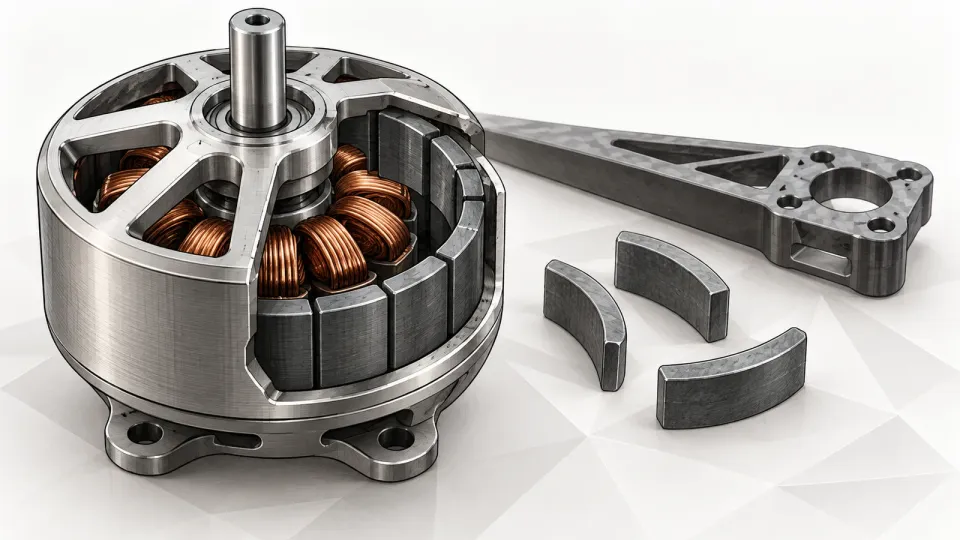
Army Picks Vulcan Elements for SkyFoundry Drone Magnets
The Army's own drone line wants fully American magnets. The supplier it chose is still building its plant, on a $620M Pentagon loan.
FCC Moves to Bar Anzu Raptor Drones Over DJI Licence
Comments close on 23 September on a proposal that would stop import and sale of a drone the maker already withdrew in February.
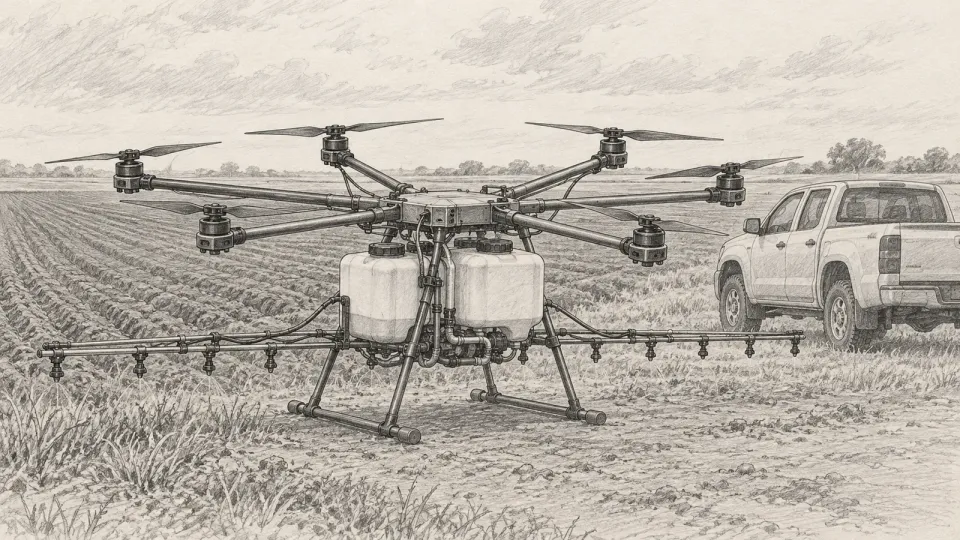
XAG Tells FCC That Banning Its Farm Drones Is Arbitrary
Eight of the nine firms in the FCC's July proposal ignored its investigators. The ninth answered, and is the only one arguing back.
Twelve States Restrict Chinese Drones for Public Agencies
Twelve states, not the six usually counted, restrict public agencies buying Chinese-made drones; Connecticut's municipal ban starts 1 October.
FCC Bars New Drones With DJI Parts From 13 October
From 13 October the FCC will refuse authorisation to any new device containing a DJI or Autel logic-bearing component, wherever the rest of it is built.
Wing Tells FCC Its Drone Rules Risk Grounding It
Wing, AUVSI and the Commercial Drone Alliance filed on the FCC's next round of Covered List rules. They split on the 65 percent US-content test.
FAA Clears 15 DJI Drones the FCC Proposes to Ban
Fifteen DJI aircraft sit on the FAA's Section 44807 approved list. Every one meets the FCC's proposed definition of a military-grade drone.

FCC Drone Ban Comment Record: 3,770 Opposed, 16 For
The FCC drone ban proposal drew 3,829 comments before the record closed on 2 September. Sixteen of them supported it.
A trade association is the fast route onto the Blue UAS list
WISPR got Green UAS certification in February and was on the Pentagon's Blue UAS Cleared List ten weeks later. Four platforms joined in 2026.

Counter-Drone Rule Expects 1,850 Agencies; 46 Are Certified
The SAFER SKIES counter-UAS rule lets US police disable drones, but only about 46 agencies are trained against the 1,850 the government expects.
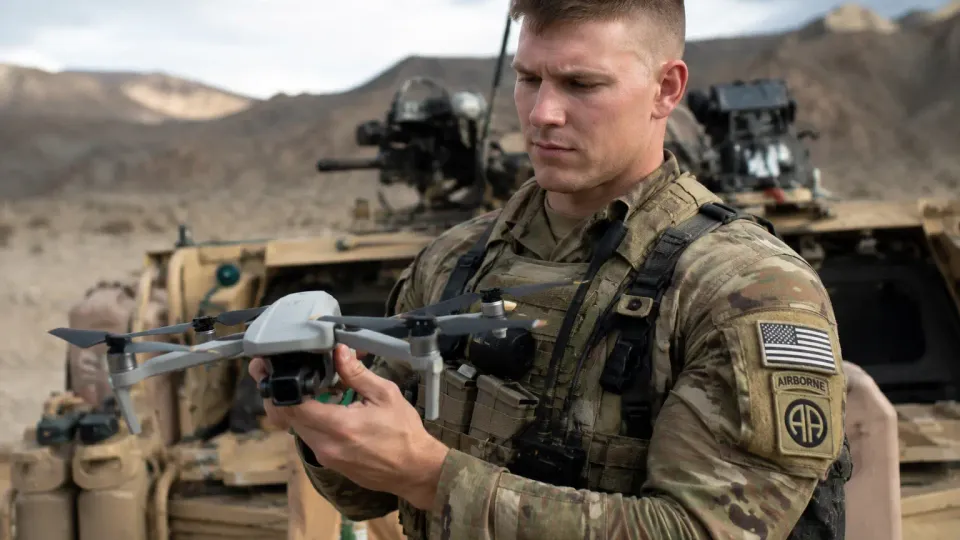
DAWG Budget, NDAA Batteries and Unusual Machines in Numbers
Trump's $53.6B Autonomous Warfare Group budget is reshaping domestic drone supply chains. Here's how four companies are responding.
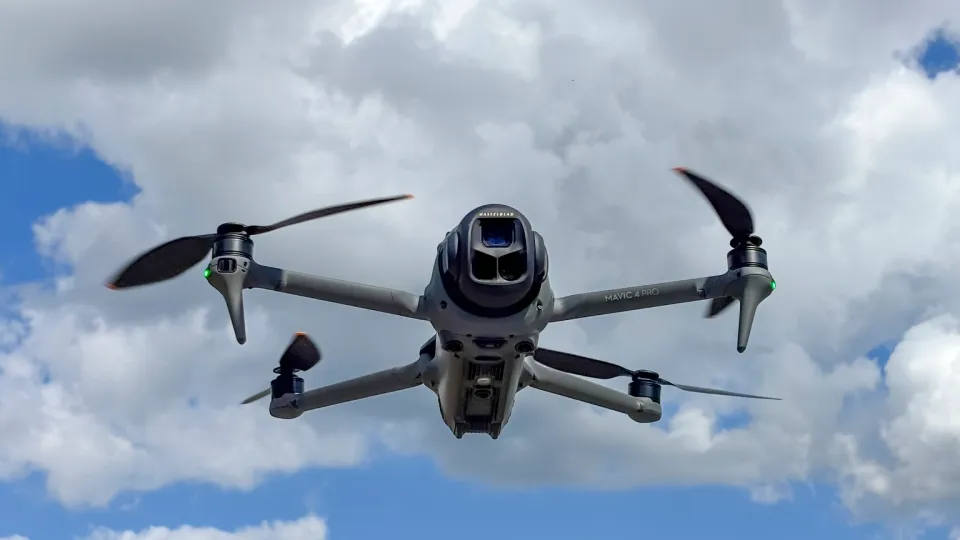
Unusual Machines Wins $5M Counter-UAS Contract with Powerus
Unusual Machines secured a $5M+ contract to supply NDAA-compliant components for Powerus counter-UAS interceptor systems.
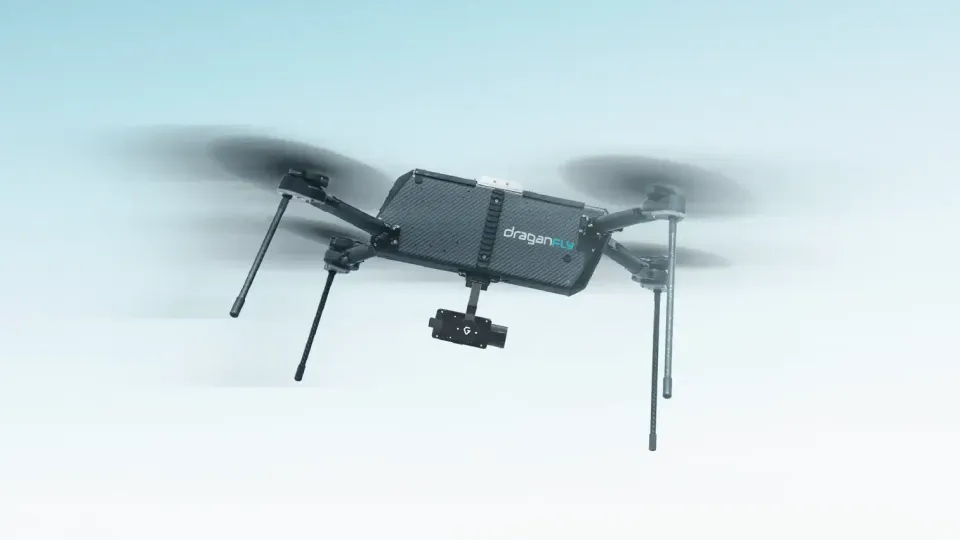
Draganfly Lands AFSOC Deal for Flex FPV Drones and Training
Draganfly secured a partnership with Air Force Special Operations Command to deliver Flex FPV drones and operator training.
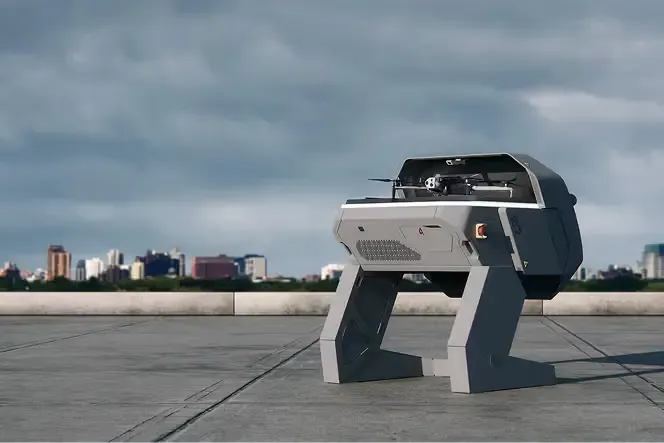
Skydio Wins $9M USAFCENT Contract for X10 Base Security
U.S. Air Forces Central ordered Skydio Dock and X10 systems to secure American airbases across the Middle East amid active Iranian drone attacks.
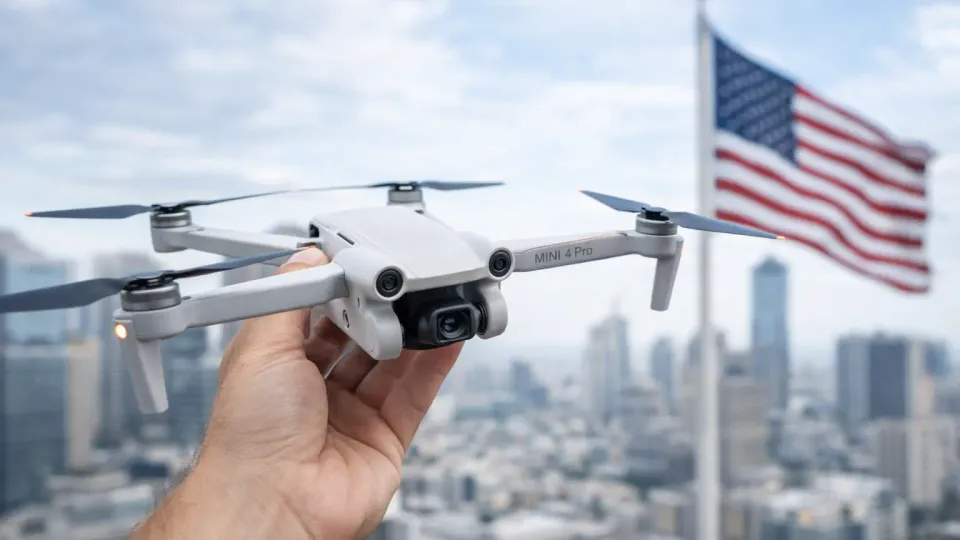
No One Is Replacing DJI in the US Consumer Market
Ten months after the FCC shut out new foreign-made drones, no American consumer drone has filled DJI's place. US makers are selling to the military.
Unusual Machines Bets on Defense Drone Manufacturing
Unusual Machines is positioning as a domestic NDAA-compliant drone component supplier as US procurement rules tighten.
Companies
DJI
Chinese private manufacturer of consumer, enterprise and agricultural drones, cameras and imaging systems.
China
Skydio
US drone manufacturer building AI-powered autonomous aircraft, supplying NDAA-compliant enterprise and defense drones to agencies and operators.
United States
Unusual Machines
US drone manufacturer and components distributor building NDAA-compliant drones and parts to cut American dependence on Chinese supply chains.
United States
Autel Robotics
Chinese drone manufacturer producing consumer and commercial UAVs, including the EVO and Dragonfish series, with a growing defense-adjacent presence.
China
Ondas Inc.
US-listed autonomous systems company that built a drone, counter-UAS and stratospheric ISR portfolio by acquisition, run as two divisions.
United States
Red Cat Holdings
US defense drone company supplying NDAA-compliant small unmanned systems for military reconnaissance through its Teal Drones subsidiary.
United States
6K Energy
US battery materials company producing domestic cathode active materials for energy storage, mobility, and defense supply chains.
United States
Anzu Robotics
US drone company that built the Raptor series under licence from DJI, now owned by XTI Aerospace and developing a replacement after ending production.
United States
Products
DJI Matrice 400
DJI
DJI's heavy-lift flagship: 59 minutes with a thermal camera fitted, a 6 kg payload, 40 km of link and a LiDAR-and-radar sensing set no rival matches at the price. Barred from federal buyers, and since September its import carries 25 percent duty, with 100 percent on the thermal payload.
Autel EVO Max 4T V2
Autel Robotics
The other Chinese thermal drone American public safety bought: a 640 × 512 thermal, a 10x optical zoom, a 1.2 km rangefinder and radar-backed obstacle sensing in a 1.7 kg folding airframe, for about $2,000 less than a Matrice 4T. Autel is named on the FCC Covered List and the aircraft draws 100 percent import duty.
DJI Matrice 4E
DJI
The mapping half of DJI's Matrice 4 series: a mechanical-shutter 20 MP Four Thirds camera, two 48 MP telephotos, a laser rangefinder and 49 minutes in a folding airframe. No thermal camera, which keeps it in the lower tariff band, and still barred to federally funded buyers.
DJI Matrice 4T
DJI
The compact enterprise drone the Mavic 3 Thermal buyers moved to: three cameras, a 640 × 512 radiometric thermal, a laser rangefinder and 49 minutes in a 1.4 kg folding airframe. Barred from federal buyers and, since September, taxed at 100 percent on import.
Skydio X10
Skydio
A serious U.S.-made enterprise platform built around autonomy, sensors, and government-grade deployment rather than mass-market volume.
Black Hornet 4
Teledyne FLIR
A 70-gram reconnaissance helicopter a single soldier carries and flies, bought by the US Army since 2018 and sold to forces in more than 45 countries.
Funding
Contracts
Government of Canada
AVSS, Volatus Aerospace, Draganfly, Objexis AI, Twenty20 Insight, Beonyx
First contracts under the Defence Drone Initiative Marketplace: up to C$50 million across six…
Japan Acquisition, Technology & Logistics Agency
Red Cat Holdings
173 Black Widow sUAS systems, each with two aircraft and a ground control station, for the Japan…
Powerus
Unusual Machines
Supply contract from Autonomous Power Corporation (Powerus) for US-manufactured components for…
U.S. Air Force
Skydio
Order from U.S. Air Forces Central for Skydio Dock and X10 autonomous drone systems to provide…
U.S. Army
Skydio
Order of more than $52 million for over 2,500 X10D drones, described as the largest single-vendor…