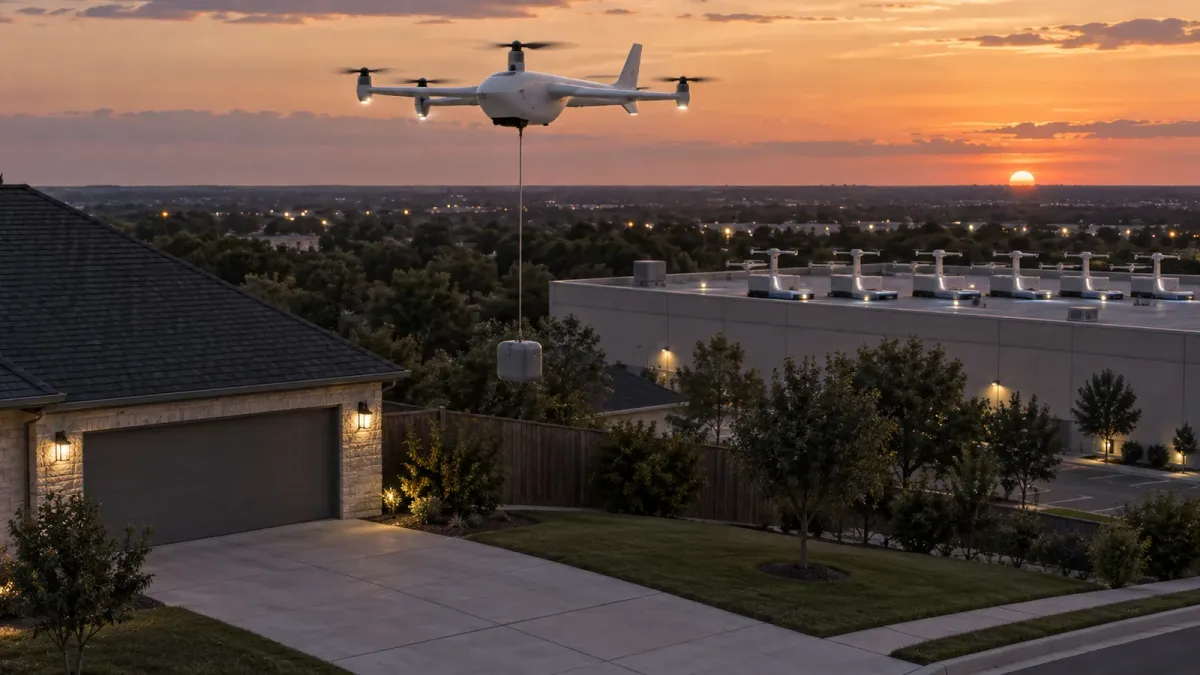

Twelve Amazon drones made 6,000 trips out of the company’s Papillion warehouse near Omaha across July and August, the Flatwater Free Press reported on 10 September. That is roughly a hundred flights a day from a site Amazon counts as one of eleven.
David Carbon, the vice president who runs Prime Air, told staff at an internal meeting in March that the programme would make a million deliveries this year. CNBC obtained a recording. On 19 August Amazon said it had made hundreds of thousands of deliveries so far in 2026, and thousands a day.
Those two numbers do not meet. A hundred flights a day, sustained at all eleven sites for a full year, is a few hundred thousand — which is roughly what Amazon says it has done, and well short of what Carbon told the room in March.
Why the map matters more than the site
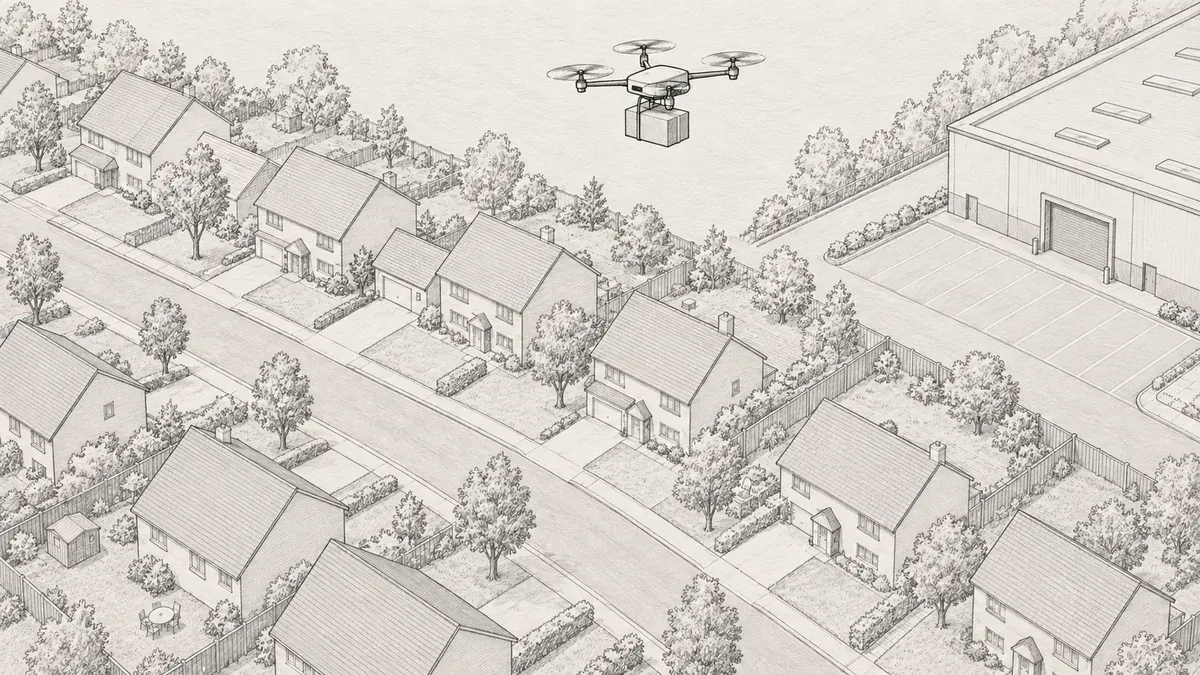
Amazon’s answer is width. It said in August that Prime Air will operate in nearly 500 US cities and towns by the end of the year, a sixfold increase, with each site covering about 175 square miles.
The constraint is the aircraft. The MK30 carries five pounds within 7.5 miles of the building it launches from, and Papillion charges Prime members $2.99 for orders under $50. Adding cities adds addresses in range; it does not make any one drone busier.
Alphabet’s Wing passed a million commercial deliveries earlier this year across 20 US markets, mostly through Walmart and DoorDash. Zipline has made two million across four continents. Both attached themselves to shopping people were already doing.
What the regulators are still looking at
Two Amazon drones hit a crane in Tolleson, Arizona last October. The National Transportation Safety Board investigation is still open, and the FAA opened its own.
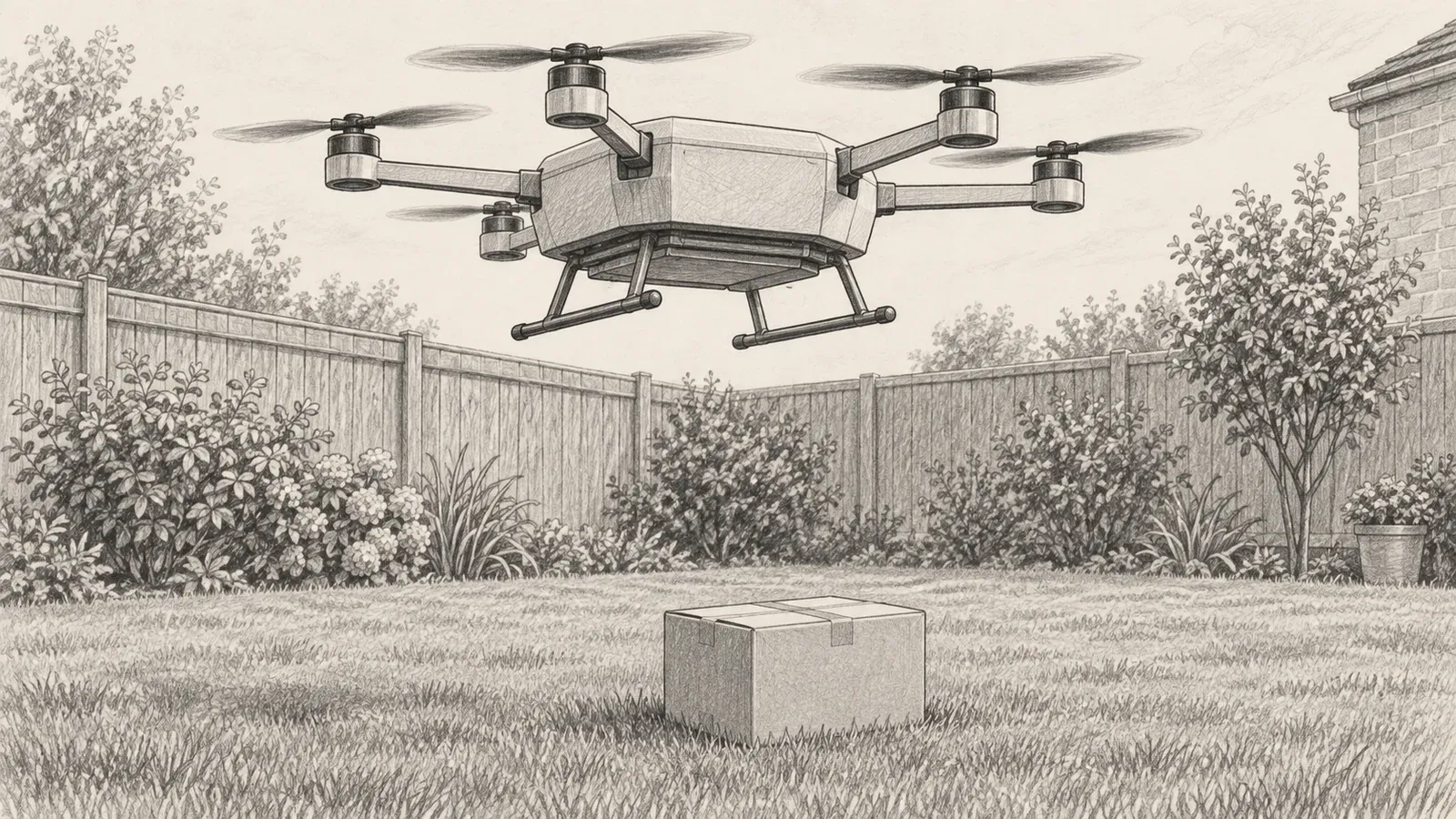
Carbon addressed the crashes at the March meeting. “We trained our algorithms, we felt pretty good,” he said, but real-world performance “just wasn’t good enough” — “that was a humbling experience”. A second FAA inquiry followed a drone snapping an internet cable in Waco in November, and Britain’s Air Accidents Investigation Branch opened a file in August after a Prime Air aircraft came down in a garden in Darlington.
On the ground in Papillion the objection is not safety. Bryan Patel, a vice president of Teamsters Local 554, told the Flatwater Free Press he views the drones as “corporate greed”, in a metro area with about 2,350 delivery drivers. Lieutenant Kurt McClannan of the Papillion police said his department’s worries eased after a visit to the fulfilment centre, and that Prime Air cleared its airspace when officers needed to map a crash scene.
Amazon is testing a tether that lowers packages instead of dropping them from 13 feet, which Carbon said would let the drones carry eggs and other fragile goods. Wing and Zipline already deliver on a winch.