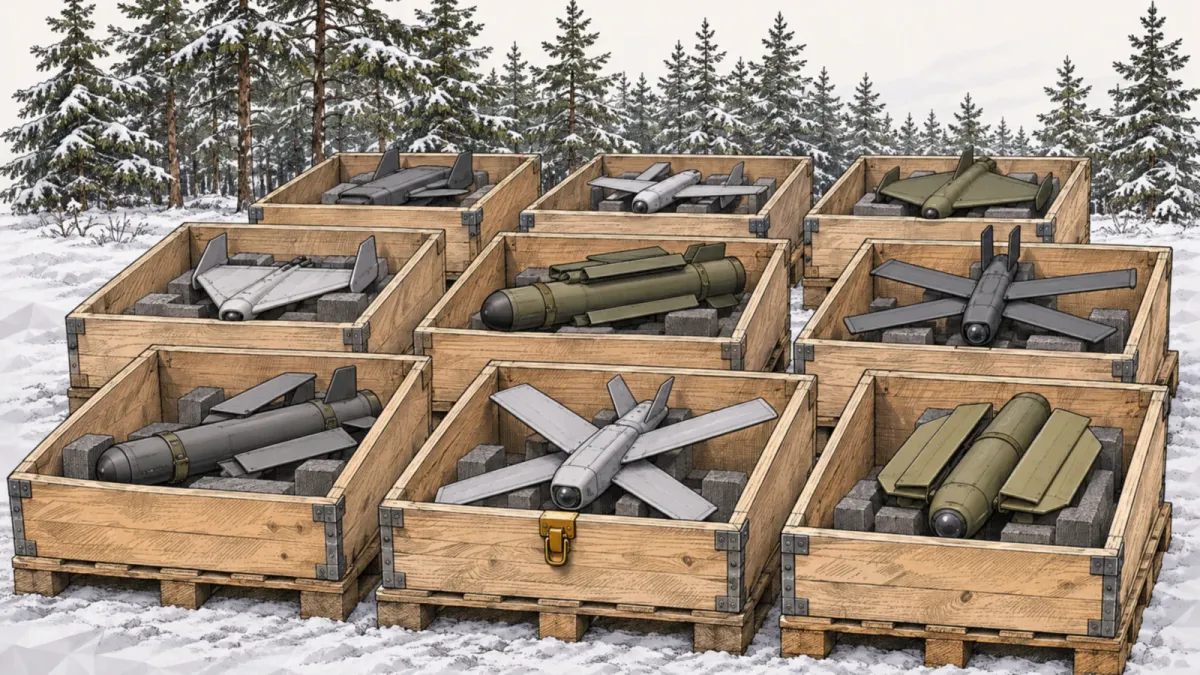

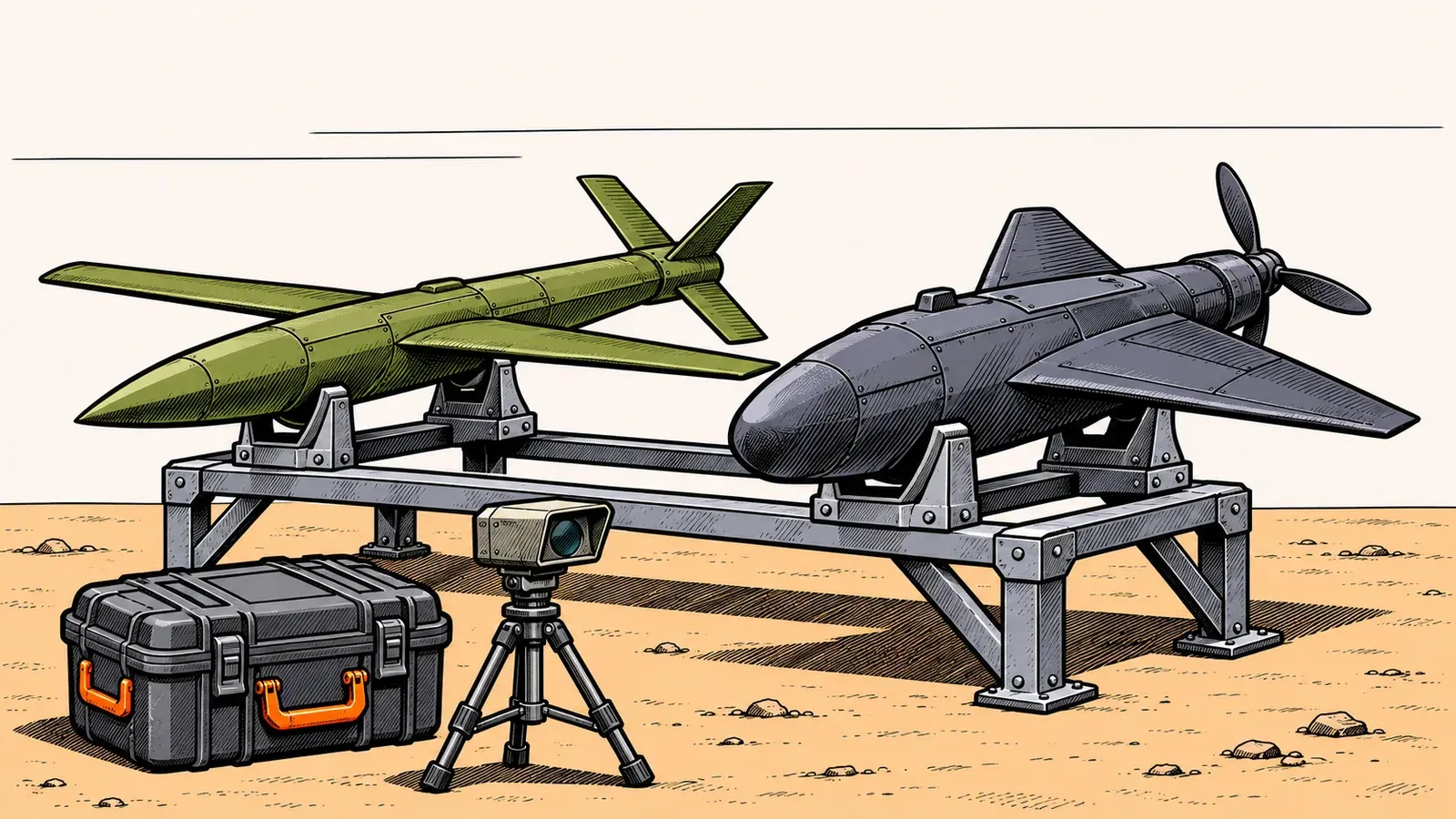
Helsing’s HX-2 and Stark’s Virtus loitering munitions passed live-warhead tests for the Bundeswehr in mid-November, the German armed forces’ procurement office said on 19 November. Germany’s first orders for the two systems are worth about €270 million each, according to ESUT’s report of the Bundestag committee papers.
The tests ran in the week of 9 November, mostly at the Bundeswehr’s weapons and munitions test centre in Meppen, Lower Saxony. The office said the point was to prove the whole system works: that each drone reliably hits a set target and that its warhead functions as intended once it gets there.
Not yet qualified
The office called the result an important part of the systems’ qualification, which it said is still under way. Passing it is a precondition for the first training with the drones, which the office wants to start this year. First deliveries are due in 2026, and Panzerbrigade 45, the German brigade being built up in Lithuania, is to be the first large unit equipped, from 2027.
The army’s Lithuania brigade began its largest exercise yet on 17 November, about 3,800 soldiers from eight NATO countries at the Rūdninkai training area. The army said on 6 November that new loitering munitions would be tested in the exercise’s final six days, for the first time.
Why the qualification step carries money
The Bundestag budget committee approved the two frameworks on 25 February, and the Bundeswehr signed with Helsing and Stark the next day. Each framework runs seven years and is capped at €1 billion, ESUT reported. The first call-offs cover 4,300 HX-2 and 2,200 Virtus. The committee will approve further call-offs only after the systems qualify.
The procurement office said on 19 November that the contracts let development, testing, qualification and preparation for use run partly in parallel, with set cancellation criteria and clauses for adding innovations. Under those terms the Bundeswehr can drop a maker whose drone fails to prove itself.
The HX-2’s earlier test
For Helsing the step follows a bad report. In January Germany and Ukraine suspended further HX-2 orders for Ukraine after an internal German army assessment reported aircraft that failed to take off and lacked promised guidance features. Helsing rejected the findings. Five weeks later, the budget committee approved the Bundeswehr’s own HX-2 purchase.
The orders for Ukraine had been large: Germany financed 6,000 HX-2 from military aid, announced by Helsing in February 2025. How many were delivered before the pause has not been published.
The 19 November statement says both drones hit their targets with live warheads. It gives no hit rates and no number of shots for either.