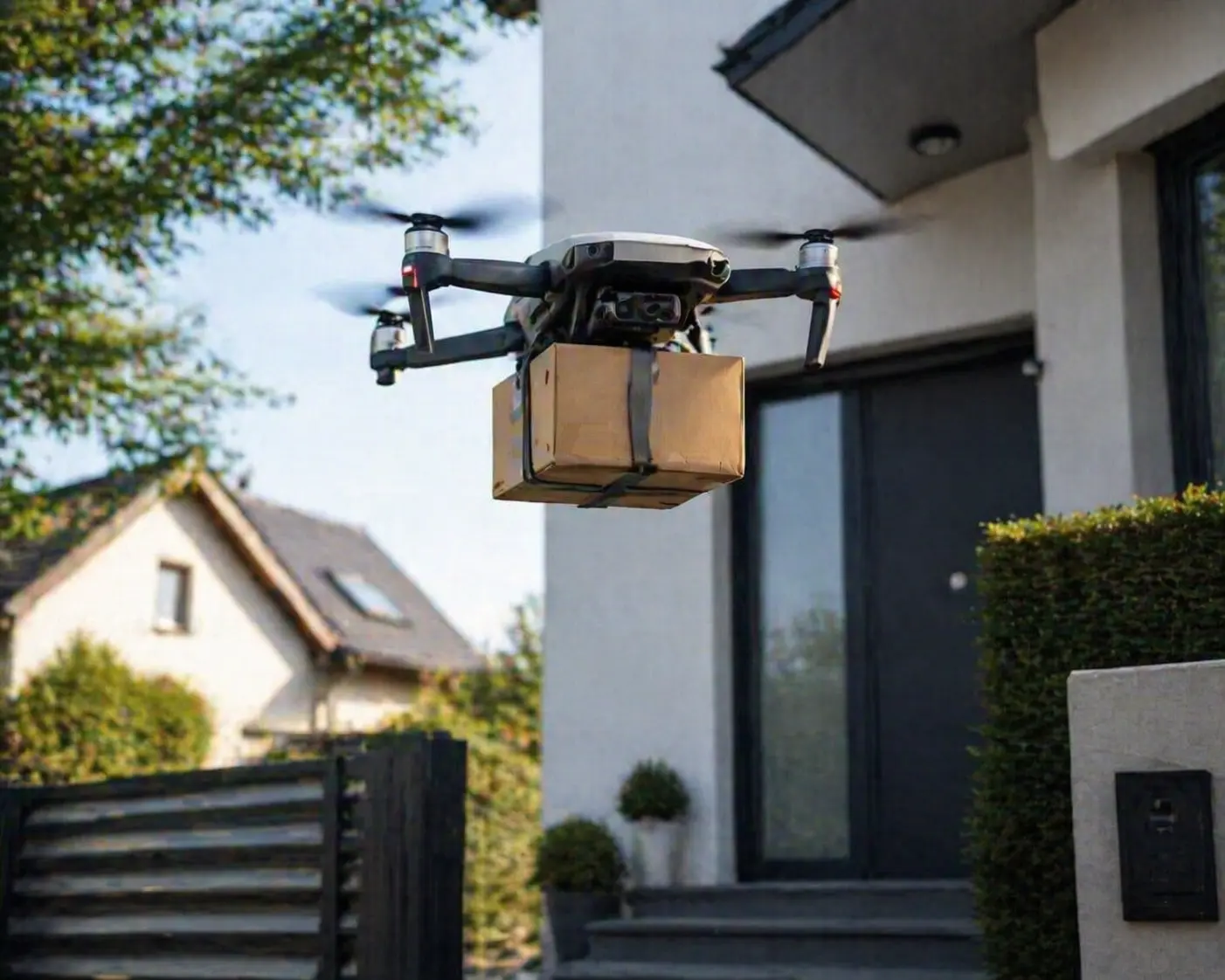

The Federal Aviation Administration signed a national environmental finding on 28 July that lets it authorise drone delivery operations without a separate environmental review for each site. Amazon says Prime Air will reach nearly 500 American cities and towns by the end of this year, six times its current footprint.
The finding covers Part 135 package delivery nationally. The FAA concluded the operations would not significantly affect the quality of the human environment, provided operators apply the noise mitigation the assessment identifies, and said it will use the document to meet its obligations on subsequent authorisation requests. Where an operator wants to exceed what the assessment analysed, the agency supplements it with a further document rather than starting again.
Before that, each hub needed its own review. The FAA has completed more than twenty of them for individual proposals. Now it has one.
In Baton Rouge the change arrived as sound. Residents of the Broadmoor subdivision, near Amazon’s site at the former Cortana Mall, told local station KNOE on 9 September that drones pass every two to five minutes.
“They are definitely loud enough for us to hear in the house,” said Michael Grabert, who lives there. Laurie Chapel, in nearby Goodwood, said the newer aircraft are quieter but still audible: “you hear this buzzing sound.”
Tyra Jones, a Prime Air supervisor, told the station the noise at delivery “shouldn’t last more than 30 seconds” and that the current model is half as loud as its predecessor. Asked whether Amazon had considered routing the drones over roads rather than houses, Jones said it had not. Twenty aircraft operate from the site, with ten allowed airborne at once.
Where the objections went
Seventeen state attorneys general and one Texas county filed against the draft assessment on 23 January. Their letter called it a largely symbolic paper exercise and argued it dismissed the risks it was written to examine, among them smoke and fire from failed lithium batteries. California’s Rob Bonta was among the signatories.
Washington and New York had asked for a 45-day extension to the comment period. The FAA gave 15 days, moving the deadline from 8 January to 23 January, and issued the finding in July.
Under the statute governing review of FAA orders, a challenge goes to a federal court of appeals within 60 days. For a finding signed on 28 July, that is 26 September.
What a city can still refuse
Airspace is federal. The ground under it is not, and that is the part local government still controls.
Garland, Texas wrote drone delivery hubs into its development code in April 2025, and the definitions are specific. A small hub, meaning aircraft under 55 pounds at takeoff, must sit at least 150 feet from a residential dwelling. A large hub must sit 300 feet away and may only go in an industrial zone. Both need a special use permit. City staff summarised the division plainly: once a drone is airborne the FAA has jurisdiction, and the staging area on the ground is the city’s.
Belvedere, California is weighing a conditional use permit requirement that would confine delivery facilities to mixed-use zones. Richardson, Texas has taken dozens of complaints about noise, frequency and altitude since deliveries began there in December 2025. Ferndale, Michigan is working out what it can do at all.
FlightBrief analysis: a hub that fits in an existing parking lot may never trigger a zoning hearing, which is the gap in this. The rules Garland wrote apply to a building somebody proposes. They do not obviously apply to a company parking a van and a launch pad on asphalt it already leases, and no city in this group has tested that.
Amazon’s target is a count of cities, not of hubs, and each city is its own council with its own code. The attorneys general have until 26 September to take the finding to court.