

The FCC’s proposal to stop the import and sale of foreign drones carrying thermal cameras, LiDAR or docking stations drew 3,829 comments before the record closed at midnight on 2 September. Sixteen of them support it.
Greg Reverdiau of Pilot Institute read and coded every filing, including 686 attachments and 22 scanned letters run through optical character recognition. Of the 3,824 that contained readable text, he counted 3,770 against the prohibition as written. That is 98.6 percent.
The proceeding is PS Docket 26-189, opened on 21 July by the FCC’s Public Safety and Homeland Security Bureau together with its Office of Engineering and Technology. It would bar continued importation and marketing of foreign-produced drones and critical components already on the Covered List where they qualify as “military-grade”, and give affected sellers 180 days to stop.
Seven ways to be military-grade
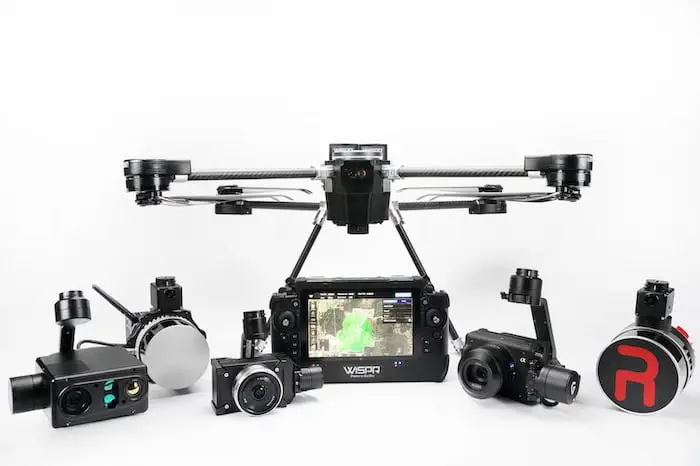
The notice defines the term by capability rather than by buyer. A drone qualifies if it weighs 55 pounds or more at takeoff, carries spray equipment covered by the FAA’s economic poison rules, carries a thermal imaging sensor, carries LiDAR, uses a docking station, integrates an item from Category VIII of the US Munitions List, or is built to fly in a swarm.
Four of those seven describe equipment a county fire department already owns. Of the 1,584 filings that engaged with the definition, 1,575 called it overbroad. Five called it adequate.
The Ohio Law Enforcement Drone Association told the commission that thermal imaging and LiDAR are “dual-use technologies employed every single day” in lawful, life-saving work. Boulder Emergency Squad put it more bluntly: a thermal sensor on a three-pound aircraft “is not a military capability”.
The swarm category caught an industry nobody appears to have considered. James Vautin, founder and chief pilot of Illuminaero, wrote that light show aircraft fly trajectories “computed before takeoff” and played back under satellite positioning — choreography, not coordinated autonomy. Anthony LaRosa of Aerial Vision Chicago wrote that the definition “can reach technology that also has ordinary civilian uses”.
The money question went 1,701 to one
Of the filings that addressed economic impact, 1,686 described severe harm. One agreed with the bureaus that the effect would be minor and contained. The median dollar figure operators put on the damage was $16,000. Phoenix Drone Pros said replacing its fleet would cost “200% of my annual revenue”.
The filers were not mostly companies. Reverdiau’s breakdown counts 1,217 individual remote pilots, 1,068 commercial drone-service firms, 298 public-safety agencies, 215 media and film operators and 175 in agriculture. On the 180-day compliance window, 443 filings engaged and 439 asked for longer.
What DJI told the commission
DJI filed 26 pages on the closing day, signed by Travis LeBlanc, who ran the FCC’s own Enforcement Bureau under President Obama, and Elizabeth Prelogar, the 48th Solicitor General of the United States. Both are now partners at Cooley.
Their argument is that the seven categories appear in no national security determination, were endorsed by no national security agency, and were written by the two FCC sub-bureaus that issued the notice. “An agency cannot outsource its analytical obligation to the public it proposes to regulate,” the filing says. DJI separately disputes that drones are communications equipment under the Secure and Trusted Communications Networks Act at all.
That question is already before the Ninth Circuit, where DJI petitioned for review of the December Covered List decision on 20 February as case 26-1029. In an April brief the company put its 2026 losses at roughly $1.56 billion and said 25 planned US product launches were blocked. Those are DJI’s figures, filed by DJI, and no court has tested them.
DRONERESPONDERS asked on 24 August to move the comment deadline to 30 September, and the Commercial Drone Alliance backed the request two days later. The bureaus refused, saying national security required them to act “as expeditiously as possible”. They can issue an order at any time, and have not said when.
The way out of all of this, for a buyer who needs a thermal camera and a dock, is a platform on the Blue UAS Cleared List. That exemption, and the parallel one for products meeting the Buy American domestic content test, expires on 1 January 2027.