
From 13 October the FCC will refuse an equipment authorisation to any new device that contains a logic-bearing component made by DJI or Autel, regardless of who assembled the rest of it or where. The rule was adopted on 22 July, published in the Federal Register on 11 September, and takes effect 30 days later.
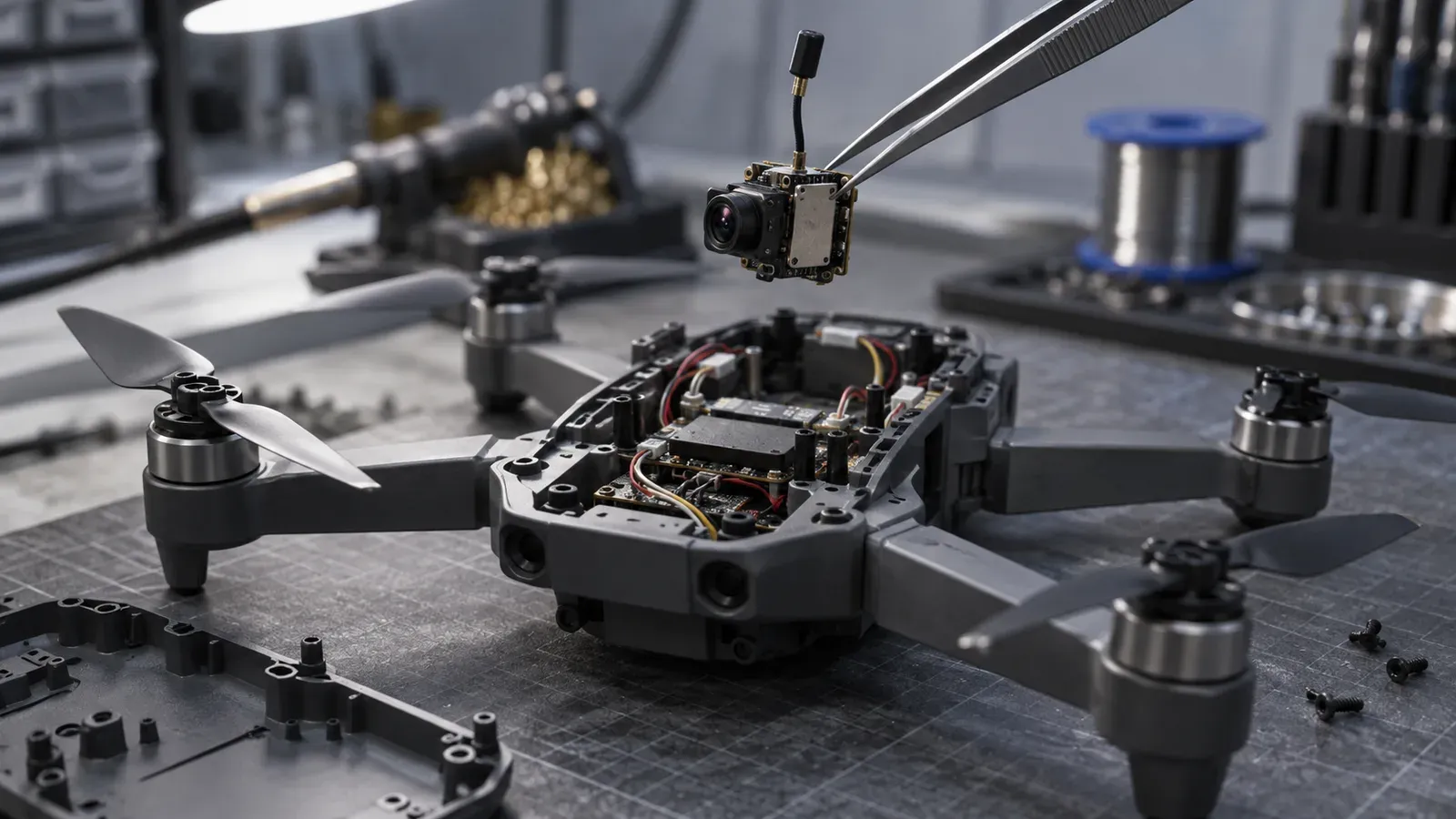
Until now the Covered List has worked at the level of the finished product. A drone DJI makes cannot be authorised; a drone someone else makes with a DJI camera module inside it could be. The FCC calls that the component-part loophole, and the Third Report and Order closes it for any part that “generates and uses timing signals or pulses at a rate in excess of 9,000 pulses per second and uses digital techniques”, or that uses radio-frequency energy to compute, store or move data. Housings, fasteners, resistors, wiring and plain battery cells are excluded. Software and firmware are not covered; the FCC declined to extend the rule to them “at this time”.
The prohibition is prospective. Anything authorised before 13 October stays authorised, and an application already pending on that date is safe unless it is later amended to change a component.
Which entries it reaches
The distinction that matters is between the two kinds of entry on the Covered List. DJI and Autel are on it by name, through Section 1709 of the FY2025 NDAA, so their parts trigger the new rule. “UAS and UAS critical components produced in a foreign country”, the entry added on 22 December 2025, is a place-of-production entry, and the FCC says the component rule “does not apply” to those unless the producer is also named. A flight controller from an unlisted Shenzhen supplier inside a US-assembled drone is treated as it was before. A DJI transmission module in the same drone is not.
That cuts across the exemptions US makers have been building around. A drone assembled in the United States that qualifies as a domestic end product under the Buy American standard is exempt from the foreign-production entry until 1 January 2028, as is anything on the Blue UAS Cleared List. Neither exemption reaches a named-producer component. After 13 October a domestic end product with a DJI part in it cannot be authorised at all.
DJI opposed the related tightening of the modification rules, telling the FCC that a blanket ban would block “important safety updates that ensure products can continue to be operated safely”. The order says those concerns are handled by waiver, and the existing waiver letting already-authorised covered drones receive software and firmware updates runs to 1 January 2029. In the notice attached to the order the FCC proposes to make that permission permanent.
Amazon has until 1 March
The same order rewrites the marketing rules for online marketplaces. Listing a device for sale while providing warehousing, fulfilment or billing now counts as “distribution for the purpose of selling”, and a marketplace that markets an unauthorised device is liable “without a willfulness or knowledge element”. The FCC pointed to the retail industry’s own evidence against it: the National Retail Federation had argued platforms cannot check compliance across millions of listings, while noting that Operation Clean Carts had removed three million illegal-device listings in six months.
Marketplaces must also show a certified device’s FCC ID at the point of sale. Those that hold the stock or take title, which covers Amazon’s own inventory and its fulfilment business, must display a valid ID by 1 March 2027. Those hosting third-party listings they never touch must verify the ID is real and make the seller certify it, by 1 June 2027. Used goods, small sellers under the INFORM Consumers Act definition and listings posted before 13 October that are never edited are exempt. eBay had told the FCC that 40 percent of its sales are used or refurbished goods.
The Agricultural Drone Initiative, a coalition of US sprayer makers and operators, told the FCC in its 8 September comment that the ID requirement is “de minimis” and that agricultural platforms the FCC has already acted against “appear to have already been rebranded under a new name and sold at steep discounts”. It asked that drones over $10,000 lose the grandfathering for old listings within 30 to 90 days.
One page has not caught up. The FCC’s own Covered List FAQ for drones, dated 21 July, still says the Blue UAS exemption “terminates on January 1, 2027”; the Covered List it sits beside was updated the same day to 1 January 2028. Reply comments on the further notice, which proposes bills of materials for every certification applicant and a ten-year term limit on authorisations, are due 28 September.