

Blue UAS
Blue UAS Cleared List 2026: Every Approved Drone Platform
What the Blue UAS Cleared List covers, how a drone gets on it, why platforms come off, and every aircraft on the DCMA list in October 2026.
Updated
8 news articles on Blue UAS ↓
Every manufacturer on the Blue UAS Cleared List
Forty-three manufacturers and the 74 aircraft listed under them on the official DCMA Blue List, read on 8 October 2026.
Checked· Latest addition: Skydio,
- Covers
- Every aircraft on the DCMA Blue UAS Cleared List, as the official portal showed it on the check date.
- Leaves out
- Components, which are on the Framework List. The portal changes between checks, so confirm there before buying.
Spotted an error? Email [email protected] with the row and the document that shows it.
43 of 43
Notes
- Skydio Skydio announced on 23 July 2026 that the X10, R10 and Dock for X10 had joined the X10D; the official list dates the X10 and R10 8 July 2026 and does not carry the Dock. The two X2D variants are listed from August 2022. Source
- Red Cat / Teal Drones The official list carries Teal Drones and Red Cat as separate makers; Teal is Red Cat’s subsidiary. It dates the Fang F7 14 October 2025 and the Black Widow 7 April 2026. The Teal 2 was $15,073 on the GSA schedule in DHS’s 2025 assessment. Source
- Parrot The official list dates both ANAFI USA entries 25 August 2022 and both ANAFI UKR entries 9 April 2025. Trade reports of the March 2025 refresh had named Parrot among the vendors removed; the official list shows the ANAFI USA still on it. Source
- AeroVironment The IE-V2 is the former BlueHalo Intense Eye, listed since 3 November 2022; the Red Dragon since 4 August 2025. Pricing not publicly disclosed. Source
- American Robotics (Ondas) Ondas announced the Optimus’s listing on 28 January 2026; the official list names the maker as American Robotics and shows 10 July 2026, a portal re-entry date. Drone-in-a-box for national security and critical infrastructure inspection. Source
- Anduril Industries Ghost/Ghost-X is listed from 29 May 2024; a second “Ghost” entry carries the 10 July 2026 portal re-entry date. Runs Anduril’s Lattice software, modular payloads, Group 1 and 2 missions. Pricing not published. Source
- Ascent AeroSystems (Robinson Unmanned) Coaxial airframe for constrained spaces. The official list dates the Spirit 19 August 2022 and repeats it as “Ascent Spirit” with the 10 July 2026 re-entry date. Trade reports had it off the list after the early-2025 refresh; in September 2025 Ascent said Spirit holds a Cleared List designation. Source
- Auterion On the official list since 20 October 2025. Source
- Colsa On the official list since 3 March 2026 (CDS-100 Crest) and 5 May 2026 (CDU-300 Talon). The Crest is listed a second time with the 10 July 2026 re-entry date. Source
- EagleNXT (AgEagle) Dropped in the early-2025 refresh, as DroneXL reported in March 2025. AgEagle announced the eBee VISION’s clearance on 22 July 2025; the official list dates it 17 July 2025, the eBee TAC 19 August 2022, and the Plaber 10 July 2026, a re-entry date. The US Army has since ordered eBee VISION units built in Allen, Texas. Source
- Easy Aerial The official list dates the Osprey 19 January 2024 and the Sparrow 9 September 2025. DIU selected the Sparrow for review in its February 2025 refresh. Official record
- EchoMAV On the official list since 5 May 2026. Source
- Edge Autonomy Fixed-wing VTOL for persistent tactical ISR. Parent company Redwire announced the addition in July 2025; the official list dates it 19 February 2026. Redwire Defense has its own entries, below. Source
- FlightWave Aerospace Systems Listed in July 2024, per DHS; the official list now shows the 10 July 2026 re-entry date. 125 minutes endurance, 100 km/h cruise, tool-free payload swapping. Official record
- Freefly Systems The official list carries the Alta X Blue Package, dated 18 August 2022, and no Astro. Freefly’s own page says the reverse: that the Astro was reaffirmed in the 2025 refresh and the Alta X left on 28 February 2025 for the AUVSI Green List. Source
- Harris Aerial On the official list since 5 June 2026 (all three Carrier H6 variants). Source
- Heven Aerotech On the official list since 19 February 2026. Heven announced Blue UAS Select status for the Z1 in November 2025, granted through its subsidiary Zepher Flight Labs. Source
- Hoverfly Technologies Tethered, unlimited flight time on ground power, up to 3.6 kg payload. Hoverfly announced the Spectre in February 2025; both entries now show the 10 July 2026 re-entry date. Source
- Hylio Listed on the official portal; its 10 July 2026 date is a portal re-entry date, not a clearance date. Source
- Inspired Flight The company said its systems were removed in the March 2025 refresh and moved to AUVSI’s Green UAS list. The official list carries both aircraft, dated 19 January 2024. Source
- Kraus Hamdani Aerospace Long-endurance tactical platform; the company announced it in September 2025 on both the Cleared List and the Blue UAS Select list, and the official list dates it 4 August 2025. Specifications not publicly disclosed. Source
- ModalAI ModalAI announced the Seeker and Stinger Vision FPV additions in August 2025. The official list dates the 7-inch Seeker 29 August 2025; the other three show the 10 July 2026 re-entry date. Built on the VOXL autonomy stack. Source
- Mountain Horse Solutions Built with Rotron Aerospace and announced by Mountain Horse in August 2025 as the Talon DT-300 Drone Plus. The official list dates it 12 August 2025. Source
- Neros Technologies Archer/Archer Fiber is listed from 14 February 2025; the two Block entries show the 10 July 2026 re-entry date. Up to 160 km/h; the Archer Fiber uses fibre-optic tethering for EW-hardened data links. Source
- PDW (Performance Drone Works) 74 minutes on an ISR payload, 6.8 kg payload capacity, 10 km range. Source
- Perennial Autonomy Listed on the official portal; its 10 July 2026 date is a portal re-entry date, not a clearance date. Source
- Purple Rhombus On the official list since 21 April 2026. Source
- Quantum Systems Listed under two names: the Vector AI as Quantum-Systems Inc. on 19 February 2026, the Trinity Pro as Quantum Systems on 24 April 2026. Quantum Systems announced the Vector’s addition in August 2025. German manufacturer; allied-nation manufacture satisfies the covered foreign country exclusion. Source
- Redwire Defense Listed on the official portal; its 10 July 2026 date is a portal re-entry date, not a clearance date. Redwire is Edge Autonomy’s parent; the VXE30 Stalker is on the Edge Autonomy row. Source
- Renegade UxS FPV and attritable category, listed in analog and digital configurations. The official list dates it 25 November 2025. Source
- Shield AI VTOL fixed-wing, over 10 hours endurance, maritime and persistent ISR. Reuters put it at about $1 million each in June 2026. Source
- Sky-Watch On the official list since 8 July 2026. Source
- Skyfish On the official list since 5 May 2026. Not the Easy Aerial Osprey. Source
- Skyfront Hybrid gasoline-electric octocopter for long endurance and heavy lift, not tethered: Skyfront states five hours on stock tanks, 10 kg payload for one hour or 5 kg for three. Corrected 20 September 2026 after Skyfront’s Brian Maxwell wrote in; the row had called it a tethered surveillance aircraft. Source
- Teledyne FLIR Nano sUAS, carried and launched by an individual soldier. Teledyne FLIR announced the clearance in June 2025; the official list shows the 10 July 2026 re-entry date. Source
- Thunder Tiger Corporation On the official list since 19 September 2025. Taiwan’s Central News Agency reported the clearance on 22 September 2025. Source
- Titan Dynamics Listed on the official portal; its 10 July 2026 date is a portal re-entry date, not a clearance date. No manufacturer announcement has been found. Source
- Vector Added February 2026 via the AUVSI Green UAS route, which since July 2025 grants automatic eligibility; the official list dates it 19 February 2026. Already deployed under a multi-year US Special Operations Command contract. Source
- Vantage Robotics The official list dates the Vesper 19 February 2026. Vantage said the Trace was cleared in July 2025; the list shows it with the 10 July 2026 re-entry date. Source
- Wingtra Wingtra told customers it was delisted in the early-2025 refresh. The official list carries both aircraft, dated 19 February 2026. Source
- WISPR Systems WISPR announced the listing in April 2026 after AUVSI Green UAS certification in February 2026; the official list shows the 10 July 2026 re-entry date. AES-256 encrypted links, US design and assembly. Source
- Zone 5 Technologies Tactical platform. On the official list since 5 March 2025. Source
- 3DR Listed on the official portal; its 10 July 2026 date is a portal re-entry date, not a clearance date. Source
Where this comes from. Read by FlightBrief from the official DCMA Blue List portal on 8 October 2026: its Blue List Products table held 75 entries under 45 manufacturer names, counted here as 43 manufacturers because Quantum Systems appears under two names and Teal Drones shares a row with its parent, Red Cat, and as 74 aircraft because one Colsa entry is listed twice. Platform names are the portal’s own. Manufacturer announcements are linked on the rows that have one. The portal dates 22 entries 10 July 2026, including aircraft cleared years earlier, so that date is treated as a re-entry in the portal and never as the date a product was cleared; Added dates come only from the portal’s other dates or from manufacturer announcements. Primary market normalises the guide’s descriptions and is our reading, not a DoD category. The list changes as platforms are added; check the DCMA portal before committing to a purchase.
Sources
- DCMA Blue List portal (ServiceNow), Blue List Products table, read 8 October 2026
- Defense Innovation Unit, Blue UAS Cleared List page, which now points at the DCMA portal
- Defense Innovation Unit, DIU’s Blue UAS list to transition to DCMA, 3 December 2025
- Defense Innovation Unit, Blue UAS Refresh List: Framework platforms and capabilities selected, 14 February 2025
- DHS Science and Technology, SAVER Blue UAS for First Responders market survey (products on the list in July 2024), February 2025
- Manufacturer announcements of additions, linked on rows that have one
Cite or reuse this table
FlightBrief, “Every manufacturer on the Blue UAS Cleared List”, checked Oct 8, 2026, https://flightbrief.news/topics/blue-uas/#dataset-blue-uas-roster
Free to reuse, including commercially, under CC BY 4.0. Credit FlightBrief and link to this page.
Every component on the Blue UAS Framework
The 245 flight controllers, radios, GPS modules, cameras, ground stations and other parts on the official DCMA Framework List, read on 9 October 2026.
Checked· Latest addition: Silvus Technologies,
- Covers
- Every component on the DCMA Blue UAS Framework List, as the official portal showed it on the check date.
- Leaves out
- Whole aircraft, which are on the Cleared List. A part’s listing does not clear the aircraft it goes into.
Spotted an error? Email [email protected] with the row and the document that shows it.
245 of 245
| Manufacturer | Component | Category |
|---|---|---|
| Silvus Technologies | StreamCaster Radio | Datalink & radio |
| Southwest Antennas, Inc | UAV Antenna | Datalink & radio |
| Silvus Technologies | StreamCaster 4240 | Datalink & radio |
| Silvus Technologies | SC4200 Dual Band Radio | Datalink & radio |
| Skydio, Inc. | Skydio Controller 2 MH | Ground control & software |
| Skydio, Inc. | Skydio Controller 2 | Ground control & software |
| Envision Technology LLC | NDAA Compliant MINI GPS UBLOX MAX M10S | GNSS & navigation |
| Envision Technology LLC | Heavy Lift Platform | Airframe & power |
| Envision Technology LLC | FPV VTX GOGGLE KIT, ORQA | Ground control & software |
| Envision Technology LLC | FPV CONTROLLER KIT, TANGO 2 PRO | Ground control & software |
| Envision Technology LLC | ASSEMBLY, PAYLOAD HANGER | Airframe & power |
| Envision Technology LLC | ASSEMBLY, KRAKEN ATTACHMENT, SDFD LV | Airframe & power |
| Envision Technology LLC | ASSEMBLY, 40MM VTX MODULE, SIONYX | Datalink & radio |
| Envision Technology LLC | ASSEMBLY, 40MM VTX MODULE, QUARK | Datalink & radio |
| Envision Technology LLC | ASSEMBLY, 40MM VTX MODULE, MOHOC | Datalink & radio |
| Envision Technology LLC | 8" QUAD ARM ASSEMBLY | Airframe & power |
| Envision Technology LLC | 5" CRAWLER ARM ASSEMBLY | Airframe & power |
| Envision Technology LLC | 40mm VTX Module, Aura, NDAA | Datalink & radio |
| Envision Technology LLC | 40mm TELEMETRY MODULE, RFD900ux | Datalink & radio |
| Envision Technology LLC | 40mm RADIO MODULE, CRSF Diversity RX, ND | Datalink & radio |
| Envision Technology LLC | 40mm Module Assembly | Flight controller & compute |
| DTC Communications, Inc.1 | BluSDR-90UL | Datalink & radio |
| DTC Communications, Inc.2 | BluSDR-6 | Datalink & radio |
| SanDisk | 128GB SanDisk Extreme microSDXC | Other |
| Freefly Systems | QGC Freefly Edition | Ground control & software |
| Zone 5 Technologies | Zone 5 Paladin Payload | Camera & gimbal |
| Zone 5 Technologies | Zone 5 Paladin 308 Payload | Camera & gimbal |
| VectorNav | IMU | GNSS & navigation |
| UXV Technologies | Video & C2 Link | Ground control & software |
| UXV Technologies | NAVBAY MH PICO INTERFACE | Datalink & radio |
| UXV Technologies | Modem | Datalink & radio |
| Titan Dynamics Inc | Titan Dynamics Raptor Skeleton | Airframe & power |
| Teledyne FLIR Defense LLC | Thermal Camera (Optional) | Camera & gimbal |
| Skydio, Inc. | VT300-Z | Camera & gimbal |
| Skydio, Inc. | VT300-L | Camera & gimbal |
| Skydio, Inc. | Skydio Dock for X10 | Ground control & software |
| Skydio, Inc. | Skydio Controller | Ground control & software |
| Septentrio | mosaic-X5 | GNSS & navigation |
| Raspberry Pi | Raspberry Pi Camera Module 2 | Camera & gimbal |
| Raspberry Pi | Raspberry Pi (on 1001657) | Flight controller & compute |
| NextVision | NextVision Computer | Camera & gimbal |
| Neros Technologies | CrossBow GCS Block 2 | Ground control & software |
| Neros Technologies | CrossBow GCS Block 1 | Ground control & software |
| ModalAI | ModalAI Video Receiver (VRX) | Ground control & software |
| ModalAI | Handheld GCS | Ground control & software |
| Microhard | Microhard pMLTE | Datalink & radio |
| Lantronix | Primary commute module | Datalink & radio |
| Kutta Technologies | Kutta Tactical Awareness Controller (KTAC) | Ground control & software |
| Jeti RC | Jeti DS-12 RC Controller | Datalink & radio |
| GREMSY USA LLC | EO/IR Camera | Camera & gimbal |
| Futaba | Futaba 16IZS | Ground control & software |
| FlightWave | GCS Controller | Ground control & software |
| ElSight | Halo | Datalink & radio |
| Doodle Labs | Mini-OEM, Doodle Helix Mesh Rider | Datalink & radio |
| Doodle Labs | M1-M6 Radio | Datalink & radio |
| Doodle Labs | Doodle Dual Band | Datalink & radio |
| DTC Communications, Inc.3 | BluSDR-30 | Datalink & radio |
| CubePilot | GPS | GNSS & navigation |
| CubePilot | Cube Orange | Flight controller & compute |
| BlueMark Innovations BV | DroneBeacon db300 standard Remote ID mod | Datalink & radio |
| Ascent AeroSystems, Inc. dba Robinson Unmanned | Structure, shrouds, bulkheads and covers | Airframe & power |
| AeroCognito | AeroCogito H7 Digital Flight Controller | Flight controller & compute |
| ARK Electronics4 | ARK SAM GPS | GNSS & navigation |
| 3DR, Inc. | 3DR CAN NODE | Other |
| NW Blue | Pro H757 | Flight controller & compute |
| VectorNav Technologies | VN-210E GNSS/INS | GNSS & navigation |
| CX2 | Vadris | Camera & gimbal |
| Inspired Flight Technologies | GS-ONE | Ground control & software |
| UXV Technologies | Navigator Tab 5 | Ground control & software |
| Sionyx, LLC | XRB-1351-V65 | Camera & gimbal |
| Sionyx, LLC | XRB-1350-V65 | Camera & gimbal |
| Heaviside Industries | Moth Tactical Spectrum Analyzer | Datalink & radio |
| Teledyne FLIR Defense LLC | FLIR BOSON 640 | Camera & gimbal |
| AeroCognito | H7 Digital Flight Controller | Flight controller & compute |
| Renegade UxS Inc. | Diversity 5.8 GHz Analog VRX | Datalink & radio |
| Raspberry Pi | Raspberry Pi 5 (4GB) | Flight controller & compute |
| Radionor | MICRO | Datalink & radio |
| Radionor | CRE2-144-M2-SMA | Datalink & radio |
| InnoPilot | InnoPilot FC | Flight controller & compute |
| FRAMOS | FSM:GO Camera | Camera & gimbal |
| Elarion | Elarion FC F405 | Flight controller & compute |
| Elarion | Elarion CRSF Splitter | Datalink & radio |
| Elarion | Elarion CRSF Combiner | Datalink & radio |
| Elarion | Elarion Analog Video Scrambler/Descrambl | Datalink & radio |
| Elarion | Elarion 868 MHz ELRS TX | Datalink & radio |
| Elarion | Elarion 868 MHz ELRS RX | Datalink & radio |
| Elarion | Elarion 5.8 GHz VTX | Datalink & radio |
| Elarion | Elarion 4IN1 ESC | Motor & ESC |
| Elarion | Elarion 433 MHz ELRS TX | Datalink & radio |
| Elarion | Elarion 433 MHz ELRS RX | Datalink & radio |
| Elarion | Elarion 2.4 GHz ELRS True Diversity RX | Datalink & radio |
| ARK Electronics5 | ARK FPV Flight Controller | Flight controller & compute |
| Teledyne FLIR Defense LLC | Boson+ 640 | Camera & gimbal |
| Silvus Technologies | StreamCaster 4400 | Datalink & radio |
| SensorOps | SynDOJO | Ground control & software |
| Futaba | R3008SB Receiver | Datalink & radio |
| ModalAI | Zorro Blue | Ground control & software |
| ModalAI6 | VOXL 2 Mini (M0204) | Flight controller & compute |
| Leonardo DRS | STAG5-SLD | Camera & gimbal |
| Vantage Robotics | Standard Greenseer | Camera & gimbal |
| Vantage Robotics | Monochrome Greenseer | Camera & gimbal |
| Vantage Robotics | Mapping Greenseer | Camera & gimbal |
| Vantage Robotics | 640 Thermal Greenseer | Camera & gimbal |
| Tough Stump Technologies | ATOS Flight Tag | Datalink & radio |
| Perf Drone Systems | DataLink | Datalink & radio |
| Futaba | R7208SB Receiver | Datalink & radio |
| Doodle Labs | Nimble Mesh Rider | Datalink & radio |
| Doodle Labs | Long-Range Transceiver | Datalink & radio |
| Desert Rotor | MIRA X | Ground control & software |
| Desert Rotor | MIRA 12X | Ground control & software |
| Sierra Wireless | RC7630 IoT Module | Datalink & radio |
| Sierra Wireless | RC7620 IoT Module | Datalink & radio |
| Sierra Wireless | RC7611 IoT Module | Datalink & radio |
| VectorNav Technologies | VN-100 Rugged IMU/AHRS | GNSS & navigation |
| UXV Technologies | SRM Airside | Datalink & radio |
| Futaba | T16IZ Super | Ground control & software |
| Ascent AeroSystems, Inc. dba Robinson Unmanned7 | Spirit Airframe | Airframe & power |
| Trillium | HD40-LV-LP | Camera & gimbal |
| Silvus Technologies | StreamCaster 4200 Plus | Datalink & radio |
| GreenSight | UltraBlue | Flight controller & compute |
| GreenSight | MicroBlue | Flight controller & compute |
| ARK Electronics8 | ARK Flow | GNSS & navigation |
| ARK Electronics9 | ARK 4IN1 ESC CONS | Motor & ESC |
| Fat Shark (Unusual Machines)10 | Analog FPV VTX | Datalink & radio |
| Silvus Technologies11 | StreamCaster LITE 5200 | Datalink & radio |
| Aries Defense | OverWatch NEOS | Datalink & radio |
| RPX Technologies12 | EmbIR-3 | Camera & gimbal |
| ModalAI | VOXL VTX | Datalink & radio |
| ModalAI | VOXL VRX | Datalink & radio |
| ModalAI13 | VOXL 4IN1 ESC | Motor & ESC |
| ModalAI | VOXL 2 LTE + I/O Module | Datalink & radio |
| ModalAI14 | VOXL 2 (M0154) | Flight controller & compute |
| ModalAI | Tracking Sensor | Camera & gimbal |
| ModalAI | Lepton Plus ToF V2 Carrier Board | Datalink & radio |
| ModalAI | FPV EO Sensor | Camera & gimbal |
| ModalAI15 | ELRS Gemini TX | Datalink & radio |
| ModalAI16 | ELRS Gemini RX | Datalink & radio |
| Ouster | OS1 | Camera & gimbal |
| Auterion | Skynode X | Flight controller & compute |
| ARK Electronics17 | ARK M.2 LTE (NA) | Datalink & radio |
| ARK Electronics18 | ARK M.2 LTE (EMEA) | Datalink & radio |
| ARK Electronics19 | ARK M.2 LTE (APAC) | Datalink & radio |
| Ewing Aerospace | Ewing H7 v1.0 | Flight controller & compute |
| Ewing Aerospace | Ewing F7 v1.4 | Flight controller & compute |
| Ewing Aerospace | Ewing 55A 4IN1 ESC | Motor & ESC |
| Auterion | Skynode S | Flight controller & compute |
| Samsung | S23 Tactical Edition | Ground control & software |
| GREMSY USA LLC20 | VIO F1 | Camera & gimbal |
| Raspberry Pi | Raspberry Pi 4 Model B (4GB) | Flight controller & compute |
| Pierce Aerospace | B1 Remote ID Beacon | Datalink & radio |
| Panasonic | TOUGHBOOK G2 | Ground control & software |
| Nvidia | Jetson AGX Orin Industrial | Flight controller & compute |
| CubePilot | Cube Purple | Flight controller & compute |
| TILT Autonomy21 | Lightweight Starlink PoE | Datalink & radio |
| ARK Electronics | ARK Pi6X | Flight controller & compute |
| Raspberry Pi | Raspberry Pi CM4 | Flight controller & compute |
| Mobilicom22 | SkyHopper PRO Micro | Datalink & radio |
| Mobilicom23 | SkyHopper PRO Lite | Datalink & radio |
| Mobilicom24 | SkyHopper PRO | Datalink & radio |
| Fat Shark (Unusual Machines)25 | Aura Analog FPV V2 | Camera & gimbal |
| ARK Electronics | ARKV6X Extended Range | Flight controller & compute |
| ARK Electronics26 | ARKV6X | Flight controller & compute |
| ARK Electronics | ARK VOXL2 RTK PAB Carrier | Flight controller & compute |
| ARK Electronics | ARK TESEO GPS | GNSS & navigation |
| ARK Electronics | ARK Pi6X Flow | Flight controller & compute |
| ARK Electronics | ARK 4IN1 ESC | Motor & ESC |
| Rotor Riot | Brave F7 v1.4 | Flight controller & compute |
| Raspberry Pi | Raspberry Pi 5 (8GB) | Flight controller & compute |
| Trillium | HD40-XV | Camera & gimbal |
| Trillium | HD40-LV | Camera & gimbal |
| Rotor Riot27 | Brave 55A 4IN1 ESC | Motor & ESC |
| Locus Lock28 | LEO100 GNSS-SDR | GNSS & navigation |
| Vertiq29 | 81-08 G2 Module | Motor & ESC |
| NextVision | Raptor 360 Pointer | Camera & gimbal |
| Samsung | Galaxy Tab Active5 | Ground control & software |
| RedTail LiDAR | RTL-450 | Camera & gimbal |
| Phase One | P3 MAVLink | Camera & gimbal |
| Persistent Systems | Embedded Module | Datalink & radio |
| Vantage Robotics | SRM-S-MH+ (VR) | Datalink & radio |
| Vantage Robotics | SRM-S-MH (VR) | Datalink & radio |
| Rotor Riot30 | Brave F7 v1.0 | Flight controller & compute |
| LightWare Optoelectronics | SF20/C | Camera & gimbal |
| LightWare Optoelectronics | LW20/C | Camera & gimbal |
| Somewear Labs, Inc. | Somewear App | Ground control & software |
| Workswell | WIRIS Enterprise | Camera & gimbal |
| UXV Technologies | Aeronav | Ground control & software |
| Trillium31 | HD45-LV-CZ | Camera & gimbal |
| Tomahawk Robotics | Kinesis | Ground control & software |
| Silvus Technologies32 | StreamCaster LITE 4200 | Datalink & radio |
| Doodle Labs | Embedded Mesh Rider | Datalink & radio |
| ARK Electronics33 | ARK RTK GPS | GNSS & navigation |
| UXV Technologies | SRM-S-SC4200+ | Datalink & radio |
| UXV Technologies | SRM-S-SC4200 | Datalink & radio |
| UXV Technologies | SRM-S-MH+ | Datalink & radio |
| UXV Technologies | SRM-S-DL+ | Datalink & radio |
| UXV Technologies | SRM-S-MH | Datalink & radio |
| UXV Technologies | SRM-S-DL | Datalink & radio |
| UXV Technologies | SRM-L-SC4200 | Datalink & radio |
| UXV Technologies | SRM-L-PS5 | Datalink & radio |
| RFD Design | RFD900x-US | Datalink & radio |
| Sentera | 6X Multispectral | Camera & gimbal |
| CubePilot34 | Cube Blue | Flight controller & compute |
| Phoenix LiDAR Systems | miniRANGER-3 LITE | Camera & gimbal |
| MicaSense | Altum-PT | Camera & gimbal |
| GREMSY USA LLC | T3V3 SE | Camera & gimbal |
| Phase One | iXM-100 | Camera & gimbal |
| CubePilot35 | Cube Orange+ | Flight controller & compute |
| Workswell | WIRIS Pro | Camera & gimbal |
| Sony | Alpha 7R IVA | Camera & gimbal |
| Freefly Systems | Workswell WIRIS Pro Smart Dovetail Paylo | Camera & gimbal |
| Freefly Systems | Sony LR1 Smart Dovetail Payload | Camera & gimbal |
| Freefly Systems | Sony A7RIV Smart Dovetail Payload | Camera & gimbal |
| Freefly Systems | Pilot Pro (Doodle Labs) | Ground control & software |
| ModalAI36 | VOXL Power Module V3 | Airframe & power |
| ModalAI37 | VOXL & VOXL 2 Microhard Modem Add-on | Datalink & radio |
| Doodle Labs | mini-OEM Dual-Band Mesh Rider | Datalink & radio |
| Silvus Technologies38 | StreamCaster 4200 Enhanced Plus | Datalink & radio |
| Persistent Systems | MPU 5 | Datalink & radio |
| Panasonic | TOUGHBOOK 55 | Ground control & software |
| NextVision | TRIP6 | Flight controller & compute |
| NextVision | Raptor Camera | Camera & gimbal |
| NextVision | DragonEye2 Camera | Camera & gimbal |
| Vantage Robotics | Vision2 | Ground control & software |
| Reveal Technology, Inc | Farsight | Ground control & software |
| Kutta Technologies | Kutta Tactical Controller (KTAC) | Ground control & software |
| UXV Technologies | UXV SRoC | Ground control & software |
| Tomahawk Robotics | Grip S20 | Ground control & software |
| Teledyne FLIR Defense LLC | Hadron 640R | Camera & gimbal |
| ModalAI39 | VOXL 2 Mini (M0104) | Flight controller & compute |
| ModalAI | VOXL | Flight controller & compute |
| Immervision | IMVISIO-ML | Camera & gimbal |
| ModalAI40 | VOXL 2 (M0054) | Flight controller & compute |
| ModalAI41 | Flight Core v2 | Flight controller & compute |
| Nvidia | Jetson Xavier NX | Flight controller & compute |
| NextVision | Colibri2 | Camera & gimbal |
| CubePilot42 | Here 4 | GNSS & navigation |
| CubePilot43 | Here 3 | GNSS & navigation |
| Doodle Labs | mini-OEM Helix Mesh Rider | Datalink & radio |
| NextVision | TRIP2 | Flight controller & compute |
| Microhard | pMDDL2450 | Datalink & radio |
| JETI Model | JETI DS-12 | Ground control & software |
| Microhard | pDDL1800 | Datalink & radio |
| UXV Technologies | Navigator Tablet 3 | Ground control & software |
| RFD Design | RFD900x | Datalink & radio |
| Microhard | pDDL2450 | Datalink & radio |
| Nothing matches that search. | ||
Notes
- DTC Communications, Inc. Software-defined MANET mesh radio in the same BluSDR family; added with the BluSDR-6 and BluSDR-30 on 28 September 2026. Source
- DTC Communications, Inc. Software-defined MANET mesh radio. DTC, a Codan company, said on 28 September 2026 that DCMA had added three BluSDR radios to the Blue List Framework. Source
- DTC Communications, Inc. Software-defined MANET mesh radio in the same BluSDR family; added with the BluSDR-6 and BluSDR-90-UL on 28 September 2026. Source
- ARK Electronics GNSS receiver with magnetometer. ARK announced its addition on 9 September 2026. Source
- ARK Electronics Marked “Blue Framework Listed” on ARK’s product page, which gives no date. Source
- ModalAI Autopilot and onboard computers. ModalAI says the VOXL 2 was the founding autopilot of Framework 2.0 in 2022 and the Mini followed in 2023. Source
- Ascent AeroSystems, Inc. dba Robinson Unmanned A coaxial aircraft already on the Cleared List, added to the Framework as a component so other builders can integrate it, per Ascent’s release of 2 September 2025. Source
- ARK Electronics Optical flow and distance sensor for flying without satellite positioning. Announced with the ARK 4IN1 ESC CONS on 14 August 2025. Source
- ARK Electronics Four-in-one electronic speed controller. ARK said the pair brought its Framework total to 13 items. Source
- Fat Shark (Unusual Machines) Analog FPV video transmitter, approved for the Framework per Unusual Machines’ release of 21 July 2025. Source
- Silvus Technologies OEM mesh (MANET) radio module, added per Silvus’s release of 19 June 2025. Source
- RPX Technologies Long-wave infrared camera, selected in DIU’s February 2025 refresh. Contested only because the source is DroneLife’s report of RPX’s 8 May 2026 announcement; RPX’s own release was not found. The official DCMA Framework List, read on 9 October 2026, carries it, which settles the question. Source
- ModalAI Speed controllers, listed on ModalAI’s Framework page. Source
- ModalAI Autopilot and onboard computers. ModalAI says the VOXL 2 was the founding autopilot of Framework 2.0 in 2022 and the Mini followed in 2023. Source
- ModalAI ExpressLRS radio-control link, in the same 11 June 2025 post. Source
- ModalAI ExpressLRS radio-control link, in the same 11 June 2025 post. Source
- ARK Electronics Cellular modem, in three variants, announced on 28 April 2025. Source
- ARK Electronics Cellular modem, in three variants, announced on 28 April 2025. Source
- ARK Electronics Cellular modem, in three variants, announced on 28 April 2025. Source
- GREMSY USA LLC Gimbal payload with daylight, thermal and laser rangefinder, which Gremsy USA says is listed on DIU’s Framework (post of 27 June 2025). Gremsy’s later ORUS L and LYNX gimbals are announced for the Cleared List instead and are not included here. Source
- TILT Autonomy Power-over-Ethernet adapter for carrying a Starlink terminal, approved per TILT’s post of 2 February 2025. DIU named TILT among companies whose components it had added that month. Source
- Mobilicom Datalink, added a week after the PRO and PRO Lite, per Mobilicom’s release of 25 February 2025. Source
- Mobilicom Two datalinks announced together on 18 February 2025. DIU named Mobilicom among companies whose components it had added, in its refresh announcement that month. Source
- Mobilicom Two datalinks announced together on 18 February 2025. DIU named Mobilicom among companies whose components it had added, in its refresh announcement that month. Source
- Fat Shark (Unusual Machines) FPV camera, per Unusual Machines’ release of 19 February 2025 (linked here in a wire copy). Source
- ARK Electronics Pixhawk-standard flight controller, announced on 14 February 2025, the day DIU named ARK among companies whose components it had added. Source
- Rotor Riot Four-in-one speed controller for FPV aircraft, per Unusual Machines’ release of 17 January 2025 (linked in a wire copy). Source
- Locus Lock DIU said in February 2025 that it had added components from Locus Lock; it did not name the model, and the company’s own post no longer loads. Official record
- Vertiq Motor with integrated speed controller, per Vertiq’s post of 29 January 2025. Motors are rare on the Framework because DoD does not classify them as critical components. Source
- Rotor Riot FPV flight controller, per Unusual Machines’ release of 7 August 2024, reposted by AUVSI. Source
- Trillium EO/IR gimbal that reached the Framework through its AUVSI Green UAS certification, per Trillium’s release of 15 August 2024. Source
- Silvus Technologies Mesh radios, added through the data-sharing arrangement between AUVSI’s Green UAS and DIU, per Silvus’s release of 18 July 2024. Source
- ARK Electronics RTK GNSS module, ARK’s first announced Framework addition, on 8 July 2024. Source
- CubePilot Flight controller, in the same NW Blue announcement of 24 July 2024. Source
- CubePilot Flight controller, announced by NW Blue, CubePilot’s US partner, on 24 July 2024 with the Cube Blue H7 and three Here GNSS units. Source
- ModalAI Power module, in the same 11 June 2025 post. Source
- ModalAI Microhard modem board for VOXL and VOXL 2, in the same 11 June 2025 post. Source
- Silvus Technologies Mesh radios, added through the data-sharing arrangement between AUVSI’s Green UAS and DIU, per Silvus’s release of 18 July 2024. Source
- ModalAI Autopilot and onboard computers. ModalAI says the VOXL 2 was the founding autopilot of Framework 2.0 in 2022 and the Mini followed in 2023. Source
- ModalAI Autopilot and onboard computers. ModalAI says the VOXL 2 was the founding autopilot of Framework 2.0 in 2022 and the Mini followed in 2023. Source
- ModalAI Flight controller, named in ModalAI’s post of 11 June 2025 on components added to the Framework. The post does not separate new additions from earlier ones. Source
- CubePilot GNSS and RTK GNSS units, in the same NW Blue announcement of 24 July 2024. Source
- CubePilot GNSS and RTK GNSS units, in the same NW Blue announcement of 24 July 2024. Source
Where this comes from. Read by FlightBrief from the official DCMA Framework List on 9 October 2026: 245 components under 82 manufacturer names, the complete list as the portal showed it. Component and manufacturer names are the portal’s own. Where a manufacturer announced a listing, the row links that announcement and keeps its note. The portal dates many entries 10 July 2026, including parts listed years earlier, so that date is treated as a re-entry in the portal, never as the date a part was cleared; such rows carry an Added date only from an announcement. Category is our grouping of the portal’s categories. A Framework listing does not clear the aircraft a part goes into. The list changes as parts are added; check the DCMA portal or the manufacturer before designing a part in.
Sources
- DCMA Blue List portal, Framework List (“Blue List Cleared Components”), read 9 October 2026
- DIU, “DIU’s Blue UAS List to transition to DCMA” (165 components as of 19 November 2025), 3 December 2025
- DIU, Blue UAS refresh: list and Framework platforms and capabilities selected, 14 February 2025, updated 3 March 2025
- DIU, updates to the Blue UAS list, Framework and supply chain, 30 May 2024
- DCMA, “DCMA accelerates Blue List process” (DVIDS), 5 August 2026
- Manufacturer announcements, linked on each row
Cite or reuse this table
FlightBrief, “Every component on the Blue UAS Framework”, checked Oct 9, 2026, https://flightbrief.news/topics/blue-uas/#dataset-blue-uas-framework-components
Free to reuse, including commercially, under CC BY 4.0. Credit FlightBrief and link to this page.
Guide
The Blue UAS Cleared List is the Department of Defense’s official catalog of unmanned aircraft systems and critical components approved for federal procurement. Platforms on it are NDAA compliant, cybersecurity-vetted, and exempt from FCC Covered List restrictions until January 1, 2028.
On 8 October 2026 the official list held 75 products from 45 manufacturer names, every one of them an aircraft. The last figure the Defense Innovation Unit published was 39 certified systems and 165 components, in November 2025, shortly before it handed the list to the Defense Contract Management Agency. Since that transfer, DIU’s own page has pointed at a DCMA address.
That address, bluelist.dcma.mil, presents a Defense Department security certificate that ordinary software does not trust, and redirects to a ServiceNow portal. The portal’s home page shows the list as a table without asking for a login: each product, its maker, its website and the date it was added. The older address the Justice Department cites in its Byrne JAG grant guidance, bluelist.appsplatformportals.us, used to serve the list as a Microsoft Power Apps page; it now redirects to the DCMA address too.
The portal gives 22 entries the same date, 10 July 2026, including aircraft cleared years earlier: Teledyne FLIR announced the Black Hornet 4’s clearance in June 2025, and Anduril’s Ghost appears twice, dated May 2024 and July 2026. This guide treats 10 July 2026 as the day those entries were re-entered in the portal, not the day they were cleared. Until 8 October 2026 this guide’s table was assembled from manufacturer announcements; it is now read from the portal, and several entries changed as a result.
Key facts
- The Blue UAS Cleared List is the Department of Defense’s roster of drones and components vetted for federal purchase. It has been maintained by the Defense Contract Management Agency since a transfer announced on 3 December 2025; the Defense Innovation Unit ran it from 2020.
- The DCMA list held 75 products from 45 manufacturer names when FlightBrief read it on 8 October 2026. The last count DIU published was 39 cleared systems and 165 components, in November 2025.
- A listed aircraft is exempt from the FCC Covered List until 1 January 2028 (extended from 2027 on 21 July 2026). Listing is an administrative status; NDAA compliance is a property of the hardware, and a platform that comes off the list does not stop being compliant.
- Three recognised assessors can vet a platform for the list: MTSI, Dark Wolf Solutions and AUVSI, whose Green UAS certification is the fast route in.
- The list has two tiers, Blue UAS Cleared and Blue UAS Select, plus a Framework section for components and software. The second table on this page lists all 245 Framework components on the DCMA list on 9 October 2026.
What Is the Blue UAS Approved Drones List?
The Blue UAS Cleared List is the Department of Defense’s catalog of unmanned aircraft and critical components approved for federal procurement, launched in 2020 under the Defense Innovation Unit and run by the Defense Contract Management Agency since December 2025. The Blue UAS program launched in 2020 under the Defense Innovation Unit as a trusted source list for small UAS procurement. It solved a specific problem: after NDAA Section 848 banned DoD from buying Chinese-made drones and components, there was no authoritative list of what was actually approved. Blue UAS filled that gap.
The move to the Defense Contract Management Agency was set in motion by a Secretary of War memo of July 10, 2025, “Unleashing U.S. Military Drone Dominance”, and announced on December 3, 2025, ahead of the ASDA full enforcement deadline. DCMA’s Unmanned Systems-Experimental command, based in Palmdale, California, now maintains the list; DIU remains involved as a partner shaping standards and checklists. The transfer marks the program’s shift from innovation vetting to operational procurement baseline.
The list covers two categories: Blue UAS Cleared, for platforms that have passed full vetting, and Blue UAS Select, for platforms competitively selected or sponsored by a military service or combatant command with an Authority to Operate. A separate Framework section covers cleared components, sensors, and software rather than complete aircraft.
How Does a Drone Get on the Blue UAS List?
Manufacturers submit platforms through DCMA or a recognized assessor. As of July 2025, three organizations hold recognized assessor status: MTSI, Dark Wolf Solutions, and AUVSI. AUVSI’s Green UAS certification program functions as a direct fast-track pathway — platforms that complete Green UAS certification can move into Blue UAS Cleared without a separate full assessment.
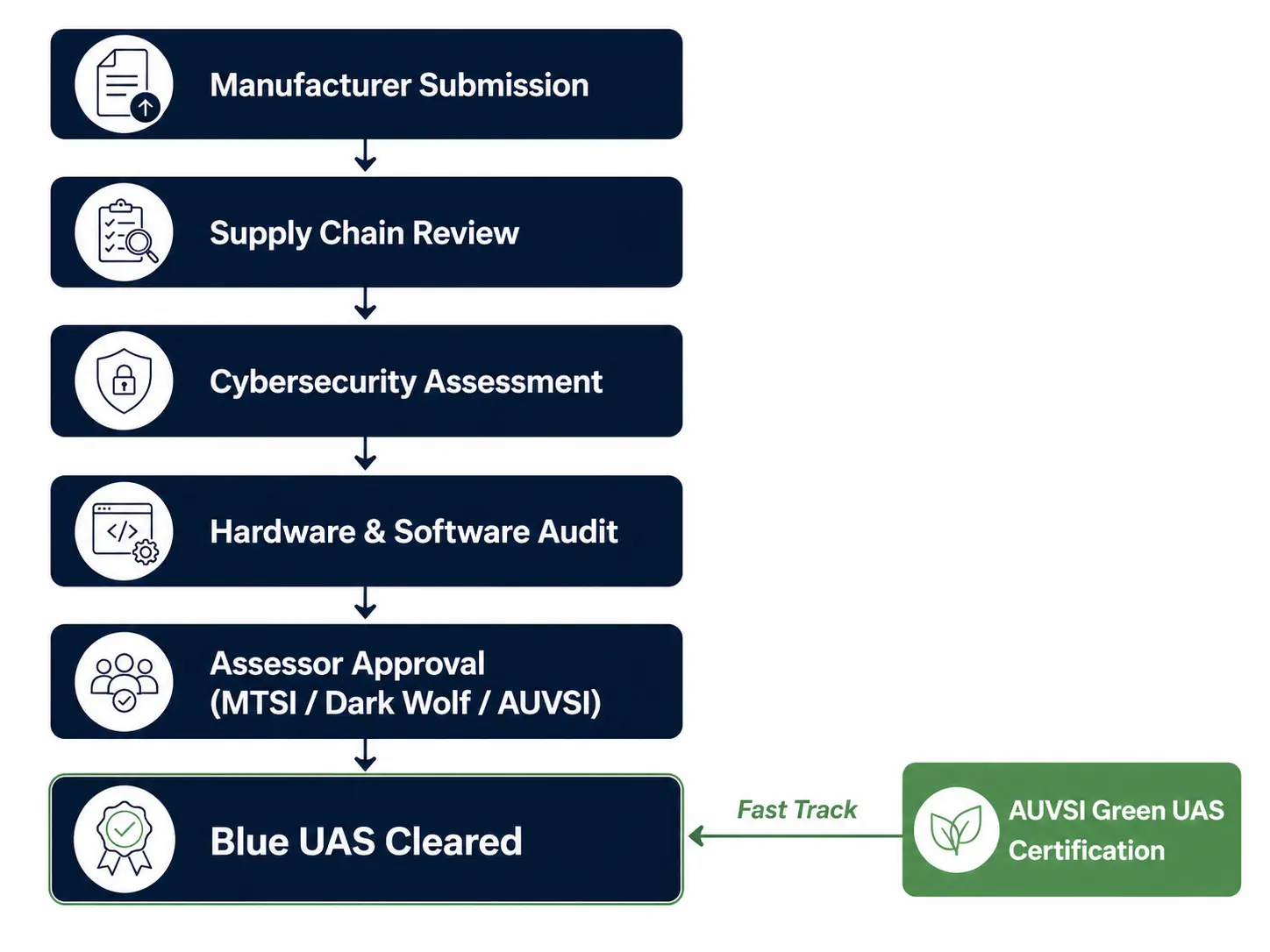
Vetting covers five areas: cybersecurity controls, supply chain provenance (no covered foreign components), hardware integrity, software security, and operational capability. The process is continuous rather than batched — manufacturers can submit at any time, and the list updates on a rolling basis. No official average timeline has been published, but industry consensus places the process at roughly six to eighteen months depending on platform complexity and how clean the supply chain documentation is.
Listing is not permanent, and the removals that have happened are more revealing than the criteria. Platforms can be dropped for unresolved cybersecurity vulnerabilities, unapproved changes to design or manufacturing, end-of-life status, or failure to maintain ongoing compliance.
In practice, none of those is what has taken platforms off the list. Between late February and early March 2025 the roster contracted sharply, and the platforms that came off — including the senseFly eBee TAC, the Ascent AeroSystems Spirit and Inspired Flight’s IF800 and IF1200 — were not removed for failing anything. Inspired Flight’s Adam Bilmes said the evaluation turned on units sold to warfighters, and with under 5% of its business there, “our systems were removed”; the company moved to Green UAS. Both Inspired Flight aircraft are on the DCMA list again; see the entry below.
All of them are on the DCMA list read on 8 October 2026: the eBee TAC and the Spirit dated August 2022, both Inspired Flight aircraft dated January 2024. Freefly says its Alta X left on 28 February 2025; the DCMA list carries the Alta X Blue Package, dated August 2022.
Wingtra, delisted in the same window, told its customers directly that the cause was “recent strategic shifts by the Defense Innovation Unit towards warfighter platforms”, and that the NDAA compliance status of its aircraft was unchanged. The notice has since been removed from Wingtra’s website, and on 8 January 2026 its chief executive wrote that Wingtra aircraft are included on the DCMA list. The list carries both, dated 19 February 2026.
That distinction is the one buyers most often get wrong. NDAA compliance is a property of the hardware. Blue UAS listing is an administrative status, granted for a specific configuration at a specific moment, and a platform can lose it without a single component changing. An agency that standardises on a listed platform is exposed to a refresh cycle it does not control.
Green UAS certification from AUVSI now grants automatic eligibility for the Blue UAS Cleared List under the current framework, removing what was previously a separate DCMA review stage. Platforms that earn Green UAS certification move directly to Cleared List eligibility without additional evaluation.
The current FCC Covered List exemption — which shields Blue UAS-cleared platforms from restrictions on foreign-produced UAS components — runs through January 2028, extended from January 2027 by the FCC on July 21, 2026.
DCMA evaluates platforms across four criteria: cybersecurity safeguards, supply chain integrity, system architecture, and operational reliability. All four must pass before a platform earns Cleared List designation.
Blue UAS Cleared List Companies 2026
The manufacturers on the Blue UAS Cleared List range from small US startups to established defense contractors. The best known include Skydio (the X2D, X10D, X10 and R10), Red Cat and its subsidiary Teal Drones (the Teal 2, Golden Eagle, Fang F7 and Black Widow), Parrot (the ANAFI USA and ANAFI UKR), Freefly Systems (the Alta X Blue Package), Inspired Flight (the IF800 and IF1200) and Shield AI (the V-BAT).
Earlier versions of this guide said AgEagle’s eBee TAC, Inspired Flight’s IF800 and Freefly’s Alta X had come off in the 2025 refresh. The DCMA list read on 8 October 2026 carries all three. It does not carry Freefly’s Astro, which this guide had listed. The platform detail below was read from the DCMA portal that day, with manufacturer announcements where they add something. DCMA updates the list as platforms complete vetting, so check the portal before committing to a purchase.
Who Can Buy Blue UAS Platforms?
Federal agencies — DoD, civilian agencies, and any entity using federal funds — are the primary market. Under the American Security Drone Act, full enforcement began December 22, 2025. Federal agencies and contractors cannot procure or operate covered foreign UAS. Blue UAS listing is the standard these buyers rely on to confirm compliance.
State and local governments can access Blue UAS platforms through cooperative purchasing programs, GSA schedules, or directly if their procurement regulations permit. DHS has explicitly flagged Blue UAS as relevant for first responder and public safety procurement. The federal mandate attaches to federal dollars rather than to the department spending them: the American Security Drone Act contains an explicit rule of construction preserving the right of state, local and territorial law enforcement and emergency service agencies to buy and fly a covered aircraft purchased with non-federal money.
Two details in that arrangement catch departments out.
The first is that the restriction covers operation, not just purchase. Federal award funds may not be used to procure a covered aircraft or in connection with operating one. A department that bought a DJI airframe with city money can still breach the condition by paying for its batteries, software subscriptions, pilot training or maintenance out of a federal grant. The FY2026 Homeland Security Grant Program notice flags this specifically.
The second is that the grant programs are stricter than the statute. The Act prohibits aircraft from a covered foreign entity. The Justice Department’s Byrne JAG guidance goes further and requires affirmative certification that only aircraft verified on the Blue UAS Cleared List will be purchased or operated under the award, that no modifications or additional accessories will be introduced, and that the aircraft will not be used to process, store or transmit federal information. Those are not the same test. A US-made drone that has never been near a covered foreign entity still fails the JAG certification if it is not on the list — and an agency that adds an unapproved payload to a listed airframe can fail it too.
Commercial buyers face no legal mandate. Any private company can buy a Blue UAS platform for private use. The premium is real and significant, but in regulated industries — utilities, critical infrastructure, energy, insurance — enterprise procurement teams increasingly treat Blue UAS or Green UAS listing as a baseline filter regardless of law.
Every Platform on the Blue UAS Cleared List
Skydio — X10D, X10, R10, X2D
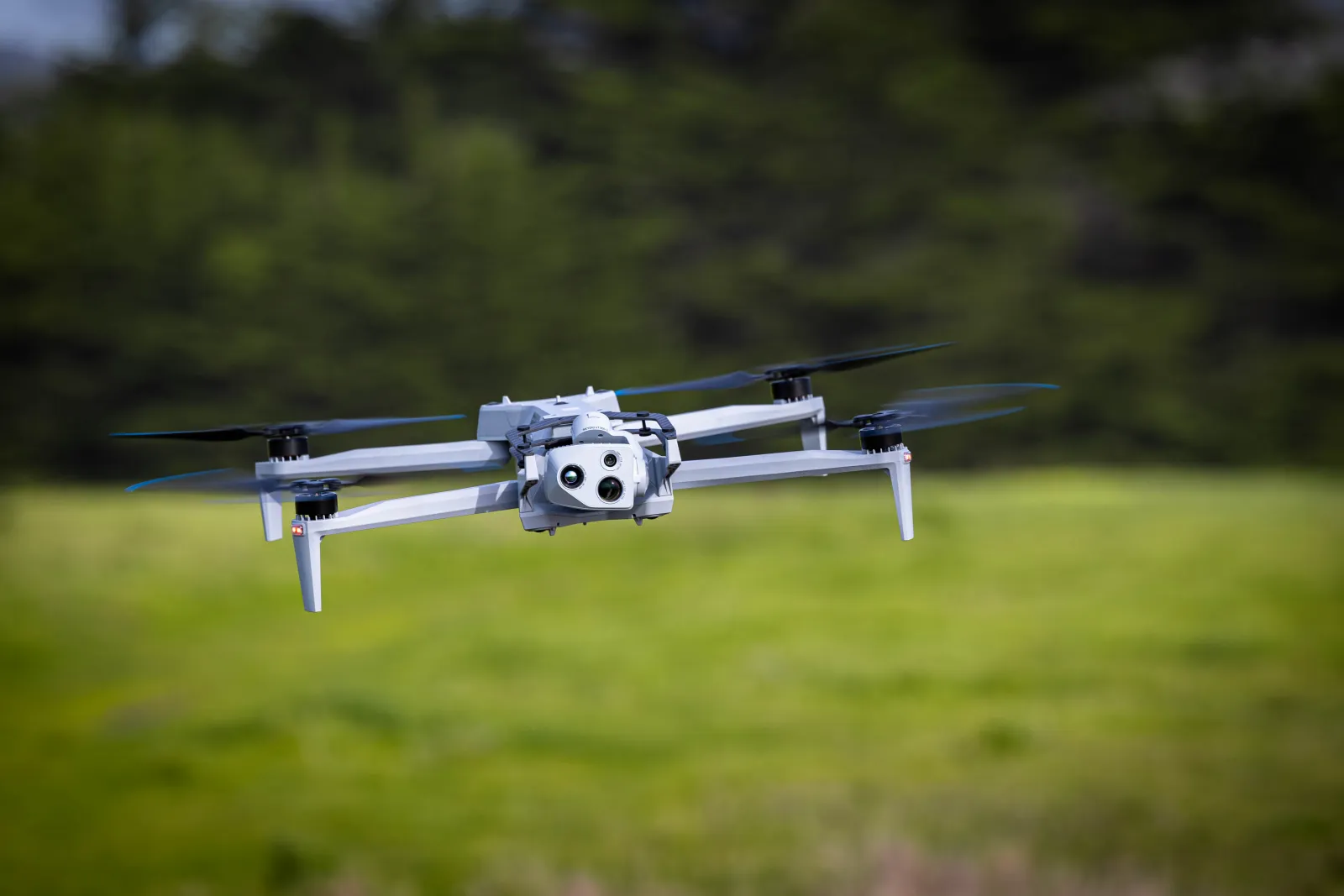
Skydio is the anchor US NDAA-compliant manufacturer. The X10D is the defense flagship: 2.11 kg, 40 minutes flight time, 12 km range with Connect SL, IP55, 360-degree obstacle avoidance, operating range from -20°C to 45°C, with a 1-inch 50MP wide camera, telephoto, and Boson+ thermal. In March 2026, the US Army ordered more than 2,500 X10D units for over $52 million — the largest single-vendor tactical small UAS order in Army history. Available via GSA and DoD contract vehicles.
On July 23, 2026, Skydio announced that the rest of its line had joined the X10D on the Cleared List: the enterprise X10, the Dock for X10, and the R10 indoor platform. The DCMA list read on 8 October 2026 carries the X10 and the R10, both dated 8 July 2026, but not the Dock. It still carries the older X2D in two versions, the X2D EO/IR 5GHz and the X2D Multiband EO/IR, dated August 2022.
Red Cat / Teal Drones — Teal 2, Golden Eagle, Fang F7, Black Widow
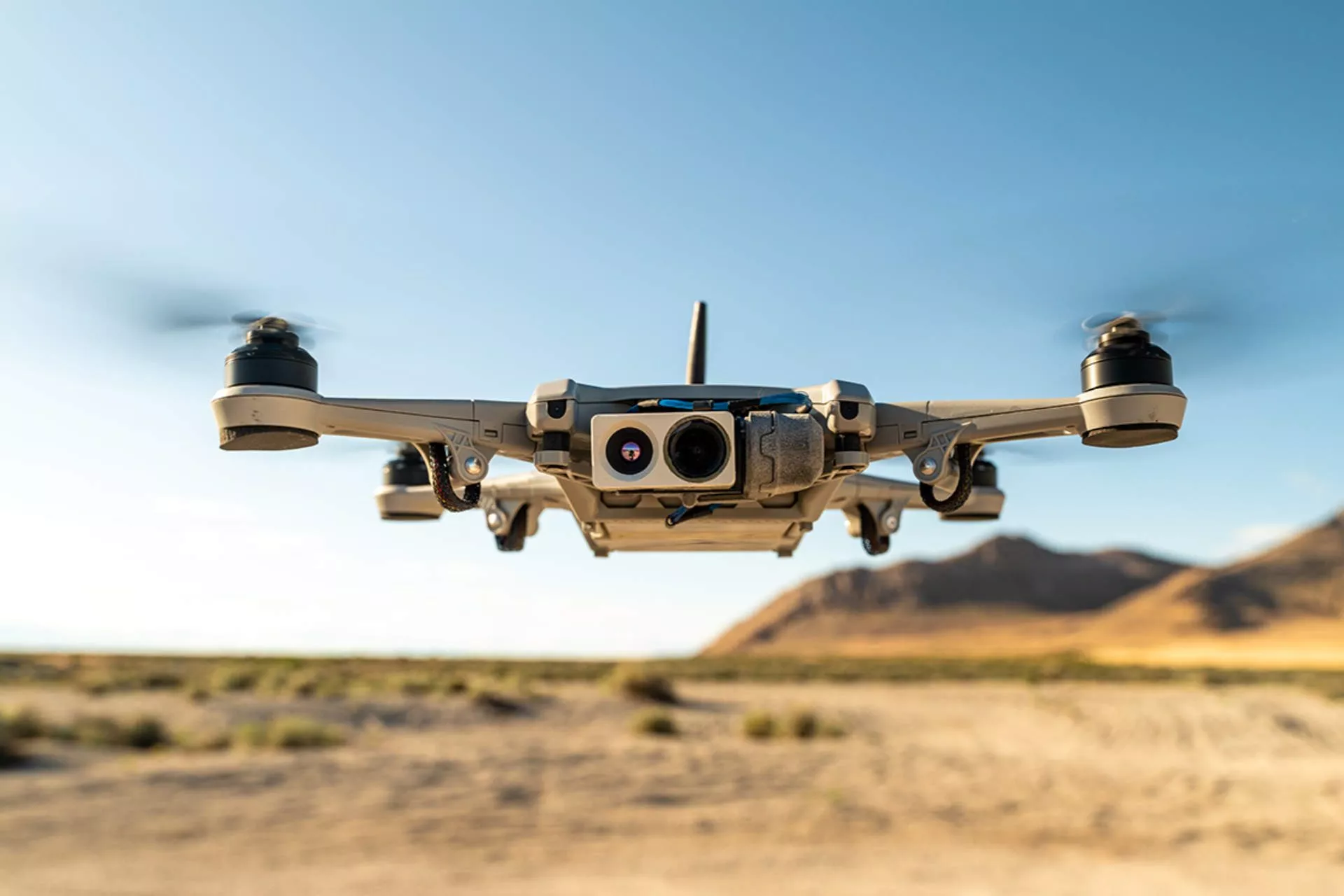
Teal Drones, a Red Cat Holdings subsidiary, has several aircraft on the list. The Teal 2 is a 1.25 kg rucksack-portable quadcopter with more than 30 minutes of flight, a 23 mph top speed, 5 km of range and a Teledyne FLIR Hadron 640R thermal and daylight camera, rated from -32°F to 110°F, per Teal. The Golden Eagle is listed in 1.8 GHz and 2.4 GHz versions, dated August 2022. The DCMA list dates the Red Cat Fang F7 14 October 2025 and the Black Widow 7 April 2026. DHS’s 2025 assessment recorded the Teal 2 at $15,073 on the GSA schedule.
Parrot — ANAFI USA GOV/MIL, ANAFI USA MIL, ANAFI UKR, ANAFI UKR XLR
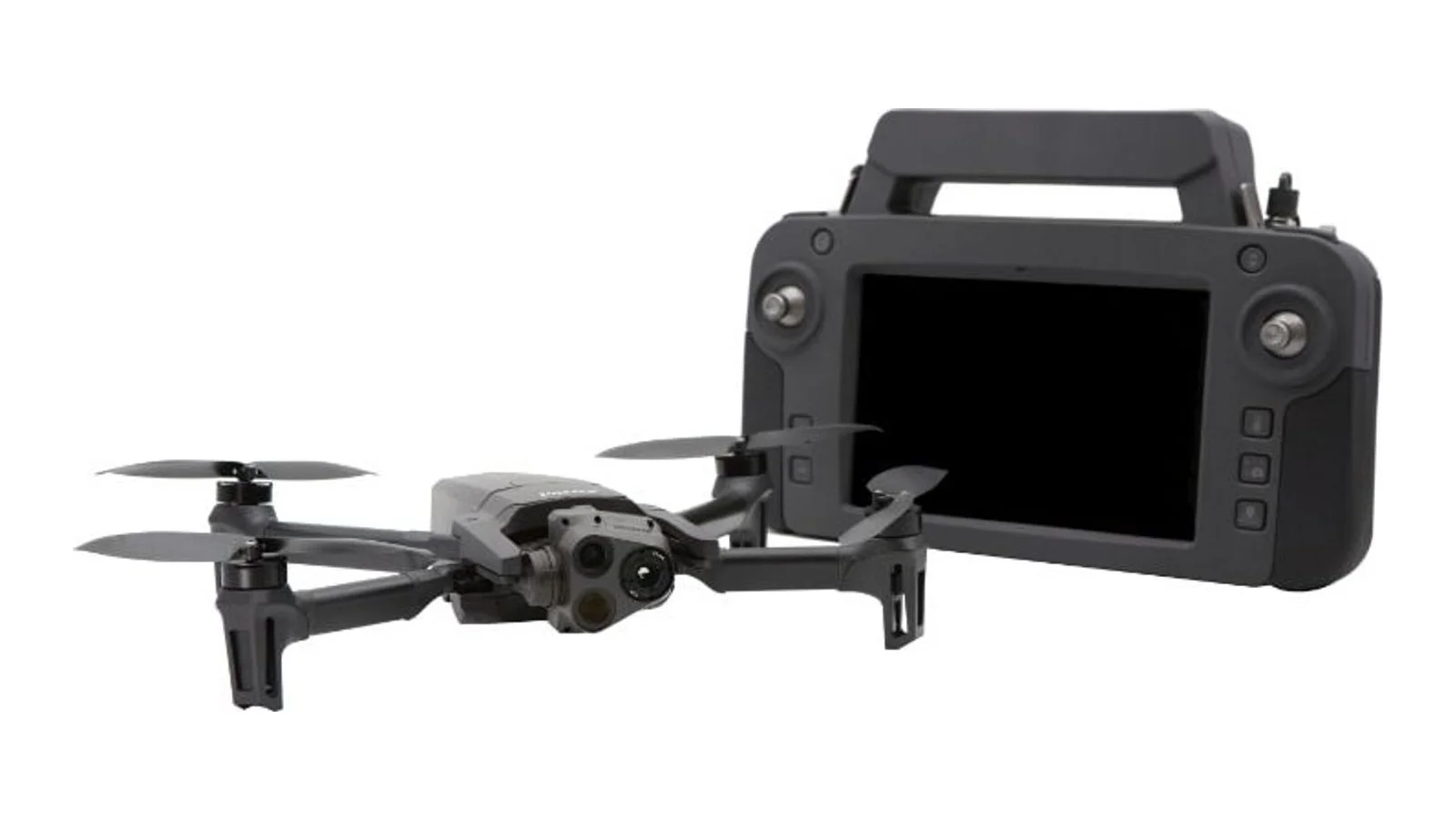
Parrot is a French manufacturer whose NDAA-compliant versions are built to US supply chain standards. The DCMA list carries four ANAFI entries: the ANAFI USA GOV/MIL and ANAFI USA MIL, dated 25 August 2022, and the ANAFI UKR and ANAFI UKR XLR, dated 9 April 2025. Trade reports of the March 2025 refresh had named Parrot among the vendors removed, and earlier versions of this guide marked the ANAFI USA as contested; the official list shows it on. The ANAFI USA weighs 485 grams, flies for 32 minutes, has a 4 km range, IP53 weather resistance, and carries three cameras: wide-angle, 32x zoom, and 320 thermal. DHS’s 2025 assessment put the ANAFI USA GOV at $13,964 on the GSA schedule.
AeroVironment — Red Dragon, IE-V2
The DCMA list carries the Intense Eye Version 2 (IE-V2), the former BlueHalo Intense Eye, from November 2022, and the Red Dragon from August 2025. The Red Dragon serves military ISR roles. AeroVironment is better known for its Switchblade loitering munitions, but the Red Dragon fills the tactical reconnaissance category. Pricing is not publicly disclosed. Available through DoD procurement channels.
Anduril Industries — Ghost, Ghost-X
The DCMA list carries the Ghost/Ghost-X from 29 May 2024, and the Ghost again under the July 2026 portal date. The Ghost runs on Anduril’s Lattice AI software, supports modular payloads, and is designed for Group 1 and 2 tactical missions. Anduril does not publish pricing — these are acquired through DoD contracts and OTA agreements. Primarily a DoD buyer platform.
Ascent AeroSystems — Spirit
The Spirit is a rugged, modular coaxial sUAS designed for operation in constrained environments where conventional multirotor form factors don’t fit. The DCMA list dates it 19 August 2022 under Ascent’s trading name, Robinson Unmanned, and repeats it as “Ascent Spirit” under the July 2026 portal date.
EagleNXT (AgEagle) — eBee TAC, eBee VISION, Plaber
AgEagle, now trading as EagleNXT, said in July 2025 that the eBee TAC and the eBee VISION were cleared again through the Green UAS route. The DCMA list dates the eBee TAC 19 August 2022 and the eBee VISION 17 July 2025, and carries a third aircraft, the Plaber, under the July 2026 portal date.
Easy Aerial — Osprey, Sparrow
The DCMA list carries the Osprey (Free Flight Version), dated 19 January 2024, and the Sparrow (Free Flight Version), dated 9 September 2025. DIU had selected the Sparrow for review in its February 2025 refresh. The Osprey Free Flight Version is a heavy-lift hexacopter with 55 minutes flight time, 20 km range, 3 kg payload capacity, and 100 km/h top speed. All-weather capable. Targets persistent surveillance and public safety operations in adverse conditions. Available via GSA.
Edge Autonomy — VXE30 Stalker
The Stalker VXE30 is a fixed-wing VTOL designed for tactical ISR. Long-endurance platform optimized for persistent area surveillance. Primarily DoD market. Edge Autonomy’s parent, Redwire, announced the addition in July 2025; the DCMA list dates it 19 February 2026. Redwire Defense has two entries of its own, listed below.
FlightWave Aerospace Systems — Edge 130
VTOL fixed-wing with 125 minutes flight time, 100 km/h cruise speed, resistance to 40 mph winds, approximately 1.2 kg weight, and tool-free payload swapping. Targets long-range mapping and surveillance. Available through government and commercial channels. On the list in July 2024, according to DHS.
Freefly Systems — Alta X Blue Package
The DCMA list read on 8 October 2026 carries the Alta X Blue Package, dated 18 August 2022, and no Astro. That is the reverse of what Freefly says. Its knowledge base says the Astro was reaffirmed in the 2025 refresh, and that the Alta X left the list on 28 February 2025, kept an exception for existing operators to 28 February 2026, and moved to the AUVSI Green List. Earlier versions of this guide followed Freefly.
Freefly’s store sells the Astro Max in two configurations. The base model is $22,995 and marked not compliant, because of its Herelink radio link. The NDAA and Blue configuration, with compliant radios, the Pilot Pro controller and DIU firmware, is $28,995. An agency buying the Astro on the strength of that Blue label should check the DCMA list first.
Heven Aerotech — Z1
On the DCMA list since 19 February 2026. Heven announced Blue UAS Select status for the Z1 in November 2025, granted through its subsidiary Zepher Flight Labs, under whose name earlier versions of this guide listed it.
Hoverfly Technologies — Spectre, Spectre TK
Tethered platform with unlimited flight time via ground power and up to 3.6 kg payload. Used for persistent ISR and communications relay where extended loiter time matters more than mobility. DoD and first responder market. The DCMA list also carries a Spectre TK.
Inspired Flight — IF800, IF1200
The DCMA list carries the IF800 and the IF1200, dated 19 January 2024. Inspired Flight said in April 2025 that its systems had been removed in the refresh, and it moved to Green UAS certification.
Kraus Hamdani Aerospace — K1000ULE
Long-endurance tactical platform. Specific specs are not publicly disclosed. DoD-focused.
ModalAI — Seeker Vision FPV, Stinger Vision FPV
ModalAI announced 5-inch and 7-inch FPV variants in August 2025. The DCMA list carries four entries: the Seeker Vision FPV 7in, dated 29 August 2025, and the Seeker Vision 10 FPV, Seeker Vision 5 FPV and Stinger Vision FPV under the July 2026 portal date. These are fast, close-quarters platforms designed for contested and confined-space tactical operations. ModalAI builds on its VOXL autonomy stack. Primarily DoD.
Mountain Horse Solutions — Rotron DT-300
Built with Rotron Aerospace. Mountain Horse announced it in August 2025 as the Talon DT-300 Drone Plus; the DCMA list names it the Rotron DT-300, dated 12 August 2025. Tactical platform. Primarily DoD.
Neros Technologies — Archer, Archer Fiber, Archer Block 1, Archer Block 2
Los Angeles-based manufacturer. The Archer reaches up to 160 km/h and is described as battlefield-proven and electronic warfare resistant. The Archer Fiber variant uses fiber-optic tethering for EW-hardened data links. The DCMA list dates Archer/Archer Fiber 14 February 2025 and carries Archer Block 1 and Block 2 under the July 2026 portal date. DoD-focused attritable and tactical category.
PDW — C100
Portable long-endurance quadcopter with 74 minutes flight time on ISR payload, 6.8 kg payload capacity, 9.6 kg weight, 10 km range, 64 km/h top speed, operating range from -4°C to 57°C. Government procurement primary market.
Quantum Systems — Vector AI, Trinity Pro
The DCMA list carries the Vector AI, dated 19 February 2026 under the name Quantum-Systems Inc., and the Trinity Pro, dated 24 April 2026 under Quantum Systems. Quantum Systems announced the Vector’s addition in August 2025. German manufacturer with NDAA-compliant supply chain. Allied-nation manufacturer — satisfies covered foreign country exclusion.
Renegade UxS — Nightmare, Nightmare Digital
On the DCMA list since 25 November 2025. Tactical FPV and attritable category. DoD-focused.
Shield AI — V-BAT
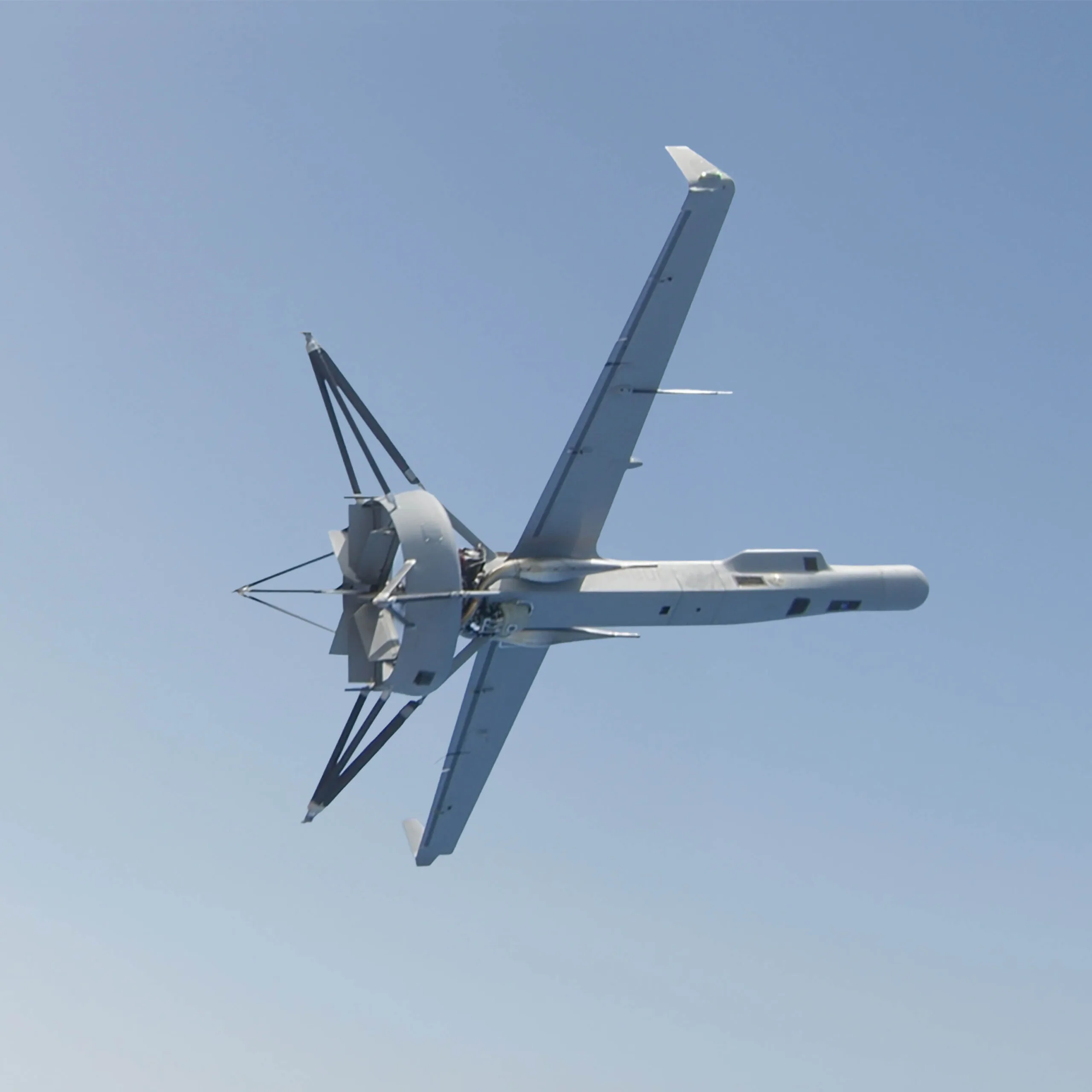
VTOL fixed-wing with over 10 hours endurance. Designed for persistent ISR and maritime surveillance where long loiter time is the primary requirement. Reuters reported in June 2026 that each V-BAT costs about $1 million. DoD procurement only.
Skyfront — Perimeter 8 Hybrid
Hybrid gasoline-electric octocopter built for endurance and lift rather than a tether. Skyfront states five hours on the stock tanks and longer with auxiliary tanks, with 10 kg of payload for an hour or 5 kg for three. An earlier version of this entry called it a tethered aircraft; Skyfront told us otherwise on 19 September 2026 and the entry was corrected the next day.
Teledyne FLIR — Black Hornet 4
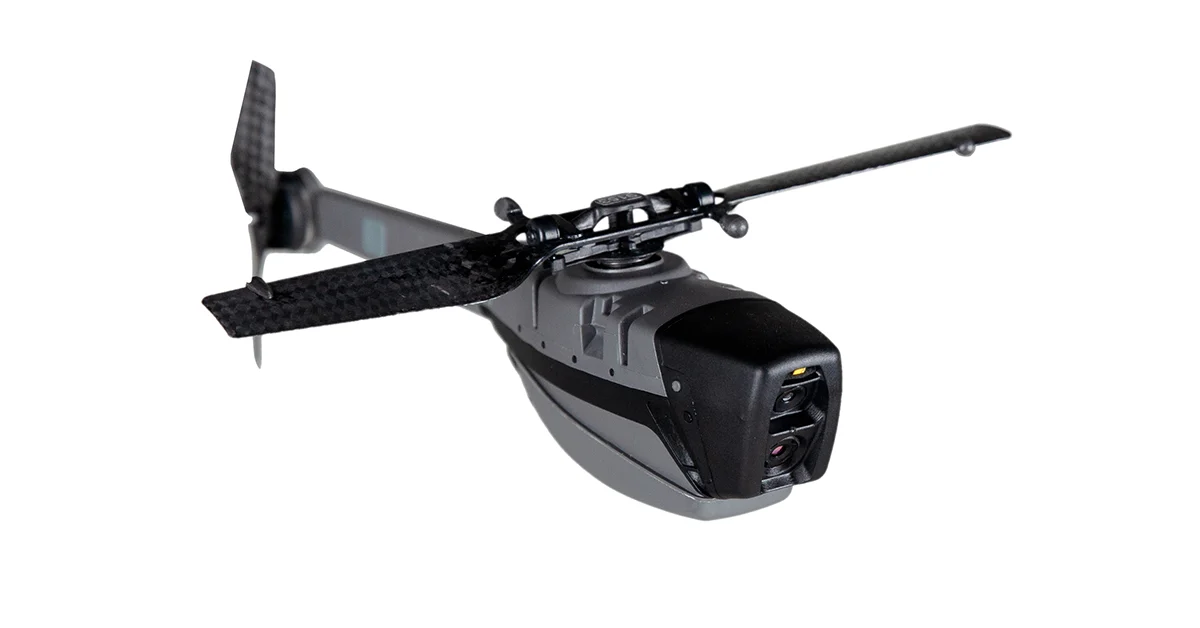
Nano sUAS in the personal reconnaissance category — small enough to be carried and launched by an individual soldier. Military-grade, DoD primary market. Pricing varies by configuration and contract. Teledyne FLIR announced the clearance in June 2025.
Thunder Tiger Corporation — Overkill FPV
Tactical FPV platform, on the DCMA list since 19 September 2025. Taiwan’s Central News Agency reported the clearance three days later.
Titan Dynamics — Titan Raptor
Tactical platform, on the DCMA list under the July 2026 portal date. Earlier versions of this guide marked it contested because no document confirmed the listing.
Vector — Longbow
Added February 2026, with Blue UAS Cleared and AUVSI Green UAS certification announced together. A modular NDAA-compliant VTOL already deployed under a multi-year contract with US Special Operations Command. Vector took the Green UAS route, which since July 2025 has granted automatic eligibility for the Cleared List.
Vantage Robotics — Trace, Vesper
Small sUAS platforms for government and public safety. Vantage said the Trace was cleared in July 2025. The DCMA list dates the Vesper 19 February 2026.
Wingtra — WingtraOne Gen II, WingtraRAY
Swiss manufacturer with NDAA-compliant manufacturing. Fixed-wing VTOL mapping platforms. The WingtraOne Gen II is widely used for precision surveying and geospatial data collection. Allied-nation manufacturer — satisfies the covered foreign country exclusion. Wingtra was delisted in the early-2025 refresh; the DCMA list carries both aircraft, dated 19 February 2026.
WISPR Systems — SkyScout 2+
WISPR announced the SkyScout 2+‘s addition to the Blue UAS Cleared List in April 2026, after AUVSI Green UAS certification in February 2026; the DCMA list shows it under the July 2026 portal date. The SkyScout 2+ emphasizes secure domestic sourcing and survivability features, including AES-256 encrypted communications, US-based design and assembly, domestically sourced components, long-range obstacle detection, terrain following, EMI protection, and extreme-condition thermal management. It ships with the WISPR SkyBoss controller, which adds AES-256 encrypted transmission and IP55 protection. Government and public safety buyers are the primary market.
Zone 5 Technologies — Paladin
Tactical platform, on the DCMA list since 5 March 2025. DoD-focused.
American Robotics (Ondas) — Optimus 1-EX
Ondas announced in January 2026 that its American Robotics Optimus had been listed; the DCMA list names the maker American Robotics and the aircraft Optimus 1-EX. Autonomous drone-in-a-box system targeting national security and critical infrastructure inspection.
Also on the list
These makers are on the DCMA list read on 8 October 2026 and had no entry in earlier versions of this guide. The detail is the list’s own: the product names and the date each was added. Where that date is 10 July 2026, it marks a re-entry in the portal rather than a clearance.
- 3DR: Autopilot (10 July 2026).
- Auterion: SLM-10, from 20 October 2025.
- Colsa: CDS-100 Crest, from 3 March 2026, and CDU-300 Talon, from 5 May 2026.
- EchoMAV: MONARK, from 5 May 2026.
- Harris Aerial: Carrier H6 Electric, Carrier H6 Heavy Lift and Carrier H6 Hybrid EFI, from 5 June 2026.
- Hylio: Blue HYL-150 ARES (10 July 2026).
- Perennial Autonomy: Bumblebee V2 (10 July 2026).
- Purple Rhombus: Grackle, from 21 April 2026.
- Redwire Defense: VXE-30 and VXE-30 Advanced Navigation (10 July 2026).
- Sky-Watch: RQ-35 Heidrun, from 8 July 2026.
- Skyfish: Osprey, from 5 May 2026.
Where the Compliance Boundary Actually Falls
Section 848 does not police every part of an aircraft. It reaches the components Congress enumerated, and Congress enumerated the ones that store or move data: the airframe, the flight controller, the radio and data transmission devices, the camera and gimbal, the ground control system, network connectivity and data storage, and the operating software.
Motors sit outside that list. So do speed controllers, battery cells, magnets and passive electronics — the parts that make an aircraft fly rather than think. DefenseScoop reported in November 2025 that the majority of systems cleared through the program have motors sourced in China, and the economics explain why: a former senior defense official put Chinese motors at $12 to $25 each against $100 to $225 for US alternatives. AUVSI’s chief executive, Michael Robbins, framed the consequence plainly — because motors were never treated as critical components, the drone motor market outside China stayed immature. AUVSI appears three times in this story: it is the sector’s trade association, it runs the Green UAS certification that feeds this list, and it is a DoD-recognized assessor.
Then in December 2025 the FCC drew the line somewhere else. Its Covered List notice defines UAS critical components to include batteries, battery management systems and motors, alongside the data-handling parts Section 848 covers.
The result is that a motor can be lawful inside a Blue UAS aircraft and a critical component under FCC rules at the same time. The exemption that resolves the tension does not close it: the January 2026 carve-out covers platforms on the Cleared List and products meeting the Buy American “domestic end product” test, which is satisfied at 65 percent domestic content by cost. That leaves room for up to 35 percent foreign content — roughly the share occupied by motors, cells and magnets.
For a buyer, the practical reading is that Blue UAS listing certifies a supply chain audit against a data-security standard, not a guarantee of end-to-end domestic manufacture. Anyone procuring on the assumption that a cleared aircraft contains no Chinese content is procuring on a misunderstanding.
What Does Blue UAS Compliance Actually Cost?
DHS priced three cleared quadcopters on the GSA schedule in its 2025 assessment: the Parrot ANAFI USA GOV at $13,964, the Teal 2 at $15,073 and the Skydio X10D at $28,382. Freefly sells a Blue configuration of the Astro Max at $28,995 (September 2026), though the DCMA list does not name the Astro. A DJI Matrice 4T sold for about $7,849 at US retailers before the tariffs, so by our arithmetic a cleared aircraft of that class costs roughly two to four times as much. Shield AI’s V-BAT is in a different bracket: about $1 million each, according to Reuters in June 2026.
The premium exists for three reasons: US or allied-nation manufacturing carries higher labor and component costs than Chinese production, compliance and certification overhead adds to program costs, and production volumes are a fraction of what DJI achieves at scale. As the market grows — driven by the $150 million initial Drone Dominance procurement and the target of 340,000 attritable units by 2027 — volume pricing should compress the gap. Unusual Machines has explicitly stated it is targeting cost parity with Chinese-made components for motors and related hardware. That matters because the component stack is a significant driver of total system cost.
Green UAS: The Commercial Pathway
Green UAS, managed by AUVSI, mirrors Blue UAS cybersecurity and supply chain standards but targets commercial, public safety, and non-DoD government buyers. It adds corporate cyber hygiene requirements, product and device security standards, and remote operations connectivity requirements that Blue UAS does not require.
Green UAS is not a DoD procurement designation on its own, but since July 2025 it functions as a recognized pathway into Blue UAS Cleared. Platforms completing Green certification can move into Blue without a separate full DoD assessment. For enterprise buyers without a direct DoD relationship, Green UAS provides a recognized compliance signal for procurement purposes.
What Happens to Agencies Still Operating Non-Compliant Drones?
Full ASDA enforcement began December 22, 2025. Federal agencies, contractors, and grant recipients cannot procure or operate covered foreign UAS. Agencies still running DJI or Autel fleets face funding risk, contract issues, and potential national security flags. There is limited grandfathering for pre-existing non-federal use, but for any federally funded operation the transition requirement is unambiguous.
The practical transition burden is real. Many agencies built operations around DJI Matrice platforms that have no direct equivalent on the Blue UAS list at the same price point. Inspired Flight’s IF800, built as a Matrice replacement, left the list in 2025 and is on the DCMA list again. At $23,000 on Inspired Flight’s store it costs nearly three times the pre-tariff price of a Matrice 4T on the figures above.
What to Watch Through 2027
The January 1, 2028 expiration of FCC exemptions for Blue UAS platforms and Buy American domestic end products is the defining near-term date. The FCC has already extended it once, from January 1, 2027, on July 21, 2026. If those exemptions expire without a further extension, the regulatory pressure on non-exempt foreign UAS in the US market intensifies further, and the Blue UAS list becomes even more central to any federal or federally funded drone procurement.
The Pentagon’s Drone Dominance program will drive the next significant wave of Blue UAS additions. With 25 vendors competing for an initial $150 million contract and a Pentagon goal of fielding more than 300,000 small drones, manufacturers not yet on the list have clear financial incentive to pursue listing. DCMA’s goal of transforming the Blue List into a true acquisition marketplace — with direct procurement capability rather than just a reference list — is set for completion by the end of 2027. When that infrastructure is in place, the gap between being on the list and being accessible to a procurement officer closes entirely.
Which Taiwanese Companies Are on the Blue UAS List? (台灣廠商)
One. On the official DCMA list, read on 8 October 2026 and checked again on 9 October, the only manufacturer based in Taiwan is Thunder Tiger Corporation of Taichung, a company listed on the Taiwan Stock Exchange. Its Overkill FPV has been on the list since 19 September 2025, and Taiwan’s Central News Agency reported the clearance three days later.
None of the 82 manufacturers behind the 245 components on DCMA’s Framework List on 9 October 2026 is based in Taiwan. Nothing in the process bars a Taiwanese maker: listing turns on an NDAA supply-chain and cybersecurity review of a specific configuration, not on the country the manufacturer is in, and makers from Switzerland, Denmark, Norway and Israel are on the lists.
Is a Blue UAS Drone the Same as an NDAA Compliant Drone?
No. NDAA compliance is a property of the hardware, while Blue UAS listing is an administrative status granted for a specific configuration at a specific moment, and a platform can lose it without a single component changing, as Wingtra and Ascent did in the 2025 refresh. Every listed aircraft is compliant; not every compliant aircraft is listed.
How Many Drones Are on the Blue UAS Cleared List?
The DCMA list held 75 products from 45 manufacturer names when FlightBrief read it on 8 October 2026, all of them aircraft. The first table on this page carries them as 43 manufacturer rows and 74 aircraft: Quantum Systems is listed under two names, Teal Drones shares a row with its parent, Red Cat, and one Colsa aircraft is listed twice. The last count the Defense Innovation Unit published was 39 cleared systems and 165 components, in November 2025.
Does Blue UAS Listing Mean a Drone Has No Chinese Parts?
No. Section 848 reaches the components that store or move data, and motors, battery cells and magnets sit outside it; DefenseScoop reported in November 2025 that most cleared systems use motors sourced in China. Listing certifies a supply-chain audit against a data-security standard, not end-to-end domestic manufacture.
What Is on the Blue UAS Framework?
The Framework is the component half of the list: flight controllers, radios, GPS modules, cameras and software that DIU vetted so a builder can assemble an NDAA-compliant aircraft from cleared parts. DIU counted 165 Framework components in November 2025, before the handover to DCMA. The DCMA portal keeps them in a separate Framework List, which held 245 components from 82 manufacturers when FlightBrief read it on 9 October 2026.
The second table on this page carries the whole DCMA Framework List as read on 9 October 2026, one row per component, filterable by what the part does. Where a manufacturer announced its listing, the row links the announcement. A Framework part does not clear the aircraft it goes into, and a cleared aircraft does not clear its parts for use elsewhere. Motors, batteries and speed controllers are rare on the list; DefenseScoop reported in November 2025 that DoD does not classify them as critical components.
Sources
- Thunder Tiger Corporation, company site, for its Taichung address and Taiwan Stock Exchange listing; Central News Agency, 22 September 2025, on the Overkill FPV clearance.
- DCMA Blue List portal, the official roster, which bluelist.dcma.mil redirects to; its Blue List Products table was read on 8 October 2026. Its Framework List of components was read on 9 October 2026. The older Power Apps address now redirects there too.
- Defense Innovation Unit, Blue UAS refresh selections, 14 February 2025, and the DHS SAVER market survey of Blue UAS for first responders, February 2025, listing products on the list in July 2024.
- Defense Innovation Unit, Blue UAS Cleared List, which now points at the DCMA portal, and DIU’s Blue UAS list to transition to DCMA, 3 December 2025.
- FCC public notice DA 26-22, 7 January 2026, exempting Blue UAS and Buy American products from the Covered List, and DA 26-761, 21 July 2026, extending the exemption to 1 January 2028.
- FCC Covered List.
- Wingtra customer notice on its March 2025 delisting, archived.
- Prices: DHS SAVER Blue UAS urban assessment, March 2025 (GSA prices for the ANAFI USA GOV, Teal 2 and X10D); Freefly’s store, September 2026.
- Framework: DIU, updates to the Blue UAS list and Framework, 30 May 2024; DCMA, Blue List process, 5 August 2026; DefenseScoop on motors and critical components, 20 November 2025.
- Drone Dominance goal: Defense News, Pentagon seeks to field more than 300,000 small drones, 3 December 2025.
- Manufacturer announcements of additions, linked on each row of both tables.
Coverage
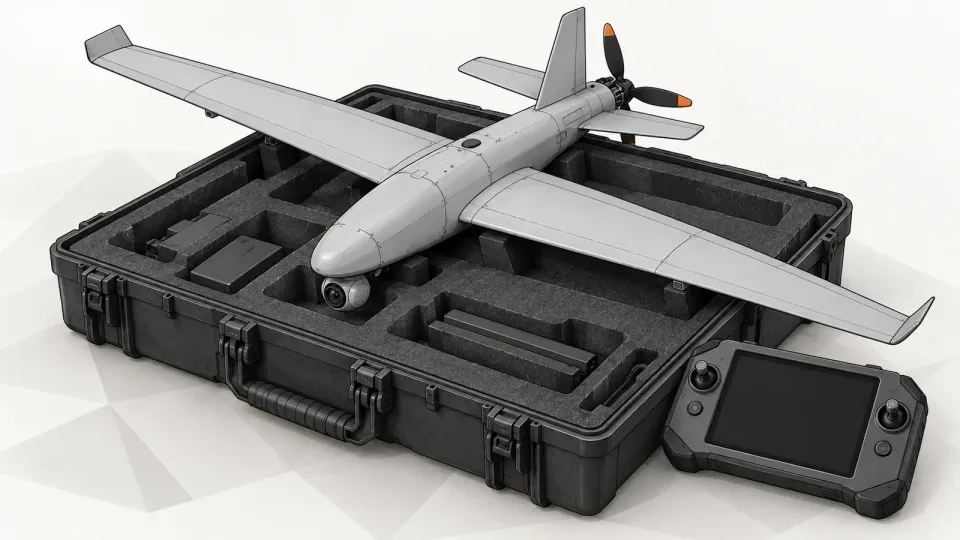
EagleNXT Delivers Nine Texas-Built eBee Drones to US Army
The eBee line began in Switzerland. EagleNXT now builds US units in Texas, after dropping off the Blue UAS list and getting back on.
Pentagon Accepts 12,080 of 30,000 Drone Dominance Drones
Six weeks after the delivery window closed, the programme's own leaderboard shows 12,080 drones accepted, and Gauntlet I winner Skycutter with none.
FCC Bars New Drones With DJI Parts From 13 October
From 13 October the FCC will refuse authorisation to any new device containing a DJI or Autel logic-bearing component, wherever the rest of it is built.

Wing Tells FCC Its Drone Rules Risk Grounding It
Wing, AUVSI and the Commercial Drone Alliance filed on the FCC's next round of Covered List rules. They split on the 65 percent US-content test.

FCC Drone Ban Comment Record: 3,770 Opposed, 16 For
The FCC drone ban proposal drew 3,829 comments before the record closed on 2 September. Sixteen of them supported it.

A trade association is the fast route onto the Blue UAS list
WISPR got Green UAS certification in February and was on the Pentagon's Blue UAS Cleared List ten weeks later. Four platforms joined in 2026.
No One Is Replacing DJI in the US Consumer Market
Ten months after the FCC shut out new foreign-made drones, no American consumer drone has filled DJI's place. US makers are selling to the military.
Unusual Machines Bets on Defense Drone Manufacturing
Unusual Machines is positioning as a domestic NDAA-compliant drone component supplier as US procurement rules tighten.
Companies
DJI
Chinese private manufacturer of consumer, enterprise and agricultural drones, cameras and imaging systems.
China
Skydio
US drone manufacturer building AI-powered autonomous aircraft, supplying NDAA-compliant enterprise and defense drones to agencies and operators.
United States
Autel Robotics
Chinese drone manufacturer producing consumer and commercial UAVs, including the EVO and Dragonfish series, with a growing defense-adjacent presence.
China
Red Cat Holdings
US defense drone company supplying NDAA-compliant small unmanned systems for military reconnaissance through its Teal Drones subsidiary.
United States
Unusual Machines
US drone manufacturer and components distributor building NDAA-compliant drones and parts to cut American dependence on Chinese supply chains.
United States
AgEagle Aerial Systems
US drone and sensor company trading as EagleNXT, with fixed-wing UAS, imaging payloads, fleet software and a majority-owned counter-drone joint venture.
United States
Auterion
Drone software company whose AuterionOS operating system and Skynode flight computers turn other makers' drones into autonomous strike systems.
United States
Neros Technologies
US manufacturer of low-cost first-person-view attack drones and counter-UAS interceptors, built around a domestic supply chain outside Chinese components.
United States
Products
Skydio X10
Skydio
A serious U.S.-made enterprise platform built around autonomy, sensors, and government-grade deployment rather than mass-market volume.
Black Hornet 4
Teledyne FLIR
A 70-gram reconnaissance helicopter a single soldier carries and flies, bought by the US Army since 2018 and sold to forces in more than 45 countries.
Teal 2
Red Cat / Teal Drones
A 1.25 kg night-reconnaissance quadcopter on the Blue UAS list, bought by Border Patrol and Air Force security units. DHS scored it lowest of five cleared drones in 2024, and its maker is now selling a successor.
Black Widow
Red Cat / Teal Drones
The US Army's chosen short-range reconnaissance drone, built for rucksack portability and GPS-denied flight — its position rests on winning the SRR program of record rather than on any single specification.
Freefly Astro Max
Freefly Systems
A US-built, NDAA-compliant mapping and inspection quadcopter with open payloads and Auterion software, priced well above the DJI aircraft it replaces for buyers who can no longer buy DJI.
Inspired Flight IF800 Tomcat
Inspired Flight Technologies
A US-built open-payload quadcopter that carries 3 kg and flies ArduPilot, sold as the compliant replacement for a DJI Matrice. No obstacle avoidance; back on the Blue UAS list after a 2025 removal.
Funding
Series C
Sequoia Capital, American Strategic Technology Fund, Interlagos, Valor Equity Partners, Allen & Company, Thiel Capital, Spark Capital, Dylan Field
Neros TechnologiesContracts
U.S. Army
Neros Technologies
IDIQ for the Archer first-person-view attritable drone, with support equipment, testing, engineering…
Japan Acquisition, Technology & Logistics Agency
Red Cat Holdings
173 Black Widow sUAS systems, each with two aircraft and a ground control station, for the Japan…
U.S. Army
EagleNXT
Nine eBee VISION reconnaissance drone kits for the Army's National Training Center at Fort Irwin…
Powerus
Unusual Machines
Supply contract from Autonomous Power Corporation (Powerus) for US-manufactured components for…
U.S. Air Force
Skydio
Order from U.S. Air Forces Central for Skydio Dock and X10 autonomous drone systems to provide…