
FLIGHTBRIEF
Topic

Counter-UAS

Counter-Drone Technology: How Militaries Defeat UAVs — Page 2

Radar, RF jamming, directed energy, kinetic interceptors, drone-on-drone — how militaries and governments defeat drone threats in 2026.

Last updated:

22 news articles on Counter-UAS ↓
Rheinmetall Skyranger 30 mobile counter-drone turret during live-fire exercise

Guide overview

Counter-drone technology — formally known as counter-UAS or C-UAS — spans radar detection, RF jamming, GPS spoofing, directed energy weapons, kinetic interceptors, and drone-on-drone systems, all tied together by AI-enabled command and control. No single system defeats every drone threat. Modern C-UAS is a layered architecture: detect, classify, track, identify, decide, defeat, assess — with different technologies handling different ranges, threat sizes, and engagement speeds. The global C-UAS market is estimated at $6.64 billion in 2025 and is projected to reach $20.31 billion by 2030.

What Is Counter-UAS Technology?

Counter-UAS is the discipline of detecting, tracking, identifying, and defeating unmanned aircraft systems that pose a threat to military forces, critical infrastructure, or civilian populations. The field barely existed as an organized defense sector before 2016. By 2026, it commands roughly $3.1 billion annually in the US defense budget alone, with the Army requesting $994 million for counter-small UAS systems in FY2027 — up from $543 million in FY2025.

Three years of drone warfare in Ukraine, the Houthi campaign against Red Sea shipping, and hundreds of unauthorized drone incursions over US military installations transformed C-UAS from a niche program into a top acquisition priority. The US Army now runs six concurrent C-UAS acquisition programs under JIATF 401, the Joint Interagency Task Force established in 2025 to coordinate counter-drone efforts across government.

The core challenge is economic. A $500 FPV drone has destroyed $2–5 million tanks in Ukraine. A Coyote Block 2 interceptor costs roughly $100,000–$200,000 per shot. Firing a Patriot-class missile at a commercial-grade kamikaze drone costs more than the drone costs to build by a factor of several thousand. C-UAS strategy is ultimately a cost-exchange problem — and most existing solutions still lose that math against cheap threats at scale.

How Are Drones Detected?

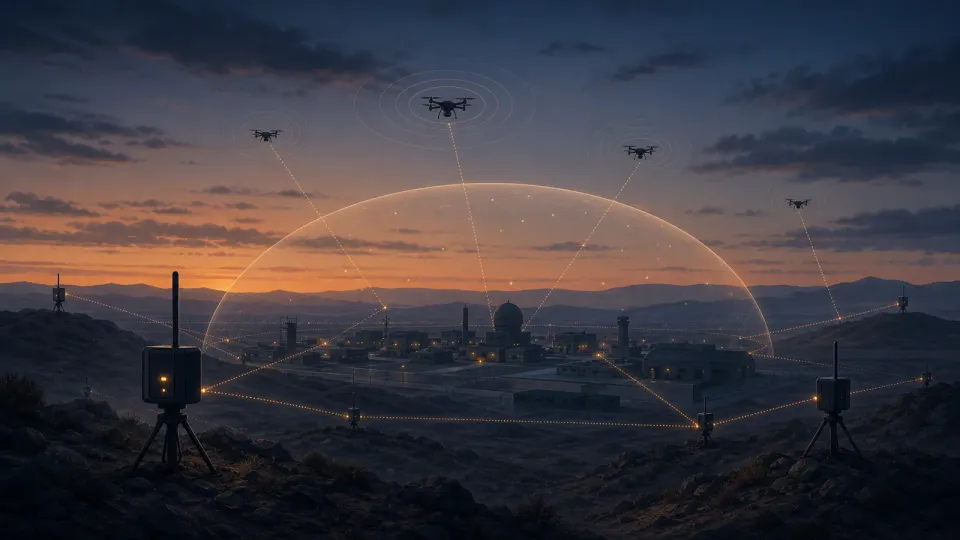
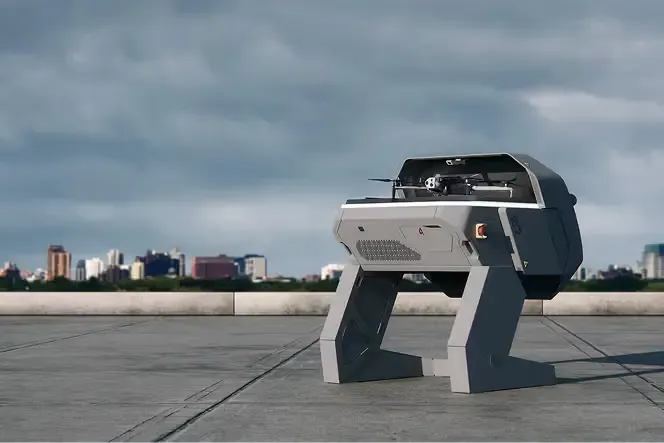
Detection is the foundation of every C-UAS system. The dominant approach combines radar with RF sensing and uses EO/IR cameras for identification. Acoustic sensors add a low-cost passive layer in specific environments.

Infographic explaining how drones are detected

Radar

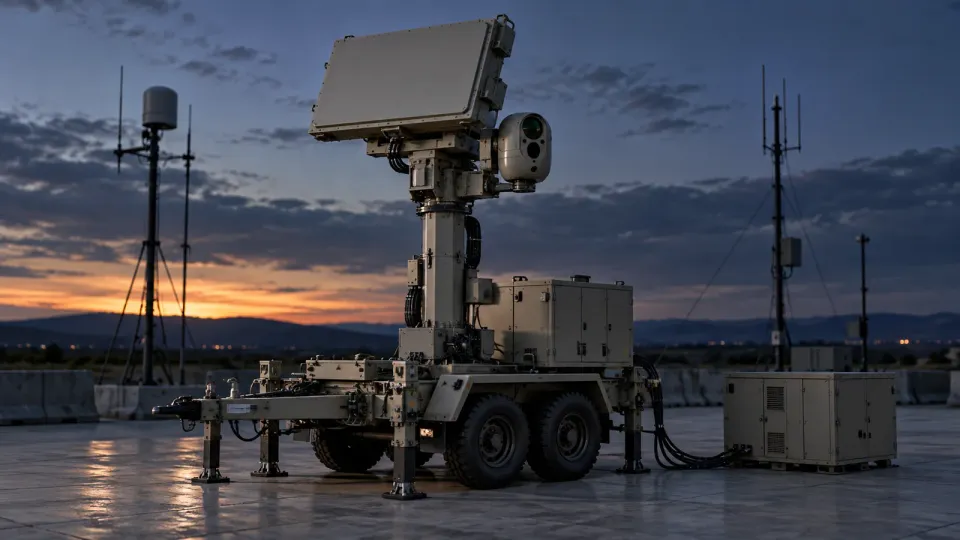
Radar remains the primary detection method for small UAS. Raytheon’s KuRFS (Ku-band Radio Frequency Sensor) is the US Army’s primary counter-UAS radar, paired with Coyote interceptors in the LIDS (Low, Slow, Small UAS Integrated Defeat System). It provides 360-degree coverage and can detect Class 1 drones at ranges beyond 15 km. In September 2025, the Pentagon awarded Raytheon a $5.04 billion contract for KuRFS radars, Coyote interceptors, launchers, and support through 2033.

Robin Radar’s IRIS (FMCW X-band) reaches 12 km for small drones including Shahed-class loitering munitions after a September 2025 upgrade, weighs 29 kg, and can operate on the move. HENSOLDT’s Spexer 2000 3D radar is in service with the German Bundeswehr as part of the GUARDION field-camp protection system. Fortem Technologies’ TrueView R20 AESA radar weighs under 7 kg at 38 watts and is the sensor that cues the DroneHunter autonomous interceptor.

RF and Signal Detection

RF detection identifies drones by their control link, video transmission, or Remote ID broadcast. It can geolocate both the drone and the operator when the controller is transmitting — a critical advantage for defeating threat actors rather than just the platform.

Dedrone’s RF-360 sensor detects and classifies approximately 600 drone models with direction-finding capability up to 8 km under ideal conditions. Sentrycs’ Cyber-over-RF system takes a different approach: protocol-level takeover rather than brute-force jamming, with version 6.0 claiming a 10 km mitigation diameter from a single sensor. DroneShield’s RfOne MkII provides RF direction-finding to 8 km and is in service with Australian Army evaluations. Anduril’s Lattice platform integrates Pulsar EW sensors alongside Sentry radar towers and WISP IR perimeter cameras into a unified fire-control picture.

RF detection has a hard limit: autonomous drones, fiber-optic FPVs, and pre-programmed one-way attack drones emit little or nothing. Against those threats, radar and acoustic sensors must carry the detection load.

Acoustic Detection

Passive acoustic arrays detect propeller and motor signatures. They are cheap, passive, and can’t be RF-jammed — making them useful as a cuing layer where other sensors are saturated or unavailable. Ukraine has deployed the largest operational acoustic network in the world: roughly 14,000 low-cost nodes under the Sky Fortress system, costing less than $5 million total, used to detect Shahed-type drones and cue air-raid sirens and higher-end intercept systems.

Practical limitations are significant. Acoustic detection range is typically 300–500 meters in field conditions and degrades sharply in wind above 5 m/s, rain, urban traffic noise, and near artillery. In January 2026, the US Army issued an RFI for Group 1 and Group 2 UAS acoustic detection systems that can operate on-the-move and feed data into Tactical Assault Kit. The Army is interested in acoustic as a soldier-level layer, not a primary sensor.

EO/IR and AI Sensor Fusion

EO/IR cameras are the identification layer — they confirm whether a radar or RF track is a drone, bird, aircraft, or false positive. Controp’s SPEED-ER reaches 40 km for land-based surveillance. Teledyne FLIR systems paired with radar cueing can detect targets at roughly 1 km visually and 600 meters in infrared at the lower end of the product range.

AI sensor fusion platforms correlate data across radar, RF, acoustic, and optical feeds to reduce false alarms and automate the kill chain. Anduril’s Lattice OS was selected by JIATF 401 in March 2026 as the enterprise tactical C2 layer for US government C-UAS, with a first task order of $87 million. Dedrone’s Tracker.AI is deployed at 955+ sites globally and is confirmed in use by US federal agencies and NATO governments. Ukraine’s Sky Map platform, developed for Shahed detection, was deployed by US personnel at Prince Sultan Air Base in Saudi Arabia in April 2026 after Iranian drone and missile attacks.

How Does Electronic Warfare Counter Drones?

RF Jamming

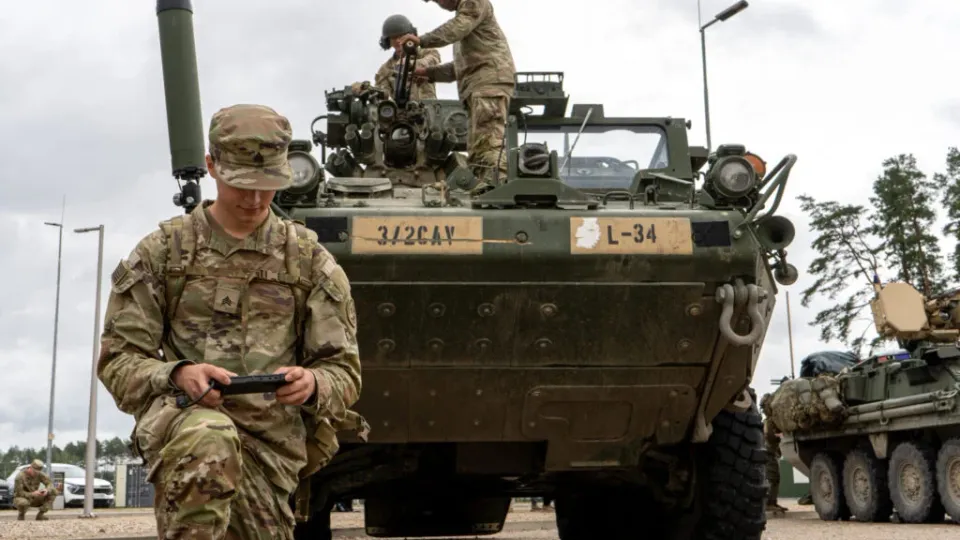
RF jamming overpowers the drone’s control link, video feed, or navigation signal. Depending on the drone’s firmware, the effect is hover, return-to-home, descent, or crash. Handheld systems reach 500 meters to 2 km; vehicle-mounted systems extend beyond 5 km.

DroneShield’s DroneGun Mk4 weighs 3.2 kg and is fielded with multiple Western militaries. The heavier DroneGun Tactical reaches 1–2 km. Dedrone’s Defender 2 is a smart jammer — protocol-specific targeting rather than broadband denial, reducing collateral interference in dense RF environments. Safran’s Skyjacker, tested on French Navy frigates and deployed during the Paris Olympics, combines jamming with GNSS spoofing to alter drone trajectories at 1–10 km range.

GPS Spoofing

Spoofing transmits false positioning signals to redirect or crash GNSS-dependent drones. Ukraine has used spoofing extensively to hijack Russian Shahed drones, with documented cases of drones diverted toward Belarus or into open fields. Ukraine’s national Pokrova EW system was designed to spoof GPS “along the entire line of contact” to defeat Russian drones and cruise missiles.

The limitation is that spoofing only works against drones that rely on GNSS for navigation. By 2025, both Ukrainian and Russian drone operators had pushed hard countermeasures: inertial navigation, visual-inertial odometry, terrain-referenced navigation, pre-programmed routes, frequency agility, and fiber-optic data links that bypass RF entirely. Jamming and spoofing remain effective against commercial-grade and lower-end military platforms, but decreasingly against purpose-built military systems hardened for contested environments.

What Are Directed Energy Weapons for Counter-Drone?

Infographic explaining how counter-drone weapons are directed

High-Energy Lasers

Lasers defeat drones by focusing thermal energy on a point long enough to damage structure, optics, batteries, or electronics. The cost per shot — measured in electricity — is typically $1–10, versus $100,000+ for a kinetic interceptor. The limitation is physics: weather, smoke, dust, atmospheric turbulence, and required dwell time of 2–5 seconds per target make lasers best suited as inner-layer defenses in relatively clear conditions.

The US Navy’s HELIOS (High Energy Laser with Integrated Optical-dazzler and Surveillance), a 60 kW Lockheed Martin system installed on USS Preble, has demonstrated downing four drones in testing. Israel’s Iron Beam — a Rafael 100 kW-class fiber laser — is the most operationally advanced system, with a cost per shot estimated at $2–3.50 and confirmed combat use against rockets, mortars, and Iranian-backed drones. The UK’s DragonFire, a 50 kW system built by MBDA, Leonardo, and QinetiQ, achieved a cost per shot of roughly £10 and is contracted for installation on Royal Navy Type 45 destroyers from 2027 under a £316 million deal.

High-Power Microwave

HPM systems emit directed electromagnetic pulses to fry electronics across an area rather than burning a single point target. This makes HPM significantly more effective against swarms — one HPM engagement can defeat dozens of drones simultaneously, while a laser is inherently one-to-one.

The US Air Force Research Laboratory’s THOR (Tactical High-power Operational Responder) is a containerized HPM system transportable on a C-130, assembled by two people in roughly three hours. Leidos is developing the follow-on Mjölnir under a $26 million prototype contract. Epirus’s Leonidas is the most commercially mature HPM system: solid-state, software-defined gallium nitride, with Gen II units reaching approximately 2 km effective range. The US Army awarded Epirus $66.1 million in January 2023 for IFPC-HPM prototypes; all four systems were delivered by March 2024. A $43.5 million Gen II contract followed in July 2025. In December 2025, Leonidas became the first HPM system demonstrated against fiber-optic FPV drones — a milestone given that fiber-optic guidance specifically defeats RF jamming. In 2026, Epirus, General Dynamics Land Systems, and Kodiak AI unveiled an autonomous HPM vehicle that requires no crew for C-UAS operations.

What Kinetic Systems Kill Drones?

Missile Interceptors

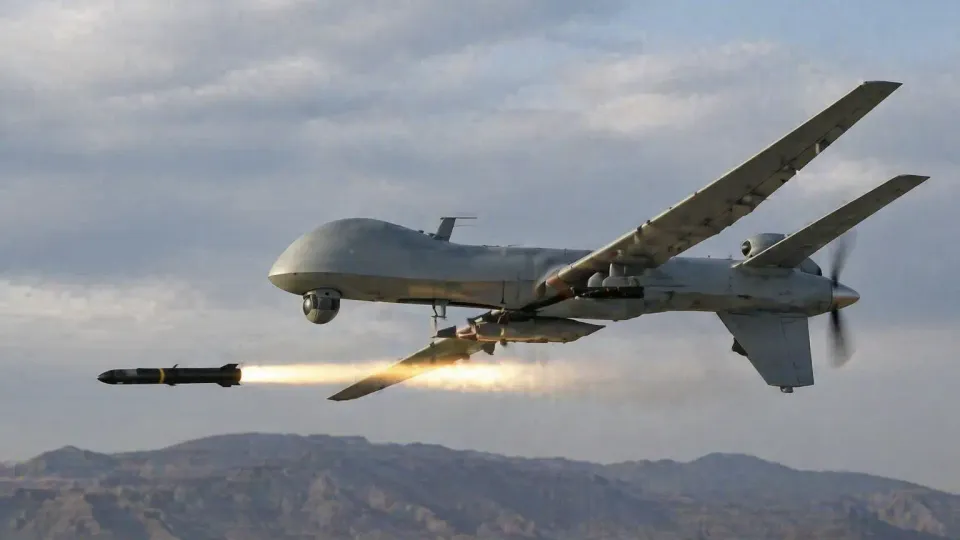
Raytheon’s Coyote is the US Army’s primary missile-based counter-sUAS interceptor. Coyote Block 2 costs approximately $100,000–$200,000 per shot, a fraction of Patriot-class interceptors but still expensive against cheap threats. Block 3NK is a reusable, non-kinetic variant. The September 2025 $5.04 billion Pentagon contract covers fixed and mobile launchers, kinetic and non-kinetic Coyote effectors, KuRFS radars, and support through 2033. The Enduring Shield system, built by Leidos and Dynetics under the Army’s IFPC Increment 2 program, received a $617 million contract in April 2026 for additional launchers, with total IFPC production contracts approaching $1.2 billion.

Gun-Based Systems

Rheinmetall’s Skyranger 30 and 35 are the benchmark mobile gun-based C-UAS systems. The 30 mm variant fires at 1,250 rounds per minute with an effective range of approximately 3 km using programmable AHEAD airburst ammunition; the 35 mm reaches 4 km. Germany ordered a prototype plus 18 Skyranger vehicles for approximately €595 million, with a potential plan for 600+ systems that could exceed €9 billion. Rheinmetall has integrated Skyranger onto unmanned Ripsaw M5 combat vehicles for crew-independent C-UAS operations.

The US Navy’s Phalanx CIWS — 20 mm, 4,500 rounds per minute, 1.5 km effective range — has adapted Block 1B variants for asymmetric threats including small UAS, though the economics of CIWS against cheap drones are poor except where the target is extremely high-value.

Net Capture Systems

OpenWorks Engineering’s SkyWall Patrol is a shoulder-fired net launcher with approximately 100 meters range, a parachute recovery system for forensic analysis, and SmartScope aiming. Fortem Technologies’ DroneHunter F700 is an autonomous interceptor drone that uses onboard radar to pursue and net-capture target drones; the US Army awarded Fortem an $18 million three-year contract in 2026. Net capture has specific advantages in urban and sensitive environments where debris from kinetic defeat is unacceptable.

What Is Drone-on-Drone Interception?

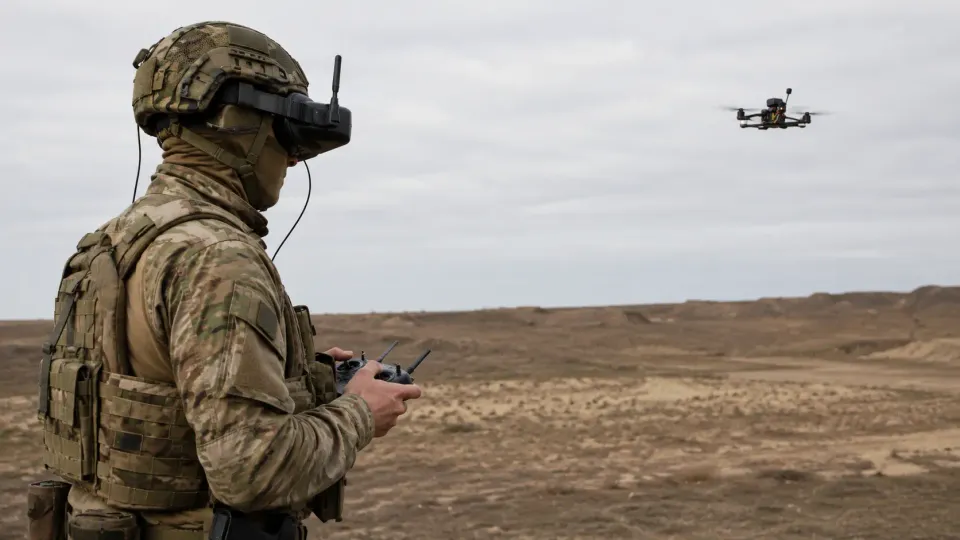
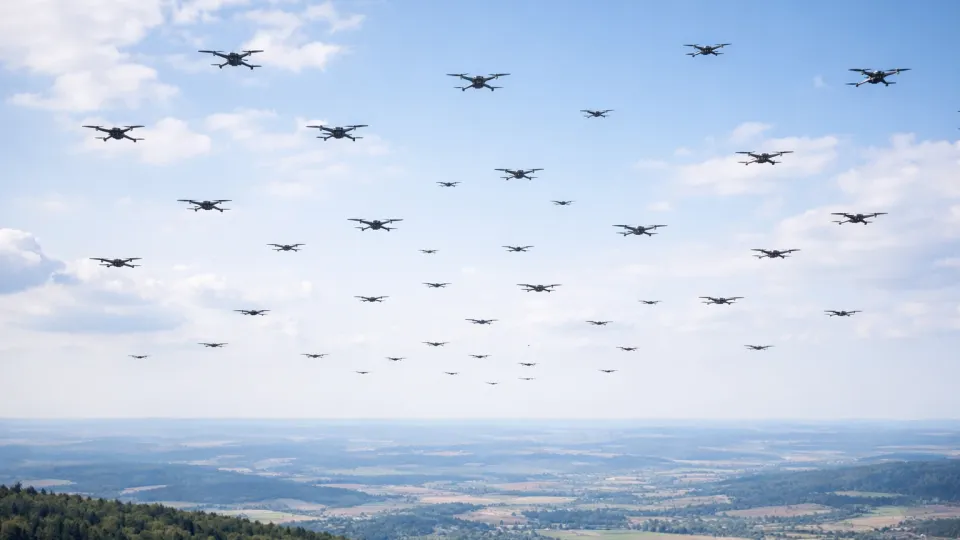
Ukraine has made drone-on-drone interception a mainstream C-UAS method. Low-cost Ukrainian interceptor drones priced at $1,000–$2,000 each are used against Shahed-type drones — a radically better cost exchange than firing Coyotes or NASAMS. In January 2026, Ukrainian forces intercepted 2,975 Russian drones; in March, 7,674. Ukrainian systems including Wild Hornets Sting and acoustically cued interceptors have proven effective enough that Reuters reported US personnel deployed Ukrainian Sky Map technology at Prince Sultan Air Base in Saudi Arabia in April 2026.

US programs are industrializing the concept. Fortem DroneHunter is in Army service. Anduril’s Anvil autonomous interceptor is integrated with Lattice and has been demonstrated with NORTHCOM’s Falcon Peak exercises. Raytheon’s Coyote Block 3NK adds a reusable non-kinetic interceptor option. In Romania, Reuters reported testing of Merops AI-powered drone interceptors linked to the broader allied response to Iranian drone attacks.

The economic logic is compelling but has preconditions. Cheap interceptors need robust detection, reliable cueing, autonomous target acquisition, and airspace deconfliction logic. Without that sensor and C2 infrastructure, drone-on-drone creates as many problems as it solves.

How Do Militaries Layer C-UAS Defenses?

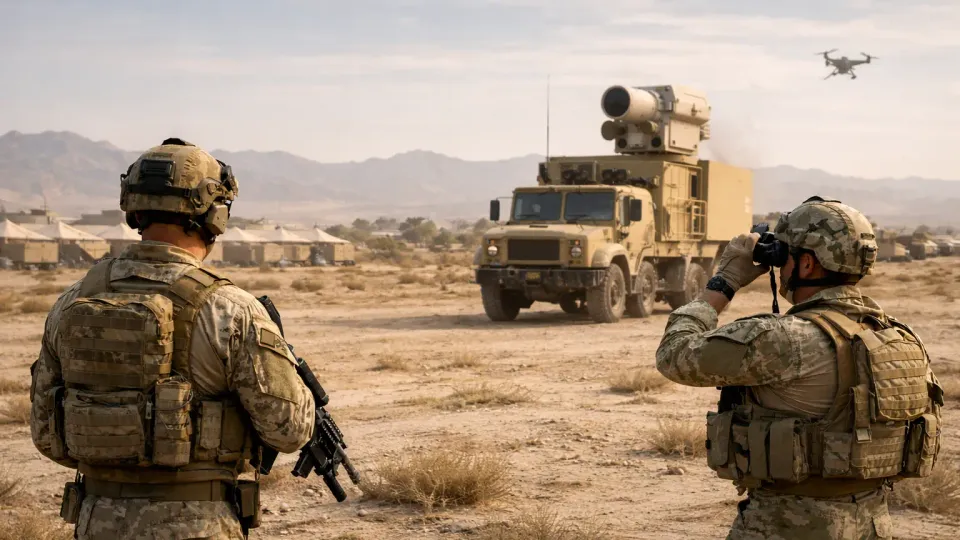
No single technology defeats every drone threat across every range and environment. Modern C-UAS is deliberately layered: wide-area sensors for early warning, soft-kill at medium range, hard-kill in the inner layers.

The US Army’s architecture pairs KuRFS radar with Coyote interceptors for the tactical layer, adds EW systems and Leonidas HPM for the point-defense layer, and integrates everything through FAAD C2 (Northrop Grumman) and increasingly Anduril Lattice. IFPC Increment 2 bridges SHORAD and Patriot-class systems for threats ranging from small UAS to cruise missiles.

Israel runs the most mature layered architecture. Iron Dome handles rockets and some drone threats; Drone Dome adds radar, RF, EO/IR, and jamming for local C-UAS; Iron Beam is the innermost directed-energy layer reducing cost-per-intercept for cheap threats. Rafael’s Drone Dome integrates RPS-42 radar, RF/SIGINT sensors, the Speed-ER EO/IR system, GNSS jamming, and an optional Lite Beam laser in a single package.

NATO is moving toward interoperable layered architectures under the LCI-X experimentation program, focused on sensor-effector integration and interoperability between national systems. European procurement is trending toward mobile SHORAD (Skyranger), directed energy trials, and national drone-wall concepts — driven by documented drone incursions over Poland, Denmark, Romania, and UK military bases including 17 straight days of drone activity over RAF Lakenheath in December 2023.

Which Companies Lead the C-UAS Market?

RTX / Raytheon

The largest single C-UAS contractor by contract value. KuRFS radar plus Coyote interceptors have generated $75 million (600 Coyote 2C, January 2024) and $5.04 billion (September 2025 multiyear) in recent awards.

Anduril Industries

C2 and autonomous interceptors. $87 million JIATF 401 Lattice task order in 2026 under a broader Army agreement reported at up to $20 billion over 10 years. Also competing for IFPC Increment 2 second interceptor via a Boeing-Anduril team.

Epirus

HPM specialist. $66.1 million Army IFPC-HPM contract in 2023, $43.5 million Gen II follow-on in 2025, $250 million Series D in 2025 bringing total funding over $550 million. Leonidas is the only US HPM system in Army field service.

DroneShield

Australian RF detection and jamming specialist. $61.6 million European military contract in 2025, $21.7 million Western military order in February 2026, $6.2 million Asia-Pacific contract in late 2025. Ticker: DRO on ASX.

Fortem Technologies

Drone-on-drone net capture. $18 million three-year US Army contract in 2026. TrueView radar and DroneHunter form an integrated detect-and-defeat package.

Dedrone / Axon

Sensor fusion and RF. Acquired by Axon in 2024. DedroneTracker.AI deployed at 955+ sites including US federal agencies and NATO governments.

Rheinmetall

Mobile SHORAD. Skyranger 30/35 orders totaling approximately €595 million from Germany with a potential expansion exceeding €9 billion. Growing export pipeline in Europe and NATO partners.

Leidos / Dynetics

IFPC Increment 2 launcher systems. $617 million Army contract in April 2026, total IFPC production contracts approaching $1.2 billion.

SRC Inc.

LIDS radar and EW systems integrator. Qatar LIDS sale reported at approximately $1 billion. SRC systems cover Groups 1–3 UAS using radar, EW, direction finding, and cameras.

What Is Driving Demand for Counter-Drone Systems?

Ukraine changed C-UAS procurement globally. By mid-2025, Kyiv School of Economics data showed drones engaging 80–85 percent of frontline targets, with at least 215,000 drone strikes recorded in summer 2025. Russia launched 6,129 Shahed-type drones in July 2025 alone — 741 in a single night. The scale normalized mass drone attacks as a standard military method, forcing NATO and partner nations to treat C-UAS as a tier-one procurement priority rather than a niche capability.

Infographic explaining Ukraine war developemnt timeline

The Red Sea confirmed what Ukraine showed. Reuters reported the US Navy expended more than $1 billion in munitions defending ships from Houthi drones and missiles from late 2023 through early 2025 — firing roughly 200 SM-2, SM-3, and ESSM missiles against threats that cost a fraction of the intercept cost. The cost asymmetry argument for directed energy and cheaper interceptors stopped being theoretical.

Unauthorized drone activity over military bases has accelerated domestic US procurement. NORTHCOM reported hundreds of incursions over US military installations, with Langley Air Force Base experiencing drone activity for 17 consecutive days in December 2023. The US Air Force bases in the UK — Lakenheath, Mildenhall, Feltwell, and Fairford — faced prolonged incursions in late 2024, prompting British troop deployment and emergency C-UAS installation.

How Big Is the Counter-Drone Market?

Market estimates vary depending on how broadly analysts define C-UAS — some count only dedicated anti-drone systems, others include SHORAD, EW, HPM, radars, and C2 platforms.

MarketsandMarkets estimates the counter-UAS systems market at $6.64 billion in 2025, growing to $20.31 billion by 2030 at a 25.1 percent CAGR. Its narrower anti-drone definition produces $4.48 billion in 2025 growing to $14.51 billion by 2030. MarkNtel Advisors projects $27.98 billion by 2032. IQPC estimates $10.1 billion in cumulative US DoD C-UAS procurement from 2024–2029 covering 1,867 systems.

European C-UAS procurement is accelerating separately. France’s PARADE program awards Thales and CS Group approximately $370 million for deployable anti-drone systems. Poland’s SAN program, a Kongsberg/PGZ consortium for 18 C-UAS batteries, is valued at approximately $4.2 billion. Unmanned Airspace reported more than $29 billion in announced government C-UAS contracts in the first three months of 2026 alone.

What to Watch Through 2027

The fiber-optic FPV problem is the most urgent unresolved technical challenge. Fiber-optic data links are immune to RF jamming. They have spread from Ukrainian frontlines to broader conflict contexts. HPM systems like Leonidas — which demonstrated effectiveness against fiber-optic drones in December 2025 — are the best current answer, but deployment scale remains limited.

IFPC Increment 2 fielding, targeted for approximately 2027, will define the US Army’s medium-tier C-UAS capability for the next decade. The interceptor competition — with Boeing-Anduril and others competing — will determine whether low-cost autonomous intercept or missile-based defeat becomes the doctrine baseline.

Directed energy will move from testing to operational service in multiple NATO countries by 2027. DragonFire on Royal Navy destroyers, Iron Beam in Israeli full operational service, and US Army DE M-SHORAD fielding will together establish whether 50–100 kW-class systems deliver the tactical impact their cost-per-shot arithmetic promises.

Drone-on-drone interception will scale. Ukraine has demonstrated the economics. The US Army’s Fortem DroneHunter contract and Anduril Anvil program are the industrial response. Whether autonomous intercept can operate reliably at scale without blue-on-blue risk and airspace deconfliction failures is the operational question that field experience over the next 18 months will answer.

Latest Coverage

Companies

Recent Funding

$250M

Series C

Sequoia Capital, American Strategic Technology Fund, Interlagos, Valor Equity Partners, Allen & Company, Thiel Capital, Spark Capital, Dylan Field

Neros Technologies
$5B

Growth

Thrive Capital, Andreessen Horowitz

Anduril Industries
$5.4M

Seed

Rainfall Ventures, ACME Capital, Skyfall Ventures, Sisyphus Ventures, Antler, Startuplab

Stendr

Recent Contracts

defense

Undisclosed

US Army PAE Fires, Anduril Industries

Three-year contract to supply a minimum of 3,000 surface-launched Barracuda-500M missiles with...

defense

Undisclosed

US DoD Office of Under Secretary for Research and Engineering, Leidos

Three-year contract to supply 3,000 low-cost containerized missiles as part of DoD's low-cost...

defense

Undisclosed

US Army Portfolio Acquisition Executive Fires, Anduril Industries

Three-year production agreement for a minimum of 3,000 Surface-Launched Barracuda-500M cruise...

defense

$100.3M

U.S. Department of Defense, Anduril Industries

Contract modification adding $100.3M to upgrade the Space Surveillance Network with mesh...

defense

Undisclosed

U.S. Army, AeroVironment

Prototype agreement for the Low-Altitude Stalking and Strike Ordnance (LASSO) program covering...