

Blue UAS
Blue UAS Cleared List 2026: Every Approved Drone Platform
What the Blue UAS Cleared List covers, how a drone gets on it, why platforms come off, and why the DCMA portal that now holds it is hard to reach.
Updated
8 news articles on Blue UAS ↓
Every manufacturer on the Blue UAS Cleared List
Thirty-one manufacturers and the platforms cleared under each, assembled from manufacturer announcements because DoD publishes no changelog.
31 of 31
| Manufacturer | Cleared platforms | Primary market |
|---|---|---|
| Skydio1 | X10D, X10, R10, Dock for X10, X2D variants | Government & public safety |
| Red Cat / Teal Drones2 | Teal 2, Golden Eagle, Fang F7 | Defense & public safety |
| Parrot3 | ANAFI USA GOV/MIL, ANAFI UKR | Government & public safety |
| AeroVironment4 | Red Dragon | Defense |
| Anduril Industries5 | Ghost, Ghost-X | Defense |
| Ascent AeroSystems6 | Spirit | Government & commercial |
| Easy Aerial7 | Osprey (Free Flight Version) | Government & public safety |
| Edge Autonomy8 | VXE30 Stalker | Defense |
| FlightWave Aerospace Systems9 | Edge 130 | Government & commercial |
| Freefly Systems10 | Astro/Max Blue Package, Alta X Blue Package | Government & commercial |
| Hoverfly Technologies11 | Spectre | Defense & public safety |
| Inspired Flight Technologies12 | IF800 Tomcat, IF1200A | Government & commercial |
| Kraus Hamdani Aerospace13 | K1000ULE | Defense |
| ModalAI14 | Seeker Vision FPV, Stinger Vision FPV | Defense |
| Mountain Horse Solutions15 | Talon DT-300 | Defense |
| Neros Technologies16 | Archer, Archer Fiber | Defense |
| PDW (Performance Drone Works)17 | C100 | Government & commercial |
| Quantum Systems18 | Vector | Defense |
| Renegade UxS19 | Nightmare, Nightmare Digital | Defense |
| Shield AI20 | V-BAT | Defense |
| Skyfront21 | Perimeter 8 | Government & commercial |
| Teledyne FLIR22 | Black Hornet 4 | Defense |
| Thunder Tiger Corporation23 | Overkill FPV | Defense |
| Titan Dynamics24 | Raptor | Defense |
| Vector25 | Longbow | Defense |
| Vantage Robotics26 | Trace, Vesper | Government & public safety |
| Wingtra27contested | WingtraOne Gen II, WingtraRAY | Government & commercial |
| WISPR Systems28 | SkyScout 2+ | Government & public safety |
| Zepher Flight Labs29 | Z1 | Defense |
| Zone 5 Technologies30 | Paladin | Defense |
| Ondas / American Robotics31 | Optimus | Government & commercial |
| Nothing matches that search. | ||
Notes
- Skydio The X10, R10 and Dock for X10 joined the X10D on 23 July 2026, which Skydio says made it the first manufacturer to move an entire active lineup onto the list at once.
- Red Cat / Teal Drones Government pricing typically $15,000 to $20,000 depending on configuration. The Fang F7 is separately cleared.
- Parrot French manufacturer, US supply chain standards, on the list since the early program. Typically $7,000 to $10,000 — the most accessible cleared platform, and the dominant one in first responder deployment.
- AeroVironment Tactical ISR. Pricing not publicly disclosed.
- Anduril Industries Runs Anduril’s Lattice software, modular payloads, Group 1 and 2 missions. Pricing not published; acquired through DoD contracts and OTAs.
- Ascent AeroSystems Coaxial airframe for constrained spaces. Came off the list in the early-2025 refresh and was back by September 2025 — the clearest example that listing is an administrative status, not a property of the hardware.
- Easy Aerial 55 minutes endurance, 3 kg payload, 20 km range, all-weather. Available via GSA.
- Edge Autonomy Fixed-wing VTOL for persistent tactical ISR.
- FlightWave Aerospace Systems 125 minutes endurance, 100 km/h cruise, tool-free payload swapping.
- Freefly Systems "Blue Package" is a distinct configuration, not a badge on the standard aircraft: $28,995 against $22,995 for the non-compliant base Astro Max. Ordering from the marketing page rather than the store can deliver an aircraft that cannot be flown on federal funds.
- Hoverfly Technologies Tethered, unlimited flight time on ground power, up to 3.6 kg payload.
- Inspired Flight Technologies Positioned explicitly as a DJI Matrice replacement. IF800 from approximately $23,000. Available via GSA.
- Kraus Hamdani Aerospace Long-endurance tactical platform. Specifications not publicly disclosed.
- ModalAI Both 5-inch and 7-inch variants added August 2025. Built on the VOXL autonomy stack.
- Mountain Horse Solutions Added in the 2025 to 2026 expansion.
- Neros Technologies Up to 160 km/h. The Archer Fiber uses fibre-optic tethering for EW-hardened data links.
- PDW (Performance Drone Works) 74 minutes on an ISR payload, 6.8 kg payload capacity, 10 km range.
- Quantum Systems German manufacturer with an NDAA-compliant supply chain. Allied-nation manufacture satisfies the covered foreign country exclusion.
- Renegade UxS Added in the 2025 to 2026 expansion. FPV and attritable category.
- Shield AI VTOL fixed-wing, over 10 hours endurance, maritime and persistent ISR. Priced in the $1 million-plus class per system.
- Skyfront Hybrid gasoline-electric octocopter for long endurance and heavy lift, not tethered: Skyfront states five hours on stock tanks, 10 kg payload for one hour or 5 kg for three. Corrected 20 September 2026 after Skyfront’s Brian Maxwell wrote in; the row had called it a tethered surveillance aircraft.
- Teledyne FLIR Nano sUAS, carried and launched by an individual soldier. Pricing varies by configuration and contract.
- Thunder Tiger Corporation Tactical FPV platform.
- Titan Dynamics Added in the 2025 to 2026 expansion period.
- Vector Added February 2026 via the AUVSI Green UAS route, which since July 2025 grants automatic eligibility. Already deployed under a multi-year US Special Operations Command contract.
- Vantage Robotics Small sUAS platforms.
- Wingtra Contested. Wingtra told customers it was delisted in the February to March 2025 refresh, attributing it to DIU’s shift toward warfighter platforms rather than to any compliance failure, and that notice has since been removed from its site. The roster this table is built from still carries the aircraft. Nothing published settles it — verify against the DCMA portal before relying on it.
- WISPR Systems Added April 2026 after AUVSI Green UAS certification in February 2026. AES-256 encrypted links, US design and assembly.
- Zepher Flight Labs Cleared in the 2025 to 2026 expansion.
- Zone 5 Technologies Tactical platform.
- Ondas / American Robotics Added February 2026. Drone-in-a-box for national security and critical infrastructure inspection, and one of the clearer signs of the program expanding past purely military platforms.
Where this comes from. Assembled by FlightBrief from manufacturer announcements and the position as of April 2026, updated where later changes are documented. DoD publishes no changelog of additions and the DCMA portal cannot be cited directly, so this is a guide to the list rather than a substitute for it. Primary market normalises the descriptions below into four values and is our reading, not a DoD category. Check the DCMA portal before committing to a purchase.
Sources
- DCMA Blue UAS Cleared List portal (a Power Apps page; it has refused connections on several checks)
- Defense Innovation Unit, Blue UAS Cleared List page, which now points at the DCMA portal
- Defense Innovation Unit, DIU’s Blue UAS list to transition to DCMA, 3 December 2025
- Manufacturer announcements of additions, named in the notes above
Guide
The Blue UAS Cleared List is the Department of Defense’s official catalog of unmanned aircraft systems and critical components approved for federal procurement. Platforms on it are NDAA compliant, cybersecurity-vetted, and exempt from FCC Covered List restrictions until January 1, 2028.
How many platforms are on it right now is a harder question than it should be. The last figure the Defense Innovation Unit published was 39 certified systems and 165 components, in November 2025, shortly before it handed the list to the Defense Contract Management Agency. Since that transfer, DIU’s own page has done nothing but point at a DCMA address.
Finding the list from that pointer is not straightforward. The address DIU links, bluelist.dcma.mil, refused every connection FlightBrief attempted, from a browser and directly, on repeated tries. The address that does respond is a different one, bluelist.appsplatformportals.us — the address the Justice Department cites in its own Byrne JAG grant guidance — and it serves a Microsoft Power Apps portal that assembles the list in the browser rather than publishing it as a page.
None of that is a conspiracy; it is an ordinary government platform migration. But the practical effect for a buyer is real. The definitive record of which aircraft US agencies may lawfully purchase is served from a host DIU does not link, in a form that is awkward to read, cite or archive. Counts circulating elsewhere on the web, including the figure this guide previously carried, do not trace back to a published DoD source, and are not repeated here.
Key facts
- The Blue UAS Cleared List is the Department of Defense’s roster of drones and components vetted for federal purchase. It has been maintained by the Defense Contract Management Agency since a transfer announced on 3 December 2025; the Defense Innovation Unit ran it from 2020.
- The last count DIU published was 39 cleared systems and 165 components, in November 2025. No count has been published since, and this guide’s table is the only public roster assembled from the portal and manufacturer announcements.
- A listed aircraft is exempt from the FCC Covered List until 1 January 2028 (extended from 2027 on 21 July 2026). Listing is an administrative status; NDAA compliance is a property of the hardware, and a platform that comes off the list does not stop being compliant.
- Three recognised assessors can vet a platform for the list: MTSI, Dark Wolf Solutions and AUVSI, whose Green UAS certification is the fast route in.
- The list has two tiers, Blue UAS Cleared and Blue UAS Select, plus a Framework section for components and software.
What Is the Blue UAS Approved Drones List?
The Blue UAS Cleared List is the Department of Defense’s catalog of unmanned aircraft and critical components approved for federal procurement, launched in 2020 under the Defense Innovation Unit and run by the Defense Contract Management Agency since December 2025. The Blue UAS program launched in 2020 under the Defense Innovation Unit as a trusted source list for small UAS procurement. It solved a specific problem: after NDAA Section 848 banned DoD from buying Chinese-made drones and components, there was no authoritative list of what was actually approved. Blue UAS filled that gap.
The move to the Defense Contract Management Agency was set in motion by a Secretary of War memo of July 10, 2025, “Unleashing U.S. Military Drone Dominance”, and announced on December 3, 2025, ahead of the ASDA full enforcement deadline. DCMA’s Unmanned Systems-Experimental command, based in Palmdale, California, now maintains the list; DIU remains involved as a partner shaping standards and checklists. The transfer marks the program’s shift from innovation vetting to operational procurement baseline.
The list covers two categories: Blue UAS Cleared, for platforms that have passed full vetting, and Blue UAS Select, for platforms competitively selected or sponsored by a military service or combatant command with an Authority to Operate. A separate Framework section covers cleared components, sensors, and software rather than complete aircraft.
How Does a Drone Get on the Blue UAS List?
Manufacturers submit platforms through DCMA or a recognized assessor. As of July 2025, three organizations hold recognized assessor status: MTSI, Dark Wolf Solutions, and AUVSI. AUVSI’s Green UAS certification program functions as a direct fast-track pathway — platforms that complete Green UAS certification can move into Blue UAS Cleared without a separate full assessment.
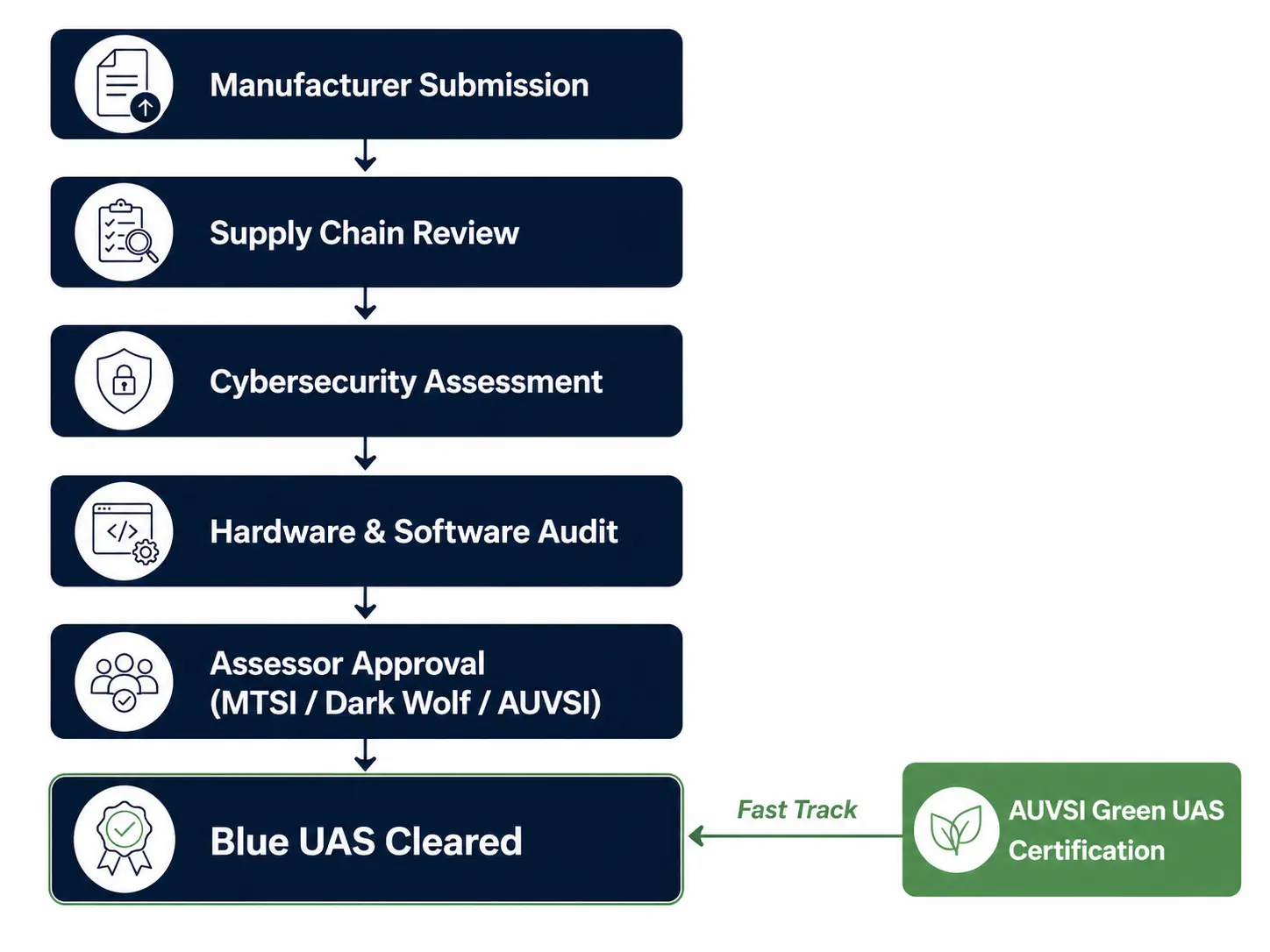
Vetting covers five areas: cybersecurity controls, supply chain provenance (no covered foreign components), hardware integrity, software security, and operational capability. The process is continuous rather than batched — manufacturers can submit at any time, and the list updates on a rolling basis. No official average timeline has been published, but industry consensus places the process at roughly six to eighteen months depending on platform complexity and how clean the supply chain documentation is.
Listing is not permanent, and the removals that have happened are more revealing than the criteria. Platforms can be dropped for unresolved cybersecurity vulnerabilities, unapproved changes to design or manufacturing, end-of-life status, or failure to maintain ongoing compliance.
In practice, none of those is what has taken platforms off the list. Between late February and early March 2025 the roster contracted sharply, and the platforms that came off — including the senseFly eBee TAC, the Ascent AeroSystems Spirit and the Inspired Flight IF1200A — were not removed for failing anything. The refresh cycle simply turned over. Ascent’s Spirit was back by September 2025.
Wingtra, delisted in the same window, told its customers directly that the cause was “recent strategic shifts by the Defense Innovation Unit towards warfighter platforms”, and that the NDAA compliance status of its aircraft was unchanged. The notice has since been removed from Wingtra’s website.
That distinction is the one buyers most often get wrong. NDAA compliance is a property of the hardware. Blue UAS listing is an administrative status, granted for a specific configuration at a specific moment, and a platform can lose it without a single component changing. An agency that standardises on a listed platform is exposed to a refresh cycle it does not control.
Green UAS certification from AUVSI now grants automatic eligibility for the Blue UAS Cleared List under the current framework, removing what was previously a separate DCMA review stage. Platforms that earn Green UAS certification move directly to Cleared List eligibility without additional evaluation.
The current FCC Covered List exemption — which shields Blue UAS-cleared platforms from restrictions on foreign-produced UAS components — runs through January 2028, extended from January 2027 by the FCC on July 21, 2026.
DCMA evaluates platforms across four criteria: cybersecurity safeguards, supply chain integrity, system architecture, and operational reliability. All four must pass before a platform earns Cleared List designation.
Blue UAS Cleared List Companies 2026
The manufacturers currently represented on the Blue UAS Cleared List span small US startups to established defense contractors. The most notable include Skydio (the X10, X10D, R10 and Dock for X10), Parrot (the ANAFI USA and ANAFI USA Gov), Auterion (the Auterion Mission Control-compatible fleet), Inspired Flight (the IF800), Freefly Systems (the Alta X), and Teal Drones (the Golden Eagle). Shield AI’s Hivemind-powered platforms are separately cleared. AgEagle’s eBee TAC, which earlier versions of this guide listed here, came off in the 2025 refresh described above. The full list, including cleared components and Framework entries, is maintained at the DCMA US-X portal and updated as platforms complete vetting. The platform detail below reflects the position as of April 2026, updated where later changes are documented. Treat it as a guide to what is on the list rather than a substitute for it, and check the DCMA portal before committing to a purchase.
Who Can Buy Blue UAS Platforms?
Federal agencies — DoD, civilian agencies, and any entity using federal funds — are the primary market. Under the American Security Drone Act, full enforcement began December 22, 2025. Federal agencies and contractors cannot procure or operate covered foreign UAS. Blue UAS listing is the standard these buyers rely on to confirm compliance.
State and local governments can access Blue UAS platforms through cooperative purchasing programs, GSA schedules, or directly if their procurement regulations permit. DHS has explicitly flagged Blue UAS as relevant for first responder and public safety procurement. The federal mandate attaches to federal dollars rather than to the department spending them: the American Security Drone Act contains an explicit rule of construction preserving the right of state, local and territorial law enforcement and emergency service agencies to buy and fly a covered aircraft purchased with non-federal money.
Two details in that arrangement catch departments out.
The first is that the restriction covers operation, not just purchase. Federal award funds may not be used to procure a covered aircraft or in connection with operating one. A department that bought a DJI airframe with city money can still breach the condition by paying for its batteries, software subscriptions, pilot training or maintenance out of a federal grant. The FY2026 Homeland Security Grant Program notice flags this specifically.
The second is that the grant programs are stricter than the statute. The Act prohibits aircraft from a covered foreign entity. The Justice Department’s Byrne JAG guidance goes further and requires affirmative certification that only aircraft verified on the Blue UAS Cleared List will be purchased or operated under the award, that no modifications or additional accessories will be introduced, and that the aircraft will not be used to process, store or transmit federal information. Those are not the same test. A US-made drone that has never been near a covered foreign entity still fails the JAG certification if it is not on the list — and an agency that adds an unapproved payload to a listed airframe can fail it too.
Commercial buyers face no legal mandate. Any private company can buy a Blue UAS platform for private use. The premium is real and significant, but in regulated industries — utilities, critical infrastructure, energy, insurance — enterprise procurement teams increasingly treat Blue UAS or Green UAS listing as a baseline filter regardless of law.
Every Platform on the Blue UAS Cleared List
Skydio — X10D, X10, R10, Dock for X10, X2D variants
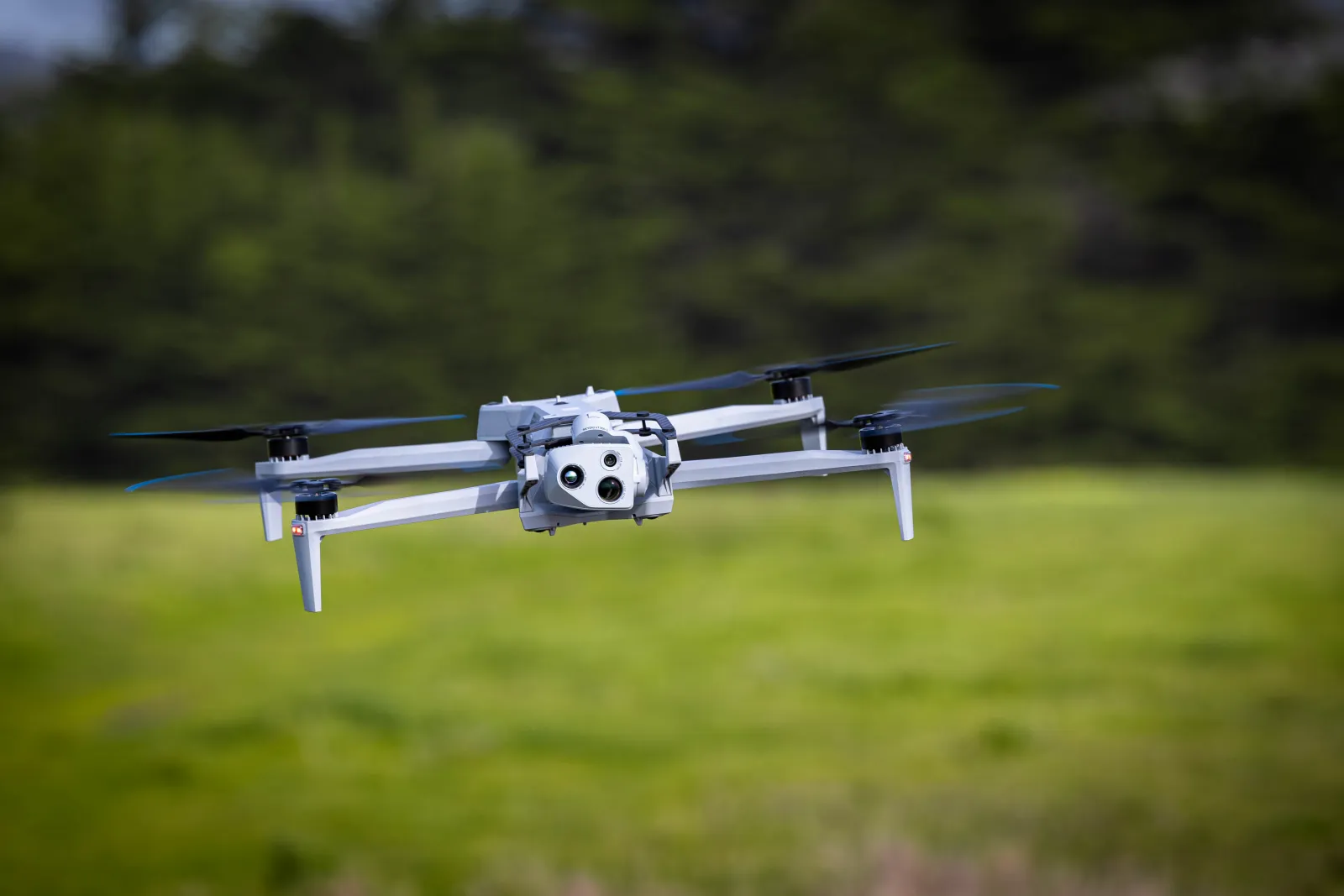
Skydio is the anchor US NDAA-compliant manufacturer. The X10D is the defense flagship: 2.11 kg, 40 minutes flight time, 12 km range with Connect SL, IP55, 360-degree obstacle avoidance, operating range from -20°C to 45°C, with a 1-inch 50MP wide camera, telephoto, and Boson+ thermal. Multiple frequency variants (1.8 and 5 GHz) are separately listed. In March 2026, the US Army ordered more than 2,500 X10D units for over $52 million — the largest single-vendor tactical small UAS order in Army history. Available via GSA and DoD contract vehicles.
On July 23, 2026, Skydio announced that the rest of its line had joined the X10D on the Cleared List: the enterprise X10, the Dock for X10, and the R10 indoor platform. The company says it is the first manufacturer to move its entire active lineup onto the list at once, and claims the only Blue UAS-cleared drone-as-first-responder system on the market. For agencies running docked, remotely deployed aircraft, that closes a gap that previously forced a choice between an autonomous deployment system and a cleared one.
Red Cat / Teal Drones — Teal 2, Golden Eagle, Fang F7
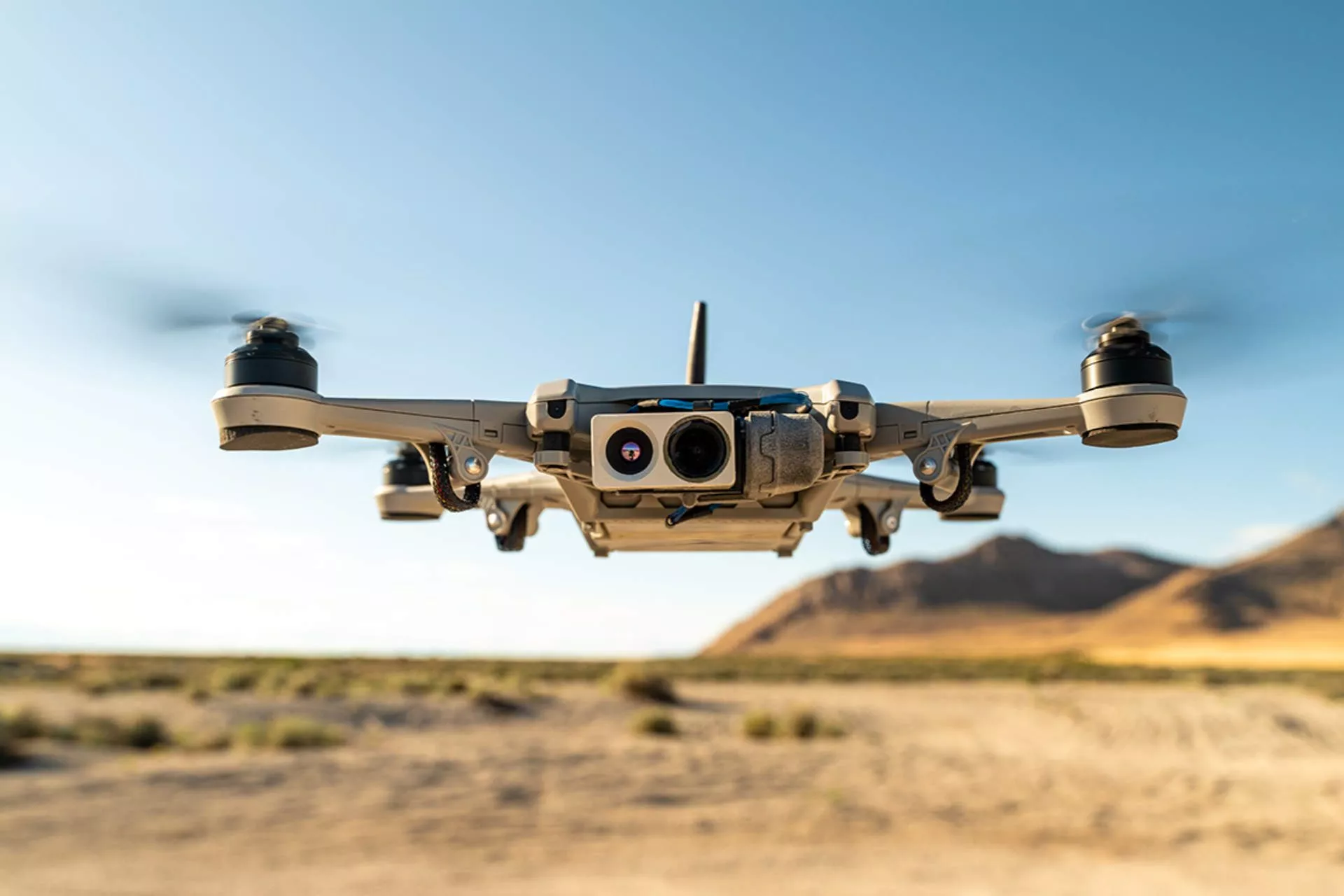
Teal Drones, a Red Cat Holdings subsidiary, has multiple variants on the list. The Teal 2 and Golden Eagle are compact, rucksack-portable quadcopters weighing approximately 1 kg, with 20 to 30 minutes flight time, 50 mph top speed, 3 km range, and a FLIR Hadron EO/IR sensor with 4K60 video. Operating range spans -32°F to 110°F. The Red Cat Fang F7 is separately cleared. All variants target short-range soldier-level and law enforcement reconnaissance. Government pricing typically runs $15,000 to $20,000 depending on configuration.
Parrot — ANAFI USA GOV/MIL, ANAFI UKR
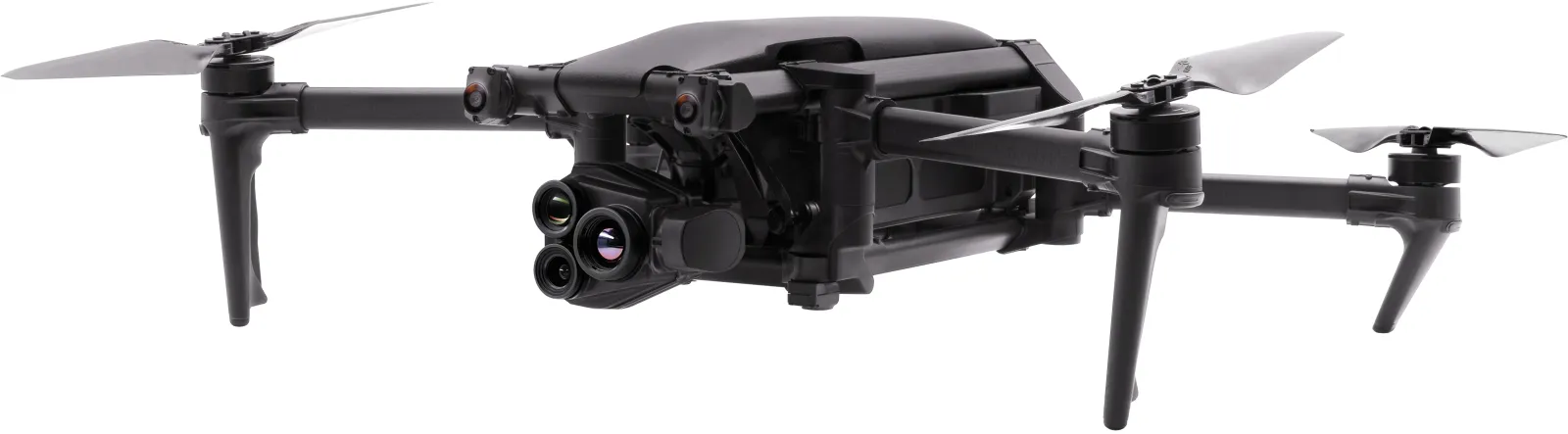
Parrot is a French manufacturer, but its NDAA-compliant versions are built to US supply chain standards and have been on the Blue UAS list since the early program. The ANAFI USA weighs 485 grams, flies for 32 minutes, has a 4 km range, IP53 weather resistance, and carries three cameras: wide-angle, 32x zoom, and 320 thermal. It is one of the most affordable cleared platforms, typically priced between $7,000 and $10,000. Parrot’s compact form factor and accessible price point have made it the dominant Blue UAS platform in public safety and first responder deployment.
AeroVironment — Red Dragon
AeroVironment’s Red Dragon is on the Cleared List primarily for military ISR roles. AeroVironment is better known for its Switchblade loitering munitions, but the Red Dragon fills the tactical reconnaissance category. Pricing is not publicly disclosed. Available through DoD procurement channels.
Anduril Industries — Ghost, Ghost-X
Both variants of the Ghost autonomous ISR platform are cleared. The Ghost runs on Anduril’s Lattice AI software, supports modular payloads, and is designed for Group 1 and 2 tactical missions. Anduril does not publish pricing — these are acquired through DoD contracts and OTA agreements. Primarily a DoD buyer platform.
Ascent AeroSystems — Spirit
The Spirit is a rugged, modular coaxial sUAS designed for operation in constrained environments where conventional multirotor form factors don’t fit. Cleared for broad government procurement.
Easy Aerial — Osprey
The Osprey Free Flight Version is a heavy-lift hexacopter with 55 minutes flight time, 20 km range, 3 kg payload capacity, and 100 km/h top speed. All-weather capable. Targets persistent surveillance and public safety operations in adverse conditions. Available via GSA.
Edge Autonomy — VXE30 Stalker
The Stalker VXE30 is a fixed-wing VTOL designed for tactical ISR. Long-endurance platform optimized for persistent area surveillance. Primarily DoD market.
FlightWave Aerospace Systems — Edge 130
VTOL fixed-wing with 125 minutes flight time, 100 km/h cruise speed, resistance to 40 mph winds, approximately 1.2 kg weight, and tool-free payload swapping. Targets long-range mapping and surveillance. Available through government and commercial channels.
Freefly Systems — Astro/Max Blue Package, Alta X Blue Package
Freefly builds the leading heavy-lift platforms on the list. The Astro carries 1.5 to 3 kg payloads with 28 to 39 minutes flight time depending on payload, with an MTOW of approximately 7 kg. Starting price runs approximately $26,000 for the Astro Max configuration. The Alta X scales up significantly: 15 kg payload capacity, 34.9 kg MTOW, 2.27 meter diameter. Both are widely used for LiDAR, RGB, and thermal payloads in inspection and mapping. Available via GSA.
The “Blue Package” designation is worth reading carefully, because it is where buyers most often go wrong. It denotes a distinct NDAA-compliant configuration, not a badge on the standard aircraft. Freefly’s own store lists the base Astro Max at $22,995 and marks it as not compliant — the Herelink radio link is the reason — while the NDAA and Blue configuration, with compliant radios, the Pilot Pro controller and DIU firmware, is a separate item at $28,995. Freefly’s marketing pages carry Blue and NDAA badges across the Astro line without that distinction on the page. An agency ordering from the marketing page rather than the store can receive an aircraft it is not permitted to fly on federal funds.
Hoverfly Technologies — Spectre
Tethered platform with unlimited flight time via ground power and up to 3.6 kg payload. Used for persistent ISR and communications relay where extended loiter time matters more than mobility. DoD and first responder market.
Inspired Flight Technologies — IF800 Tomcat, IF1200A
Designed explicitly as a DJI Matrice replacement for government buyers transitioning away from Chinese platforms. The IF800 starts at approximately $23,000. Heavy-lift configuration with industrial inspection and government mapping as primary use cases. Available via GSA.
Kraus Hamdani Aerospace — K1000ULE
Long-endurance tactical platform. Specific specs are not publicly disclosed. DoD-focused.
ModalAI — Seeker Vision FPV, Stinger Vision FPV
Both 5-inch and 7-inch FPV variants were added to the list in August 2025. These are fast, close-quarters platforms designed for contested and confined-space tactical operations. ModalAI builds on its VOXL autonomy stack. Primarily DoD.
Mountain Horse Solutions — Talon DT-300
Added as part of the 2025 to 2026 expansion. Tactical platform. Primarily DoD.
Neros Technologies — Archer, Archer Fiber
Los Angeles-based manufacturer. The Archer reaches up to 160 km/h and is described as battlefield-proven and electronic warfare resistant. The Archer Fiber variant uses fiber-optic tethering for EW-hardened data links. DoD-focused attritable and tactical category.
PDW — C100
Portable long-endurance quadcopter with 74 minutes flight time on ISR payload, 6.8 kg payload capacity, 9.6 kg weight, 10 km range, 64 km/h top speed, operating range from -4°C to 57°C. Government procurement primary market.
Quantum Systems — Vector
German manufacturer with NDAA-compliant supply chain. VTOL tactical platform. Allied-nation manufacturer — satisfies covered foreign country exclusion.
Renegade UxS — Nightmare, Nightmare Digital
Added in the 2025 to 2026 expansion. Tactical FPV and attritable category. DoD-focused.
Shield AI — V-BAT
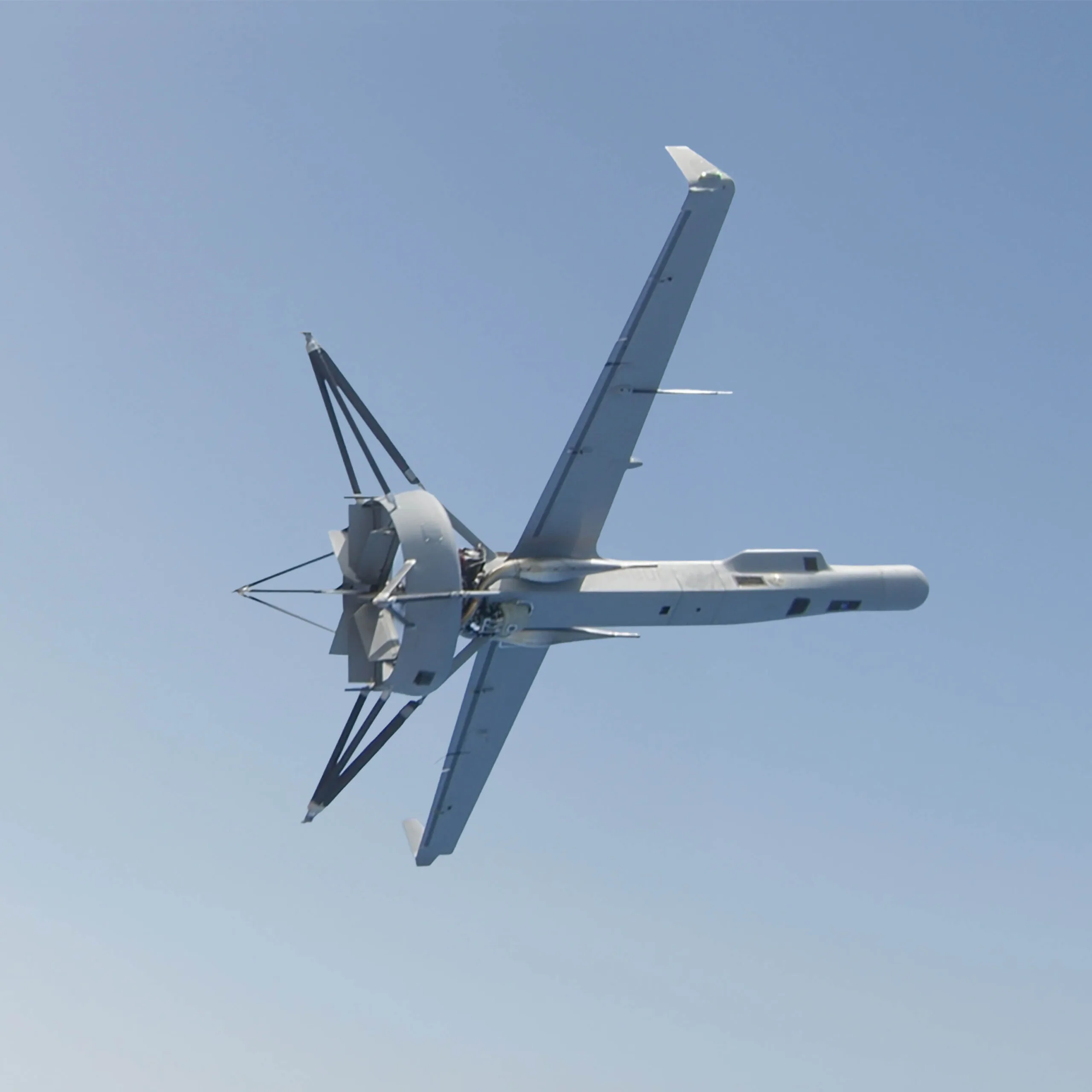
VTOL fixed-wing with over 10 hours endurance. Designed for persistent ISR and maritime surveillance where long loiter time is the primary requirement. Pricing is in the $1 million-plus class per system. DoD procurement only.
Skyfront — Perimeter 8
Hybrid gasoline-electric octocopter built for endurance and lift rather than a tether. Skyfront states five hours on the stock tanks and longer with auxiliary tanks, with 10 kg of payload for an hour or 5 kg for three. An earlier version of this entry called it a tethered aircraft; Skyfront corrected that on 19 September 2026.
Teledyne FLIR — Black Hornet 4
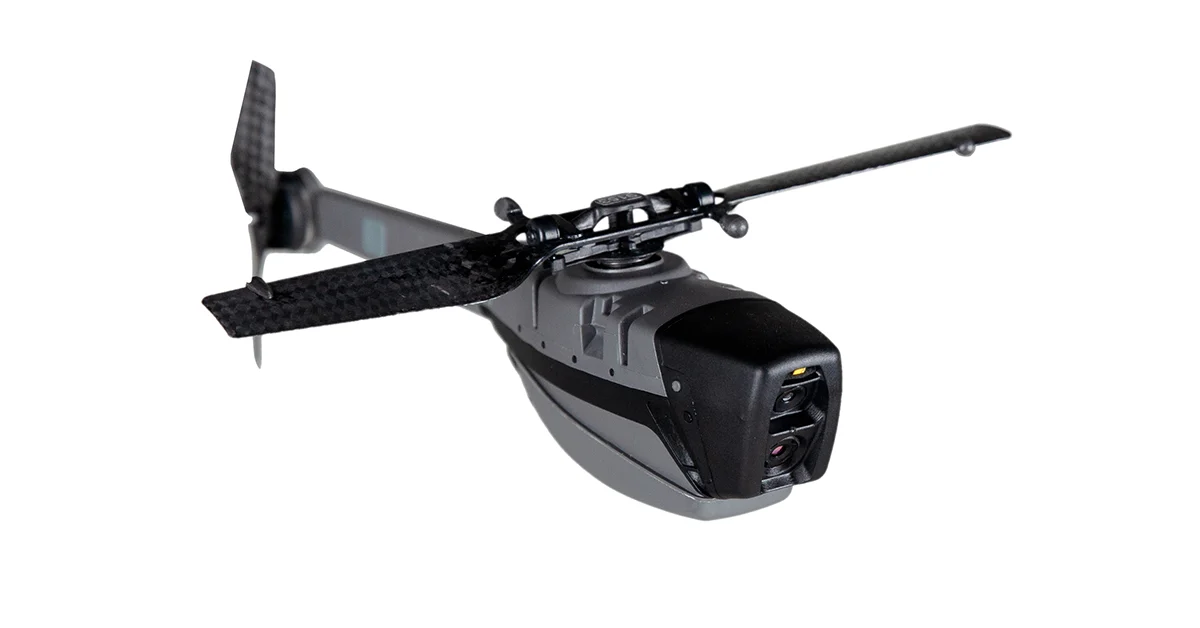
Nano sUAS in the personal reconnaissance category — small enough to be carried and launched by an individual soldier. Military-grade, DoD primary market. Pricing varies by configuration and contract.
Thunder Tiger Corporation — Overkill FPV
Tactical FPV platform. DoD-focused.
Titan Dynamics — Raptor
Tactical platform added in the 2025 to 2026 expansion period.
Vector — Longbow
Added February 2026, with Blue UAS Cleared and AUVSI Green UAS certification announced together. A modular NDAA-compliant VTOL already deployed under a multi-year contract with US Special Operations Command. Vector took the Green UAS route, which since July 2025 has granted automatic eligibility for the Cleared List.
Vantage Robotics — Trace, Vesper
Small sUAS platforms. Government and public safety market.
Wingtra — WingtraOne Gen II, WingtraRAY
Swiss manufacturer with NDAA-compliant manufacturing. Fixed-wing VTOL mapping platforms. The WingtraOne Gen II is widely used for precision surveying and geospatial data collection. Allied-nation manufacturer — satisfies the covered foreign country exclusion.
WISPR Systems — SkyScout 2+
Added to the Blue UAS Cleared List in April 2026 after earning AUVSI Green UAS certification in February 2026. The SkyScout 2+ emphasizes secure domestic sourcing and survivability features, including AES-256 encrypted communications, US-based design and assembly, domestically sourced components, long-range obstacle detection, terrain following, EMI protection, and extreme-condition thermal management. It ships with the WISPR SkyBoss controller, which adds AES-256 encrypted transmission and IP55 protection. Government and public safety buyers are the primary market.
Zepher Flight Labs — Z1
Cleared in the 2025 to 2026 expansion. Tactical category.
Zone 5 Technologies — Paladin
Tactical platform. DoD-focused.
Ondas / American Robotics — Optimus
Added February 2026. Autonomous drone-in-a-box system targeting national security and critical infrastructure inspection. One of the more recent additions reflecting the program’s expansion beyond purely military platforms.
Where the Compliance Boundary Actually Falls
Section 848 does not police every part of an aircraft. It reaches the components Congress enumerated, and Congress enumerated the ones that store or move data: the airframe, the flight controller, the radio and data transmission devices, the camera and gimbal, the ground control system, network connectivity and data storage, and the operating software.
Motors sit outside that list. So do speed controllers, battery cells, magnets and passive electronics — the parts that make an aircraft fly rather than think. DefenseScoop reported in November 2025 that the majority of systems cleared through the program have motors sourced in China, and the economics explain why: a former senior defense official put Chinese motors at $12 to $25 each against $100 to $225 for US alternatives. AUVSI’s chief executive, Michael Robbins, framed the consequence plainly — because motors were never treated as critical components, the drone motor market outside China stayed immature. AUVSI appears three times in this story: it is the sector’s trade association, it runs the Green UAS certification that feeds this list, and it is a DoD-recognized assessor.
Then in December 2025 the FCC drew the line somewhere else. Its Covered List notice defines UAS critical components to include batteries, battery management systems and motors, alongside the data-handling parts Section 848 covers.
The result is that a motor can be lawful inside a Blue UAS aircraft and a critical component under FCC rules at the same time. The exemption that resolves the tension does not close it: the January 2026 carve-out covers platforms on the Cleared List and products meeting the Buy American “domestic end product” test, which is satisfied at 65 percent domestic content by cost. That leaves room for up to 35 percent foreign content — roughly the share occupied by motors, cells and magnets.
For a buyer, the practical reading is that Blue UAS listing certifies a supply chain audit against a data-security standard, not a guarantee of end-to-end domestic manufacture. Anyone procuring on the assumption that a cleared aircraft contains no Chinese content is procuring on a misunderstanding.
What Does Blue UAS Compliance Actually Cost?
The price premium over pre-restriction DJI equivalents runs 50 to 100 percent or more depending on platform category. Parrot’s ANAFI USA at roughly $7,000 to $10,000 is the most accessible entry point. Mid-range platforms like the Inspired Flight IF800 start at $23,000 and the Freefly Astro Max at $26,000. Tactical systems like the Skydio X10D are priced via government contract rather than public list. Shield AI’s V-BAT operates in a different bracket entirely at over $1 million per system.
The premium exists for three reasons: US or allied-nation manufacturing carries higher labor and component costs than Chinese production, compliance and certification overhead adds to program costs, and production volumes are a fraction of what DJI achieves at scale. As the market grows — driven by the $150 million initial Drone Dominance procurement and the target of 340,000 attritable units by 2027 — volume pricing should compress the gap. Unusual Machines has explicitly stated it is targeting cost parity with Chinese-made components for motors and related hardware. That matters because the component stack is a significant driver of total system cost.
Green UAS: The Commercial Pathway
Green UAS, managed by AUVSI, mirrors Blue UAS cybersecurity and supply chain standards but targets commercial, public safety, and non-DoD government buyers. It adds corporate cyber hygiene requirements, product and device security standards, and remote operations connectivity requirements that Blue UAS does not require.
Green UAS is not a DoD procurement designation on its own, but since July 2025 it functions as a recognized pathway into Blue UAS Cleared. Platforms completing Green certification can move into Blue without a separate full DoD assessment. For enterprise buyers without a direct DoD relationship, Green UAS provides a recognized compliance signal for procurement purposes.
What Happens to Agencies Still Operating Non-Compliant Drones?
Full ASDA enforcement began December 22, 2025. Federal agencies, contractors, and grant recipients cannot procure or operate covered foreign UAS. Agencies still running DJI or Autel fleets face funding risk, contract issues, and potential national security flags. There is limited grandfathering for pre-existing non-federal use, but for any federally funded operation the transition requirement is unambiguous.
The practical transition burden is real. Many agencies built operations around DJI Matrice platforms that have no direct equivalent on the Blue UAS list at the same price point. The Inspired Flight IF800 and Freefly Astro are the closest functional replacements at two to three times the cost.
What to Watch Through 2027
The January 1, 2028 expiration of FCC exemptions for Blue UAS platforms and Buy American domestic end products is the defining near-term date. The FCC has already extended it once, from January 1, 2027, on July 21, 2026. If those exemptions expire without a further extension, the regulatory pressure on non-exempt foreign UAS in the US market intensifies further, and the Blue UAS list becomes even more central to any federal or federally funded drone procurement.
The Pentagon’s Drone Dominance program will drive the next significant wave of Blue UAS additions. With 25 vendors competing for an initial $150 million contract and a 340,000-unit attritable target by 2027, manufacturers not yet on the list have clear financial incentive to pursue listing. DCMA’s goal of transforming the Blue List into a true acquisition marketplace — with direct procurement capability rather than just a reference list — is set for completion by the end of 2027. When that infrastructure is in place, the gap between being on the list and being accessible to a procurement officer closes entirely.
Is a Blue UAS Drone the Same as an NDAA Compliant Drone?
No. NDAA compliance is a property of the hardware, while Blue UAS listing is an administrative status granted for a specific configuration at a specific moment, and a platform can lose it without a single component changing, as Wingtra and Ascent did in the 2025 refresh. Every listed aircraft is compliant; not every compliant aircraft is listed.
How Many Drones Are on the Blue UAS Cleared List?
The last count the Defense Innovation Unit published was 39 cleared systems and 165 components, in November 2025, and the Defense Contract Management Agency has published no figure since. The table on this page carries 31 manufacturer rows assembled from the DCMA portal and manufacturer announcements.
Does Blue UAS Listing Mean a Drone Has No Chinese Parts?
No. Section 848 reaches the components that store or move data, and motors, battery cells and magnets sit outside it; DefenseScoop reported in November 2025 that most cleared systems use motors sourced in China. Listing certifies a supply-chain audit against a data-security standard, not end-to-end domestic manufacture.
Sources
- DCMA Blue UAS Cleared List portal, the official roster; it renders in the browser only and has refused connections on several of our checks.
- Defense Innovation Unit, Blue UAS Cleared List, which now points at the DCMA portal, and DIU’s Blue UAS list to transition to DCMA, 3 December 2025.
- FCC public notice DA 26-22, 7 January 2026, exempting Blue UAS and Buy American products from the Covered List, and DA 26-761, 21 July 2026, extending the exemption to 1 January 2028.
- FCC Covered List.
- Wingtra customer notice on its March 2025 delisting, archived.
- Manufacturer announcements of additions, cited in the table notes.
Coverage
Pentagon Accepts 12,080 of 30,000 Drone Dominance Drones
Six weeks after the delivery window closed, the programme's own leaderboard shows 12,080 drones accepted, and Gauntlet I winner Skycutter with none.
FCC Bars New Drones With DJI Parts From 13 October
From 13 October the FCC will refuse authorisation to any new device containing a DJI or Autel logic-bearing component, wherever the rest of it is built.
Wing Tells FCC Its Drone Rules Risk Grounding It
Wing, AUVSI and the Commercial Drone Alliance filed on the FCC's next round of Covered List rules. They split on the 65 percent US-content test.

FCC Drone Ban Comment Record: 3,770 Opposed, 16 For
The FCC drone ban proposal drew 3,829 comments before the record closed on 2 September. Sixteen of them supported it.

A trade association is the fast route onto the Blue UAS list
WISPR got Green UAS certification in February and was on the Pentagon's Blue UAS Cleared List ten weeks later. Four platforms joined in 2026.
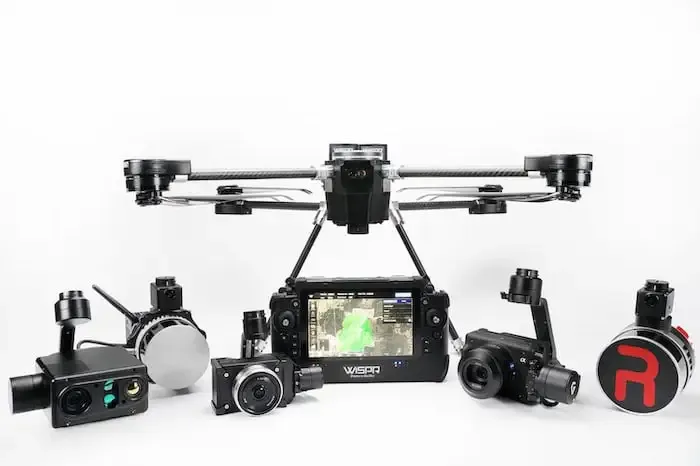
WISPR SkyScout 2+ Added to Blue UAS Cleared List
WISPR Systems' SkyScout 2+ earns Blue UAS Cleared List approval, clearing it for federal procurement without NDAA limits.
No One Is Replacing DJI in the US Consumer Market
The DJI ban has left a gap no US dronemaker wants to fill. Defense contracts pay better, and nobody is competing for the 90% of the market DJI dominated.
Unusual Machines Bets on Defense Drone Manufacturing
Unusual Machines is positioning as a domestic NDAA-compliant drone component supplier as US procurement rules tighten.
Companies
DJI
Chinese private manufacturer of consumer, enterprise and agricultural drones, cameras and imaging systems.
China
Skydio
US drone manufacturer building AI-powered autonomous aircraft, supplying NDAA-compliant enterprise and defense drones to agencies and operators.
United States
Autel Robotics
Chinese drone manufacturer producing consumer and commercial UAVs, including the EVO and Dragonfish series, with a growing defense-adjacent presence.
China
Red Cat Holdings
US defense drone company supplying NDAA-compliant small unmanned systems for military reconnaissance through its Teal Drones subsidiary.
United States
Unusual Machines
US drone manufacturer and components distributor building NDAA-compliant drones and parts to cut American dependence on Chinese supply chains.
United States
WISPR Systems
Mississippi drone manufacturer building NDAA-compliant SkyScout quadcopters for mapping, inspection and public safety, on the Blue UAS list since 2026.
United States
Neros Technologies
US manufacturer of low-cost first-person-view attack drones and counter-UAS interceptors, built around a domestic supply chain outside Chinese components.
United States
Ondas Inc.
US-listed autonomous systems company that built a drone, counter-UAS and stratospheric ISR portfolio by acquisition, run as two divisions.
United States
Products
Skydio X10
Skydio
A serious U.S.-made enterprise platform built around autonomy, sensors, and government-grade deployment rather than mass-market volume.
Black Widow
Red Cat / Teal Drones
The US Army's chosen short-range reconnaissance drone, built for rucksack portability and GPS-denied flight — its position rests on winning the SRR program of record rather than on any single specification.
Funding
Series C
Sequoia Capital, American Strategic Technology Fund, Interlagos, Valor Equity Partners, Allen & Company, Thiel Capital, Spark Capital, Dylan Field
Neros TechnologiesContracts
defense
Acquisition Technology & Logistics Agency, Red Cat Holdings
Delivery of 173 Black Widow sUAS systems to the Japan Ground Self-Defense Force for tactical ISR...
defense
Powerus (Autonomous Power Corporation), Unusual Machines
Supply contract for US-manufactured components for counter-UAS interceptor systems and 10-inch...
defense
U.S. Air Forces Central, Skydio
Order for Skydio Dock and X10 autonomous drone systems to provide perimeter security at USAFCENT...
defense
Pentagon JIATF-401, Perennial Autonomy
Agreement between the Pentagon's Joint Interagency Task Force 401 and Perennial Autonomy to fund...